

Wild asters have an almost magical appearance when you see them up close, with beadlike buds floating among bloomed flowers. My garden is full of asters in the fall, a super plant for pollinators. They can be weedy and spread a lot, but in springtime when they get to be about 8 inches high, they’re easily uprooted anytime you want to cull them back. Asters triple in size in late summer getting ready to flower, but most of the gardening season they’re unobtrusive. In the foreground of this photo is a section of the bed I’ve built up using container and hanging basket plants. Containers get tired by the end of the season, but the plants revive when you put them in the ground.
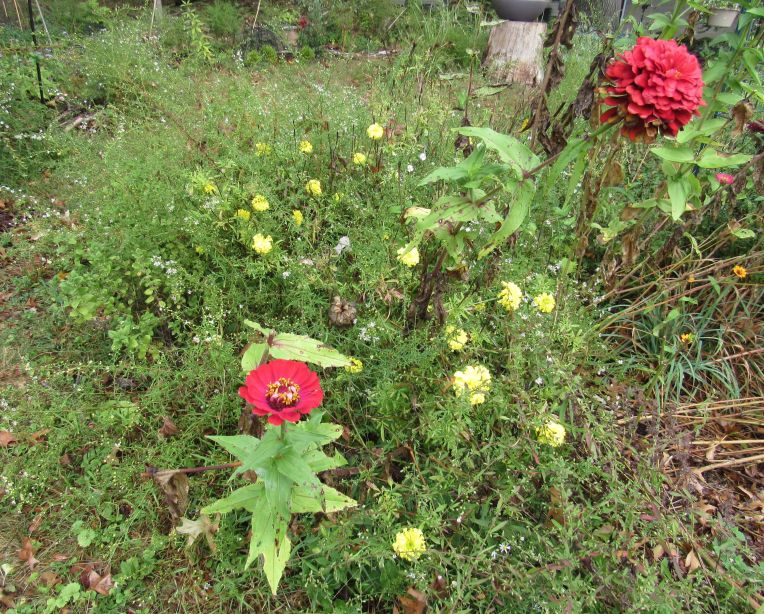
These State Fair zinnias are the biggest attraction for large species of butterflies. I’ve done well this year with monarchs, not only having a breeding pair, but some recent visitors with bright orange scales, so they’ve probably just hatched. All the large butterflies–tigers, zebras, black swallowtails, fritillaries, monarchs–were more numerous this summer than the last few years, and several types were breeding. Late summer/fall I also have tons of tiny butterflies, but I can never get a good look at them for identification. Leaving grasses to grow tall is the best way to make a habitat, that tiny butterflies will definitely use. The other flowers above are lemon-colored marigolds, a tall variety, and the fall asters.

A rainy day woodland path, with mellow greens and terra cottas. The deer have eaten a lot of leaves off the caladiums, but one is hanging on next to a flowering tobacco.




 Memories of a Midwestern Family