
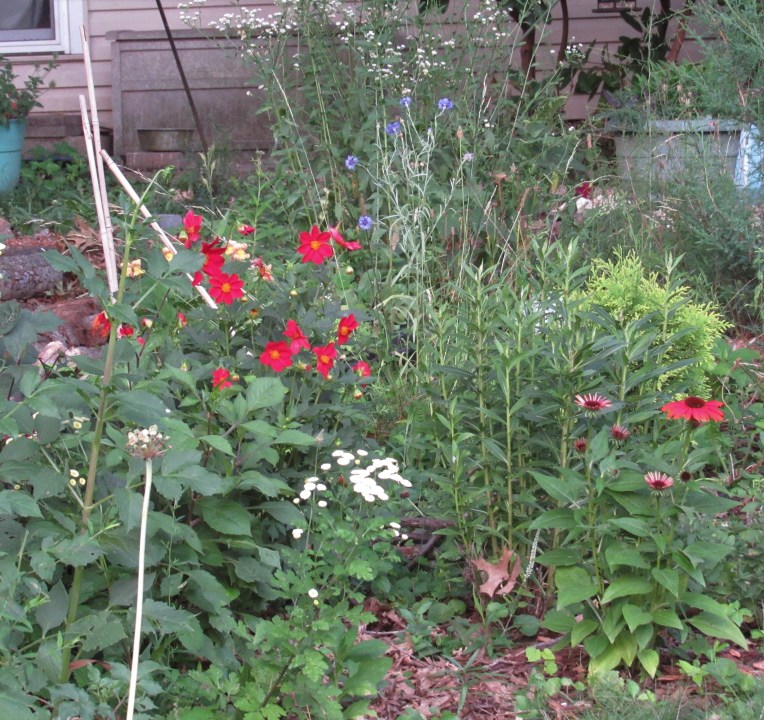
From mid-summer of this year, a meadowy mix of cultivated and wild flowers. The erigeron in the back is a volunteer. I don’t know what species, but one that puts out dozens of small white flowers, wafts in the breezes, and grows two to three feet tall. Then I have red dahlias, blue centaurea, light-yellow feverfew, rosy-orange coneflower, and the yellow-tipped foliage of Golden Globe arborvitae.
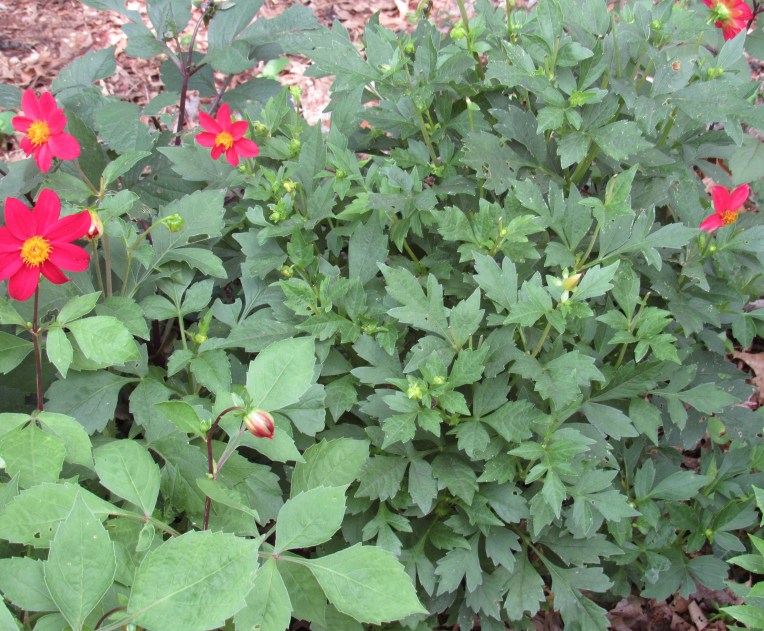
Here are the red dahlias up close. They’re the open flowered, pollinator-friendly kind, and as you can see, the one on the right thinks it’s a mum. Lots of small leaves, lots of flower buds. But they still bloom dahlia-style, in succession—so for all the buds, it can’t quite achieve the loaded look. These have a sheltered spot along the path, and survived from last winter.
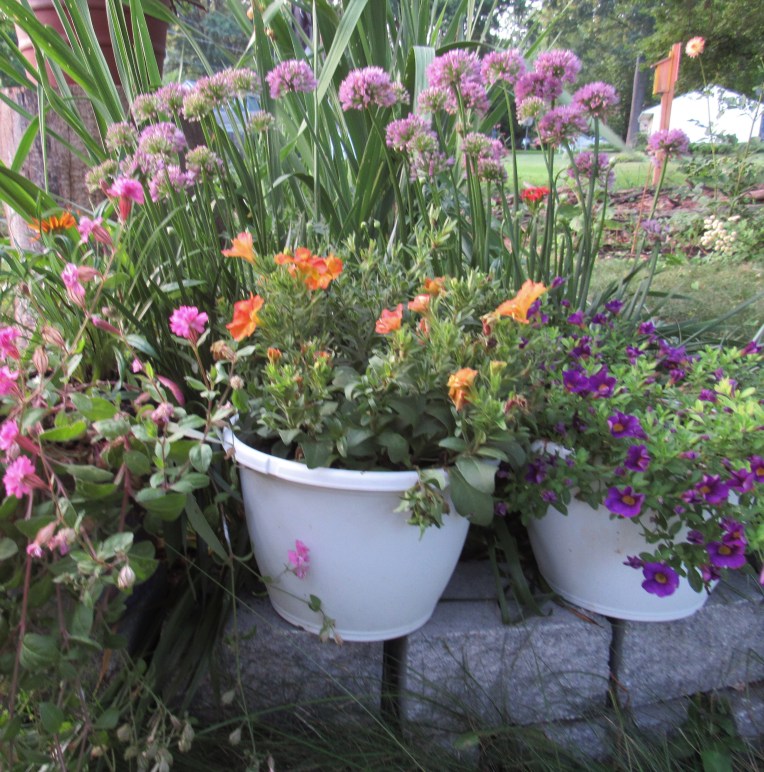
Here are two hanging baskets I got for five dollars each. I took the hanging part off and perched them on this little wall, where until fall arrived and the deer ate them (two calibrachoas in this color-wheel perfect combo of orange and purple), they bloomed gorgeously.
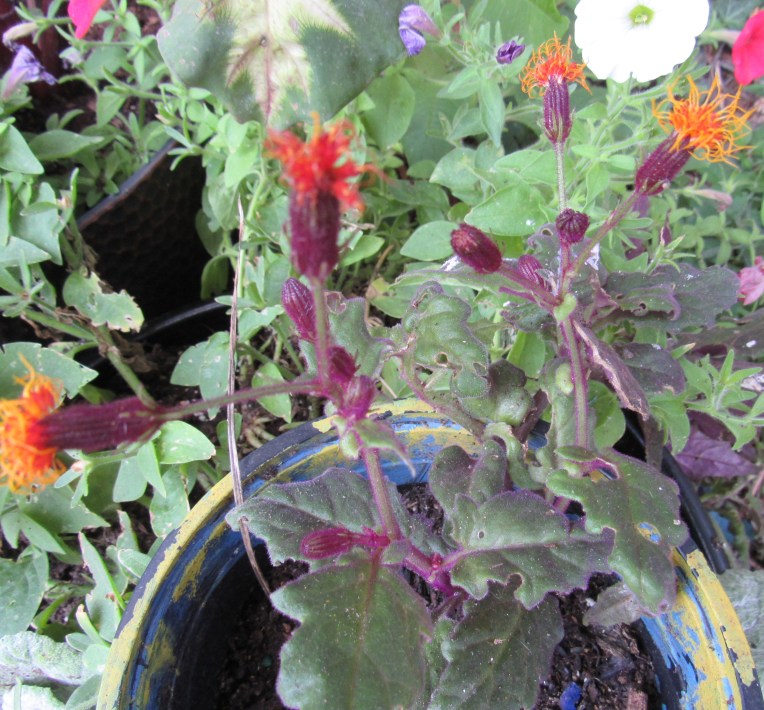
Purple velvet vine looks exotic, and is usually sold as a houseplant. Mine got an intractable case of mealy bug, so I put it outside. Here you see its fantastic little flowers. When they’re finished, they turn into white puffs, like asters. And that’s because this fancy plant is a member of the aster family…who would guess? I brought it indoors for winter, found it still had mealy bug (though it seems not much bothered). I put it in a hanging basket before an isolated window in my garage. If it survives, I’ll let it bloom outdoors next summer.

I used a Waikiki and a black-leaved colocasia together in one large pot. (With a few wave petunias.) I think next year I’ll get a third colocasia type, and have three sets of contrasting leaves. I’m wintering these over against the garage wall, and I’ll cover the pot in bubble wrap. That’s how I keep pitcher plants in winter, and how I kept the black colocasia last year. Colocasias can thrive in pots in the house, but you need a really big space for them. For me, keeping tender tubers, corms, etc., in lightly damp sand, or whatever is recommended, just never works. Letting the plants go dormant in an area that won’t freeze is better.
 Memories of a Midwestern Family