
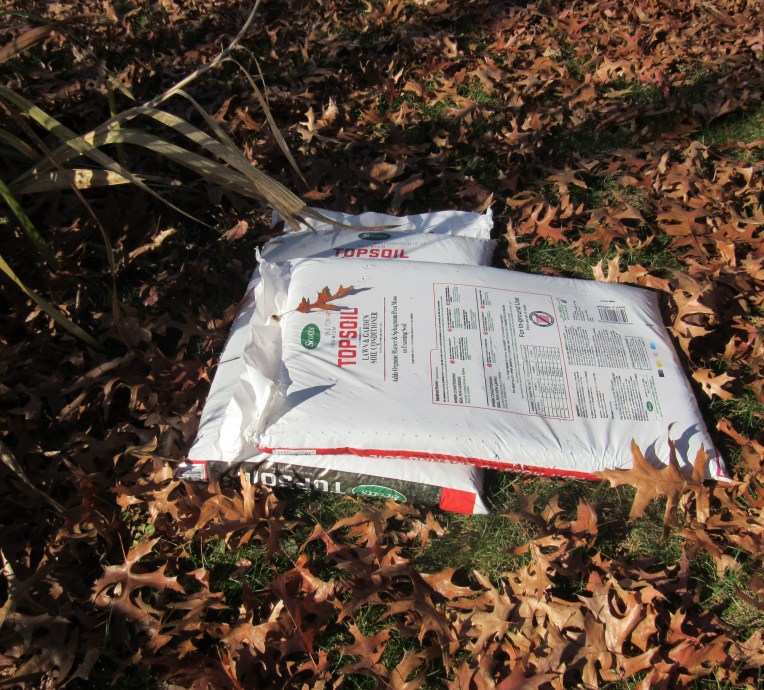
If you’re planting small bulbs, like crocus or several of the allium varieties, which can be placed under a few inches of soil, here’s a way to avoid digging at all, while laying the ground for a bed-expansion in next year’s garden. Buy a few bags of topsoil….
I know you can find advice out there against it. But the bagged products have the reputation of both the manufacturer and the chain store selling them to support, and they have laws to comply with. It’s not the same as topsoil delivered from a random seller online. I like this less augmented (with fertilizers) product, that allows soil organisms to build fertility for you. The brand above is like half-decomposed mulch, not heavily peaty, and after a good rain its light particles sink below the heavier ones, forming a mulch layer on their own. Of course, you can buy a lot of commercial brands, and should pick the kind best for the soil you have.

Distribute the bulbs, which will root by themselves whether upright or on their sides, in a natural flow. Never mind the grass. Fescues mostly die when well covered, and the stringy roots are easy to dislodge in the spring.
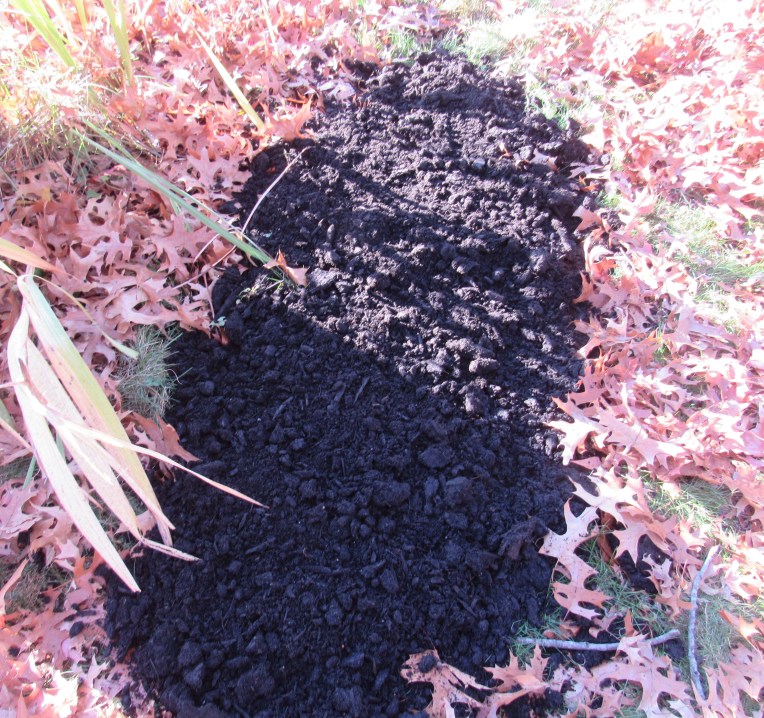
Distribute soil over the whole planting, to about three inches depth for crocuses.
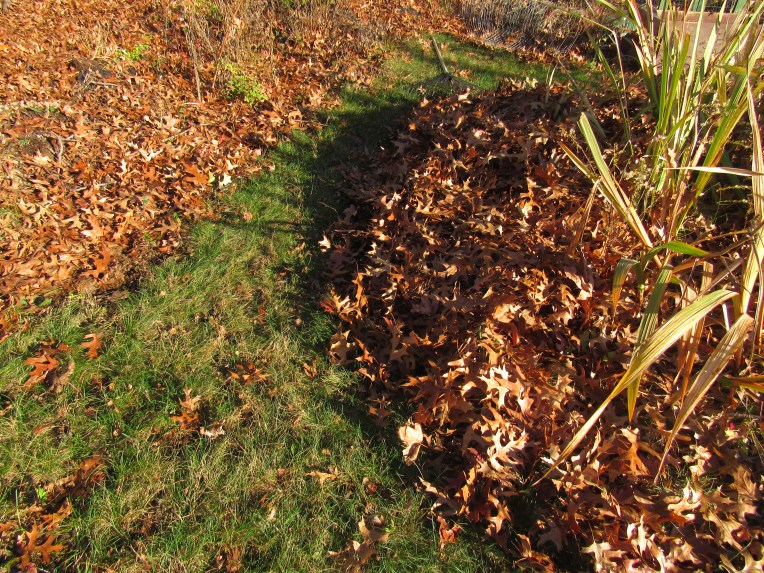
Finally, I’ve raked on leaves to protect the bulbs from squirrels, and keep them from being exposed by rains. The leaves will add richness to the bed, but if they’re oak, should be thinned in time. When they begin to form a mat, your bulbs and perennials alike need light and air, so you should do a general midwinter raking (that is, late January, early February), taking about half the leaves away for composting.
 Memories of a Midwestern Family