
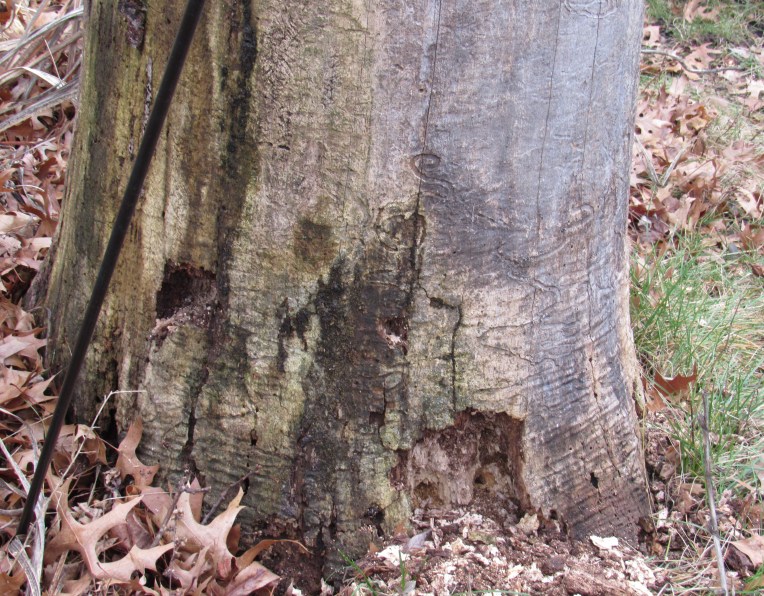
Above, the ash stump I’ve been using to support a large pot. I bought a new pot in the fall, the dish style that’s becoming popular. A lot of pots are too vertical, and plants don’t benefit from soil that packs at the bottom and ends up either soggy or dry.
Now the pileated woodpecker is taking my stump apart. We’ll see if it survives as a garden feature! But it’s wonderful to have an insect-intensive habitat, attractive to our largest woodpecker. What larger animals need most crucially is space—enough trees, in the case of the pileated, to hammer out their nest holes. If the babies live to adulthood, each male will have to find a territory of his own. The more we build habitat in our back yards, the more we sustain a path for nature to migrate, with food, water, and breeding sites, and the more nature we have on Planet Earth.
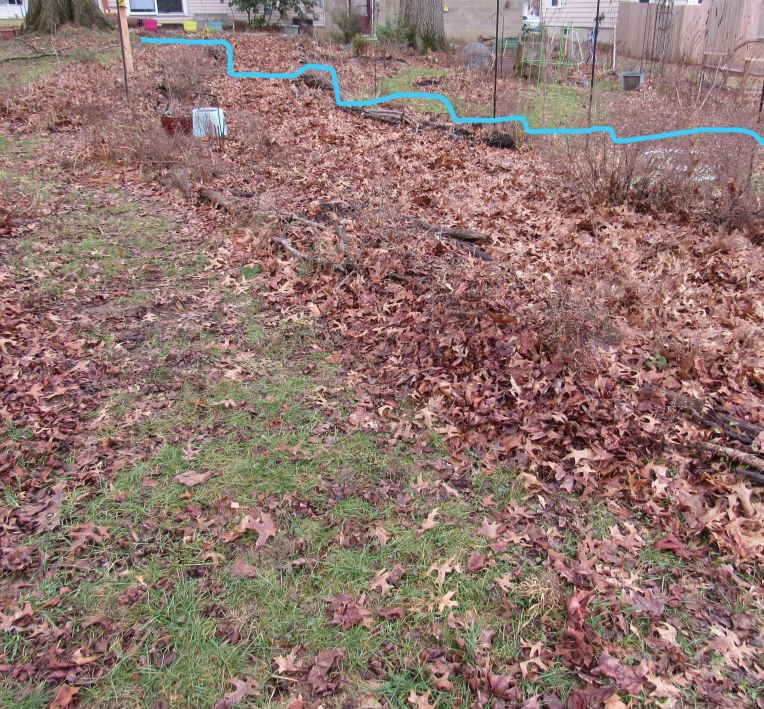
We’re having very pleasant spring weather, this late mid-winter. Even so, it’s a little worrisome, because a bubble of warm, dry air that lingers more than a week is not a pattern we want repeated through summer. Hopefully, El Nino interruptions are passing, and things will be as normal this summer as they can. The blue line above shows how I’ve changed the lay of my yard with shallow terracing. When we get heavy rains, the water goes downhill slowly, mostly soaking in. This terracing keeps my garden water-retentive, so plants root deeper, and can hold their own in dry spells. It’s easy to terrace your own yard, even if it has no natural hill. Make paths edged in fallen logs and sticks, or in wall blocks from the garden center, or even a load of firewood, repurposed. Use compost, yard waste, and purchased soil to fill in planting areas. The flow of water, plus soil activity from all the creatures you’re inviting, shapes the surface.
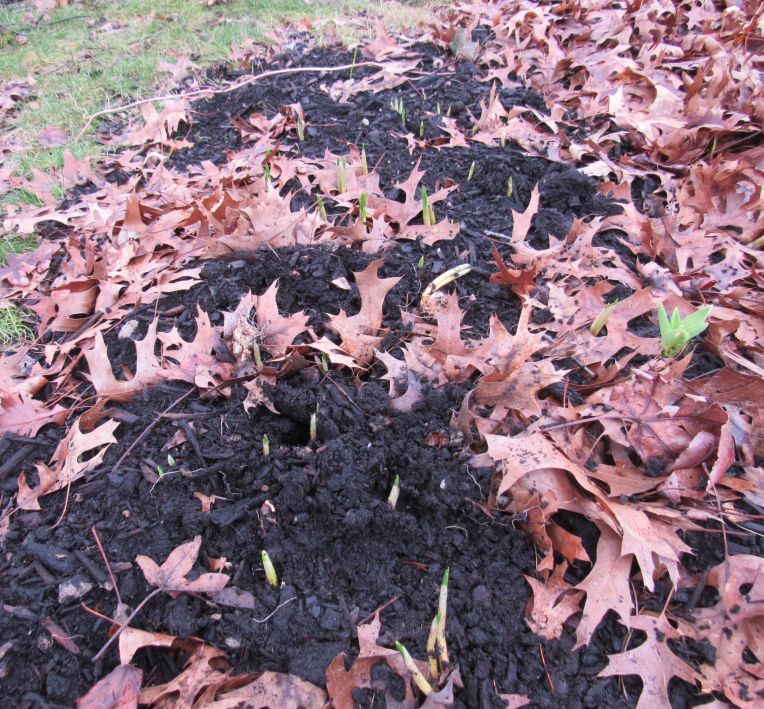
A few posts ago, I showed the easy way to plant small bulbs. Here are my crocuses coming up, and when they’re finished blooming, I can fill in around them with annuals and new perennials.
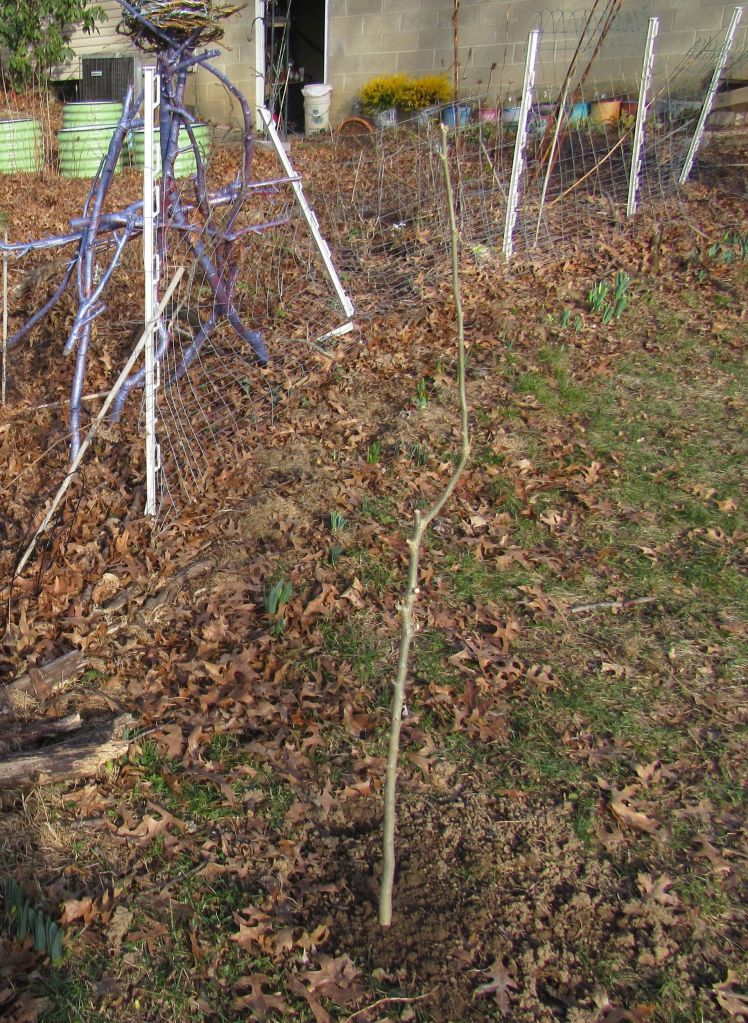
This is not a tree, it’s a Rose of Sharon. I’ve been pruning it to grow straight up, and my plan is to train a clematis on it. With luck, I’ll have the “post” flowering as well as the vine. Since Rose of Sharon is free—at least many of us find them sprouted in our yards, whether we like them or not—we have room to experiment.
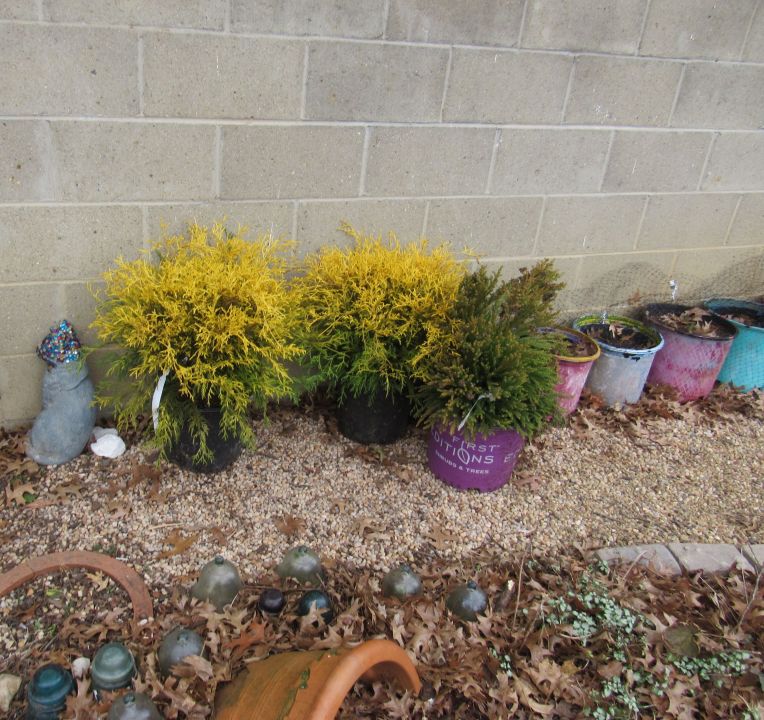
Finally, a pic of some shrubs, two yellow chamaecyparis, and a green cryptomeria, that should turn bluer when it gets new growth. I ordered them from Plants by Mail, and you can see that what arrives on your doorstep is impressive.
 Memories of a Midwestern Family