

I believe this is Eupatorium serotinum, White Boneset, native to North America. Last year it got above five feet tall, and had a huge florescence. As with typical Eupatoriums, a genus Joe Pye Weed was once considered belonging to (Joe Pye is now Eutrochium, still very similar in appearance to plants called Eupatorium), the flowers are feathery and clustered. In the case of E. serotinum, the flowers are white, not pink. White Boneset blooms late in summer, and attracts dozens of pollinator species. Mine last year was in a constant cloud of activity. My garden also has two kinds of Joe Pye weed, plus Eupatorium coelestinum, called Blue Mistflower. Eupatoriums/Eutrochiums are highly beneficial to insects. All of mine have leaves perforated with round holes, as above, a sign (probably) of moth caterpillars. I know my yard is full of tiny moths, that pop up out of the grass as I walk around.
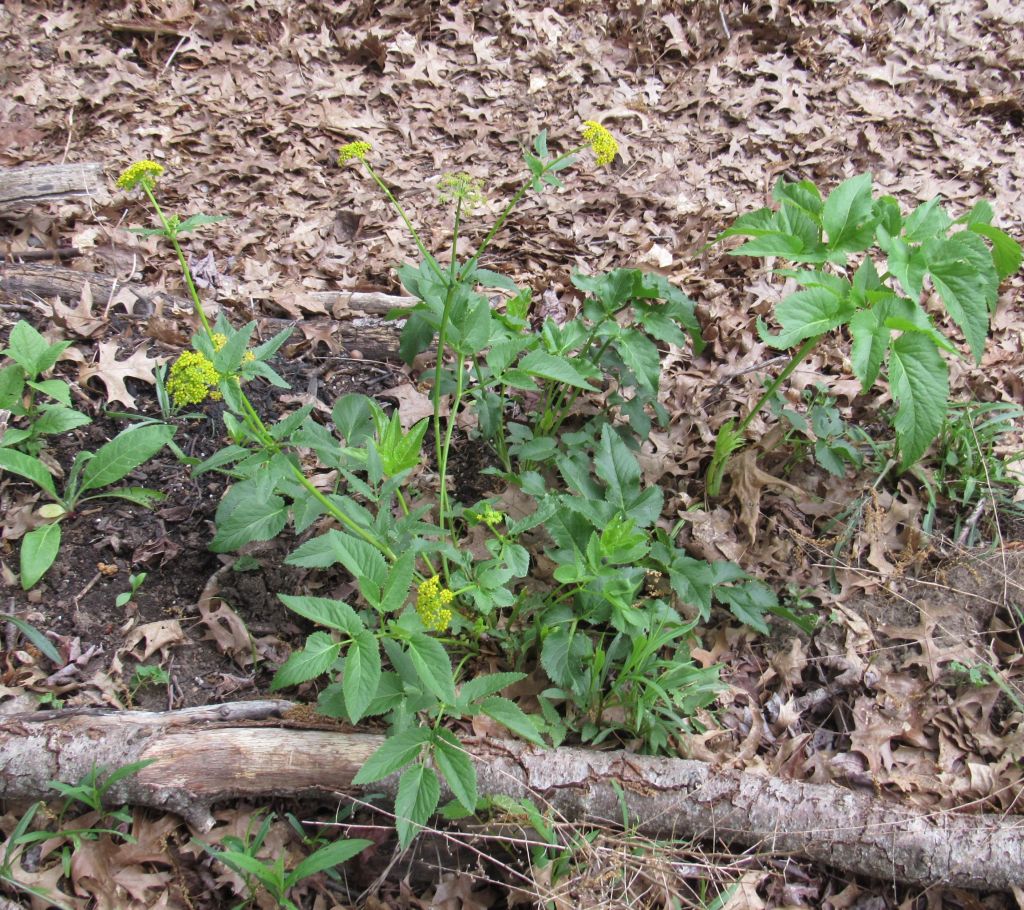
This is Golden Alexanders, Zizia aurea, a host plant for Black Swallowtail butterflies. In my yard, I don’t see that many Black Swallowtails; I get mostly Spicebush. So far I haven’t seen anything eating my Golden Alexanders, but just as an ornamental they’re striking, a garden plant you’d think would be more cultivated. They sprawl a little in their growth habit, as you can see, so they provide their own soil cover to conserve moisture.
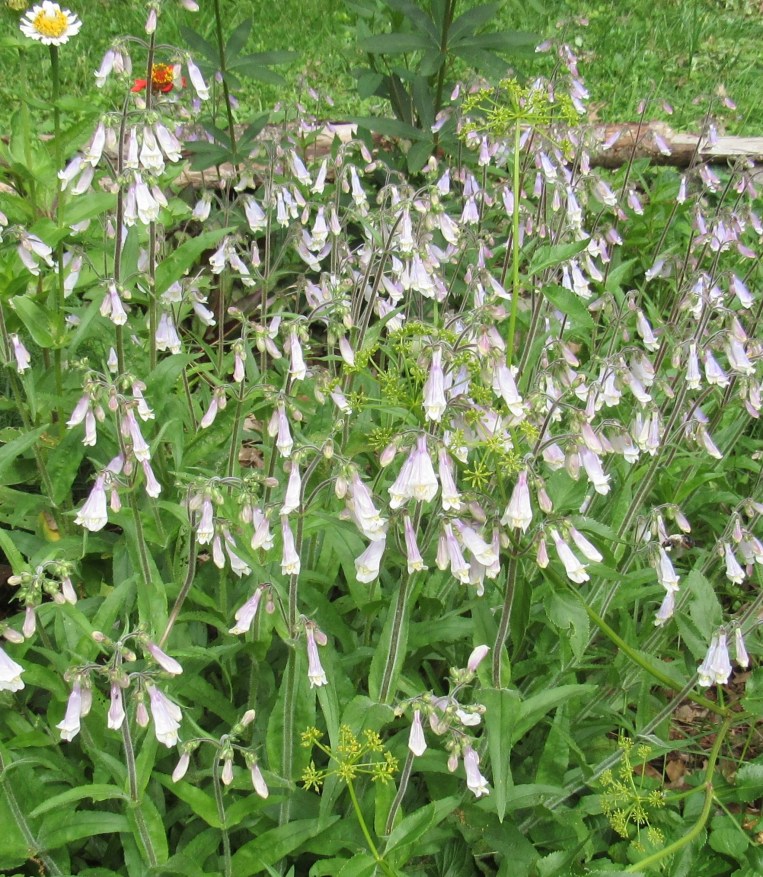
These are Hairy Penstemon, Penstemon hirsutus (some seedheads of Golden Alexanders can be seen among the blooms). In this photo are only three plants. Each plant must have a hundred flowers, and the flowers have lasted at least three weeks. They first bloomed so early that there weren’t a lot of bumblebees hatched yet. They’ve been mostly pollinated by small bee species, but one of the smaller bumblebees can be seen at the middle right margin. Fantastic display from these.
 Memories of a Midwestern Family