
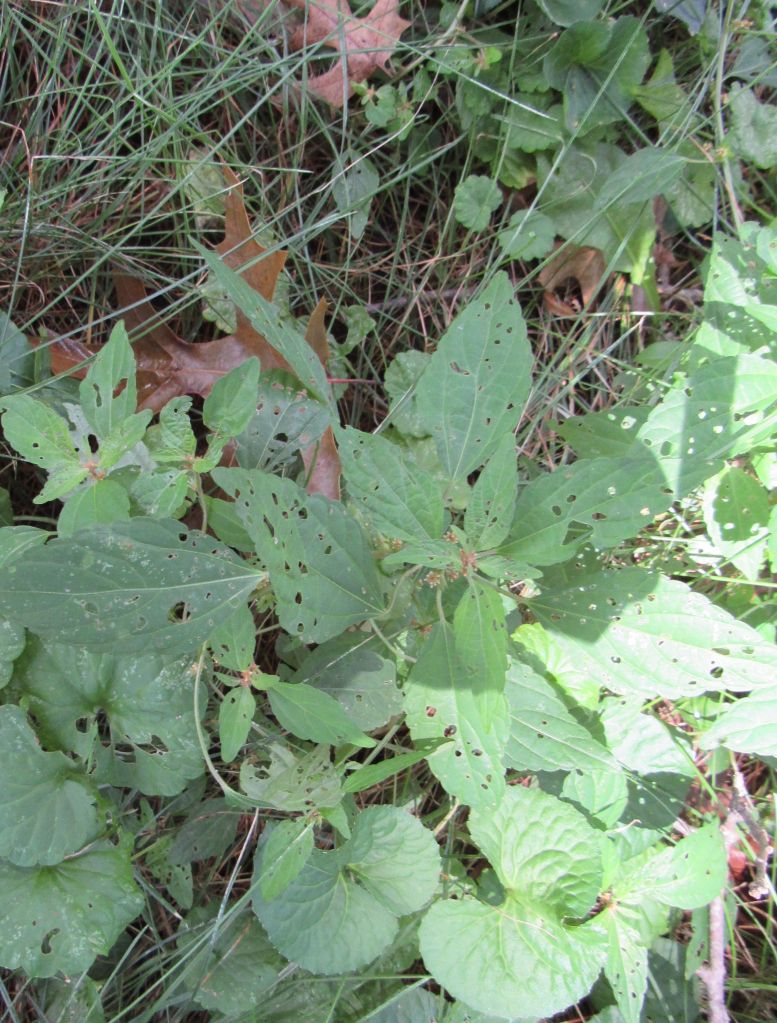
Pigweed is always seen in this condition. It’s one of the most utilized plants by insects, small rodents, and birds. Pigweed is in the Amaranthus family and has nutritious seeds, that humans can feed on as well (thinking of our climate change future, where we may have to learn to forage), though it’s often written about as an agricultural nuisance. Pigweed attracts flea beetles and hunting beetles, skipper butterflies, and moth species.
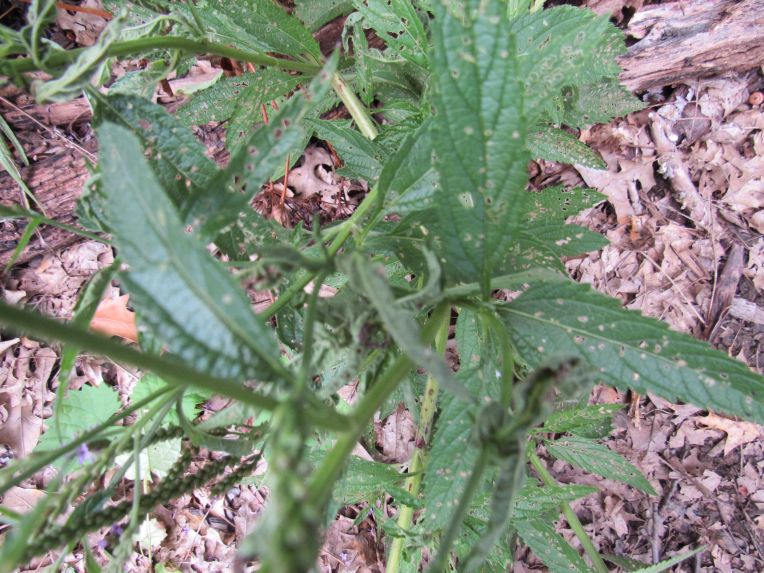
This is blue vervain, a great native you can buy from nurseries that sell native plants. It has tiny flowers, but so numerous they’re showy, too. An advantage of tiny-flowered plants is that native pollinators can use them, while larger-flowered plants may be taken over by honey bees. These leaves look just the way we want our native garden leaves to look, full of feeding holes. The Common Buckeye is a butterfly that feeds on blue vervain.
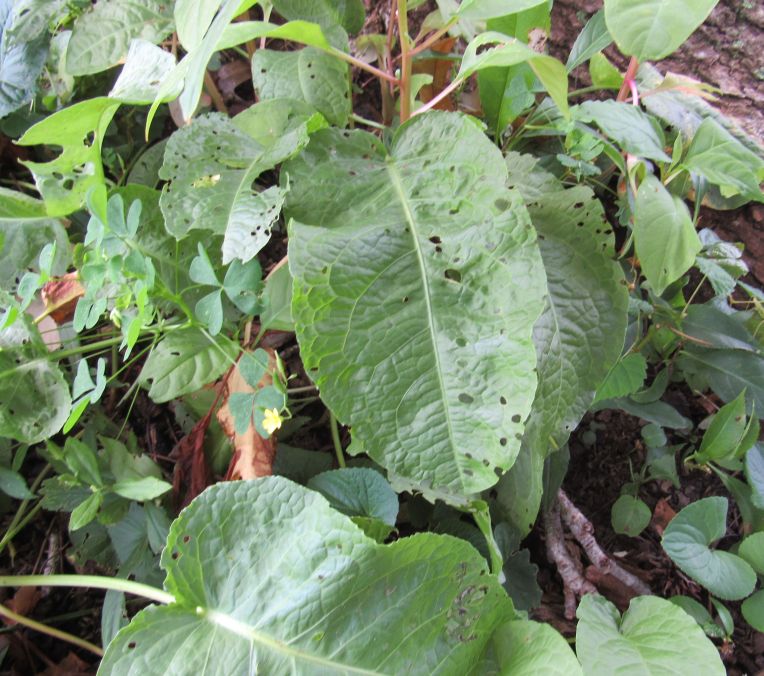
Here is bitter dock, or broadleaf dock. This plant is native to Europe, but long naturalized in North America. Bitter dock can be a host to the American Copper butterfly. Some creature has been feeding on this, while not making holes in the pokeweed next to it. I have several areas in my garden where I let things grow as they appear. Tall grasses, wildflowers that show up, make little patches of meadow, and these protect dozens of tiny moths and butterflies that feed and shelter in them. You can see moths spring up as you walk through your meadow areas.
 Memories of a Midwestern Family