Old and New Ways of Gardening for Nature

This year I’m getting a great display from this fancy daylily, the variety name of which I’ve never noted down. Now that I’m writing about the garden, I’ll have to be more meticulous in labeling, so I can share that information. 
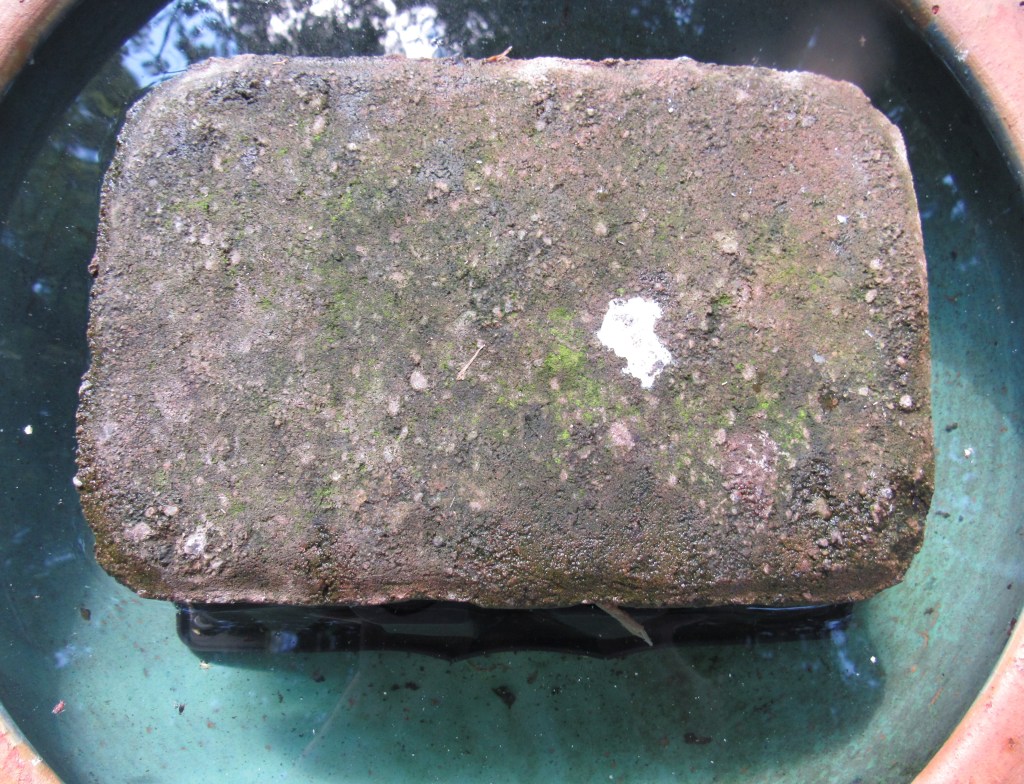
I made this watering place with the first intention of keeping deer away from the bog tubs. I don’t mind if they drink out of them, but they do some clumsy damage wending through my container plantings, knocking pots over. What I have is a ceramic tub, with an upside-down 12-pk of planting cells, such as are used to start seeds, and then a concrete paver on top. One thing I hadn’t expected is that the concrete would saturate. Tiny insects have been landing on top of the paver and drinking from the surface. With an arrangement like this, mosquito larvae can be dumped and the tub refilled.

With the bog tubs, and their mini-ecosystems, I don’t do anything about mosquitoes. The tubs only support about two inches of water above the accumulated soil mass, and the sparrows pick the larvae out of the shallows to feed on. Birds we like, swifts, martins, our endangered migrants, orioles and warblers, etc., eat mosquitoes, either adults, larvae, or both, and depend on them to a degree.

Did you know that honeybees and wasps drink water? So do several other beneficials.

Now, going back to the 90s, when I started gardening, the organic world still touted pest control as an unquestionable thing. If you saw caterpillars, you wanted them gone—as you were taught. The magazines featured pests of the month and how to eradicate them; the catalogs that sold organic supplies offered poisons to kill insects, chemicals to destroy fungi…in those days, even glyphosate was sometimes recommended as a herbicide. Little rings containing Bt, bacillus thuringiensis, were and are sold to place in tubs and ponds. Bt is fatal to moth and butterfly larvae; there is not much evidence that it kills bees, though adults drinking water from Bt-containing ponds must be thought to carry it back to the hive. [From Bee Culture magazine, a good survey article on mosquito control and threats to bees.]

Aside from changes of water, duckweed is another poison-free method for controlling mosquitoes. If you wonder what’s wrong with duckweed, other than aesthetics (I think it looks fine, myself), it consumes oxygen at night, and can deplete a pond where fish are kept (but in rare circumstances). On the other hand, goldfish and koi will eat duckweed. If you have a large pond, an aerator will keep the surface too choppy for the mosquitoes to lay eggs, and aerators that run on solar are easy to find. 

And since we don’t know what’s drinking out of our water features, and we want to supply water to as many creatures as need it, no kill methods, leaving out even treatments said to be organic, are best.
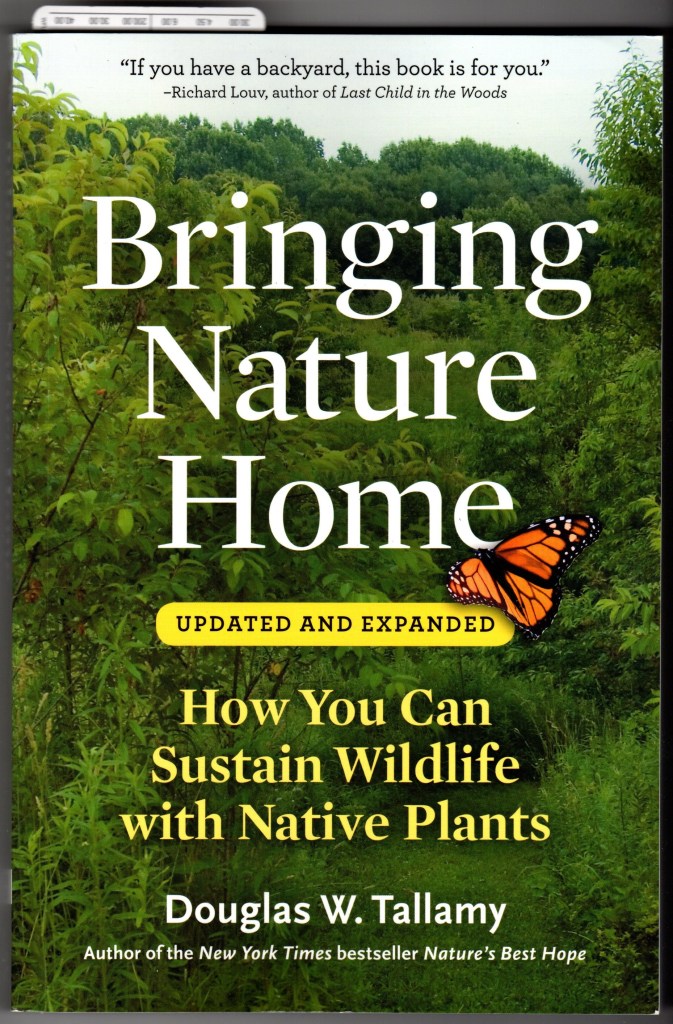
A book I’m reading, and recommend, if you want to make your backyard a habitat. The author explains both why and how to design a native planting scheme, which you can adapt to your preferences and inherited plants. (I’ve written about my callery pear, its good, bad, and weird points. But it belongs to the yard, and the wildlife gets a lot of use out of it; the huge oaks, however, are the real anchors to my patch of the natural world.)

Tallamy’s contention is chiefly this: that each of us who has a piece of this land is already empowered to link it to a national habitat, each little patch doing its work to sustain what America no longer has the human-free areas to guarantee without our help.



Bargain Time

I have a Baptisia australis in my front border that has bloomed only once, and sparsely. It needs to come out, but not until fall, when I can dig without trampling good flowers. I also have some lilies in containers that are in their second year, and will have to be moved because they’ll have used up the fertility of the soil. So what do we do in June, when we anticipate gaps to be filled in October? Shop the sales!

Don’t get bargain fever, but snap up anything you know you’ll want. Above are two rudbeckias, a meadow sage, a foxglove, a papyrus, two balloon flowers, and a campanula, that in total I paid $37.98 for. The rudbeckias and foxglove (which appears to be three individuals in one pot, anyway) can be divided into threes, and the sage looks like it can make two. Wherever I choose to plant them for summer growth, I can later move any of them into the front border, or my larger containers. 

You’ve probably seen various techniques for dividing plants, but let me share the easiest. Get a bucket of water, unpot your perennial, and swirl it in the water until the roots are clear of soil. Cutting it apart with scissors can be done then with precision, and the roots are well conditioned to spread in their new location. 


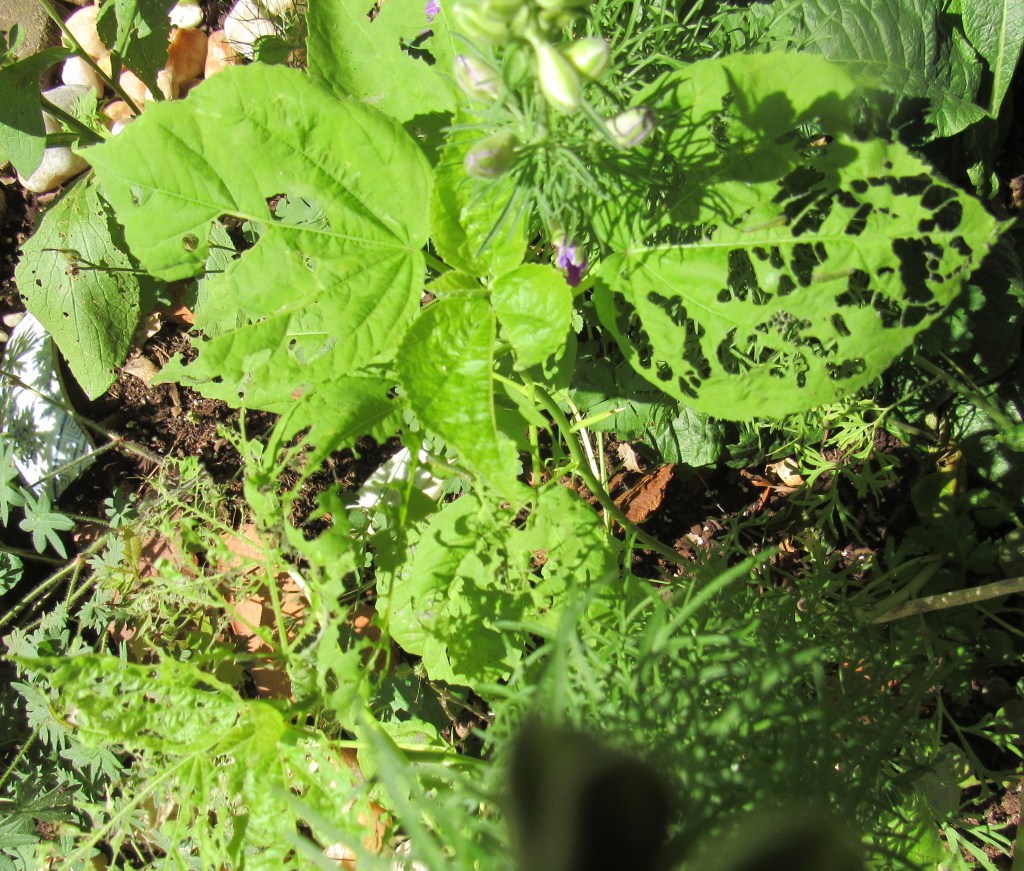
This is always the fate of Hibiscus. It looks like there are enough good leaves for the plant to overcome being eaten and flower. Hibiscus are easy to grow from seed, so let the caterpillars thrive for the songbirds, and start some new ones when you need to.


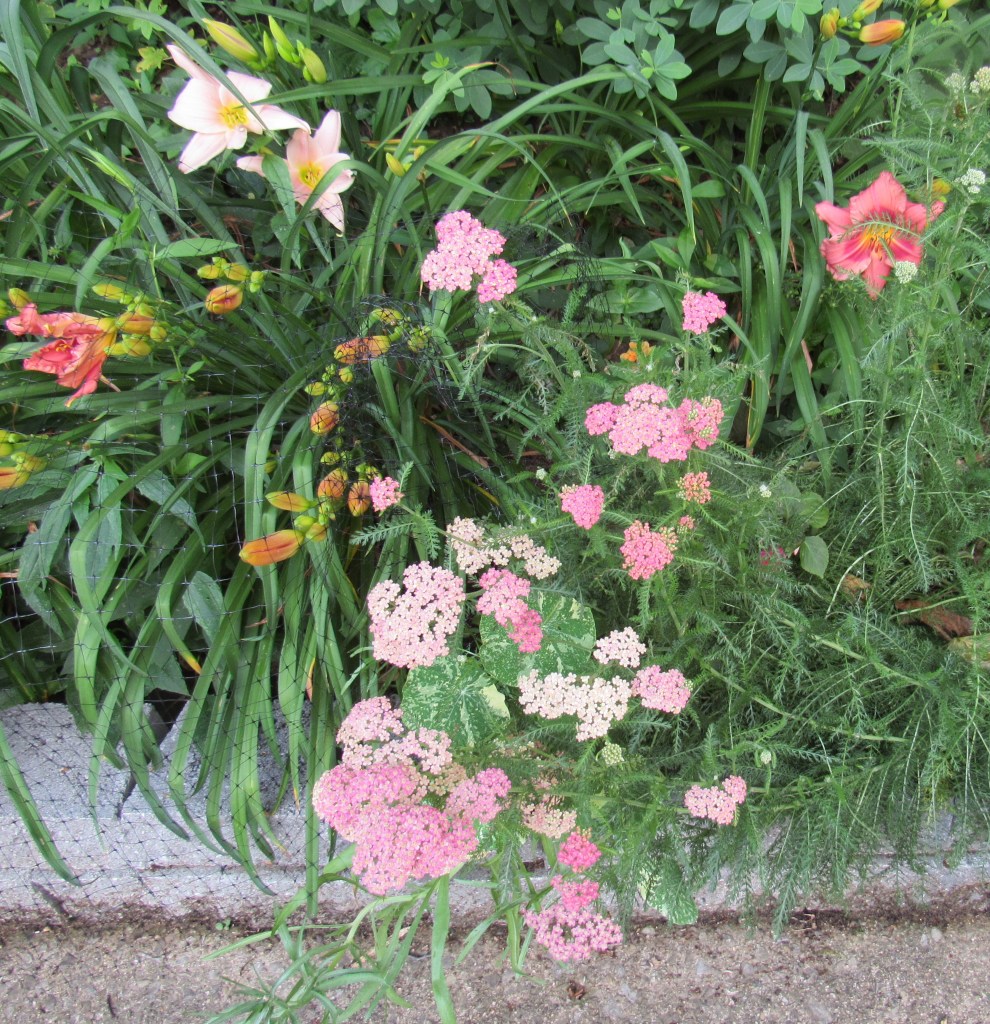
A section of border flowers (and some of the deer netting, that needs tweaking up every day, so it doesn’t stop the blooms from opening). The yarrows are coming out naturally in this suite of pinks.


Fantastic nicotiana that can’t really be captured by the camera. It has this brick red on the outside, and purple on the inside, so that from the right angle the two colors together make a neon effect.


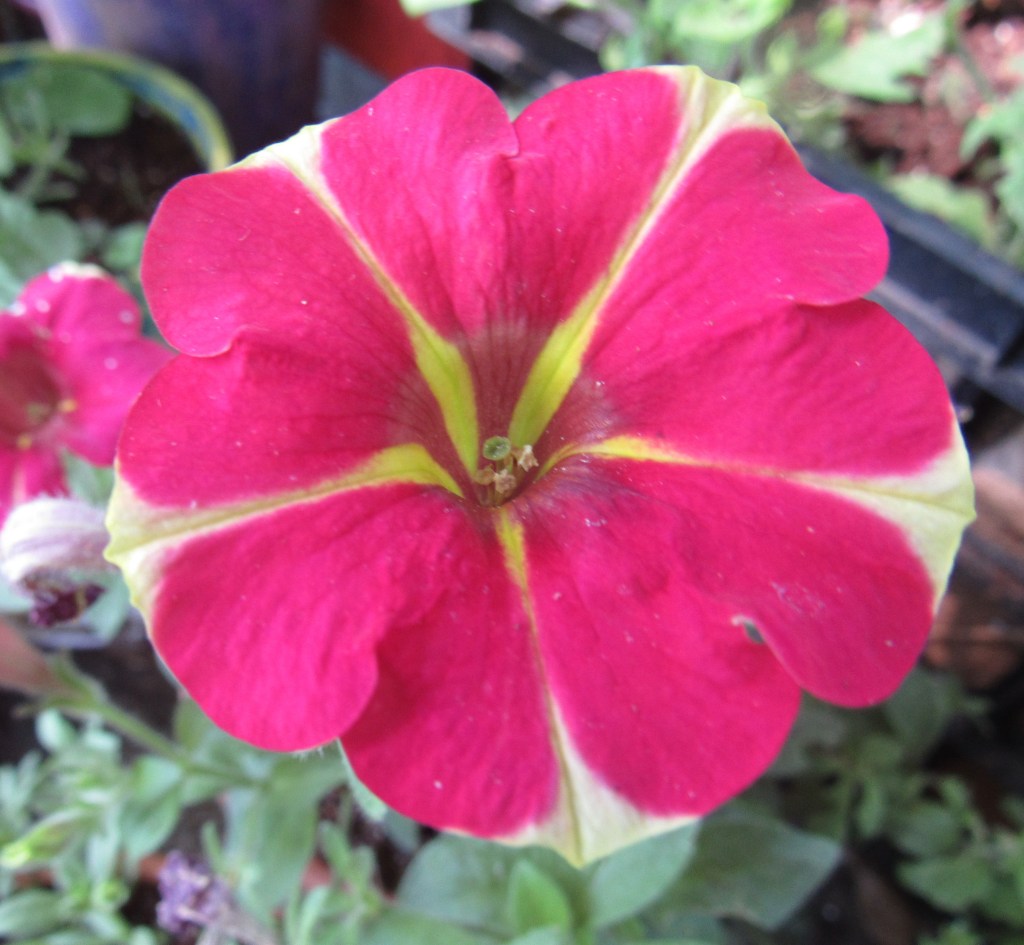
Petunias seem perfectly symmetrical, but they do have a right-side-up. At the base of the fused lower right petal is an extended marking to guide the bees.
 

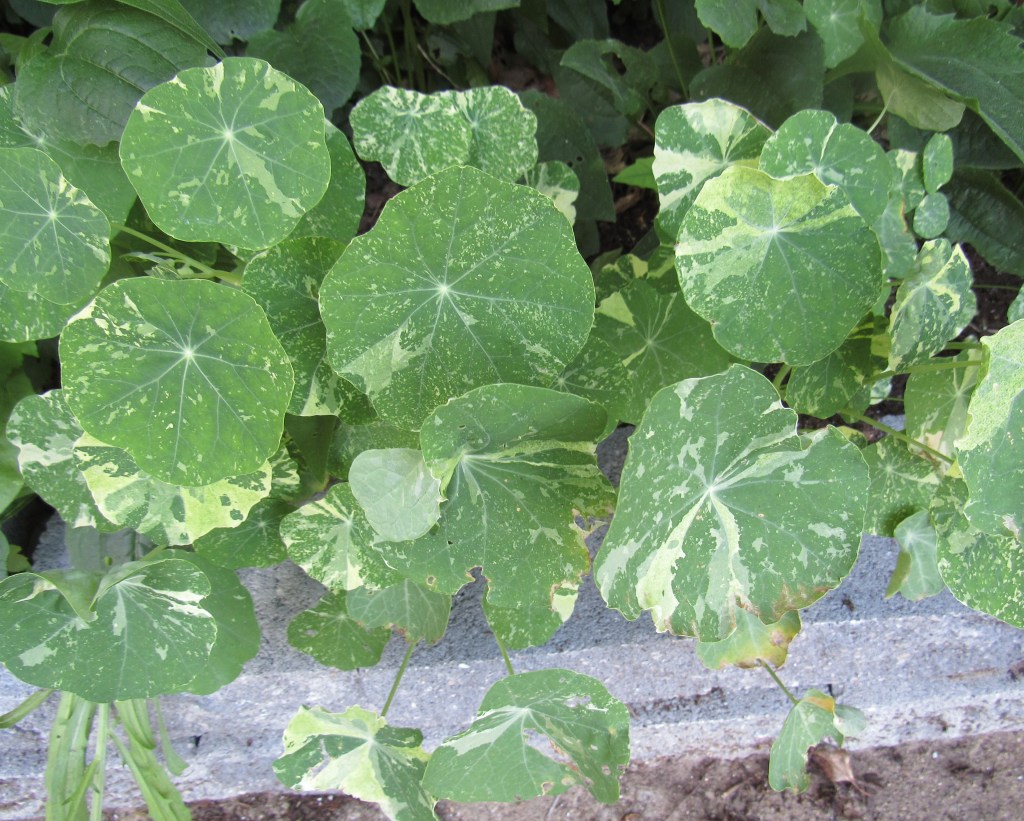
Alaska nasturtiums doing what I want them to, spilling over the block edging, which looks very distant thanks to the camera’s forced perspective. 


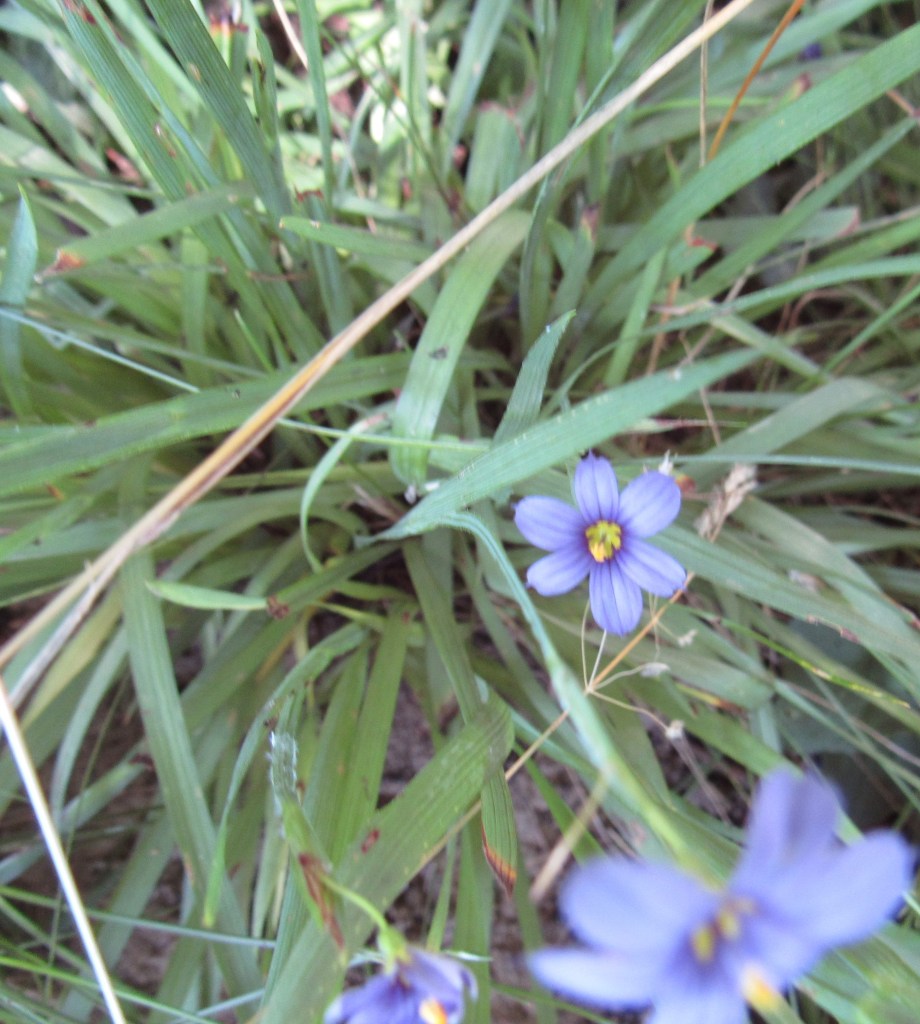
A close view of a tiny wildflower, abundant in my lawn, Blue-eyed grass (a type of iris).


Wild garlic, one of the natural arrivals in my deer area. The new plants are all ready to go, as soon as the seedhead breaks up.


Mid-June Blooms

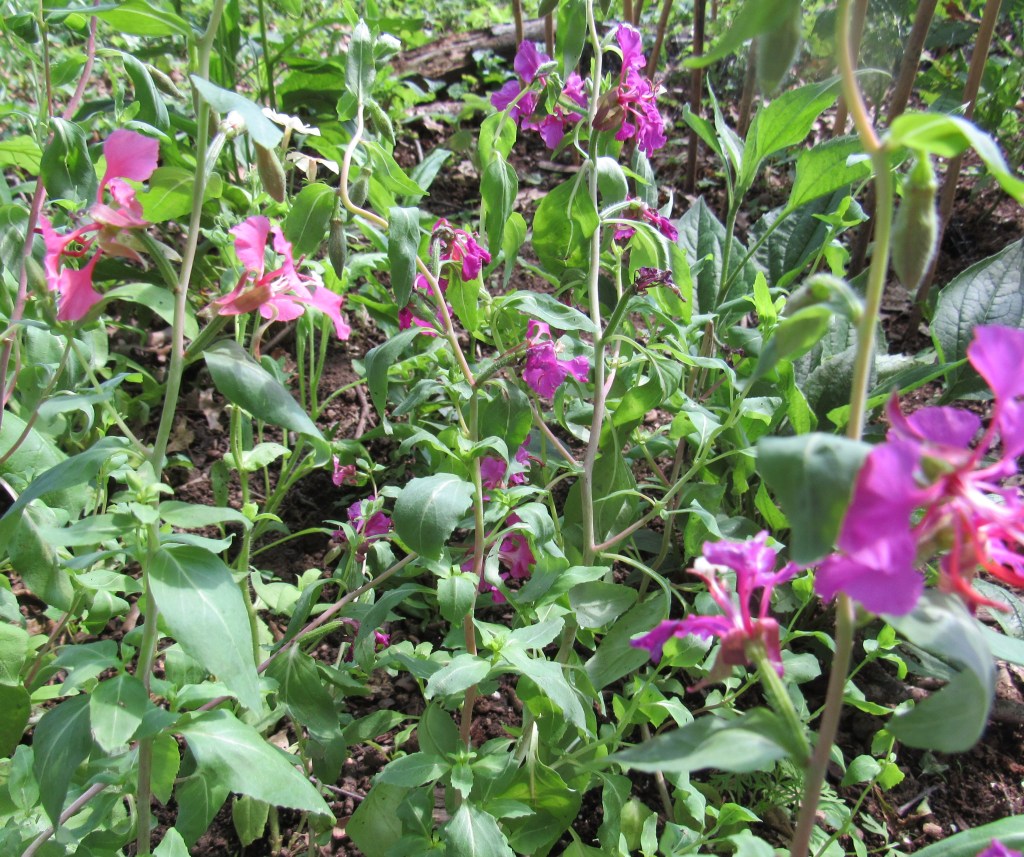
An annual I’m trying this year, Clarkia, related to fuchsias, that blooms in shades of pink. This variety I grew from seed is spacier in petal/sepal configuration than the cup-shaped flowers usually seen. The leaves and stems have a little of the succulent appearance of impatiens. 


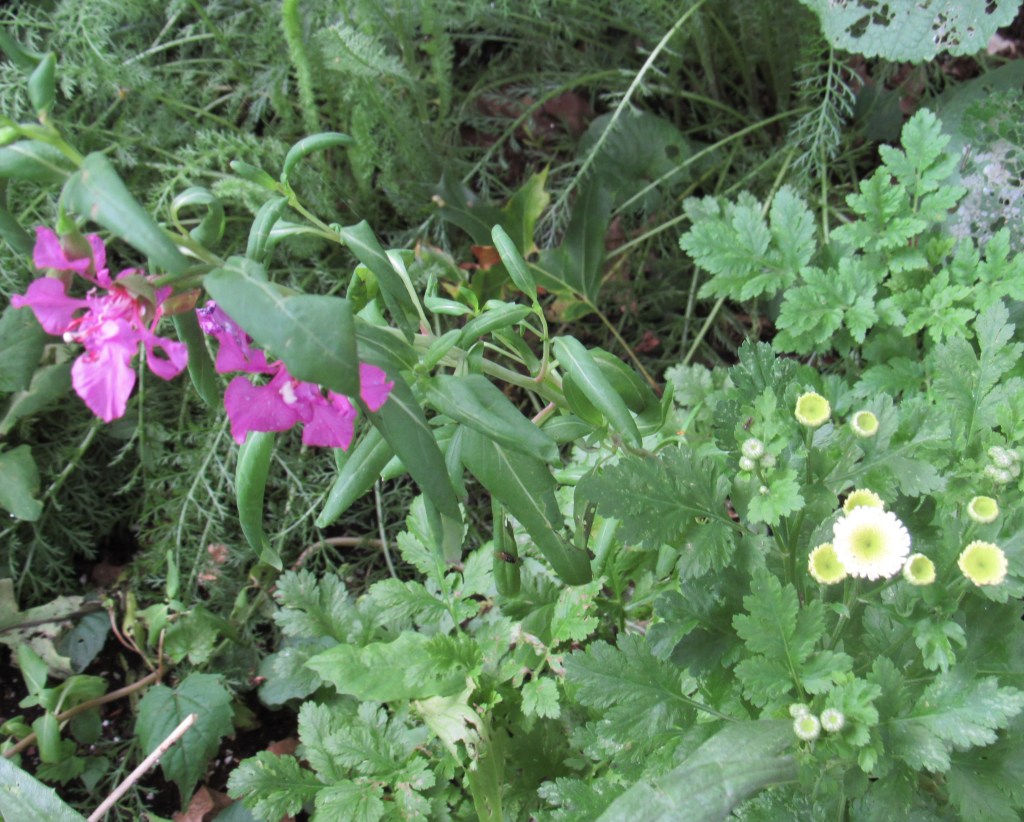
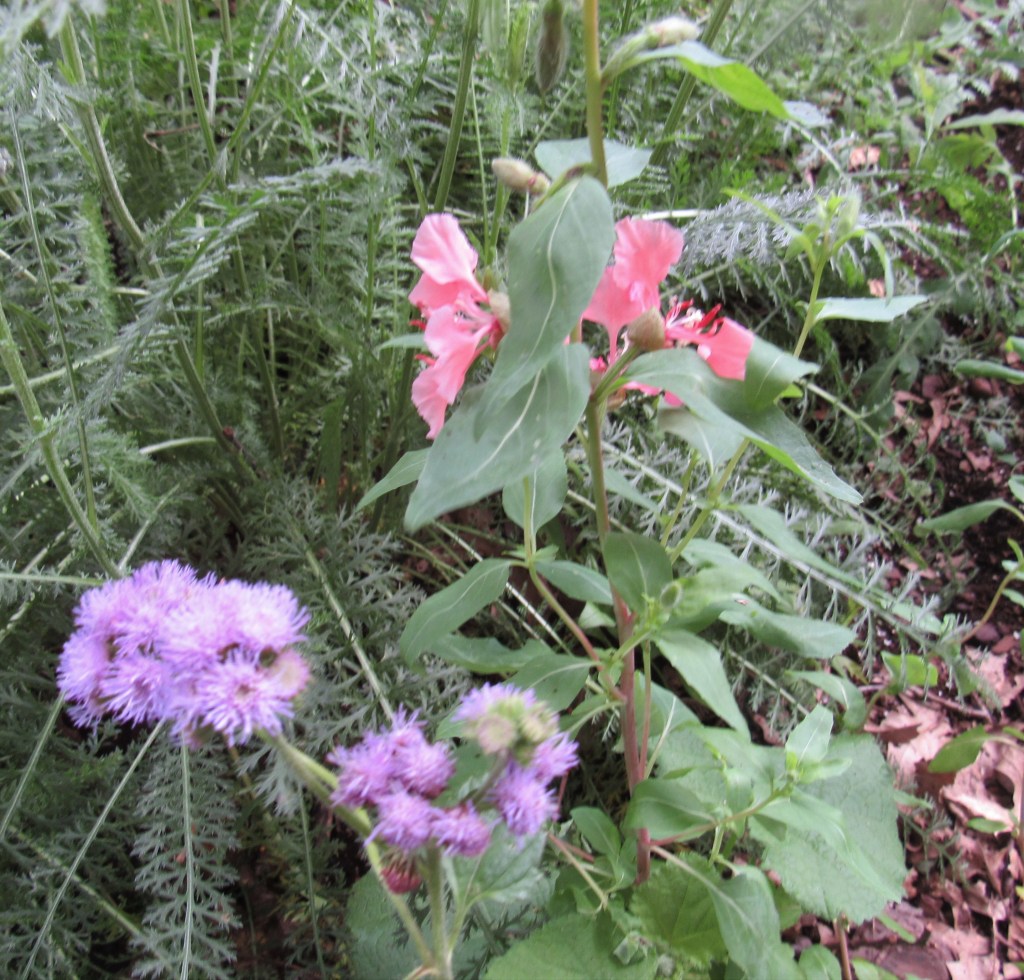
The combinations above are really pretty in person, though the camera didn’t quite get the colors true. Feverfew’s ferny leaves and pale yellow buttons seem to accent any planting well, especially contrasting with magenta. And then the blue of ageratum—bluer than the photo suggests—is the perfect match to salmon pink.


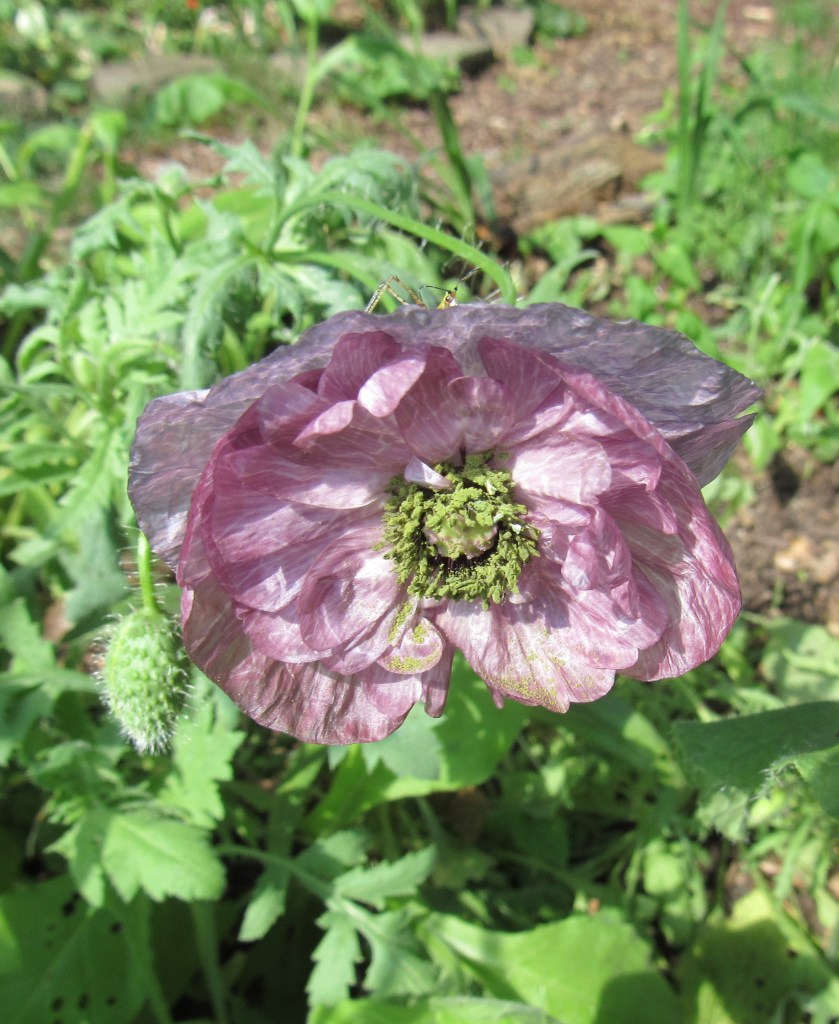
A delicate Shirley poppy, with a small grasshopper sneaking into the picture.


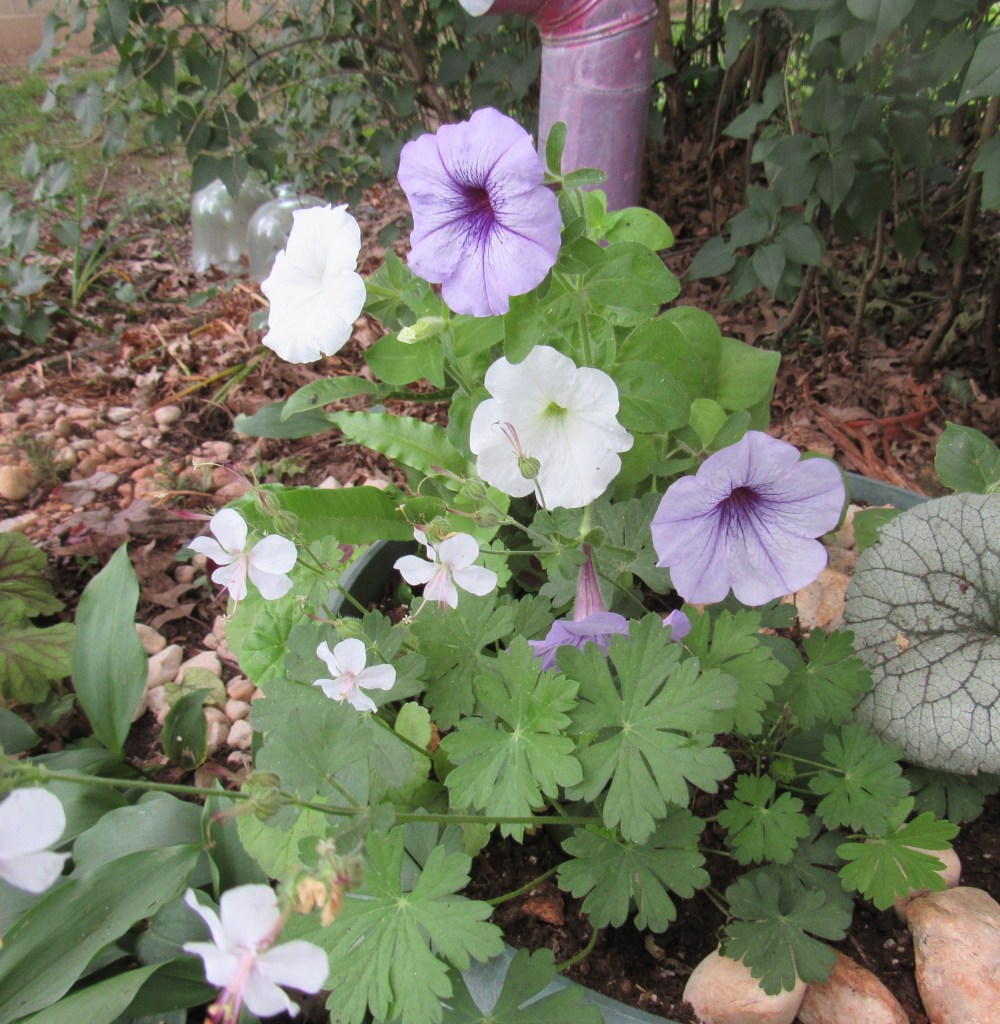
A nice effect of petunias and geraniums. Petunias grow most happily in pots, because slugs love them so much,  petunias as bedding plants are likely to be tattered to death.


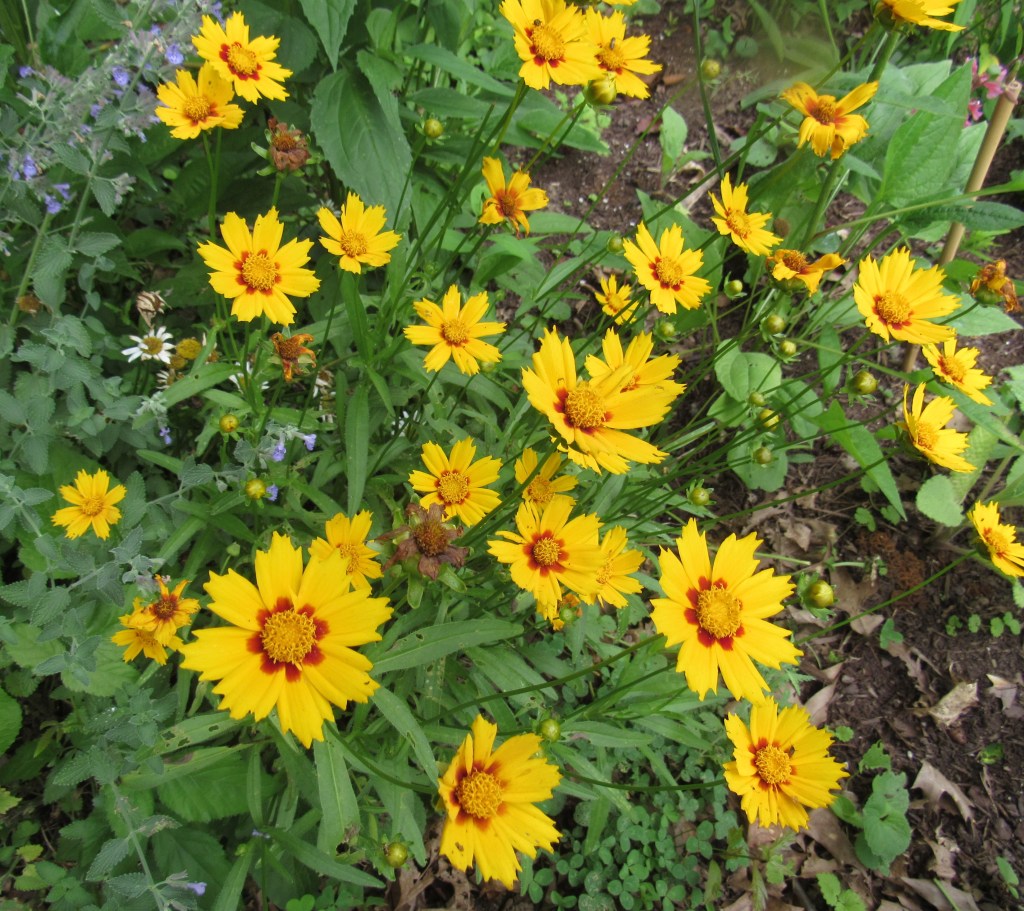
Coreopsis in its second year, after being started last year from seed. I’ve never had much luck with coreopsis, when I’ve bought it as a plant. It blooms the first year, but perennial label notwithstanding, it usually disappears by the next spring. So seed is probably the way to go.


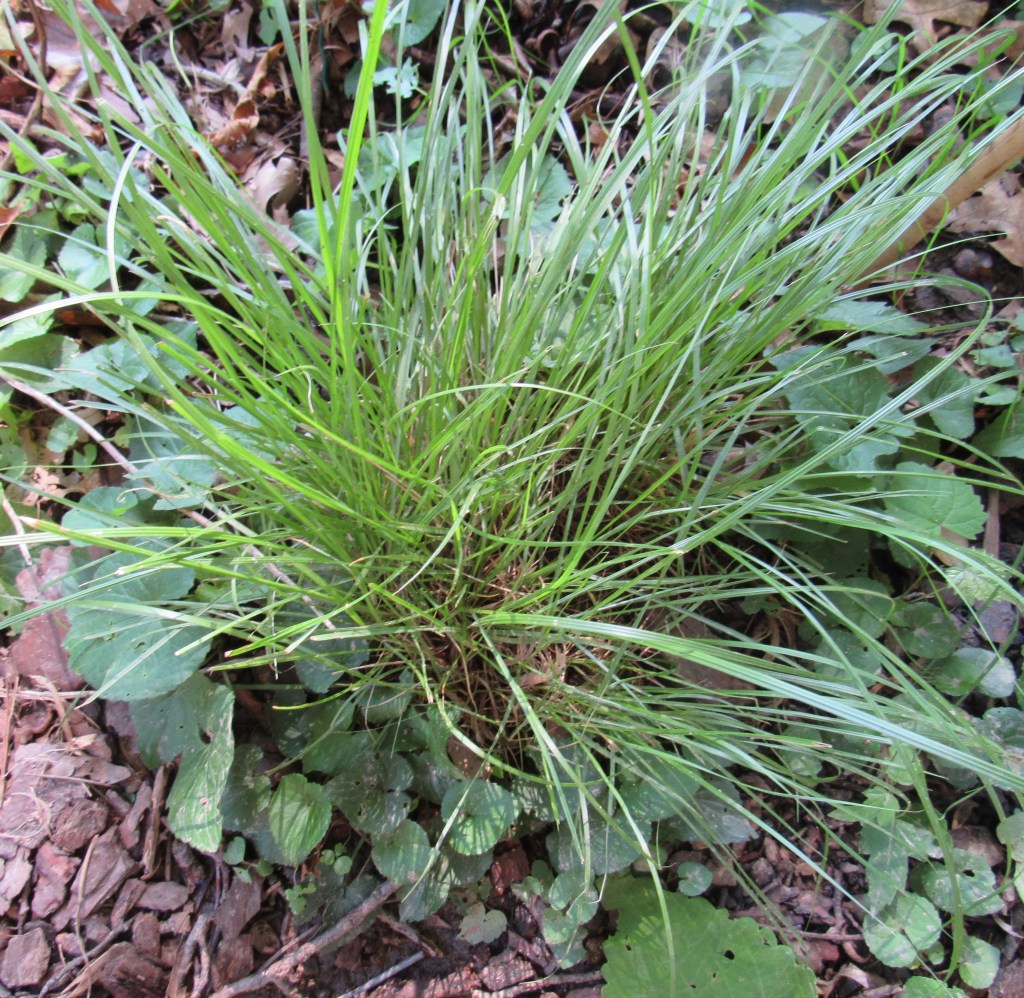
A design tip from nature. This grass, that my cats like to eat when I walk them on their harness, has come up in a collar of violets. I can see possibilities: blue fescue surrounded by primroses, red pennisetum surrounded by forget-me-nots…


Bugs and Beauty

Above, a close shot of a goatsbeard flower. If you have one, it is either male or female, and so won’t reproduce by seed unless you have the right combination of two. That trait is called dioecious. Another member of the rose family, which goatsbeard belongs to, is the apple tree. Most varieties of apple need a mate to produce fruit. The goatsbeard is native to North America, and the flowers attract their own population of tiny insects, that I couldn’t quite bring out in this picture. Whatever they are, the ladybug larvae have been hunting them.


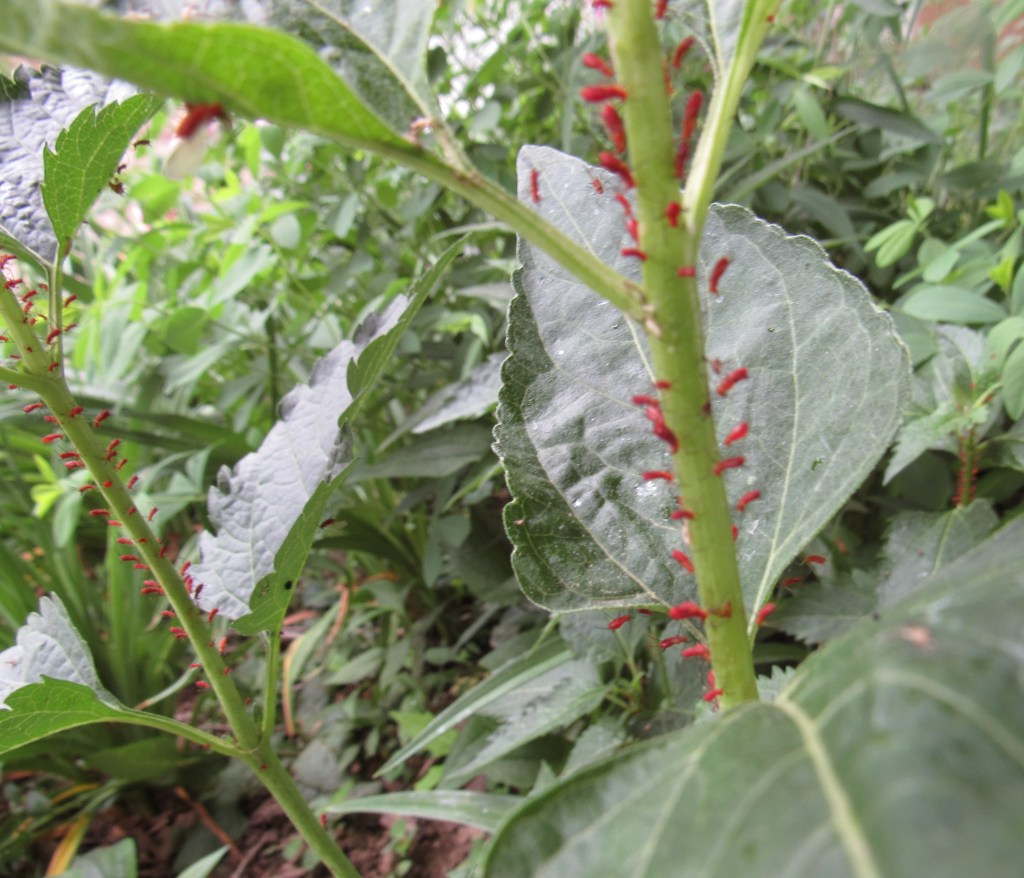
The strange red aphids above have been all over my heliopsis. As you can see, they attach themselves to the stems in a regimented way, and sort of float (on a too-tiny-to-see mouthpart, I presume). What I do about aphids, is let them be. I’ve seen yellowjackets, as well as ladybug larvae, eat them. These days, when all of nature is precious, our rule should be, Lose the Plant, Save the Planet. In fact, most afflicted plants won’t die from bugs or funguses…and if a plant can’t survive in your garden, you can find plenty of others that will.

A barn owl is said to catch as many as a thousand voles in the months raising its young. We love owls, and we don’t love voles, but it stands to reason the voles have to be there if the owls are going to thrive on them. Caterpillars that skeletonize leaves also feed migrating songbirds, and the moths caterpillars turn into feed bats. And that’s the natural order of things—prey comes before predators. When our yards can support wildlife, the creatures will arrive, but in the meantime we have to allow insects and rodents. 

Post-WWII, the suburban dream was a strange mishmash of perfect green lawn and tidy backyard vegetable plot. At the same time, suburbanites were encouraged to scorn rustic details like fences. If animals have only the choice between chemically treated grass, or flowers and tomatoes, of course they invade the garden. For decades the industry-touted solution was more chemicals, or other “kill” methods, that an organic gardener never needs to employ.

Another important rule is: Recruit Small, Fight Big. We don’t want to harangue fellow gardeners, who have at least one foot in the battle with us; we want to fight for laws to preserve and protect Planet Earth and commitment to their enforcement. 


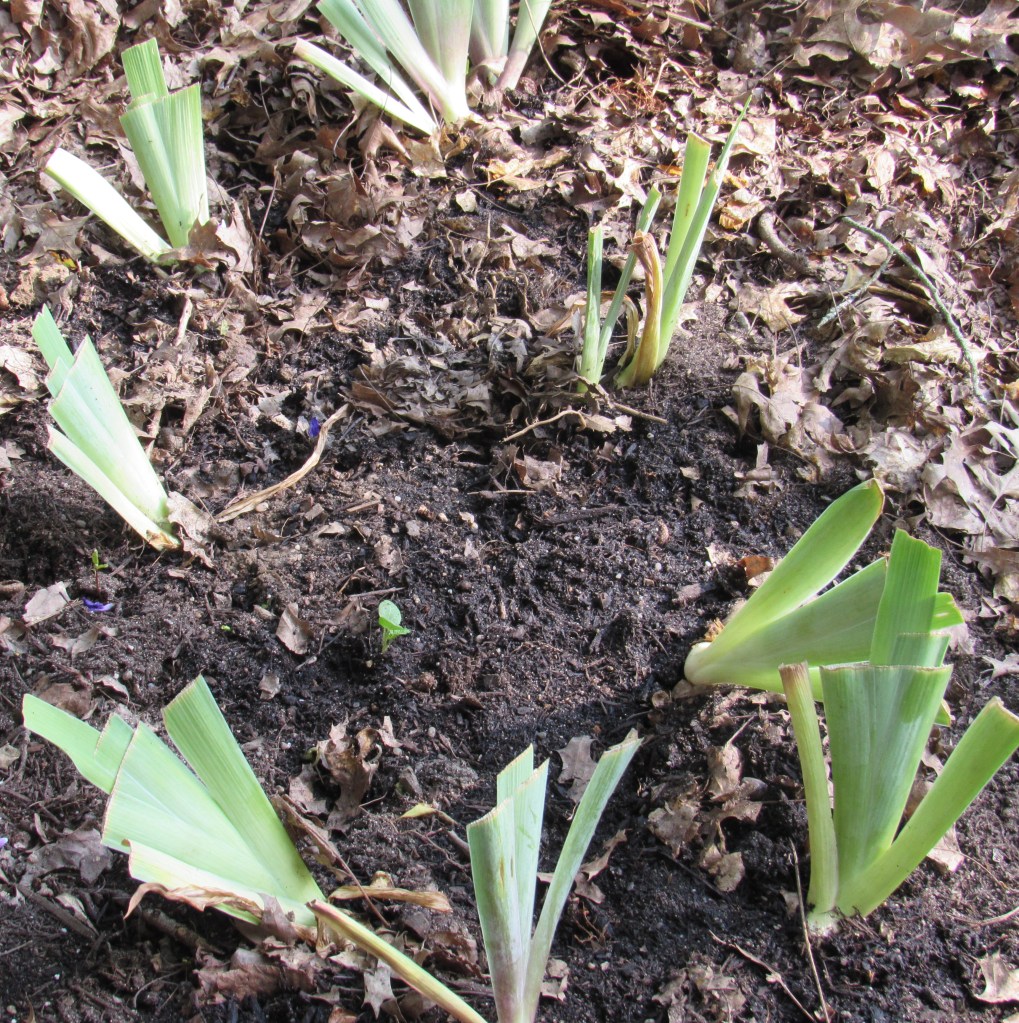
Here are the irises I mentioned last week, dug, separated, trimmed, and replanted in a sunnier spot.


And here’s what’s taken their place. Raccoons have been nasty diggers this spring, so I’ve been buying bags of egg rocks (about five dollars each at Lowe’s), and strewing them in the vulnerable spots. Except for the primroses I divided and stuck in here and there, all I’ve put in are annuals, red impatiens and a lantana. That way I can decide if I want a different perennial in this bed next spring. 

I’ve seen, at least once, a garden writer tackle the theme of excess perfection in magazine and catalogue pictures. The above is a true-to-life view of new plantings in hot weather, a little sparse and a little droopy. But since mail order nurseries are using the pernicious star rating system these days, it’s worth thinking about unrealistic expectations, the way that a permissive environment for returning anything for any reason infantilizes consumers. Plants are alive, and under assault when we put them outdoors. Patience and resourcefulness help, also the constant acquiring of knowledge; also a philosophical view. We gain a lot from gardening—all the entertainment of setting a thing in motion and seeing how it plays out—but plant by plant, we don’t always win. Maybe it would be better to show the spots and yellowing, and aphids, and heat wilt, and deer chomping…


Little Garden Events

In this interesting May 2021, we’ve gone back from high summer heat to chill, just when my furnace is out. I’ve been putting up with bundling indoors, since the season’s wrong for having the repair done. If anything was wrong, I wouldn’t know until fall.

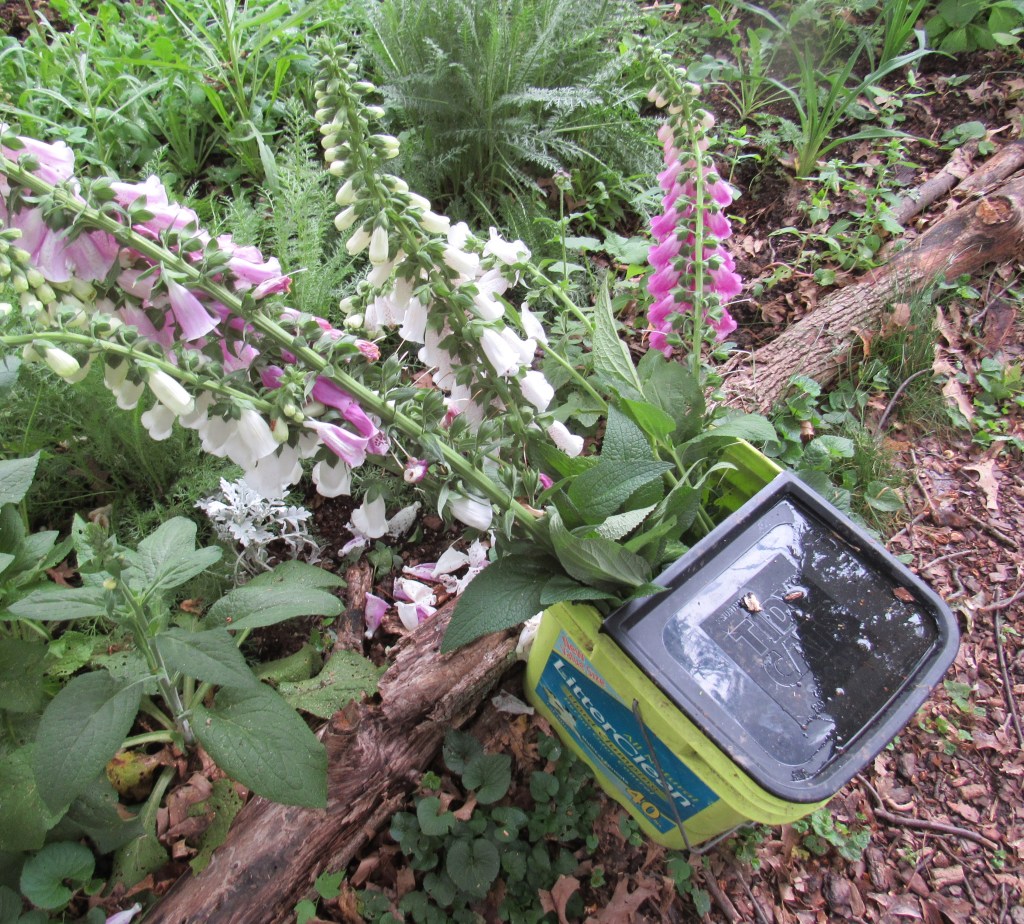
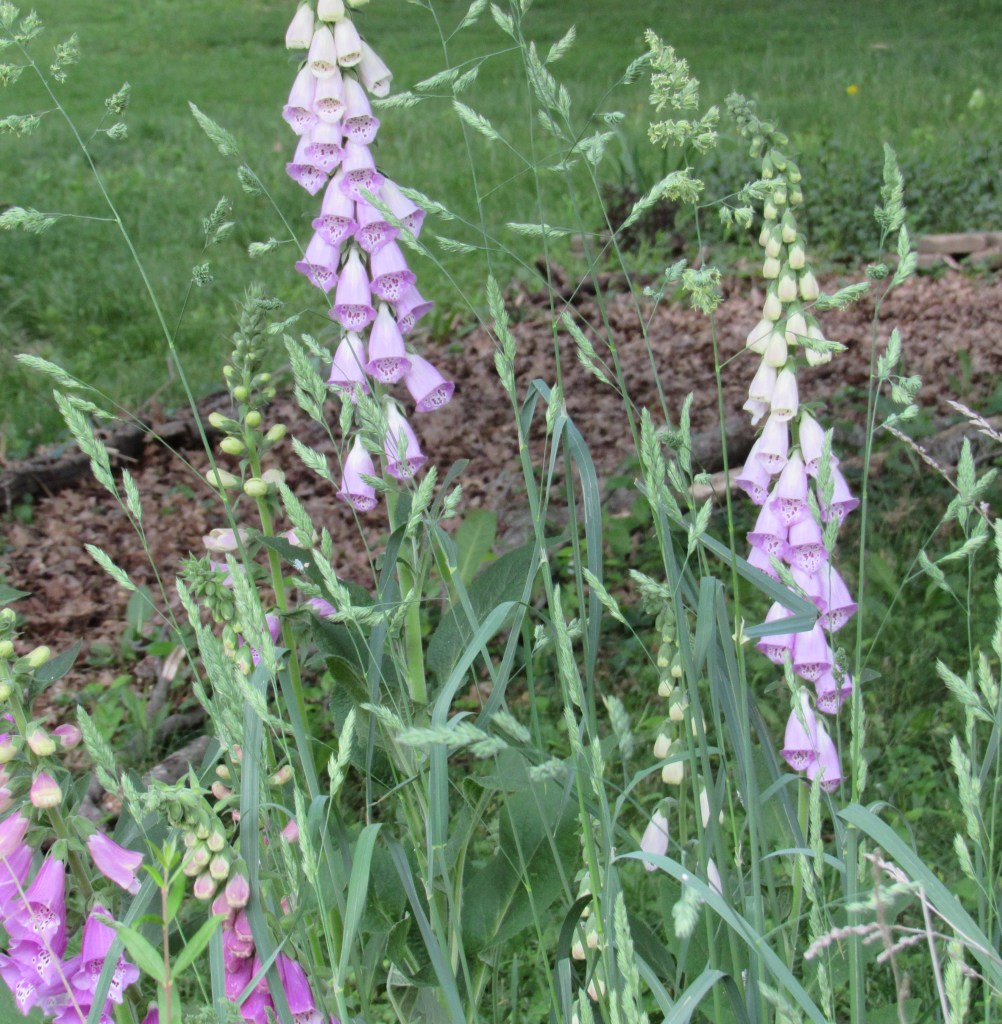
We had a good wind this week, and a number of my five-foot-tall foxgloves got bent over. The flowers are still opening, and the bees are still pollinating, so I don’t want these inside; also, of course, I don’t want my cats bothering them. The flowerheads are finishing their lifespans in this bucket of water, with the half-lid to keep creatures from trying to drink. The seeds should fall into the bed, so I can redistribute my new plants next spring.


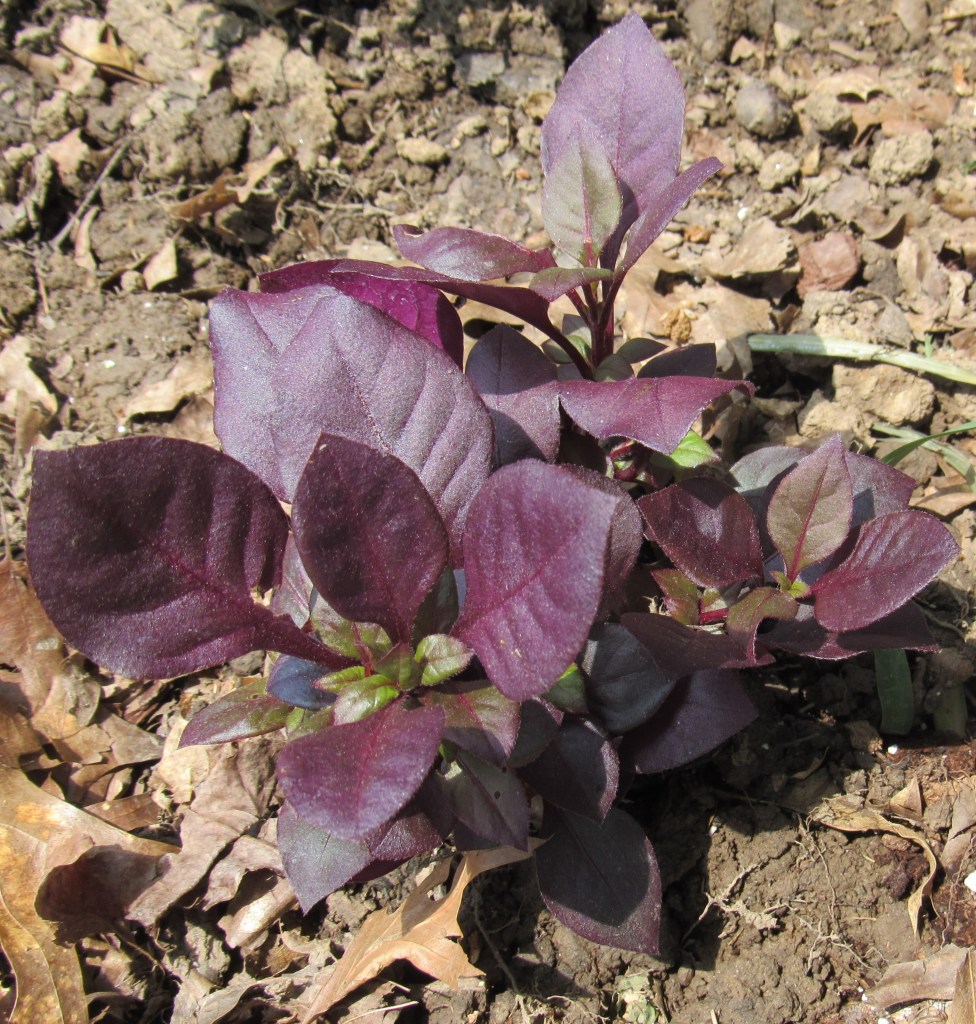
This is a new one to me—not to many, I’m sure. It’s called Alternanthera, and I picked up a couple, since I always like groupings with different foliage colors. 


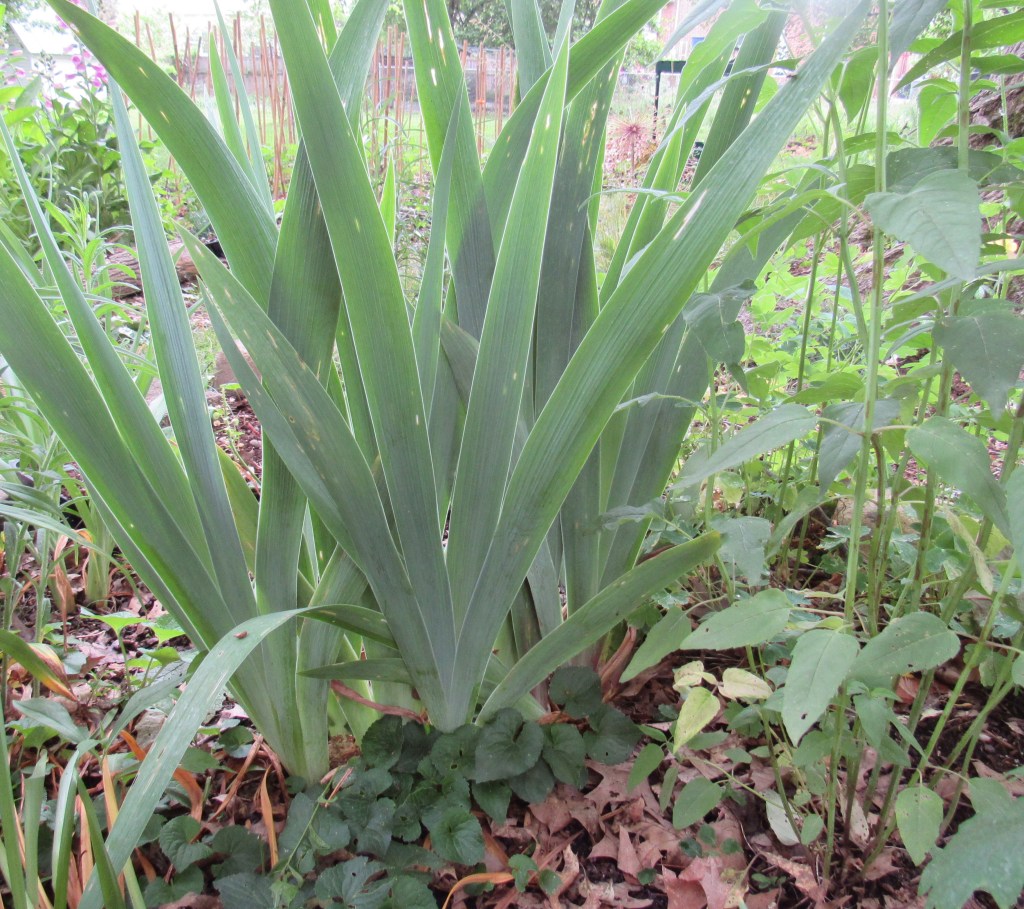
A stand of seriously crowded irises. No surprise they aren’t blooming. They need digging, dividing, and put in a new, sunnier location. Then I’ll have a gap in the bed to fill with something, a problem no gardener minds.


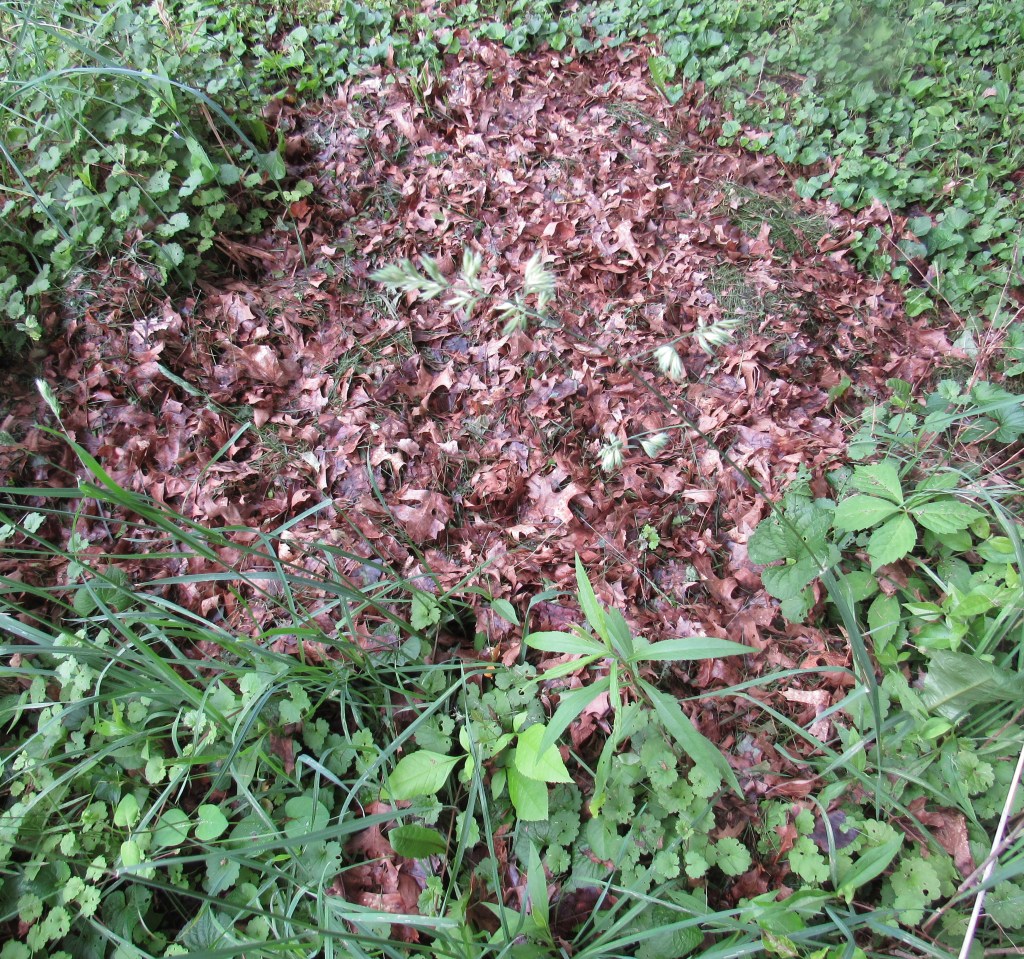
This is how I make a new bed. I pile lawn clippings from the mower bag, mixed right now with a lot of leaves. Then I let them form soil through the winter, and plant the following spring.


Two views, above, of the weirdest gall I’ve seen so far. Those are not drops of water, but blisters. The foamy stuff is not really foam, like a spittlebug makes, but in consistency like cooked egg white. And, as is obvious, the leaves are severely warped. I found it on the ground, and I tossed it behind the rhododendron after I’d taken its picture.


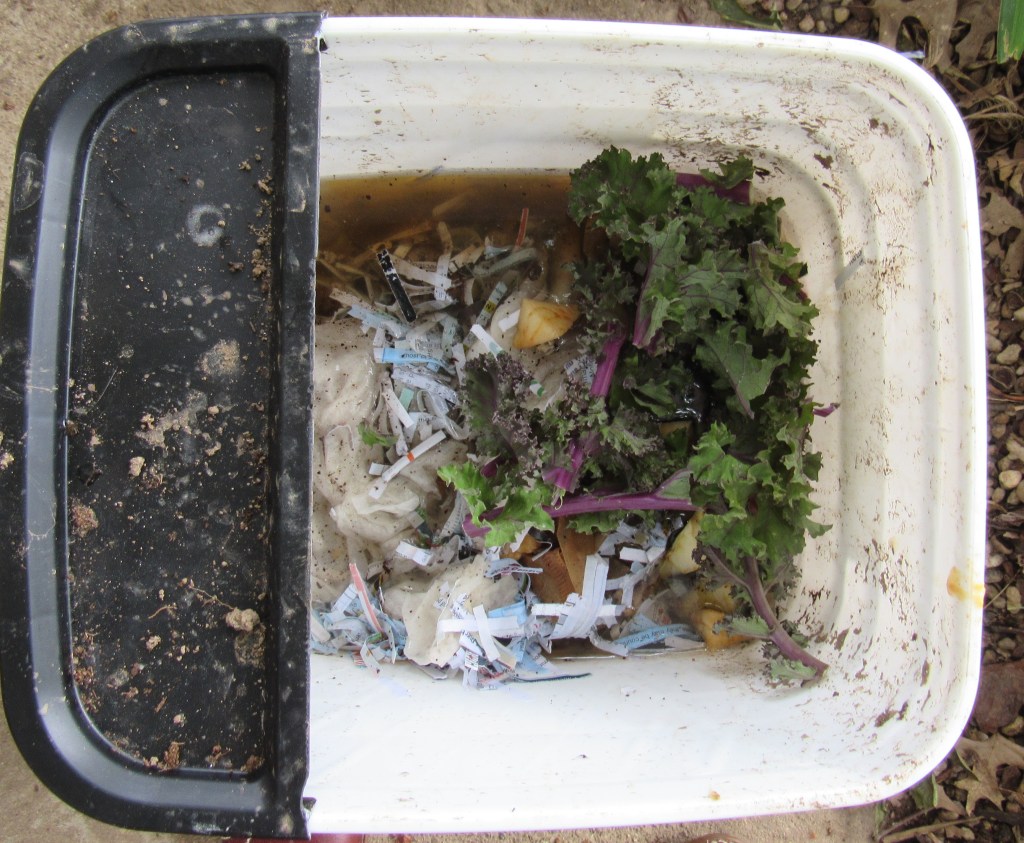
A composting tip: If you keep a kitchen bucket to toss scraps in while you prepare meals, keep a larger bucket in the garage, part-filled with water. Here, as shown, you should drop your used tissues and paper towels (no bacon fat), and small amounts of shredded paper from the junk mail. Add your veg scraps at the end of the week, and dump everything on the outdoor compost. (Adjust these instructions if you have only a patio or balcony and no garage.) Paper will transmute into garden feed easily, if it starts out soaked, while timely dumping means the bucket won’t smell. 


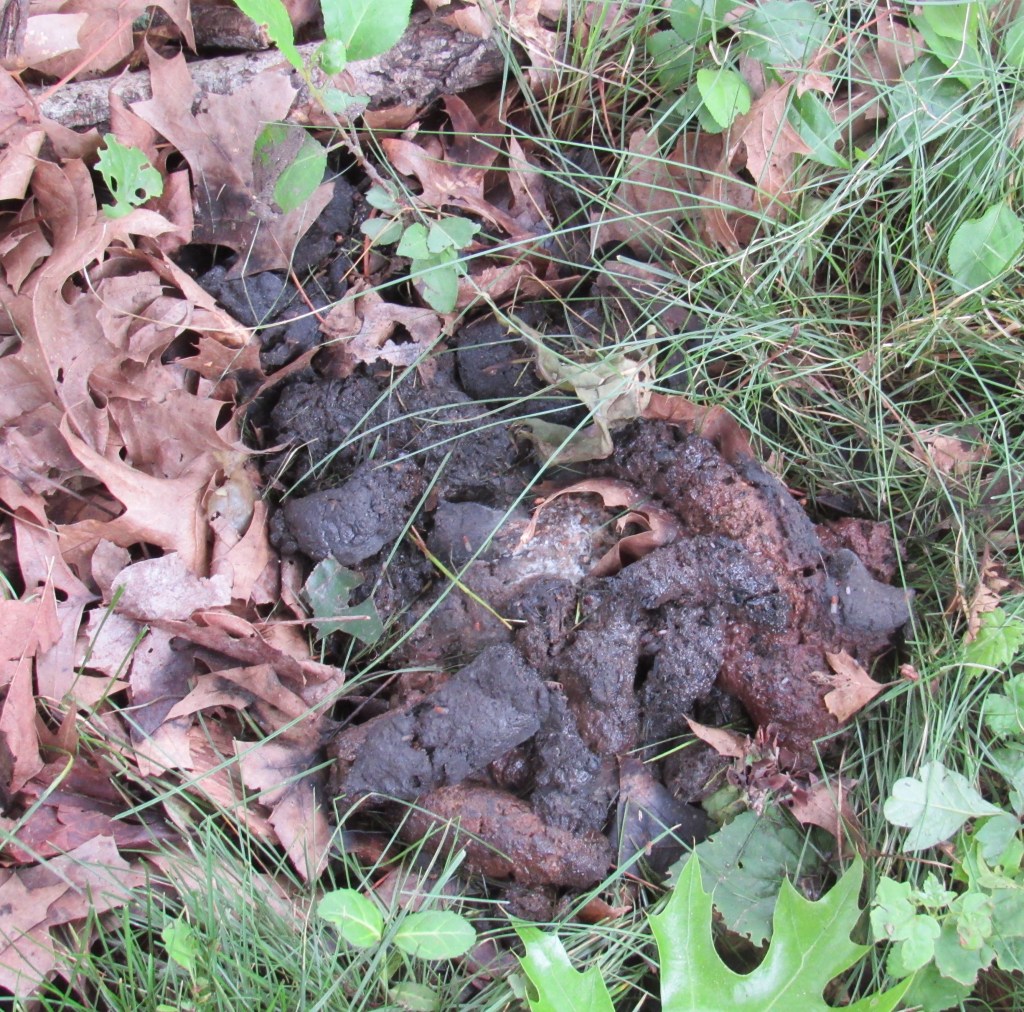
I found this expansive pat from some creature, and doubted it was a deer. In truth, I’ve seen this kind of thing before, but I’d never given consideration to bears. In Southeastern Ohio we can have black bears, but we typically don’t, at least not in numbers to be spotted by homeowners. The proof is inconclusive, but it makes me wonder. I’ve been experimenting with putting apple slices out for the deer, in hopes they’ll eat those and not my plants. Maybe not a good idea!


Effects

The coleus, in this bed where almost everything has variegated leaves, has the same red, yellow, and green as the heuchera (variety Electra, I think). Coleus are the easiest plants to start from seed, grow from cuttings, and store indoors through winter. So, for next to no money invested, you get the design impact of far more expensive plants.


The last issue of Garden Gate magazine talked about growing hydrangeas in pots. That seemed like a great answer to me, for this big pot that can accommodate a lot more root than a handful of annuals produces. First, note another good pairing with coleus, in this case almost an exact match in leaf shape and size, and burgundy to contrast with green. Second…I didn’t know when I planted the hydrangea that its flowers echoed the rhododendron’s in the background so well. But here are two shrubs that should mesh together nicely.


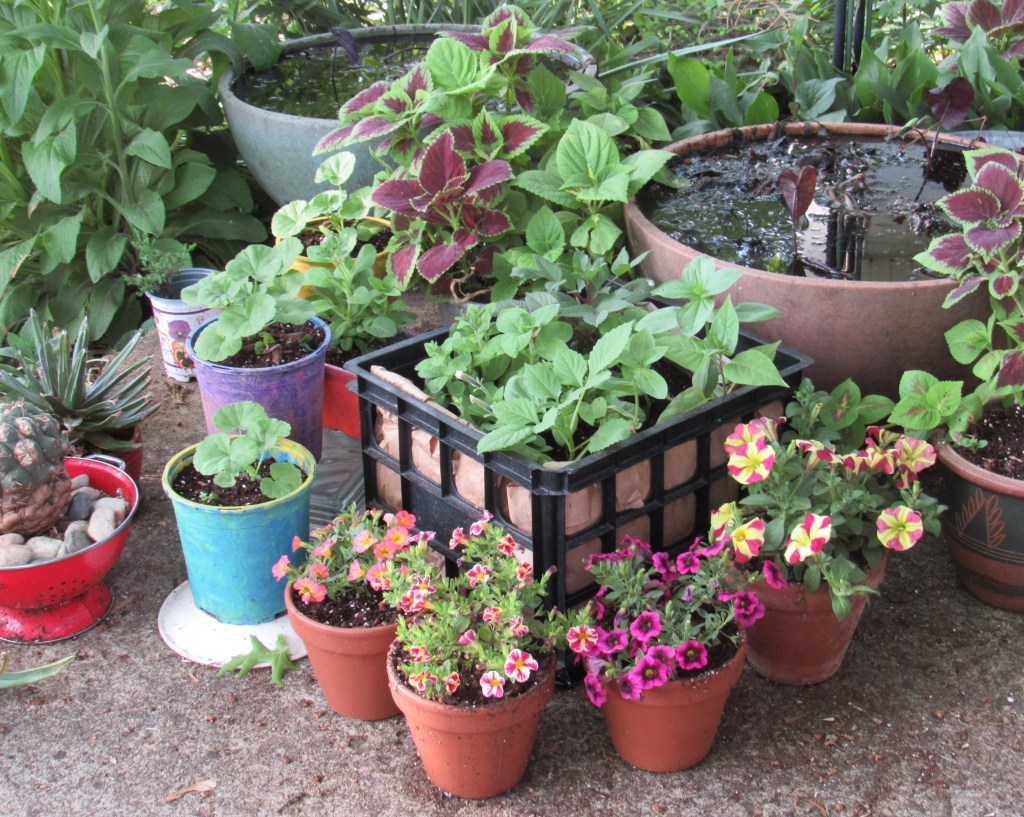
This year’s pots. The blue and purple ones are throwaway nursery pots, decorated with craft paint. It’s a way to keep plastic out of the environment, and I recommend painting pots as a waiting-for-warm-weather March or April hobby, and as a usual practice these days. Not just collecting pretty ceramic and terra cotta, but building your stock with repurposed plastic. Think…if as few as a hundred people did six pots each, that would be 600 pieces of plastic out of landfills, roadsides, waterways..

Meanwhile, the crate lined with paper is just a notion of mine. I’ll see how it works… And as to the annuals, the calibrachoa and petunia, I love pinwheel flowers, so these were great finds.


Meadow plantings are hot, but it’s worth noting that a meadow is a type of plant community created by human agricultural practices, from grazing livestock in fields, and from mowing. Meadows and their combination of grasses and flowers are easy to love, great for birds and insects, but there’s no set-it-and-forget-it aspect to maintaining one. You might like the effect on a small scale, making miniature meadow plantings among your beds. If so, mix in grasses, and in everything, look for sway…flowers with nodding heads that dance in the wind. Above, some grasses and foxglove, then a stand of catmint with daisies (the always good blue, white, and yellow combo); finally, some tall yellow columbines, with iris, monarda, and goldenrod.


The advice is always plant in threes. But I like the effect of one bright red flower in a bed of mostly pinks and purples. Primrose, as above, is good for spring, zinnia or dahlia for summer, and a peony or rose can stand out among shrubs.


Planting Out Week

Photo of backyard border bed

Last week, we were in the gloom; this week, serious spring has settled in, with temperatures forecast for the eighties in the coming week. Here is a view of the bed I showed a couple of posts back, when I talked about how many plants it takes to fill one. I now have it fully stocked with annuals: poppies, Centaurea, Scabiosa, sunflowers, Tithonias, ageratum, feverfew (a perennial). With luck, Clarkia and annual phlox, but I’m growing them for the first time, so I can’t be sure until they flower. Mostly choices that are deer resistant. (And one really lonely allium, that got included by mistake with the daffodils.)


Photo of vegetable bed protected from deer

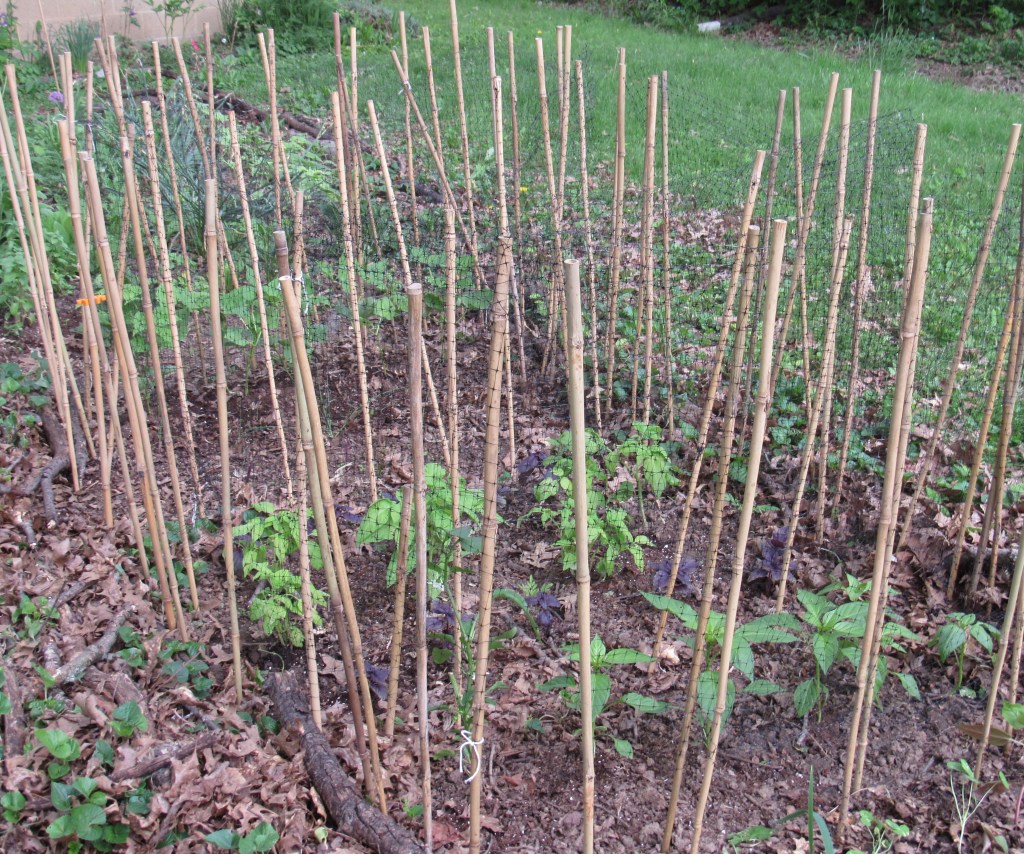
This is the way I’m experimenting with protecting my vegetables. I’ve never been able to grow many edibles, because of the deer, but that’s been partly my not wanting to construct fencing. I may yet need to make metal grid fences, but what I have here is a double baffle, a kind of deer discourager that I’ve read about and that strikes me as logical. I have an inside section of netting, strung onto bamboo stakes, then an outside section of additional stakes. The concept is that the deer will try to push their noses in, find one baffle, the outer row of stakes; and if they try further, a second baffle, the inside netting, which confusion leaves them too uncertain of safety to venture more.

Double rows of fencing, spaced at four feet apart, are recommended for this method when you’re making the investment of a serious fence. 


Photo of wild aster foliage

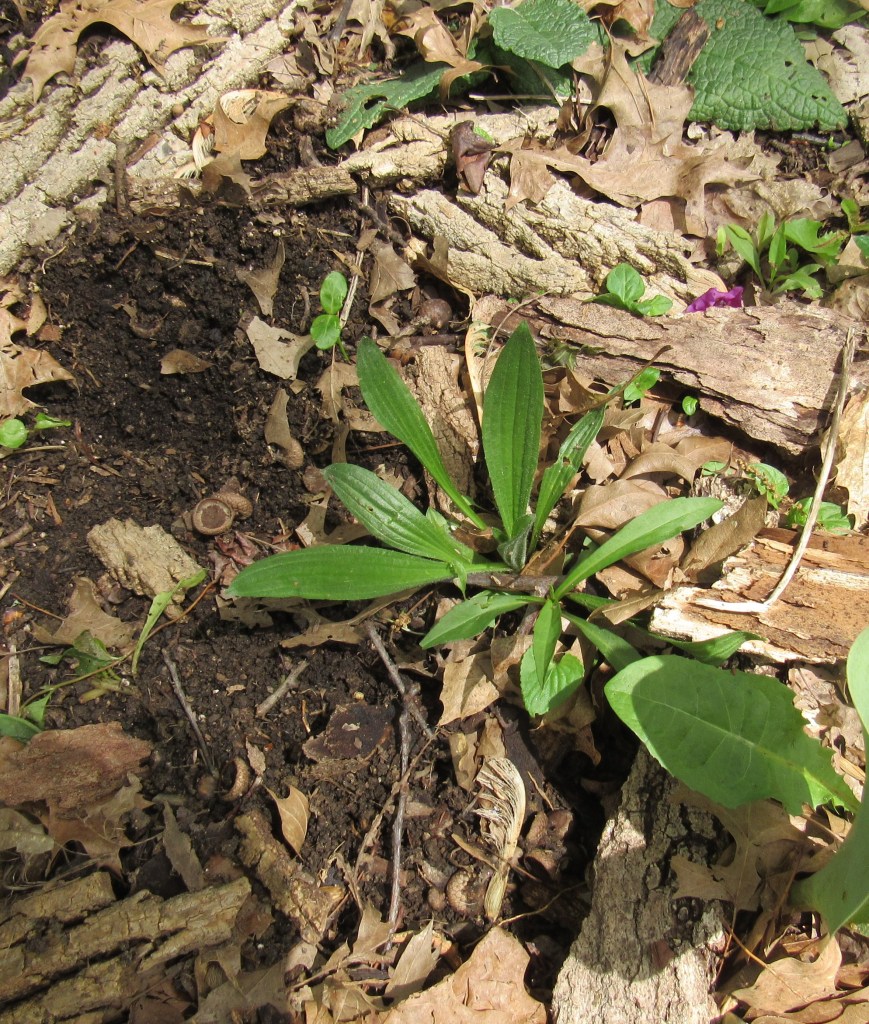
Above, a pair of wild plants that turn up in the garden, and that have elegant, attractive foliage. The first is narrow-leaf plantain, which also will form a sort of ground cover, and has the little bullet flowerheads, that some of you, like I did in childhood, may have “shot” by wrapping the stem around itself and sliding the loop to detach the flower. The second is a late-summer aster. Some aster species have broader leaves, but this one, which will bloom with a tiny white flower, has grassy leaves that look pretty most of the season. Asters are pests as well as beneficial, seeding everywhere, but they bloom when pollinators need them, so are worth allowing (to a point).  


Photo of ground ivy in flower

Ground ivy has a certain charm when it’s in bloom, with its little bluish flowers dotting among the grasses. It was brought to North America by European immigrants, for its medicinal uses, to cure coughs and bronchitis, also arthritis and tinnitus, and a few other conditions. So while we wait for Universal Health Care 😉, try some ground ivy, free and abundant, and good for the insect population in any case. 


Photo of white foxglove

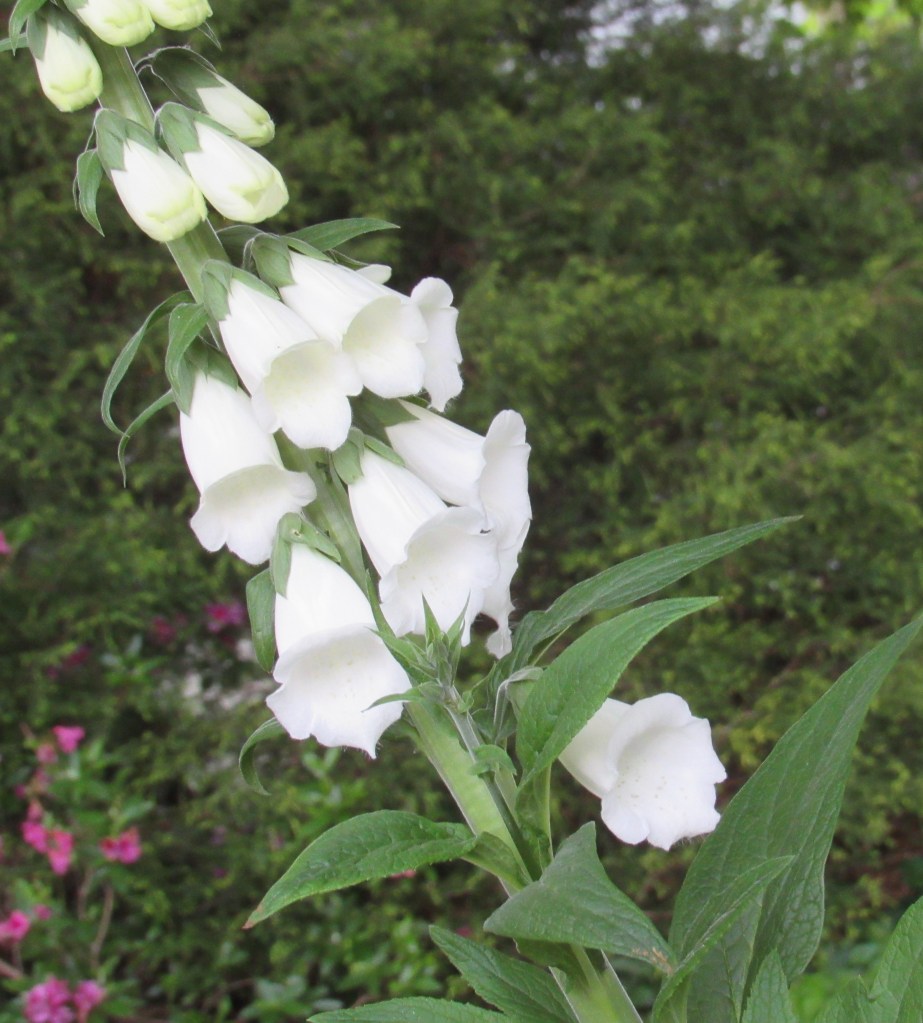
An almost perfect white foxglove. It barely even has spots, a claim the named white varieties don’t seem able to match. I’d have to propagate it by cuttings, since the seeds have probably been compromised already by the nearby pink foxglove.


Photo of clematis flower

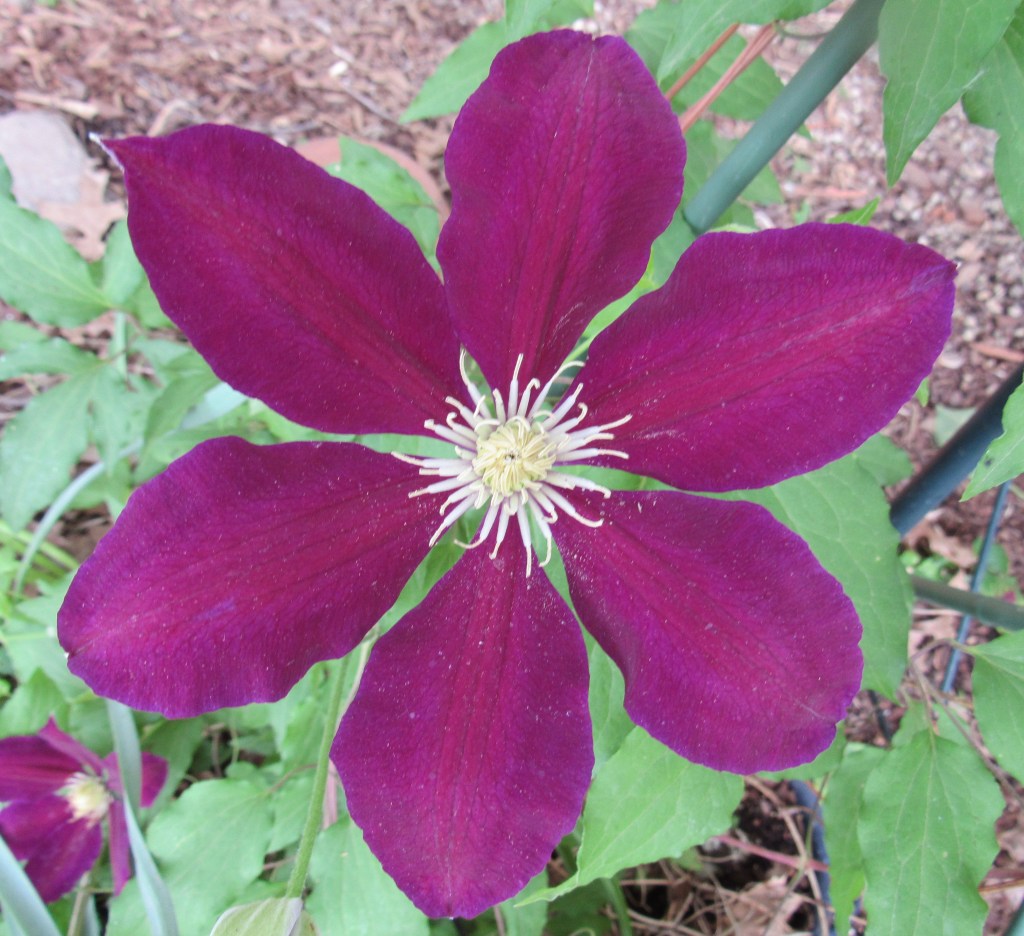
Last year I treated my clematis with bonemeal, and this year it’s taken off, climbing the arbor for the first time. It’s an average jackmanii as far as I know, but the flowers are also coming larger and more burgundy than purple. (The camera gives a magenta appearance, but the true life shade is deeper.)


Photo of Japanese painted fern with green sport

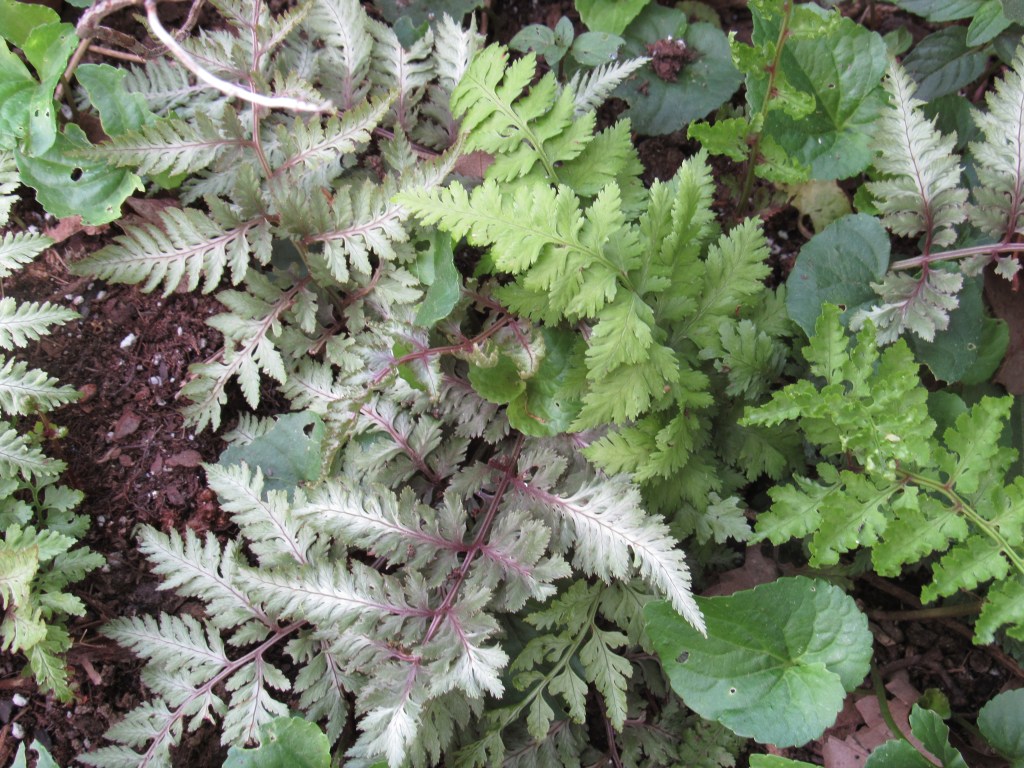
One of my Japanese painted ferns, has sported (in horticulture, a sport is a stem or branch that features a different color or appearance from the main plant). Even though it’s a plain lime green, it makes a good-looking “second fern” in its own right.


Things to Notice in the Garden

Photo of backyard flower bed

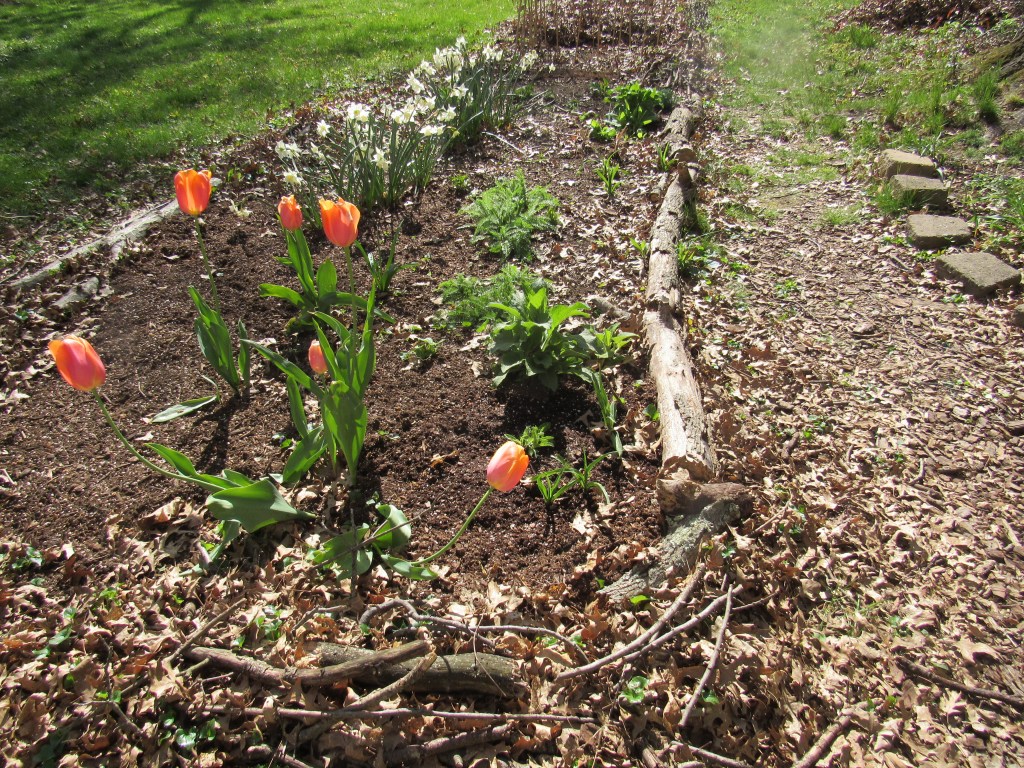
Above, one of my backyard beds, taken April 26. This area so far (so far, because I have a path/bed configuration that goes all the way to the edge of another bed near the neighbor’s fence, but I’m only uncovering the soil for cultivation a stretch at a time) measures roughly 5 feet by 20 feet. Take away the bulbs, soon to be finished, and there are around twenty-five perennials. As you can see, that amount fills the bed sparsely. Whereas, if you went to a garden center and bought 25 plants, at an average price of $9 each, you’d pay $225, with the bed not nearly filled. To get the lush look, even for small beds in yards of ordinary size, you need hundreds of plants.

These are some of the flats I’m hardening off, plants I started from seed, and others from cuttings. And I’ve divided one or two of the mail order plants and local purchases. Seed starting, cuttings, and division (chopping the plant in two, or pulling it apart stalk by stalk, depending on the type it is) are three ways of increasing your store. The fourth is found plants, seedlings scattered near the parent, or gifts from nature. Most of what birds drop into your garden won’t be desirable, but now and again, as with my mountain laurel from last year, a real boon arrives. I counted close to five hundred plants that I’ve amassed for the post-frost-free time, when the garden gets started. And even though that makes for hours of (fun) labor, it isn’t, given the number of beds to fill, that many plants. 

Photo of used up daffodil bulbs to replant

Last year I wanted to dig up some of the non-blooming daffodils (very old ones that came with the house) and free space in the bed where their leaves took up so much. I tried digging and found they were worked down extra deep, almost a foot for some of them. This year I went after them anyway, while I still don’t like disturbing the bed that much. Some bunches of leaves tore away with the bulbs still in the depths, but I harvested several. As you can see, they’re puny, so the lack of flowers isn’t surprising. I’m finding places to tuck them in, at a shallower level, naturalizing them to a degree without committing a lot of lawn to bulbs…though I might well consider that with my fall bulb orders. 

Photo of copper leaved heuchera

I bought three cheap heucheras last year: the variety called Palace Purple. Heucheras can be $20 to $30 and upwards, for the really gorgeous leaf patterns. It was a compromise—to get foliage color into my shade beds at a bargain price. But interestingly, one of the two I have near each other has copper leaves, apparently having a different genetic tendency than it was meant to. Which I count good luck, since it gives me two heucheras in that bed with individual coloring. 

Photo of columbine seedling

Note the seed leaves of this beginning columbine are being eaten, almost from germination, by very tiny leaf miners. I never do anything about the leaf miners, since columbines seem completely adjusted to them. But it’s a good tip to lift any seedlings you’d like to have grow into full-sized plants, and give them a place of their own. In my experience the majority of seedlings at the feet of the parent plant will disappear, and only the ones you give special attention to will thrive.

Photo of hellebore plants

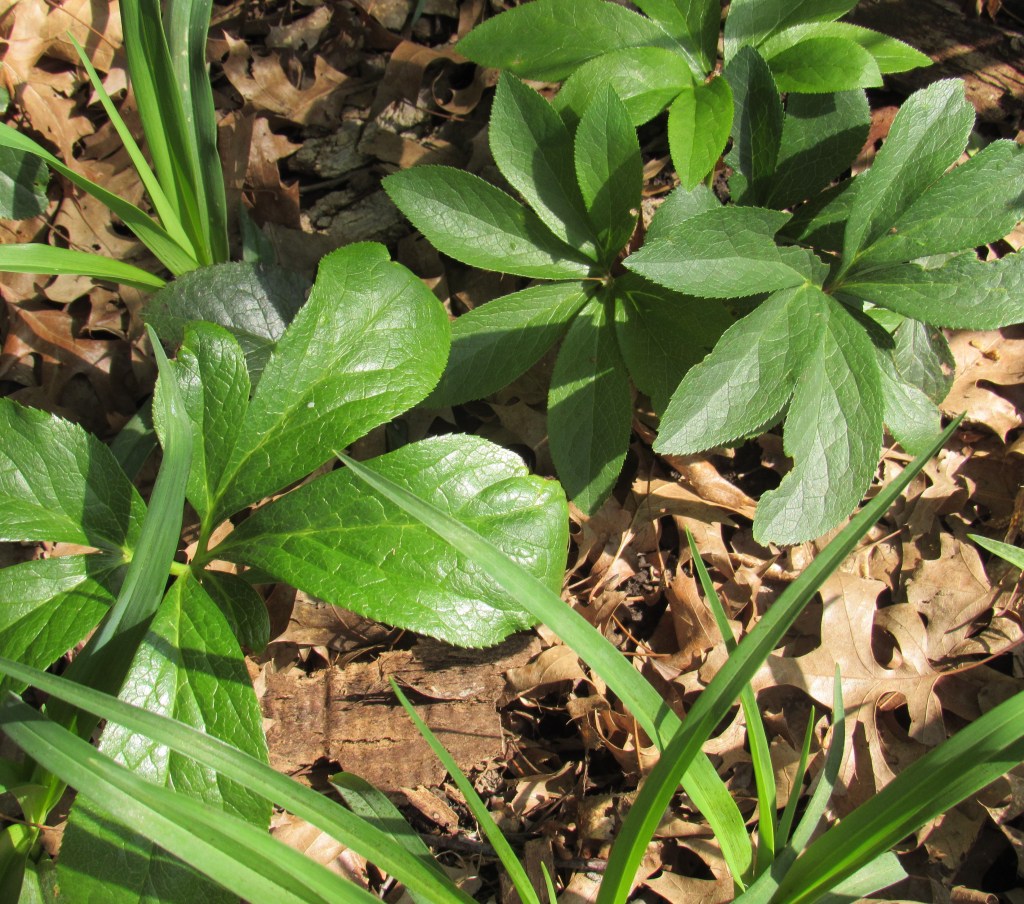
Last year I planted hellebore seedlings that were a few years old, but small. This year they’re taking off, becoming dominant in their corner. Which means about three of the daylilies pictured among them will have to be relocated.

Photo of garlic cloves in tea strainer for deer deterrence

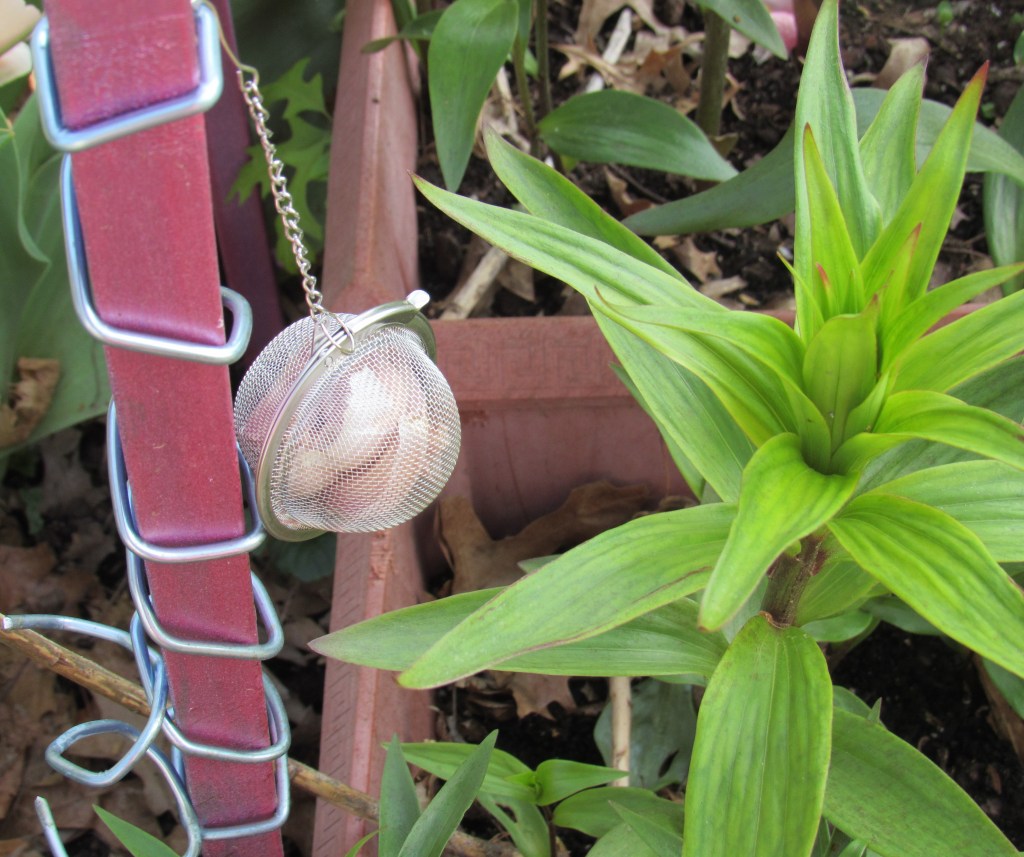
These tea strainers are cheap to buy, so I thought of trying them with garlic cloves, near my lilies, since the deer are continually coveting the flowerheads. Another tip: The foliage of the lily pictured is wan and yellowish, between green veins. Spring this year has been extra warm, so plants have put up a lot of top-growth before the soil temperatures have risen. Some are having trouble, as many do, drawing nutrients from cold, soggy earth. The plant may not need feeding or treatment, just patience until June, when the problem may have solved itself.


Circle of Life 😊

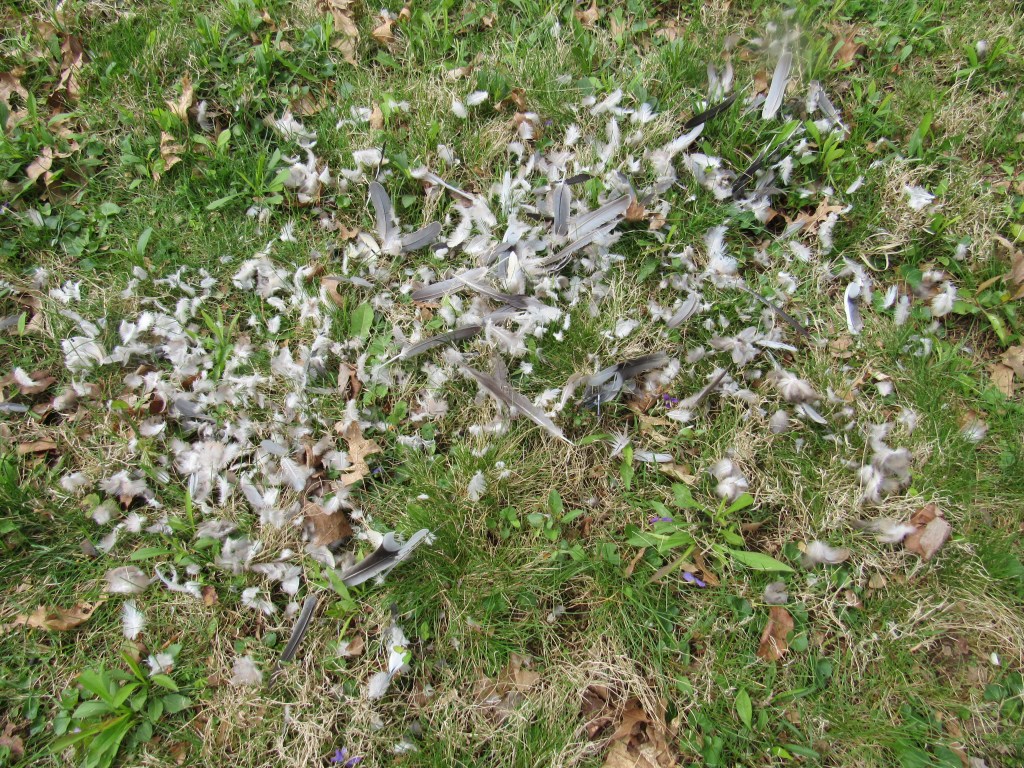
I was enjoying a mockingbird at my suet feeder all day on Friday. Saturday, I took my cat Ed out on his harness for that most important morning mole hunt. I saw something at the back of the yard, and after putting Ed inside for the day, went to look. It was the large field of feathers, as shown in the photo below.

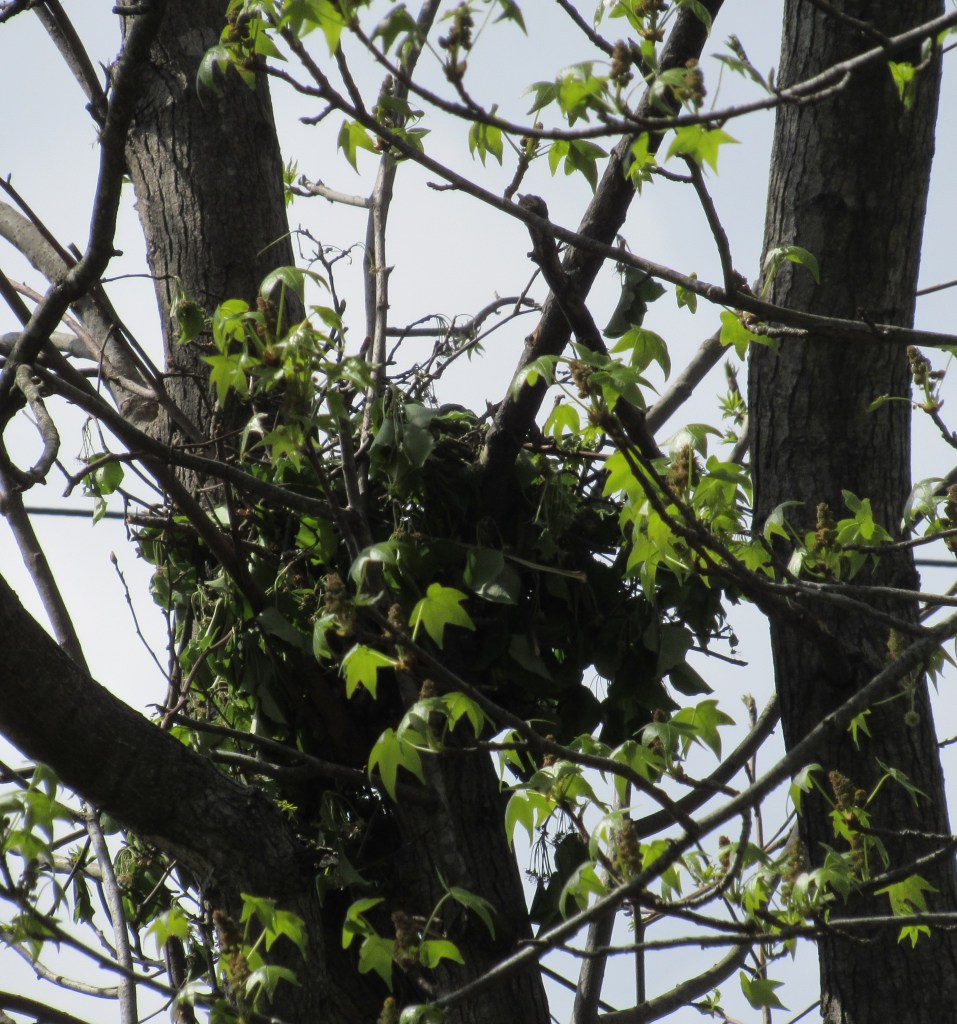
They were plain grey and tan, without notable spots that would identify them as a mourning dove’s, and I didn’t see the mockingbird Saturday. So I thought I’d lost him to a hawk. Today (Sunday) I saw the nest above in my sweetgum tree, even though the nest appears constructed with pear branches. Last year the Cooper’s hawks built an abortive nest in the pear. This year they seem to have made a better choice of location, but their preference of leaf type is interesting. Probably it’s because the sweetgum isn’t fully leafed out yet, or because its sap is too aromatic for their taste.

Today, the, or a, mockingbird was at the suet feeder, meaning either a new one has taken over the territory already, the old one is fine after all, the female got taken instead of the male, or the feathers belong to a different bird altogether.


Here are all the feathers. This type of display tells you the predator was likely a hawk. A cat carries its prey off to a secret place to eat, and isn’t likely to sit pulling feathers while vulnerable (so the cat feels) to having its prey stolen. But to a hawk, taking off with a bird fully-feathered would be like trying to run carrying an open umbrella.


Several of last year’s nicotiana, nominally annuals, have come back from the roots this year. As famous gardeners Joe Eck and Wayne Winterrowd advised, it’s worthwhile pushing your zones. You don’t know what you may get away with growing. Southeastern Ohio not only straddles zones six and seven these days, but has the sort of hilly woodland environment that provides microclimates readily. Where there are tree roots, where water runs underground, where shrubs and grasses make shelters, where even small humps and bumps alter air currents, hardy annuals and hot-zone perennials can last late into fall and even return in spring.


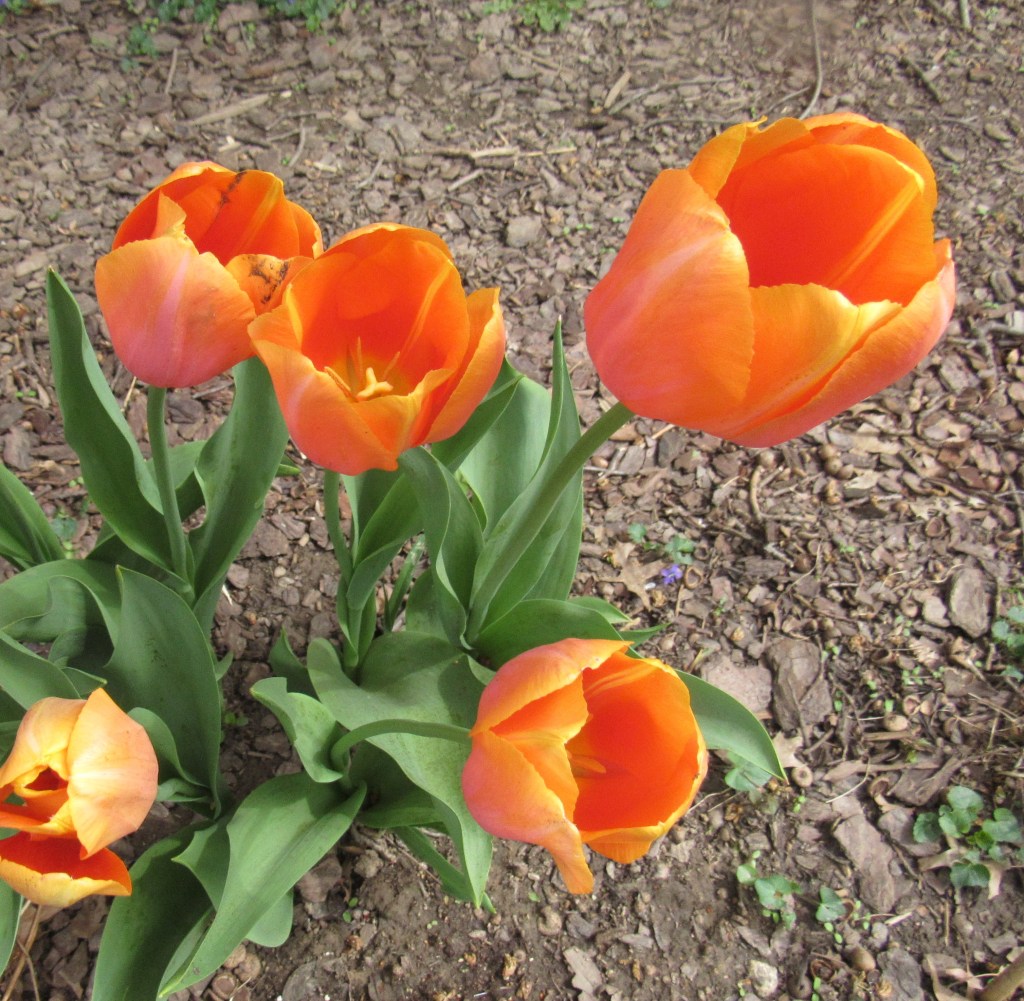
The last of the three types of tulips I planted last fall: Apricot Beauty, Dordogne, and this one, Salmon Impression. This one is really on fire, with lots of richness in its orange-shading-to-salmon coloration. And I’ve done well with tulips overall, despite the deer, after taking a few precautions.