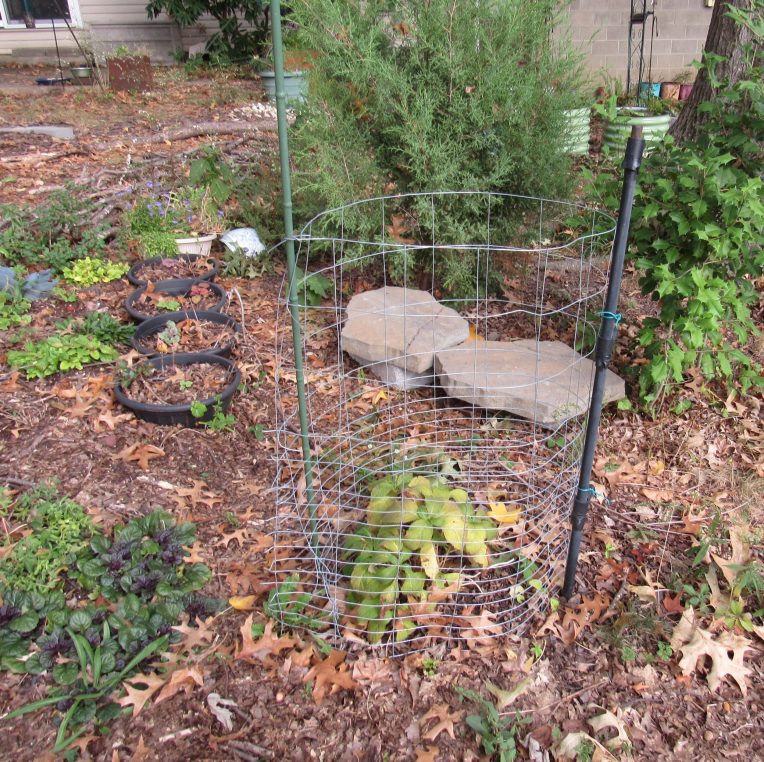
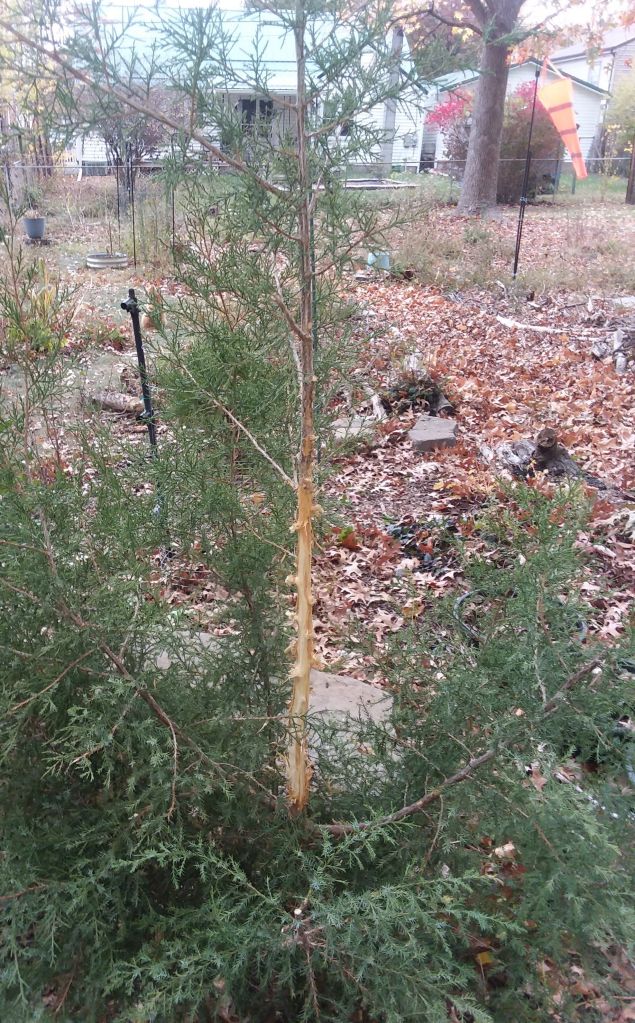
At the top is a photo I was going to share, but didn’t get around to writing the post. You can see my nice juniper, and the little plantings curving around it. I did have my hydrangea protected, since I know deer like to eat them. But I never thought I’d have a male deer tearing my trees apart with its antlers. The Rose of Sharon I talked about a couple of posts ago, that I’m trying to tree form, got attacked too. I think both will survive, since they’re both mature and have good root systems, but I may have to grow the Rose of Sharon as a shrub, or take a long time to get a leader back. The juniper, too, still has healthy growth down below, but it was such a nice tree. I think the drought has made the deer more destructive this year, and they’re ranging farther for food and water. I would thank them not to treat my yard as a territory for marking, though. 😐
The very parched grass, seen behind my new driveway planting. I don’t water lawn, but I water plants I want to keep (which is all of them). The Caryopteris is blooming beautifully in its first year, started from a quart-size pot, and grown to a respectable shrub. I’ve had dozens of tiny butterflies in my garden late in the season. A couple of skippers are on the flowers, but hard to see in this photo. Caryopteris is a huge pollinator attractor. I’m still getting the effect of yellow (Chamaecyparis) and blue I chose these shrubs for, so considering we’ve had three rains from late June to mid-September, I’m not doing badly with several of the vignettes in my flower beds.
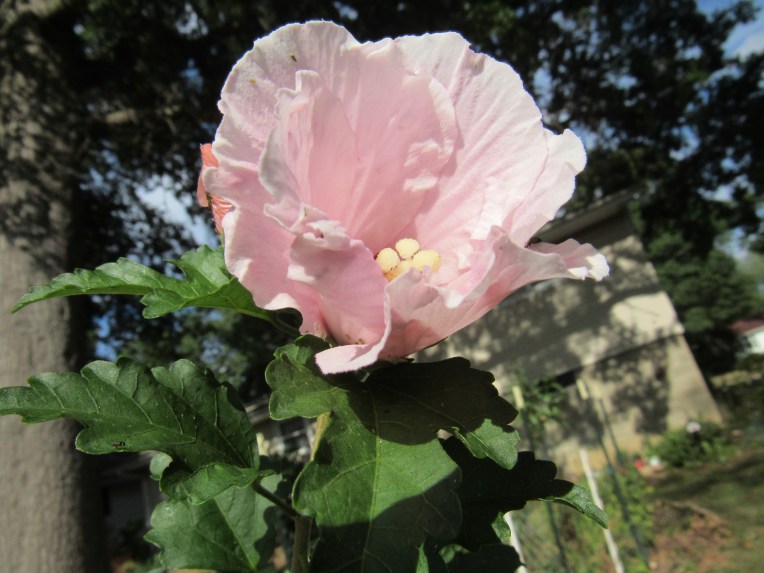
I mentioned a while back that I had a volunteer Rose of Sharon I was training to a tree form, to climb a clematis on. I didn’t know what color it would be. But what a great gift, to end up with this pale pink! I’ve never seen a Rose of Sharon this color outside of the brand new ones they’re breeding—and since this tree form’s an experiment, I wouldn’t want to spend a lot of money on it. It also has lobed leaves…a different genetic profile altogether, for whatever reason. Whether the clematis will survive can’t be told til next spring.
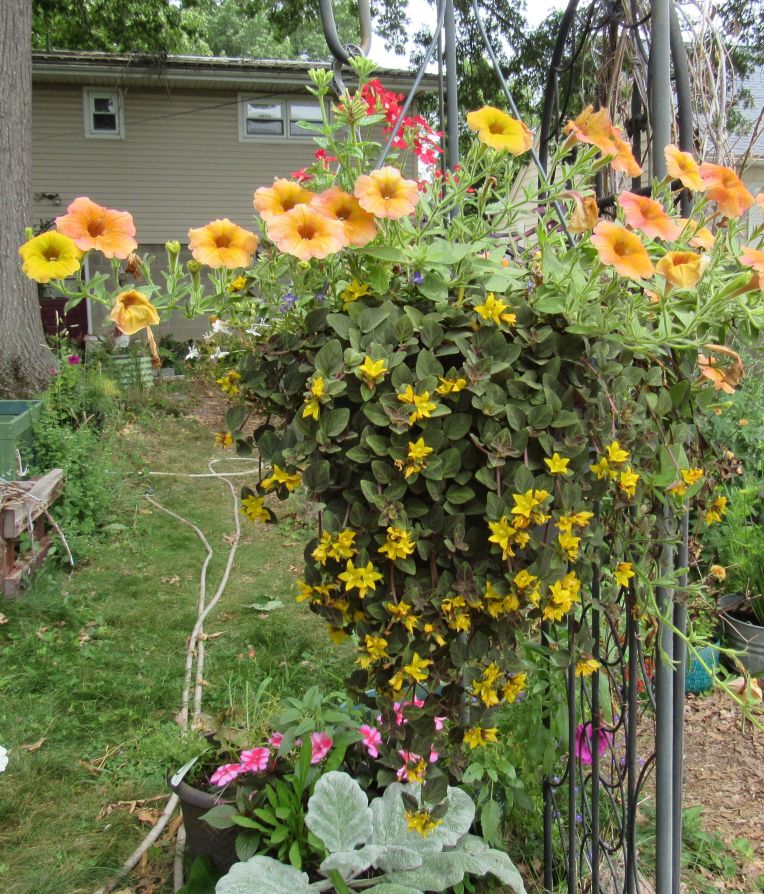
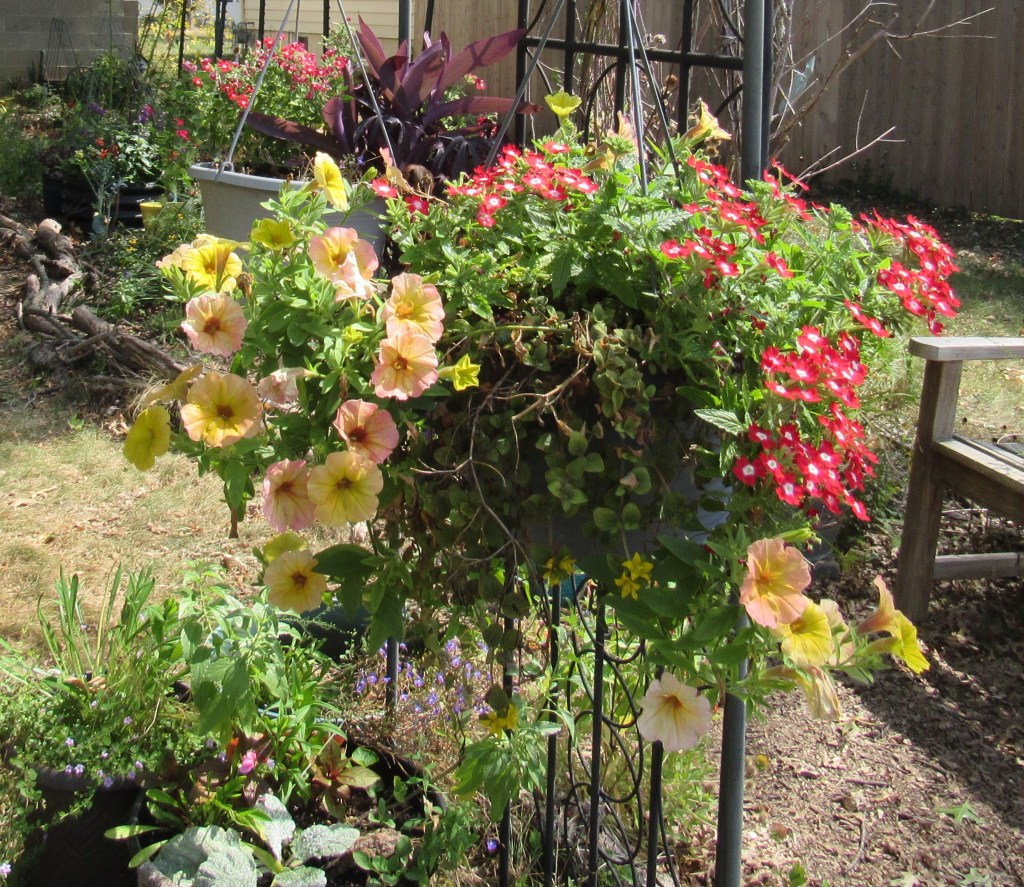
I’ve been keeping hanging baskets watered, though I had to retire a few, emptying the basket and planting the whole arrangement into a border where it could get more shade. The first picture above was taken June 27, and the second September 13. This “Honey” Supertunia and the red Superbena are great as a pair. The basket behind has red Superbena, Tradescantia, and a black-leaved sweet potato vine. These two baskets are holding up and giving my money’s worth. We’re in the season of super-hungry deer, so I never know if even garlic-sprayed plants will be waiting for me tomorrow.


 Memories of a Midwestern Family