Little Finds


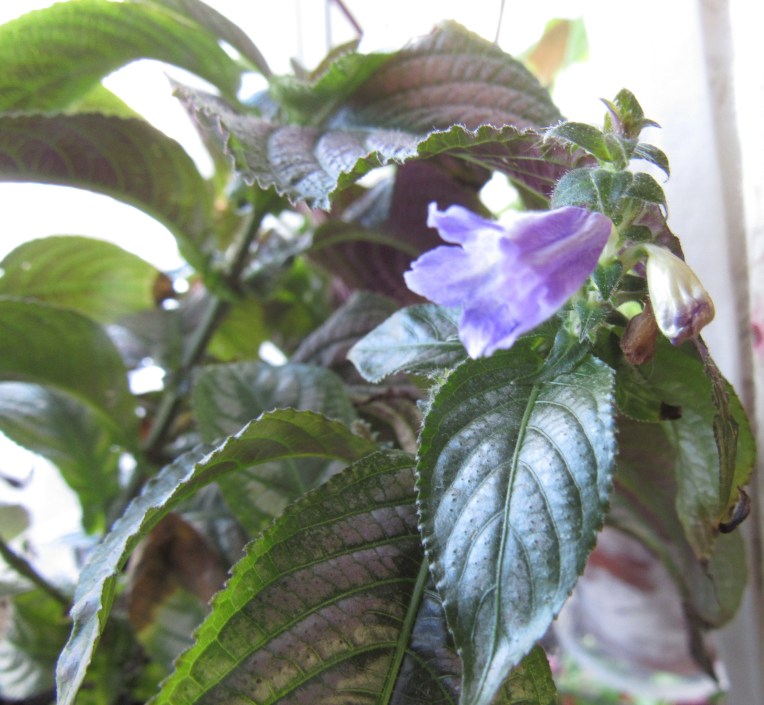
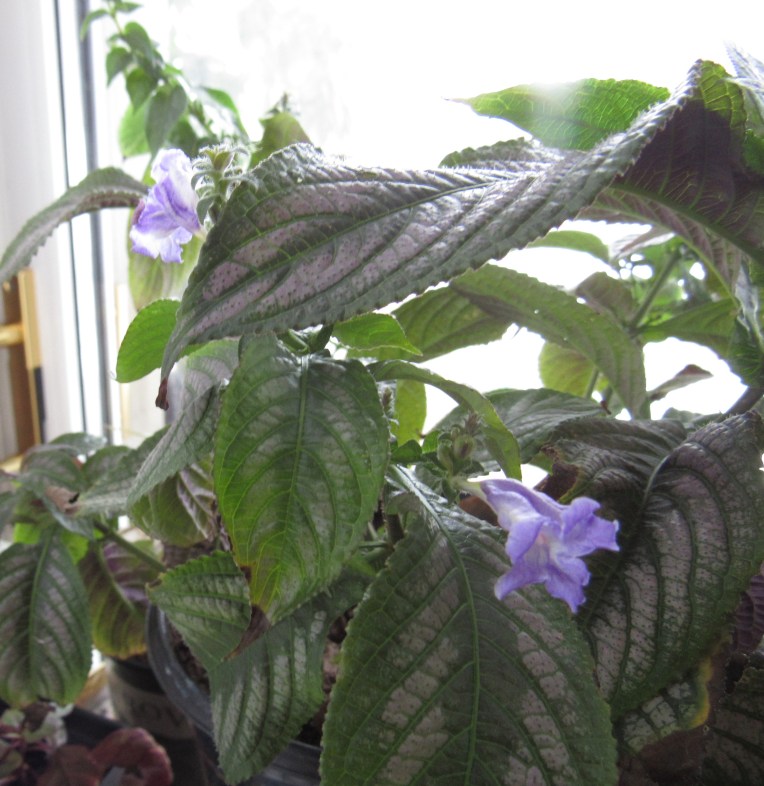
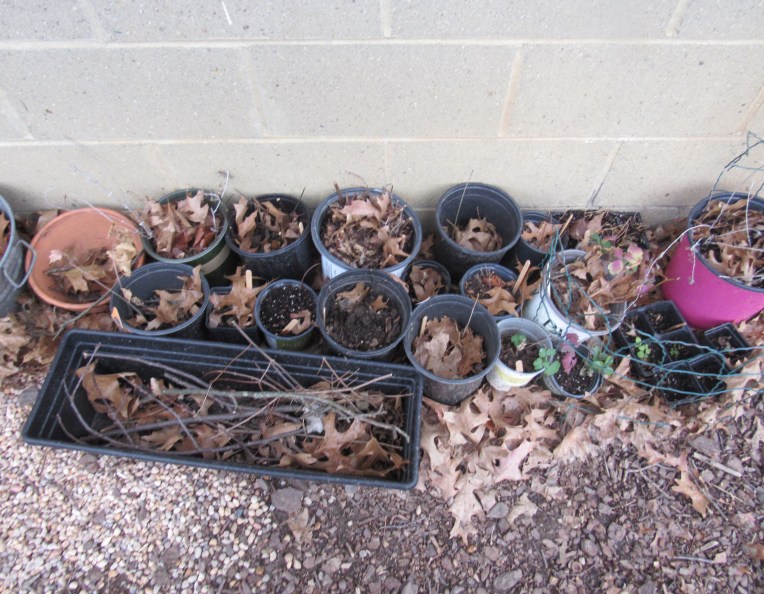
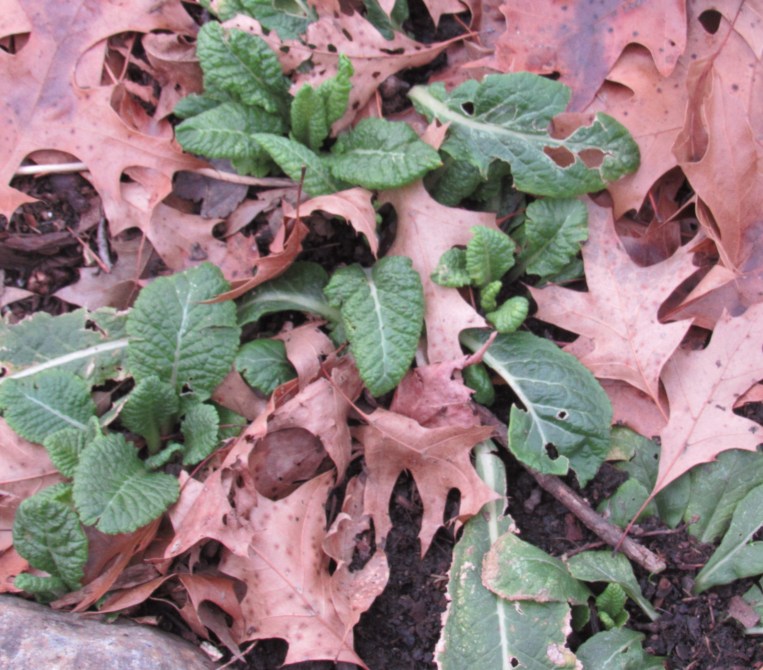
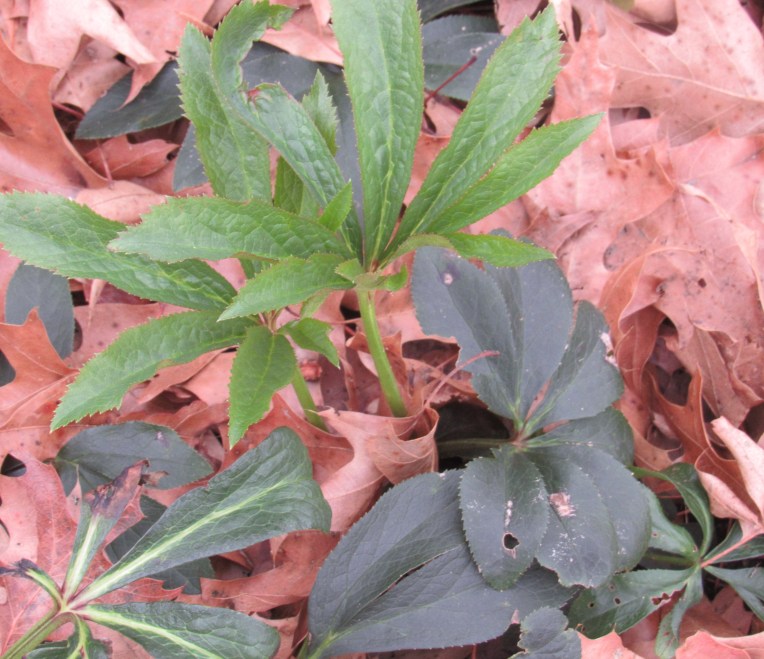
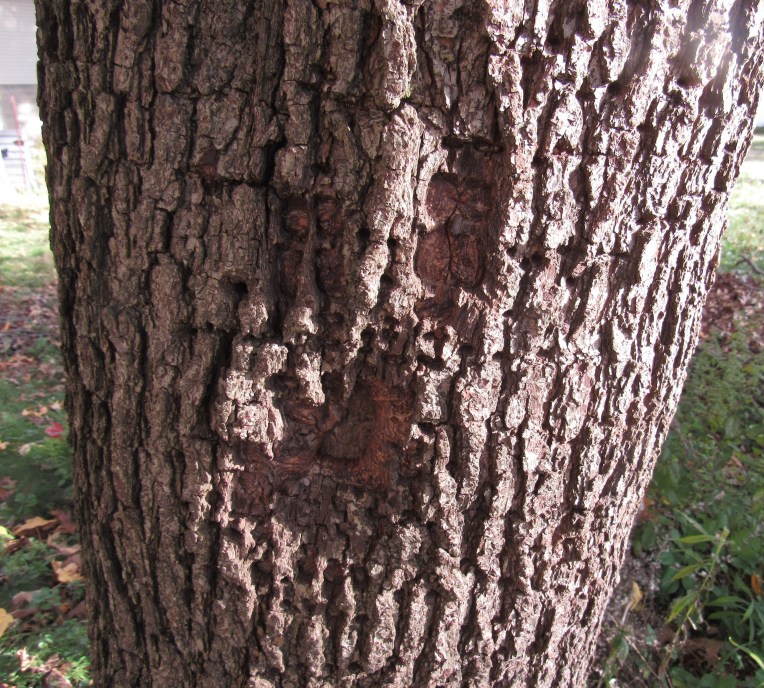
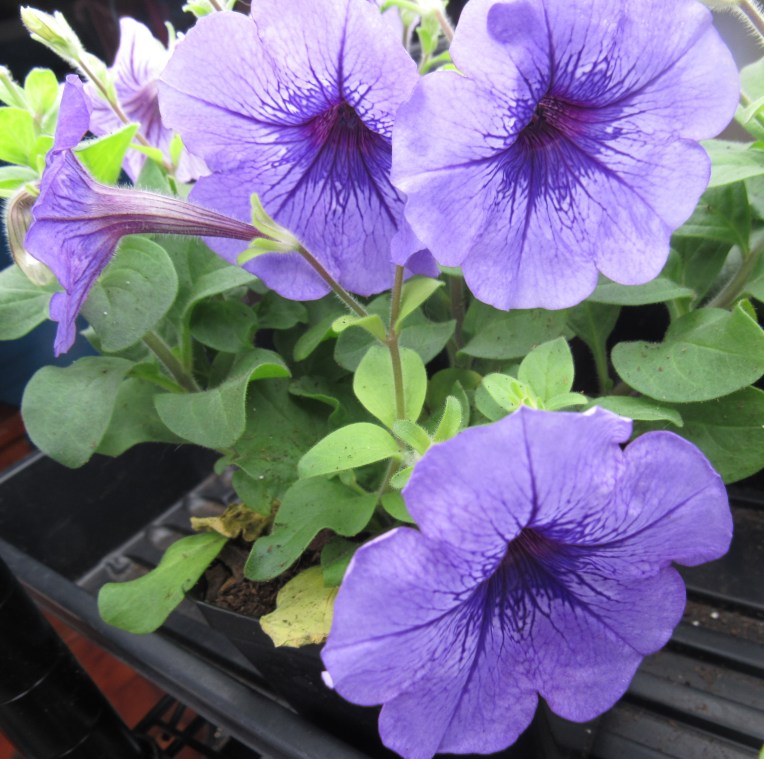
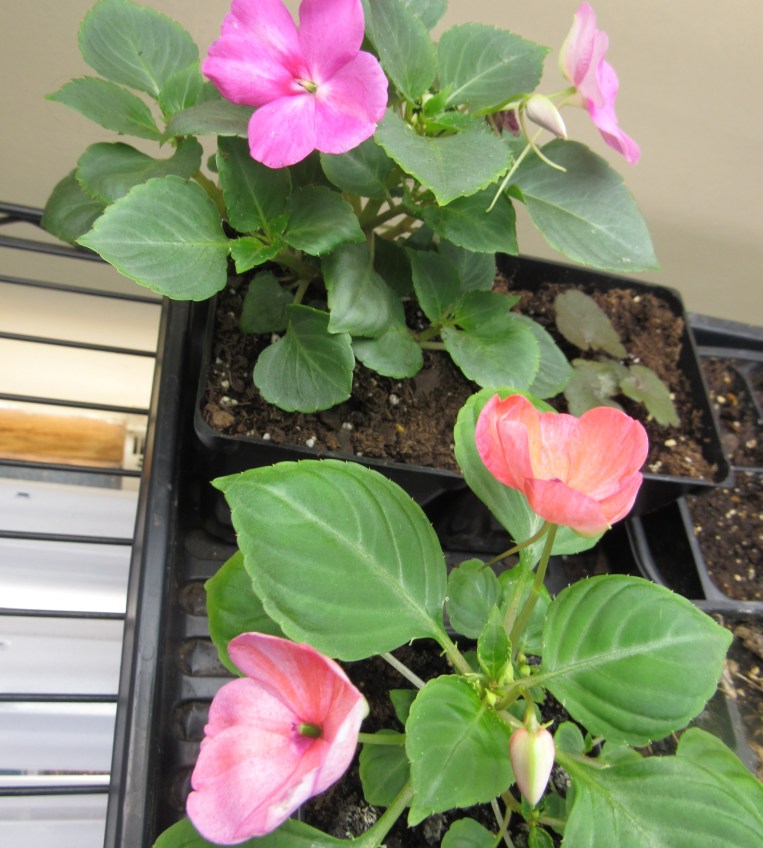
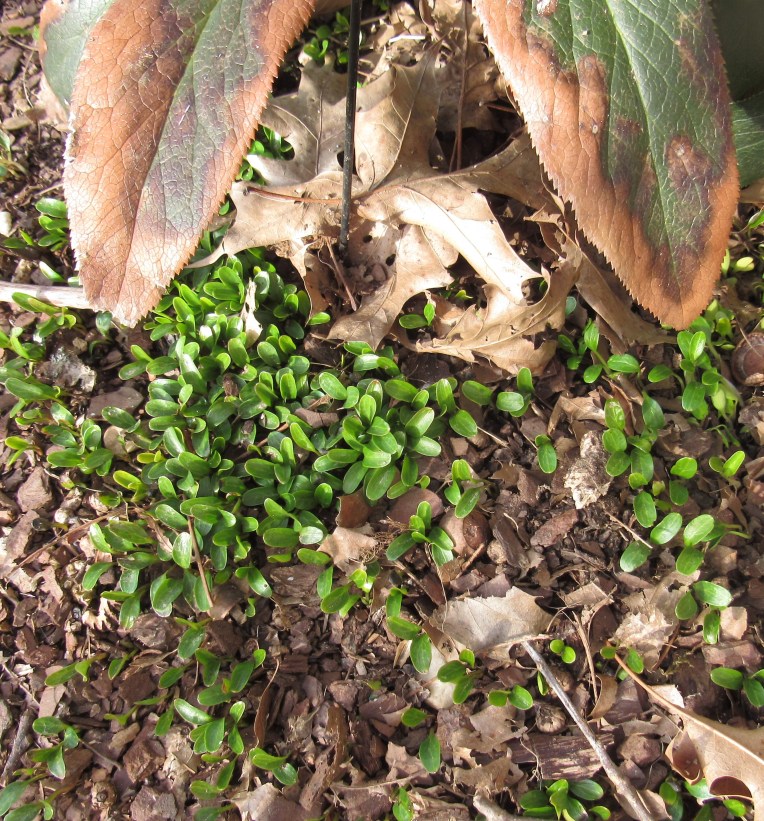
Above are some volunteers, seeded from garden fixtures, or annuals I grew last year. 

The petunia sprouted up in one of the pots I brought in from the patio. It stayed small for a long time, by the drafty patio door, and even struggled when I took it up to a windowsill and overwatered it. I wasn’t sure yet what plant it was. Finally, it got to be time for seed-starting, and putting up the lights and shelves. Once the petunia was warm and pampered, it took off. I usually buy petunia seeds in watercolor patterns, that have the pretty veins. This one looks true-to-type.

In the lower half of the second picture, you can see an impatien that seeded itself, and had picked up genes from both the red and pink ones. It’s producing a Rembrandt tulip effect, with marbleized streaks of color, so that each flower is different. But the overall effect is a coral.

The third picture is of hellebore seedlings. Seemingly, every seed that dropped last year germinated. I have hundreds of them, and literally removed more than a hundred to start in pots. I don’t know what I’ll do with them all, but I can see lining paths with them. The deer don’t bother them, and they bloom in winter, so a little hellebore hedge ought to be a good idea.



The Time Is Now

Photo of springtime flowers in circular planters
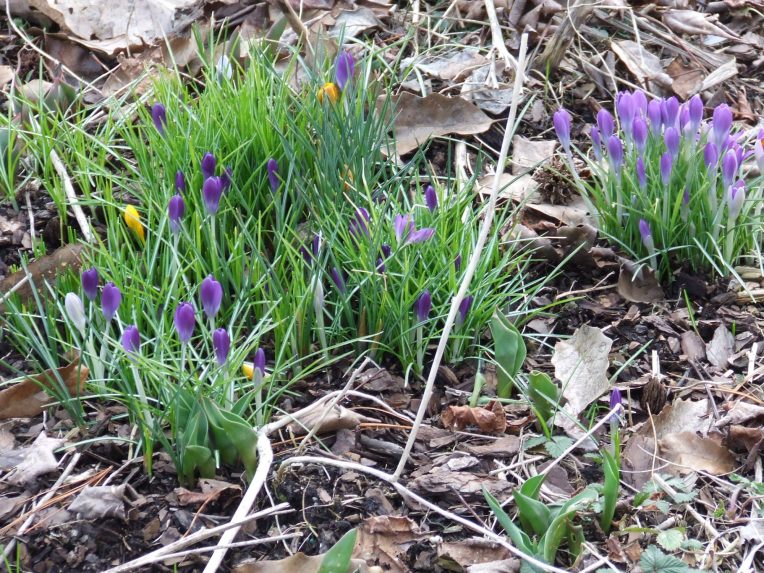
Photo of emerging crocus


A few cheerful pictures from my old garden. I’d forgotten how nicely the trout lilies (Erythronium) spread themselves. I haven’t grown them for years.

And that is my theme today. As I said in an earlier post, I had two trees cut down, a dead ash and a Bradford pear. I have space now to add new trees, and I’ve ordered several shrubs, mostly native to the midwestern U.S. Here are the ones I’m adding: Red-twig Dogwood, Blue lacecap Hydrangea, Smooth Sumac, Elderberry, Nannyberry (viburnum), Clethra, Blueberry, Aralia, Ilicium, a climbing rose called Fruity Petals, and an arborvitae called Tater Tot.

Of trees, I’m planting two apples. I had an apple tree in my old garden. I didn’t spray, so the apples were scabby and coddled (bored by the larvae of the coddling moth), and attacked by apple maggots. But they were usable, if peeled and cut free of brown spots. I put bags of apple chunks away in the freezer, to make pies and cobblers with.

The tree was a Golden Delicious. The flavor of home grown apples is always above comparison to store bought, although store bought have improved a lot in the 21st century. Golden Delicious used to be sold at the grocery, but I feel like I haven’t seen them for years. Anyway, 2022 is a fine year to plant those things that require waiting for. If you’ve been wanting fruit trees, or blueberries, blackberries, strawberries, grapevines, whatever, it won’t help to put off planting them. You’ll only wait that many more years for a harvest.

Also, slow-starting perennials with worthwhile flowers, like peonies, or plants that naturalize and look beautiful in swaths, like Virginia Bluebells, will only get to their high point if you give them a start. Also, and most imperative, your habitat project, if you’ve been planning one.

Our world has had tough times, and the future is uncertain. In the garden at least, it’s time to get the ball rolling, so you can be pleased with yourself in two or three years, and in the meantime look forward happily.


A Pretty Bloom and Some Seed-Starting Info

Photo of blue penstemon-like flower of strobilanthes


Strobilanthes dyeriana, the Persian Shield plant common in garden centers in the summer, is native to Myanmar. Some species of Strobilanthes are grown for their flowers, but Persian Shield is used for foliage. One of mine, that I brought to overwinter indoors, has put up dozens of flowerheads. Now some of the blooms are open, and as the photos show, they come out a pretty blue-purple, and with a shape like a penstemon flower, about an inch in length. (The two aren’t related; Strobilanthes is in the Acanthus family, and penstemon is in the plantain family.) 


I saw an article last year, in the New York Times where, discussing the collecting and sowing of wildflower seeds, a native plant expert said the Butterfly Weed, Asclepius tuberosa, is difficult to start. I’ve actually had good success with it, so I thought I’d share my method and observations.

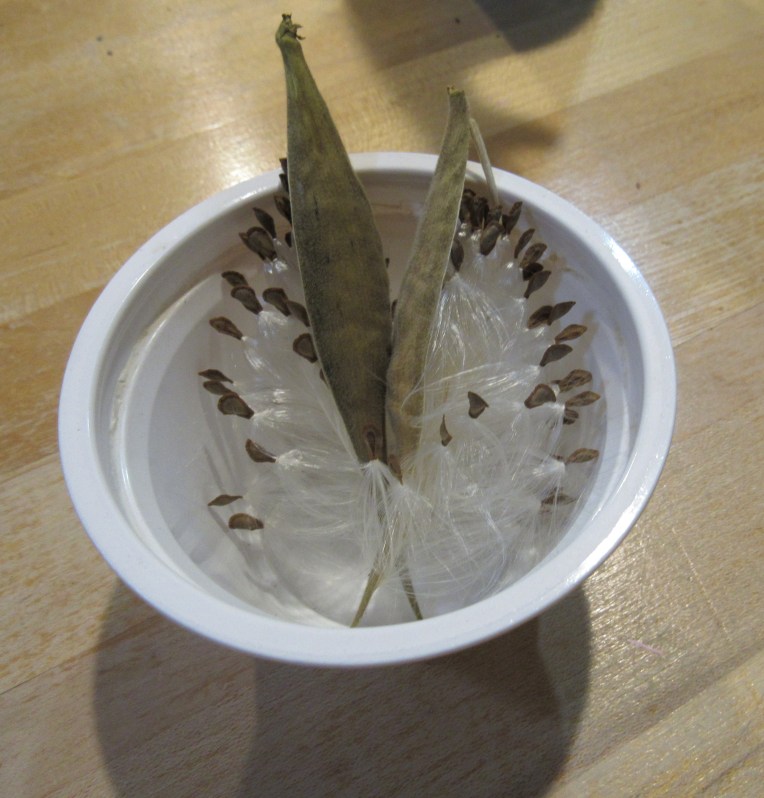
I collect a couple of pods, which as you can see gives more than enough seed. I put them in an open container in my garage. When they split naturally, which takes some months, the seeds will puff out from the expanding floss. The floss, once the pods have opened on their own timetable, pulls loose from the seed easily. That makes sense. The seed wants to root itself somewhere, not be carried by the wind forever.

My intuition is that the cold of being in the garage in winter, while it probably matters, is less key to germination than letting the pod reach the stage of splitting, and planting seeds that need no tugging to remove the floss. I sow them like most others, upstairs in my cat-proof room with the lights and shelves, just tucked under the surface of the medium, and I get several new plants going that way.

Late Season Sights

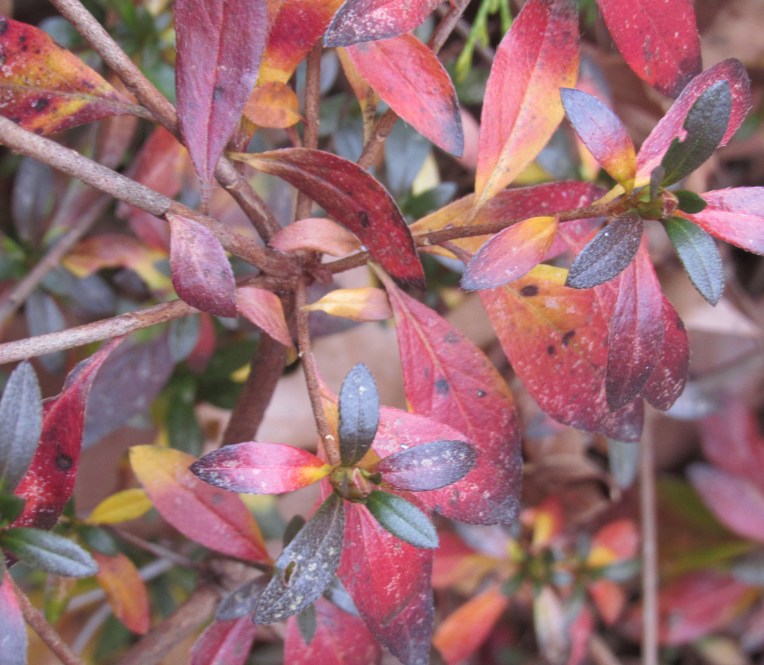
My front-yard azalea seems much happier since I started raking out from under it in the fall. It used to be a brown mess, eaten to pieces by azalea lace bugs. Now there’s not too much damage, though spots where the leaves have been eaten still show. I’ve never seen an azalea produce this much fall color.  

This is the outer wall of my garage. I’ve got several things in the nursery, all cuttings, divisions, or dug-up volunteers. With the exception of the foxgloves, in the square pots, right, that seeded themselves. (If you have a perennial that’s reliable for self-sowing, you can place a pot underneath, topped with potting soil, and the new starts will arrive.) I dug up a couple of good columbines, and divided my goatsbeard. I also have a buttonbush, some Russian sage, Baptisia australis, and some actual mountain laurel cuttings. They should root themselves over winter, enjoying this spot where the warmth from the garage keeps them above a hard freeze. It’s my theory (probably not mine alone) that plants evolved to go dormant in the winter and wake in the spring need weather cues and shouldn’t be wintered indoors. The windowbox in front is just there to provide insulation. 

Some plants, in late fall/early winter, go into a growth phase. The upper photo shows the primroses, putting on lots of new leaves. The lower photo shows a hellebore that seeded itself from the parent plant. Fingers crossed that it will bloom in ’22 and I’ll see what kind of flowers it has. They can only be different from the parent if they’ve reverted in some way, though the parent is a fancy hybrid. But I only have one hellebore, so only someone’s else’s could have provided new genes.

Wishes for next Gardening year

Above, a hart’s tongue fern, and its interesting way of sporing. The second photo shows how the callery pear tree, that had a section of bark cut out by a yellow-bellied sapsucker, has coped by growing the same sort of collar a tree makes when it loses a branch. I had a fledgling sapsucker, in its juvenile plumage, come to my suet feeder this year. So, the callery pear may be an invasive foreign species, but it does provide sustenance for one type of bird.

I cleared away the pile of brush that was stacked under my sweetgum tree, and the area left, that has very rich soil, I plan to build into an understory habitat, with shrubs, small trees, and wildflowers. I’ve planted lots of jumbo daffodils around my path edges. One thing I decided, based on observation, is that daffodils are better planted along borders than inside beds, because their foliage lingers for a month or so after they flower, and takes up good planting space you want to use for other things. Of bulbs, I’m adding crocuses, tulips in containers, anemones, ranunculus, hyacinthoides (bluebells). 

Next year, I want to plant some conifers, a blue spruce for color, and a mugo pine for its nice size, even thought neither are native to Ohio. I do have a small white pine that appeared in the yard by itself. I have several things in pots, that I’m wintering sheltered against the garage wall, cuttings from shrubs and perennials. I may get a genuine mountain laurel, a second button bush, a cypress, and an azalea—the last two started from root layering. I have a few perennials potted, some columbines, hellebores, goatsbeards, and baptisia. I’ve moved several coneflowers from the front bed to new ones I’m building out from the sides of the paths, turning more of the yard into flower gardens, less remaining lawn.

I would like to get a caryopteris, an Itoh peony, and a blue lace-cap hydrangea. For perennials, I need more pulmonaria (I saw a great, inspiring, multi-variegated planting in Garden Gate magazine, that I’d like to emulate with pulmonaria and brunnera). I need more ferns of different types, and I want to add more primrose and some tiarella. I’ve collected seed of several good annuals and native perennials, but of seed to buy, I’d like to get celosia, cosmos, sweet william, viola, blue centauria, more annual phlox. 


Learned This Year

As mentioned last post, this spring I tried new annuals from seed.

Dahlias worked well; next year I want to grow the pompom style, if I find them in a catalogue.

Geraniums worked well. Most came out the typical red, though I got one hot pink.

Hens and chicks started easily, but stalled at about the quarter-inch size, and not having a good place to nurture such tiny things, I lost them.

Of tuberous begonias, I got two examples, an orange-red, and one too small yet to know what color. They didn’t germinate especially well.

I got nothing from the exotics I tried, although I scattered the remaining ginseng seeds (that stayed dormant in pots) under an oak tree, so possibly a winter will start them. The pitcher plant seeds never germinated.

I discovered it’s hard to tell what certain seedling trees are, and easy to misidentify them. From now on, unless the seedling is a distinctive species, I’ll wait longer and not share a mistaken ID. I was gifted an ironweed this year, but early on posted it as a Joe Pye weed. As abundant as ironweed is in SE Ohio, I’d always wanted one to find its way into my yard, and it never happened until this year. Now I have a few seeds to spread into my meadow area.

Meadows increase insect life, and it doesn’t matter altogether if the plantings are native. Not to say natives aren’t preferable, but where I have mostly ground ivy, I still have seen the smallest butterflies make use of the shelter. They need safe places to roost at night, as well as host plants for their eggs. 

Above, a late display of tender plants, coleus and strobilanthes, looking bright and beautiful. Being in a sheltered bed, they’ll probably keep going until a frost or two. In photo two, my small paw paw tree (not so hard to recognize, both for the big leaves, and their habit of attaching at a 45 degree angle to the stem), notably chewed up at the end of the season, hopefully bringing zebra swallowtails next spring. This reinforces the point that native trees support insects from the time they start growing leaves. You don’t need a park-size specimen to offer nature the benefits of a host tree. 


Saving Seeds

One of the things I tried this year that worked well, was starting dahlias from seed. In most of my gardening years, catalogs didn’t sell them, and the advice on dahlias made them seem fussy. You had to dig the tubers, preserve them in sand or peat, or a plain paper bag, spritz them occasionally with water so they wouldn’t dry out, but not let them get wet… Or just buy new tubers every spring. 

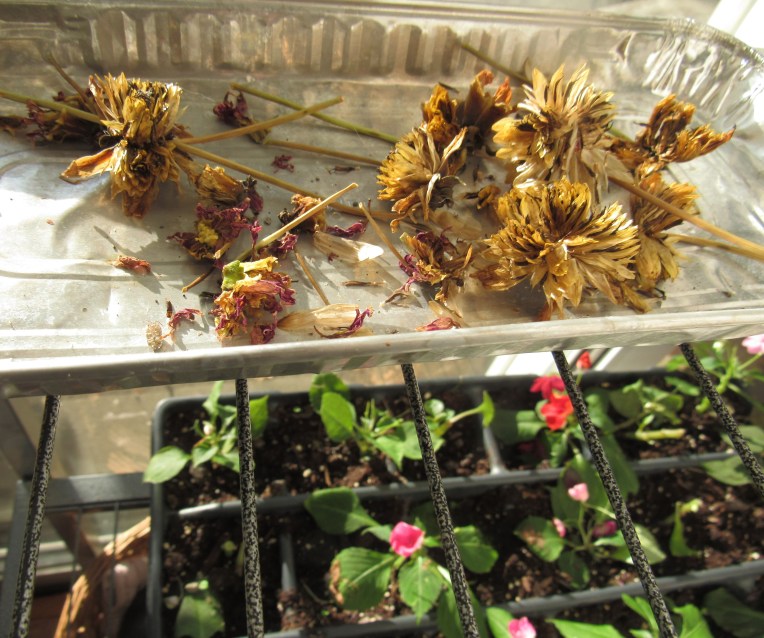
In the metal tray above are dahlia seeds collected from my garden. The spent flowers are slimy, and need extra attention—but not too much—to extract the seeds. Lay them where they get sun, and when they’re halfway dry, spread the heads apart. As you can see, the seeds above are exposed and can now be separated from the chaff. 


All the prepared seeds I’ve collected so far, neatly stored in their envelopes. I concentrate on perennials; most that are helpful to nature and unappealing to deer are in the daisy family, coneflowers and rudbeckias. I’ve also collected verbascum, achillea, monarda, and annuals centaurea and scabiosa.


The seeds drying out in my garage. For this work you can take several plastic containers out of the environment by saving them for use. Put flower heads upside-down and leave them for a few weeks, add a label (I use wooden popsicle sticks). When they’ve dried, using fingers or a butter knife, depending on how stickery the flowerhead is, loosen the seeds, envelope them, and write the name.


I’ve been misidentifying what I wanted (wishful thinking) to be a mountain laurel. It looked promising as a small plant, but I’ve learned after a few such errors, not to ID too early. Seeing the ridges developing along the stem, I was afraid it was only a burning bush euonymus. I would have pulled it (they are invasive), but it seems to be something else. It has leathery leaves that stayed on all last winter. They show no sign of being other than evergreen this year. I’ll just have to wait and see what characteristics it develops over time.


End of August Odds and Ends

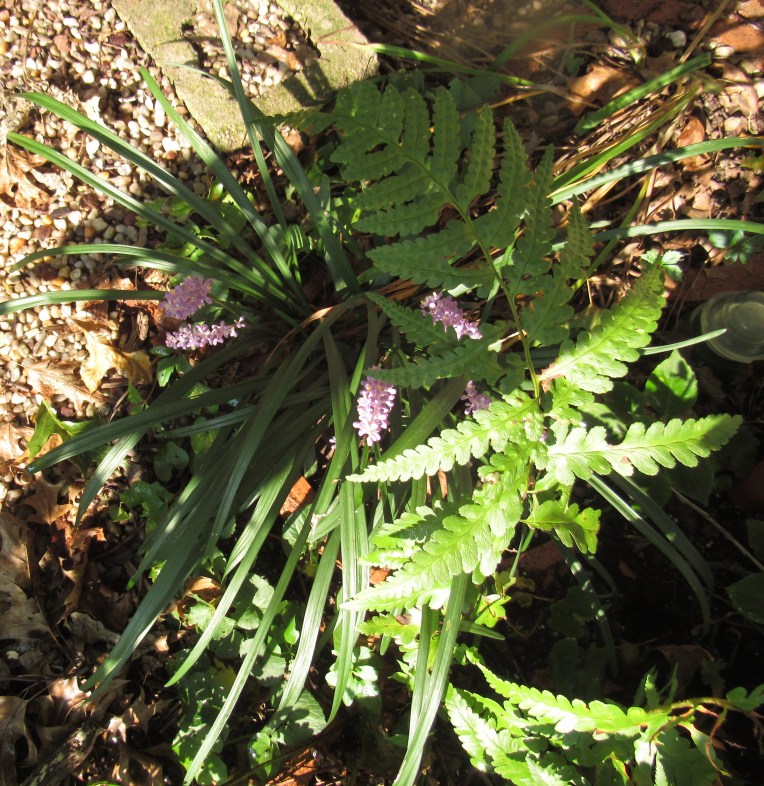
This photo composed itself nicely, with the bright sun and strong shadow, and the swirl of fern-leaf and liriope. The two plants were making a pretty woodland look, so I wanted to show a highlight of my garden at this time of year, when several things are finished.


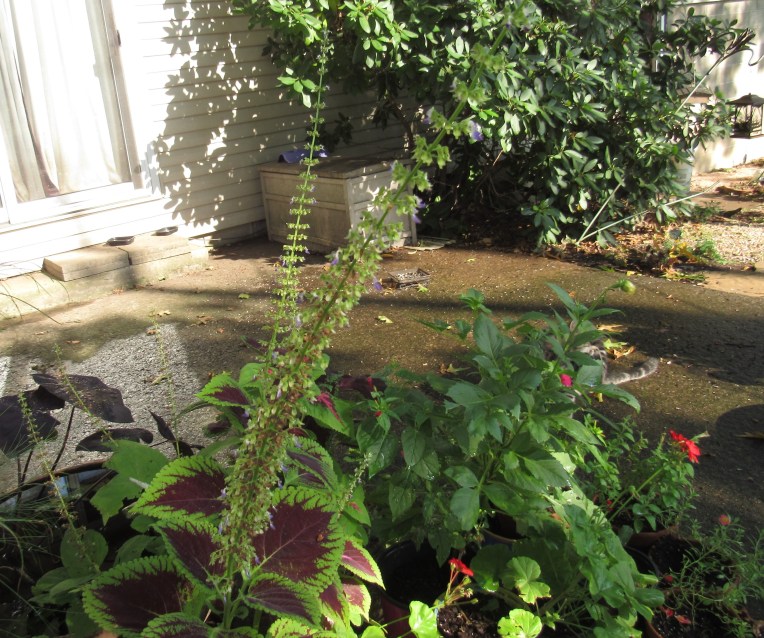
They say you should cut the flowers off your coleus. It’s true, they add a rangy, unkempt quality, but they are popular with bumble bees, and this year I’ve seen two hummingbirds, while last year, I saw only one—and it was the coleus flowers they were feeding on. These flower stalks by the bog tubs are about two feet long.

In the background is a four o’clock, a better container plant than I would have thought. I didn’t buy them on purpose, but they came as part of a seed mix. I’m not usually outdoors when four o’ clocks bloom, and even when I am, I haven’t been able to detect the famous scent. But even so, the foliage is lush, and the little beginning flowers are so numerous they make spots of color everywhere. Altogether, four o’ clocks in pots are one of this year’s good discoveries.


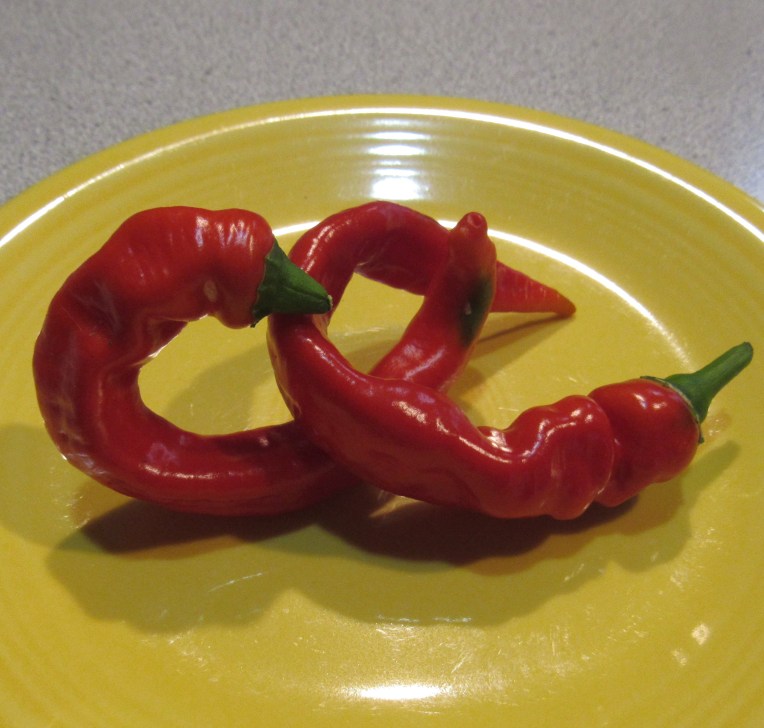
These are a kind of pepper called Jimmy Nardello. They aren’t chilies, but taste a lot like bell peppers. But they have the advantage, being thin, that the plants produce lots of them, and they ripen quickly. I like sweet peppers raw on a sandwich, and these Jimmys are abundant for sandwich peppers. Another good discovery.


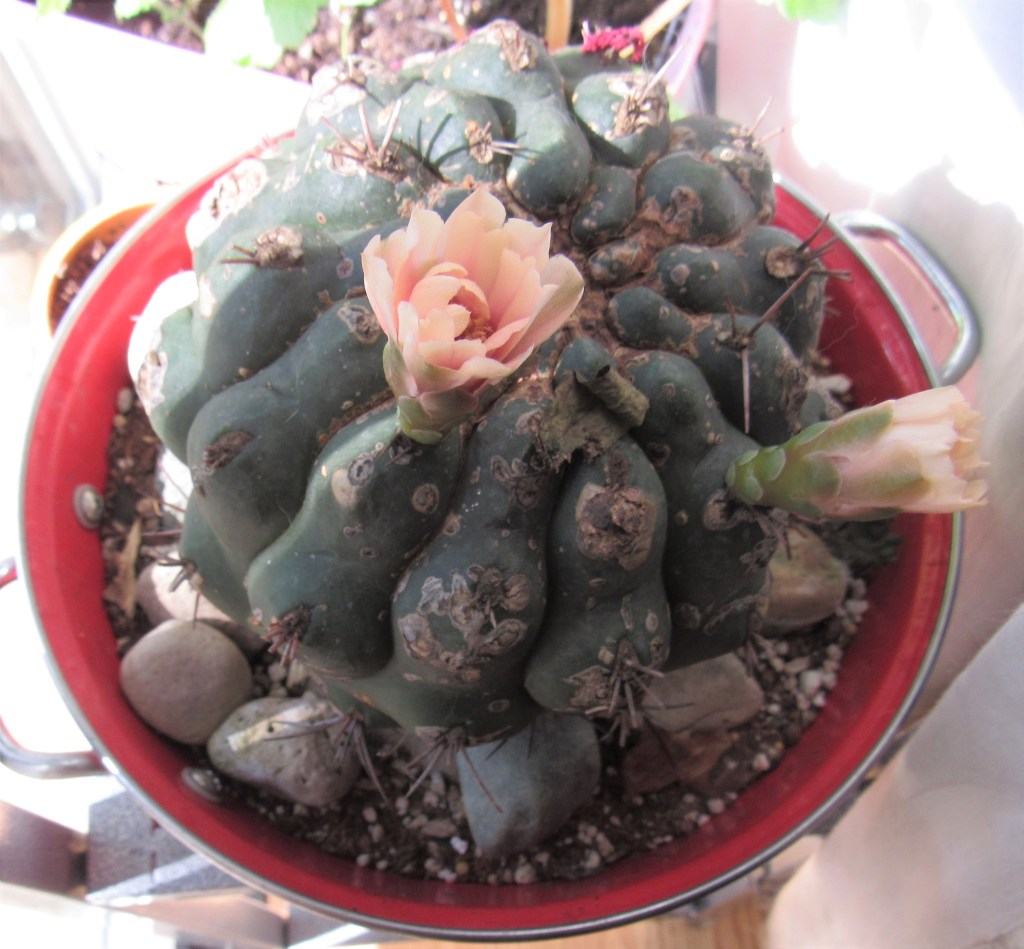
The cactus fully bloomed out. The flowers took on a pink tone after starting peach. I didn’t realize cactus flowers are waxy-textured. I tried finger-pollinating them, but I don’t know if that will make a fruit I can use for seeds.


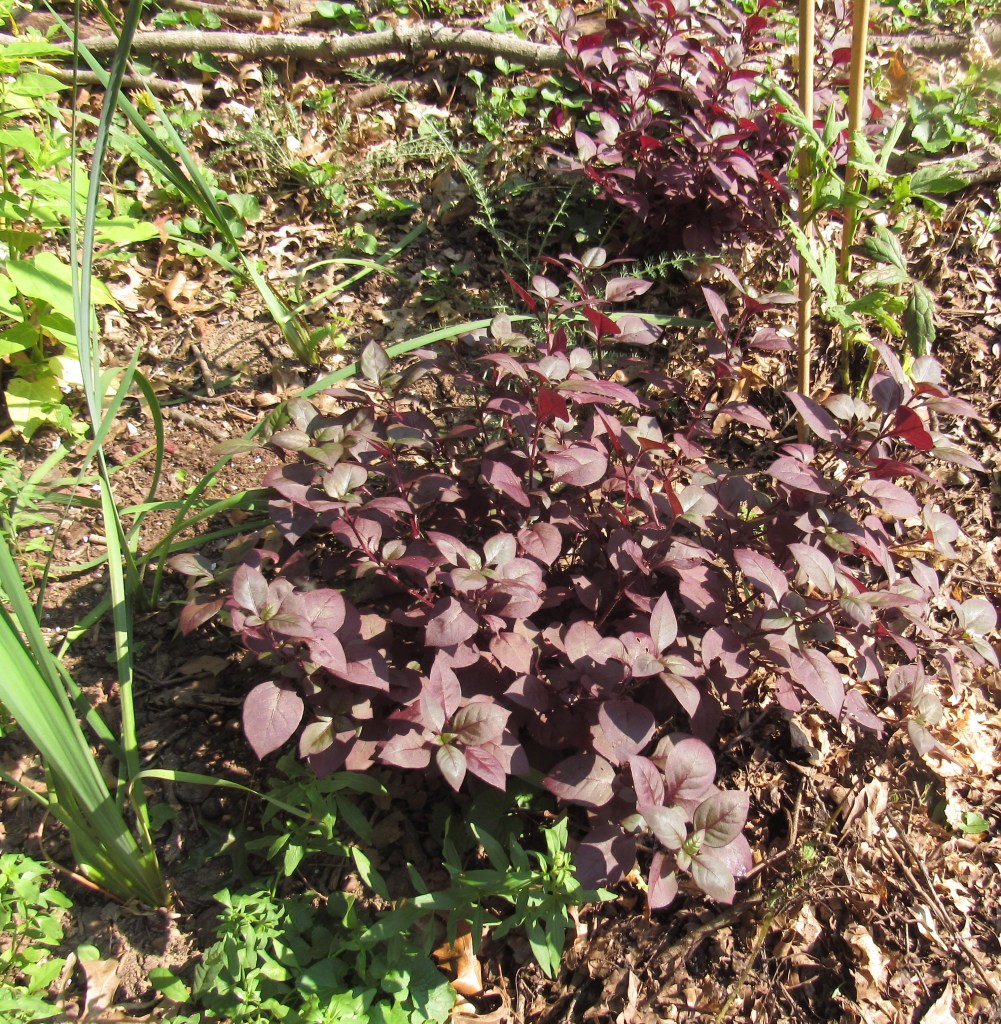
The alternanthera, that I mentioned also as a new discovery this year. So far, they’re super—beautiful foliage, even prettier with the new blue-green leaves against the older burgundy, than this picture shows. And they’ve grown to a small shrub size, much needed in this new planting area, where the other things have barely taken off. A rabbit, or a groundhog nibbled on them, but hasn’t done much harm to their looks. 


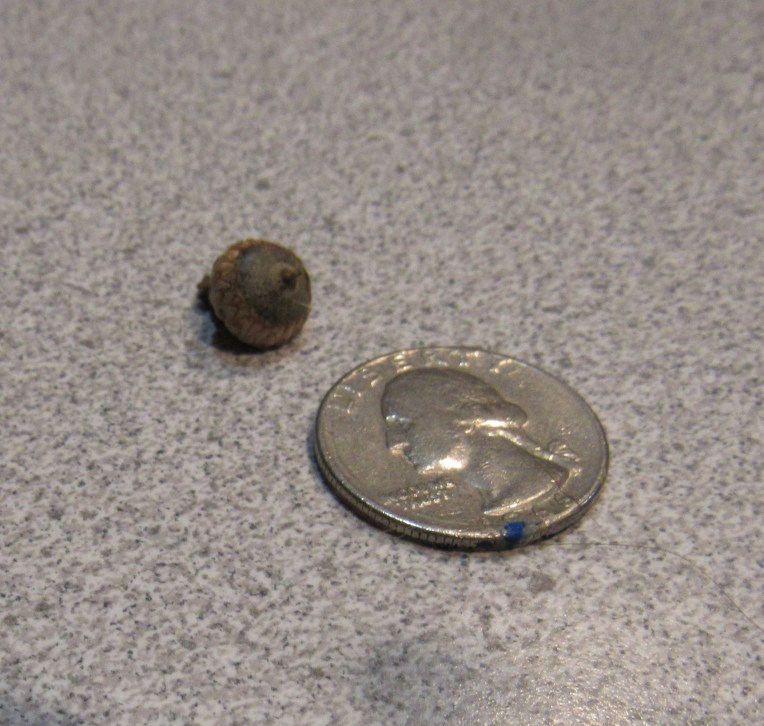
The pin oaks this year have been shedding lots of tiny, poorly formed acorns. The flowering was off, and I could tell early, because I get showers of catkins to sweep up most years, but hardly any for 2021. If my trees are in sync with the rest of the forest locally, the winter will be a little sparse for the wildlife.


Cactus Flower

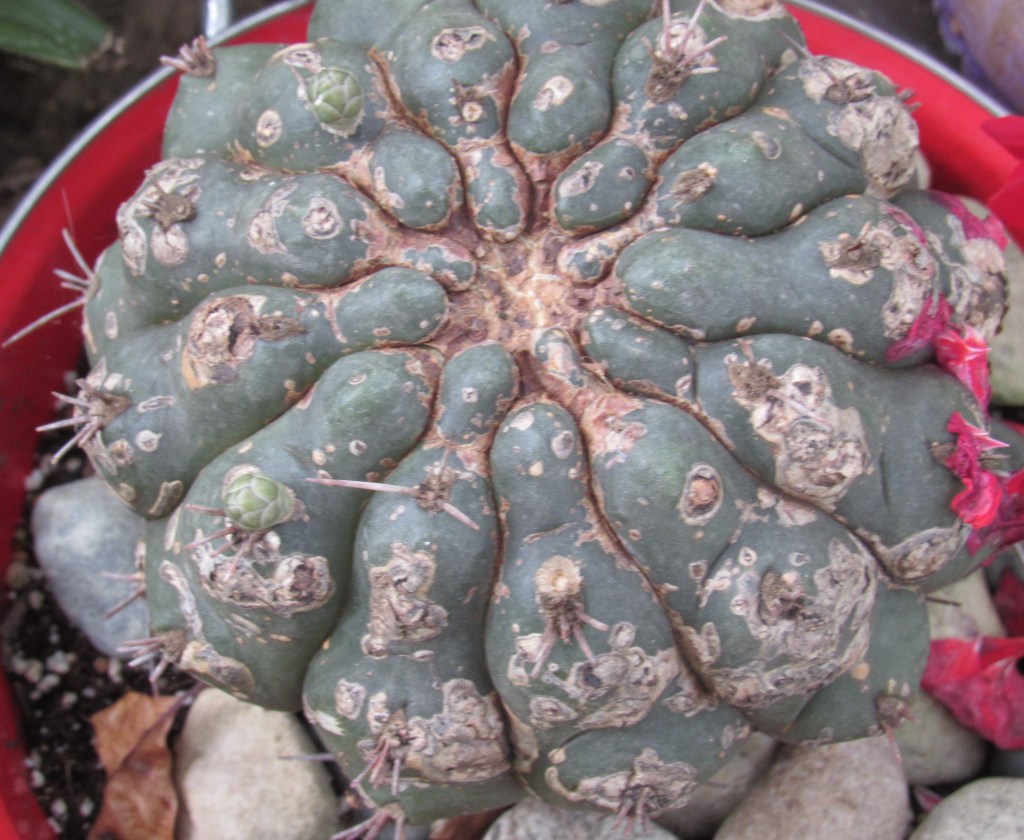
My poor old cactus, that I’ve had for more than a decade.

Among its sufferings, I was keeping it in a too-small pot, without realizing, because at some point I’d set the small pot inside a larger one. I gave it a new home this year, after finding the lower half was a colorless, squeezed-together chunk. I’ve always put it out on the patio in summertime, and it’s done fine, not bothered by the heavy rains. What bothers it is rodents, squirrels and chipmunks, which is why it has those unsightly gnawed places.

An interesting thing is that the chipmunks will bite the ends off all the needles, then climb up to perch on the cactus, just as their cousins the ground squirrels might do in the west, where cactuses actually grow. There may be a shared evolutionary memory, mostly dormant in the chipmunk.

The other thing the chipmunks do is bite off the flower buds. This cactus has been trying for a few years to flower, so this time I’ve brought it inside before the buds vanish.


The above paragraphs were started as a post a couple of weeks ago. Now the cactus is opening its flowers, and as you can see, they are a beautiful peach. That’s what the poor thing has been harboring inside itself all this time.


For something cheerful, a sunny yellow daylily, and a tiger swallowtail. And my annual reminder that the Monarch butterflies, of which I don’t see many, arrive at this time of year, latish mid-summer. I see them feed almost exclusively on Tithonia flowers (so plant them!) It doesn’t appear Monarchs visit southeastern Ohio in the early season, to lay eggs…maybe there aren’t enough of them to sustain a local population anymore. So all the milkweed I have in my garden doesn’t help much. But they do stop for nectar as they migrate.