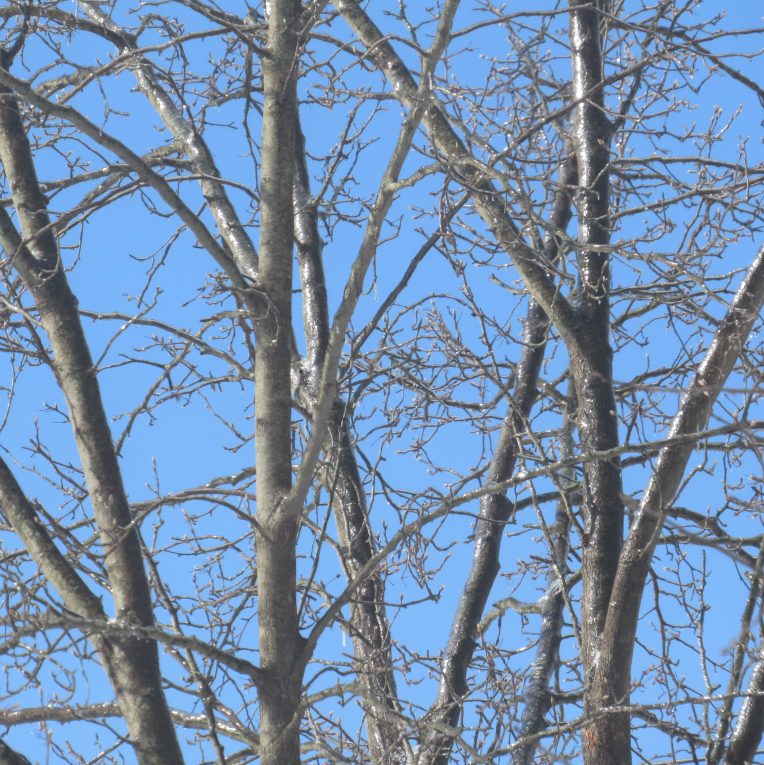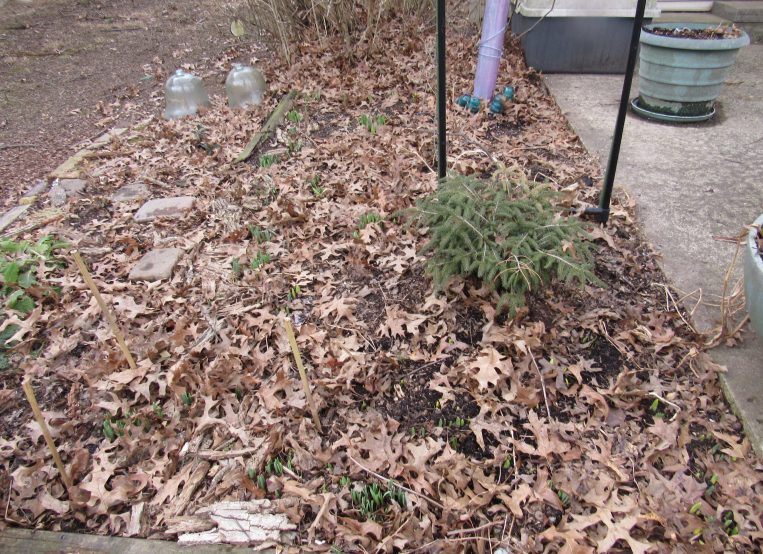
Drainage Project

This is the slope from my patio, past the bird feeders, and coming down to the garage door. It’s steepish, and the area has a washing problem due to compacted soil, and nothing growing there. That’s because birds, lightweight as they are, are milling constantly after seed. And squirrels run up and down here all day; deer come to forage at night.

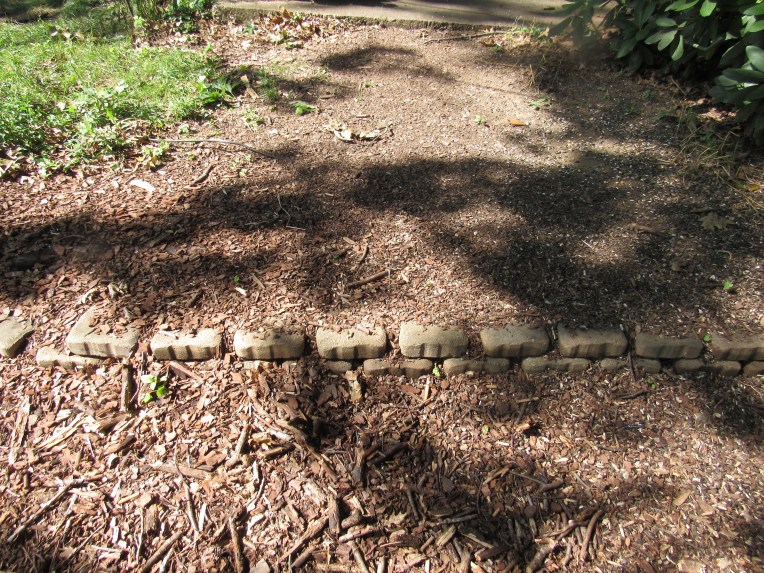
I’ve put in this little wall of concrete cobblestones (with gaps to shelter toads and salamanders), which is making the dirt behind it level off, while the angle at the patio edge gets sharper. That’s a miniature version of the same erosion patterns that eventually form waterfalls. The water rushes over the edge, but is slowed as it spreads across the “flatlands”. Erosion is concentrated at the higher elevation, in effect the rock shelf, because there’s a boundary being created by the two rates of flow.

But slowing the flow is what’s wanted, to control drainage, to keep dirt from being carried into the storm sewers, and to keep the garden from losing its topsoil and mulch. The next step is to dig out a space for steppingstones, down from the patio, and to plant some good anchoring plants, limiting the creature traffic to the center. Then I’ll fill that part in with pea gravel to filter the water downwards.
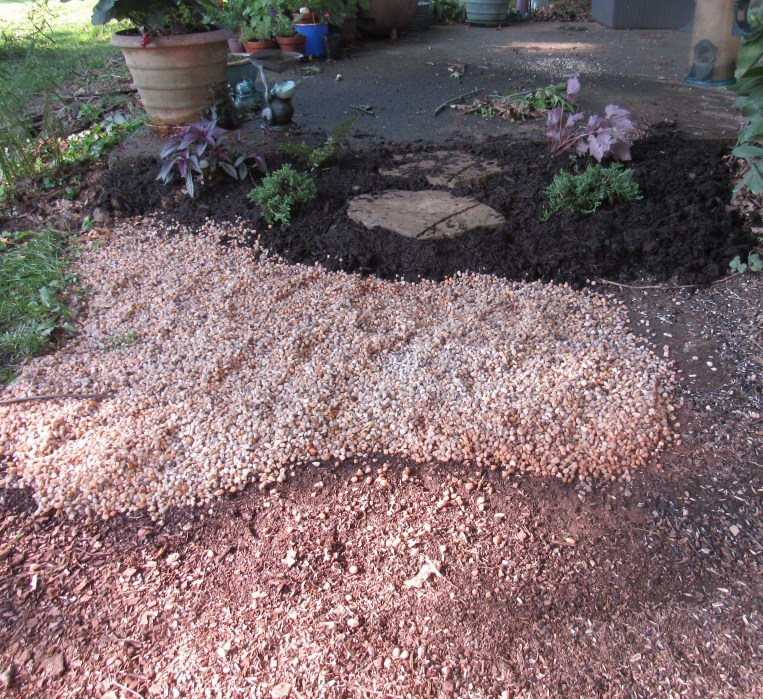


The next phase. Black hardwood mulch is the only kind I was able to buy. Gardening supplies are off this year, presumably affected by the pandemic. The black mulch looks good, but it will decompose faster than pine nuggets. In the way of things, I bought less pea gravel than I need, so that will take more filling in. 
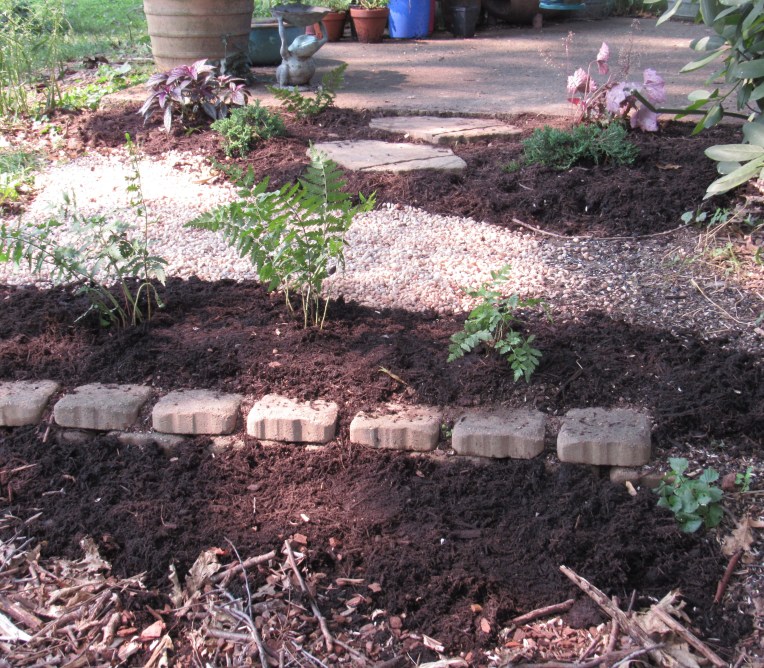


Mostly done. At the upper level is a strobilanthes plant, two Blue Rug junipers, two Japanese painted ferns, and one heuchera whose roots were all in among one of the ferns, so I had to dig them both. The lower level has four divisions of a fern I lifted from another of my beds. I bought the junipers and the strobilanthes, and shopped my garden for the rest.
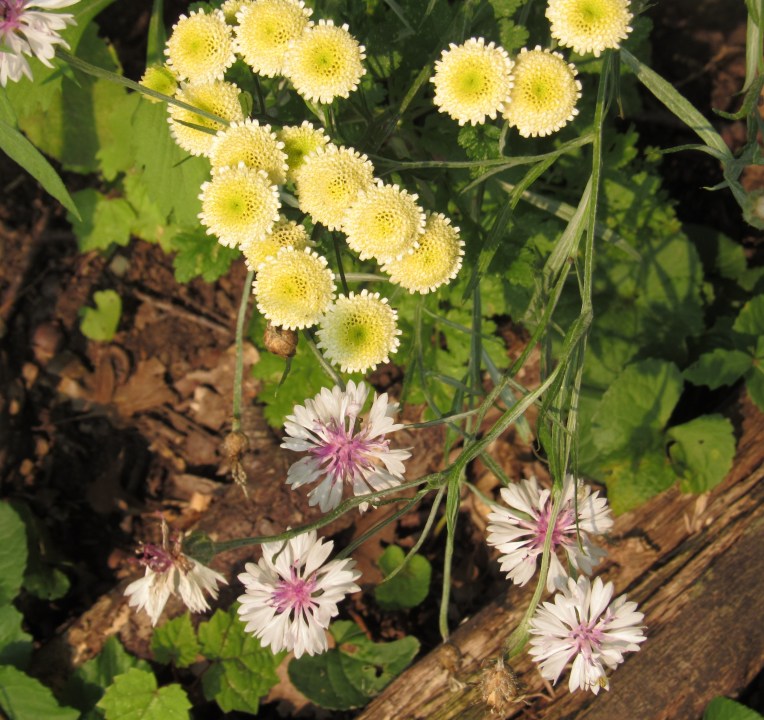


Sometimes your garden gives you bouquets. This pretty combo made itself: yellow feverfew and centaurea, white with a pink center.
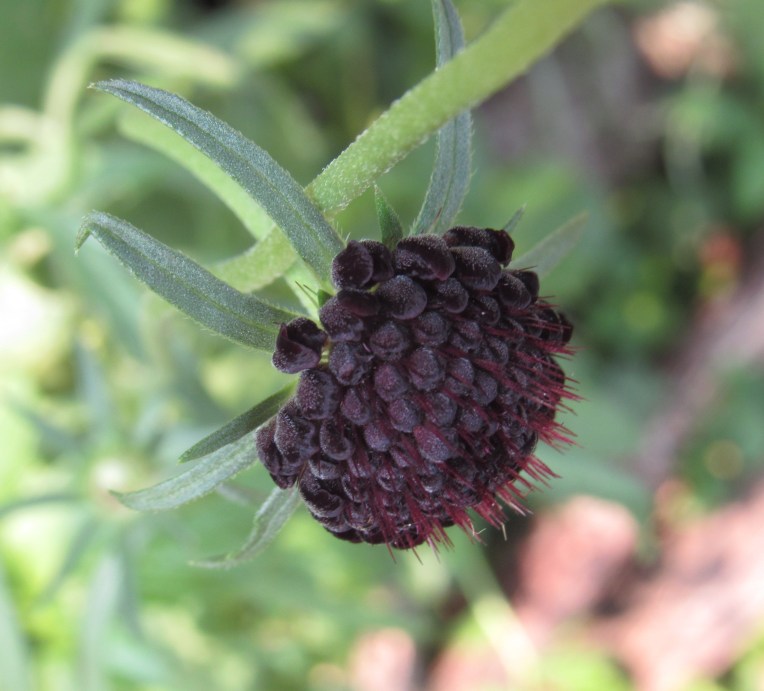
 

One of the super-dark burgundy scabiosas, a budded flower getting ready to open.
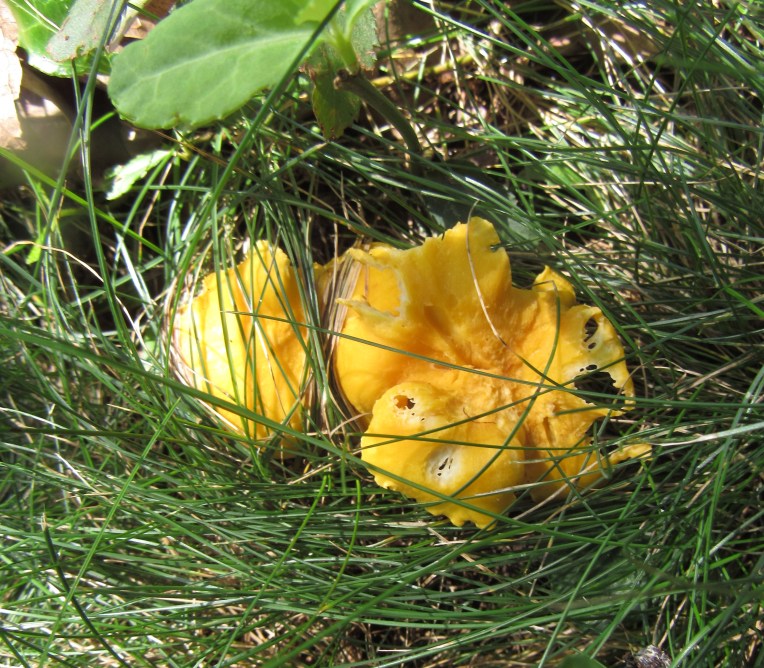


These bright yellow mushrooms popped up in several places. Of ones in my guidebook, they most resemble chanterelles. 


Bargain Time

I have a Baptisia australis in my front border that has bloomed only once, and sparsely. It needs to come out, but not until fall, when I can dig without trampling good flowers. I also have some lilies in containers that are in their second year, and will have to be moved because they’ll have used up the fertility of the soil. So what do we do in June, when we anticipate gaps to be filled in October? Shop the sales!

Don’t get bargain fever, but snap up anything you know you’ll want. Above are two rudbeckias, a meadow sage, a foxglove, a papyrus, two balloon flowers, and a campanula, that in total I paid $37.98 for. The rudbeckias and foxglove (which appears to be three individuals in one pot, anyway) can be divided into threes, and the sage looks like it can make two. Wherever I choose to plant them for summer growth, I can later move any of them into the front border, or my larger containers. 

You’ve probably seen various techniques for dividing plants, but let me share the easiest. Get a bucket of water, unpot your perennial, and swirl it in the water until the roots are clear of soil. Cutting it apart with scissors can be done then with precision, and the roots are well conditioned to spread in their new location. 


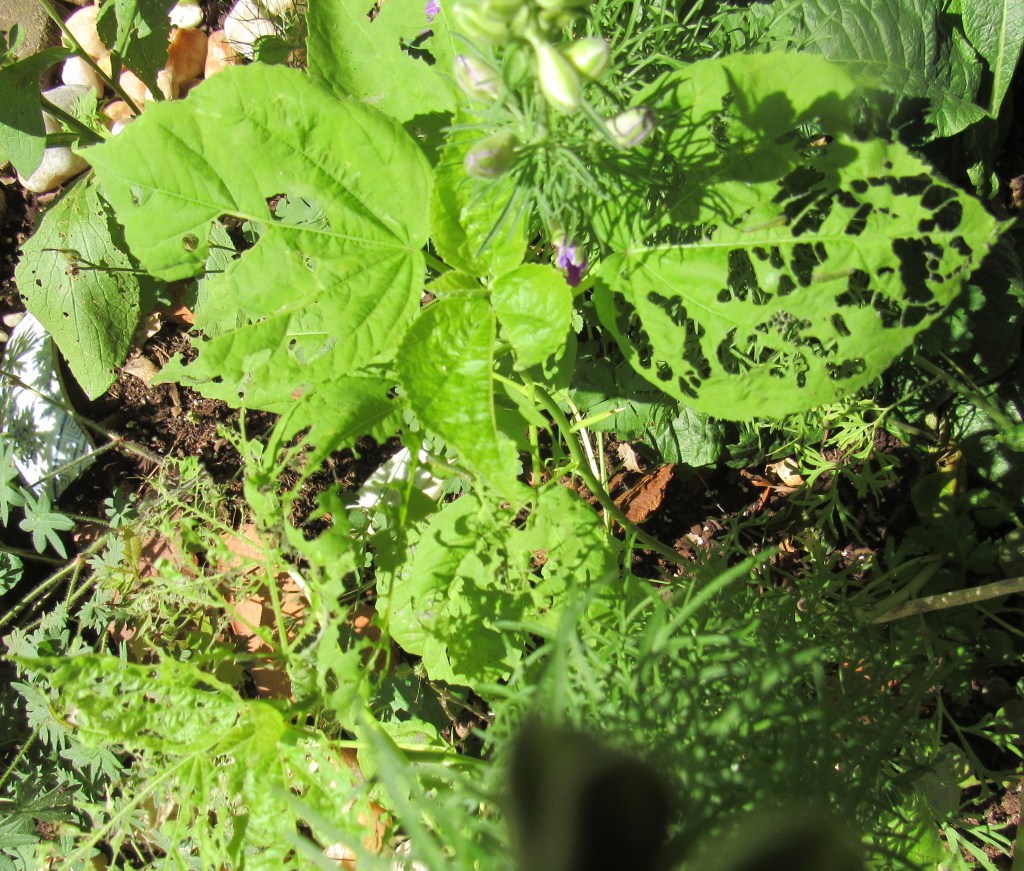
This is always the fate of Hibiscus. It looks like there are enough good leaves for the plant to overcome being eaten and flower. Hibiscus are easy to grow from seed, so let the caterpillars thrive for the songbirds, and start some new ones when you need to.


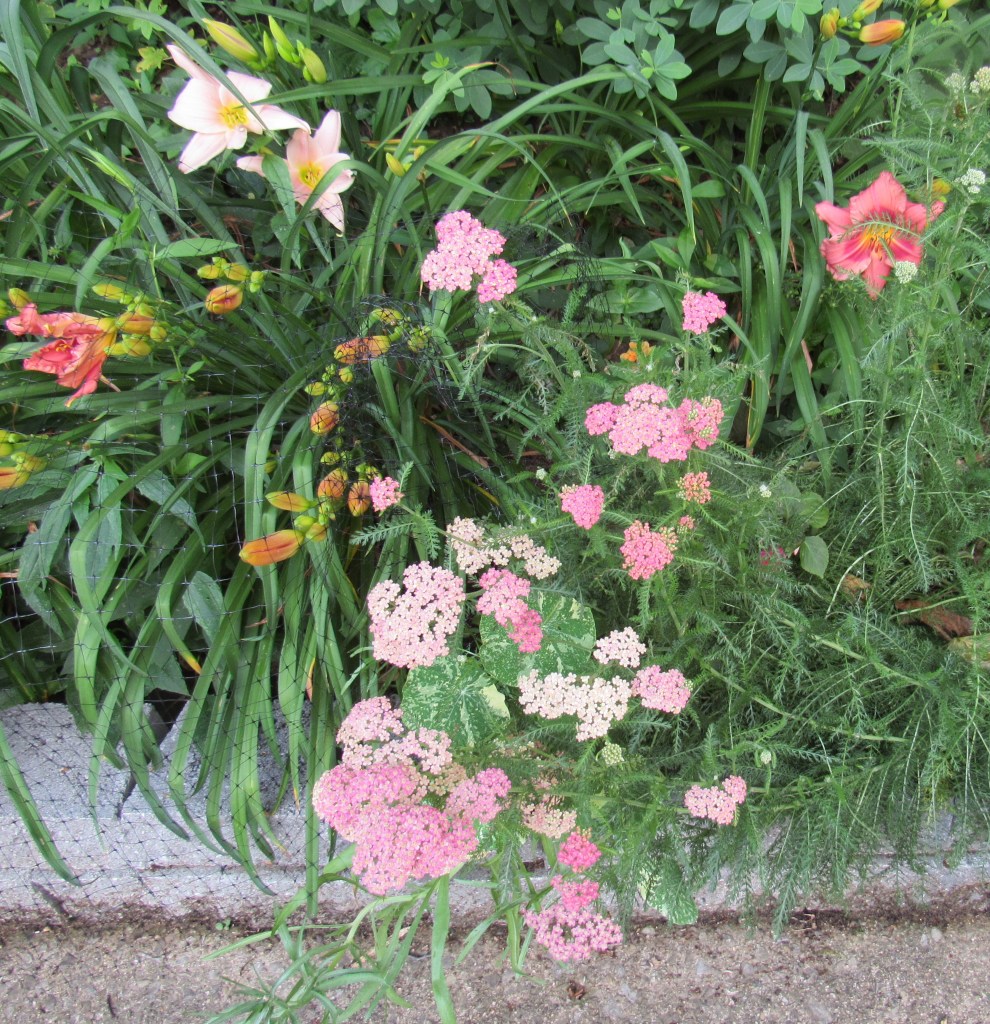
A section of border flowers (and some of the deer netting, that needs tweaking up every day, so it doesn’t stop the blooms from opening). The yarrows are coming out naturally in this suite of pinks.


Fantastic nicotiana that can’t really be captured by the camera. It has this brick red on the outside, and purple on the inside, so that from the right angle the two colors together make a neon effect.


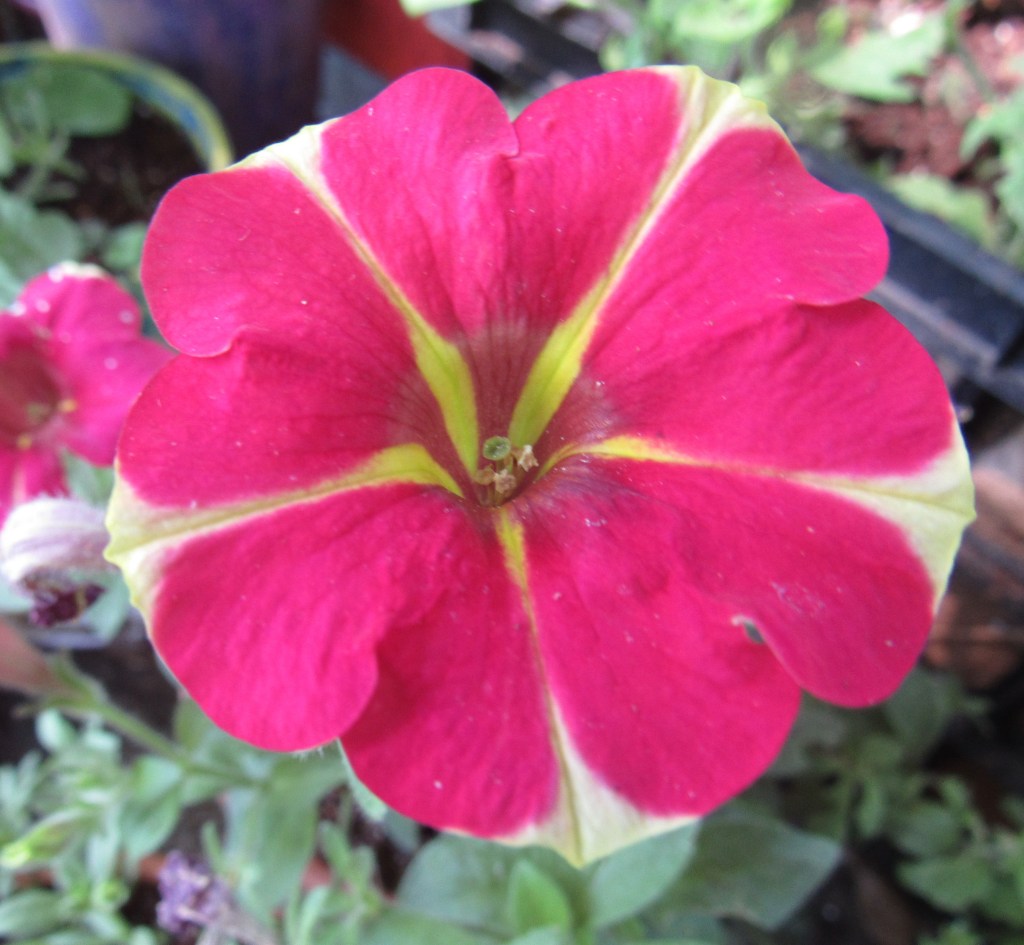
Petunias seem perfectly symmetrical, but they do have a right-side-up. At the base of the fused lower right petal is an extended marking to guide the bees.


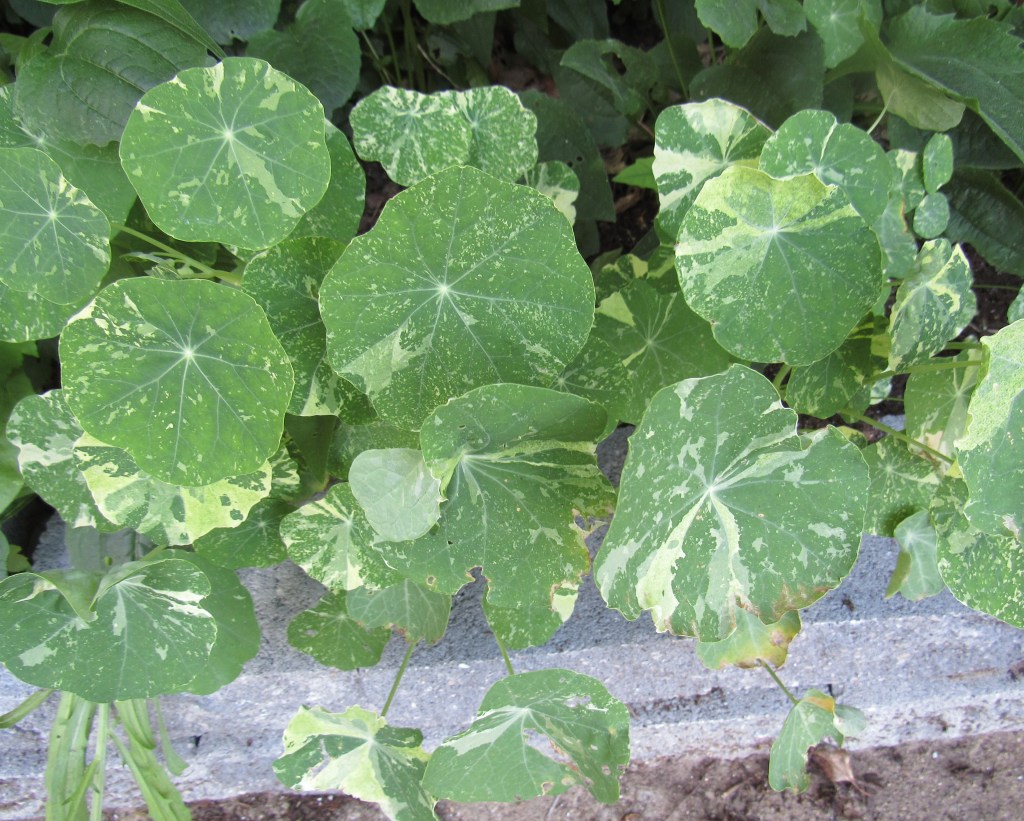
Alaska nasturtiums doing what I want them to, spilling over the block edging, which looks very distant thanks to the camera’s forced perspective. 


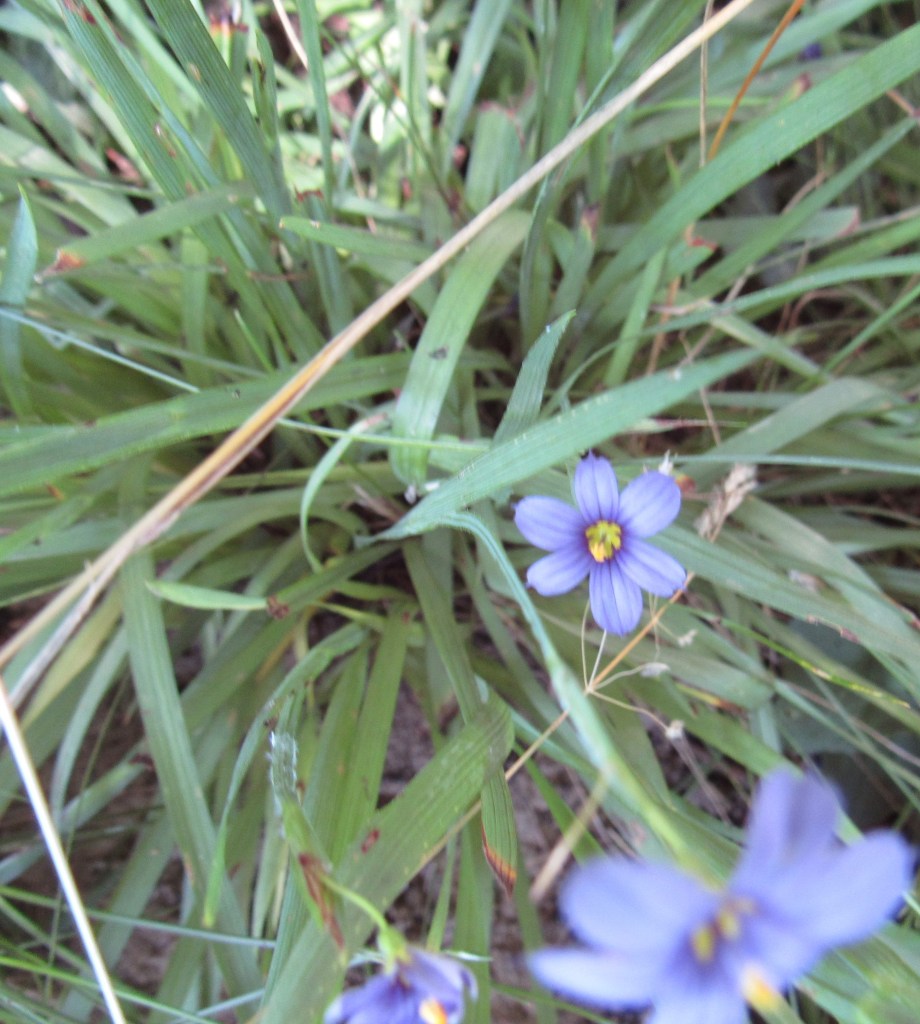
A close view of a tiny wildflower, abundant in my lawn, Blue-eyed grass (a type of iris).


Wild garlic, one of the natural arrivals in my deer area. The new plants are all ready to go, as soon as the seedhead breaks up.


Mid-June Blooms

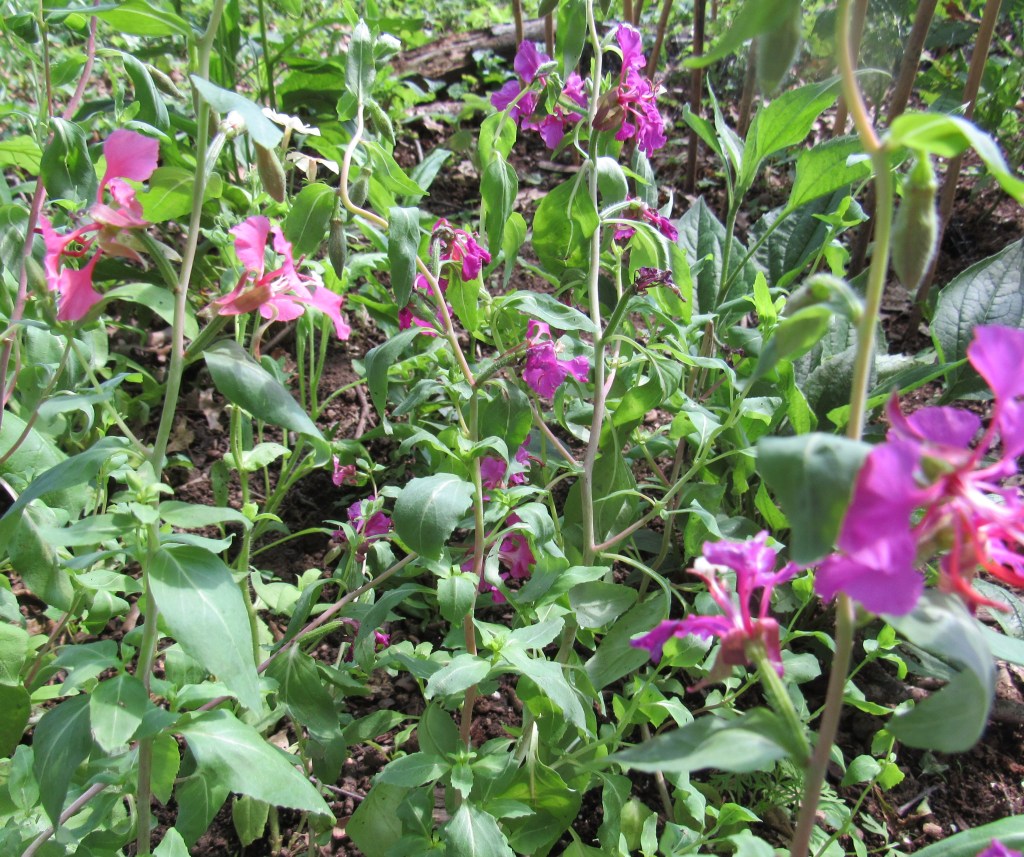
An annual I’m trying this year, Clarkia, related to fuchsias, that blooms in shades of pink. This variety I grew from seed is spacier in petal/sepal configuration than the cup-shaped flowers usually seen. The leaves and stems have a little of the succulent appearance of impatiens. 


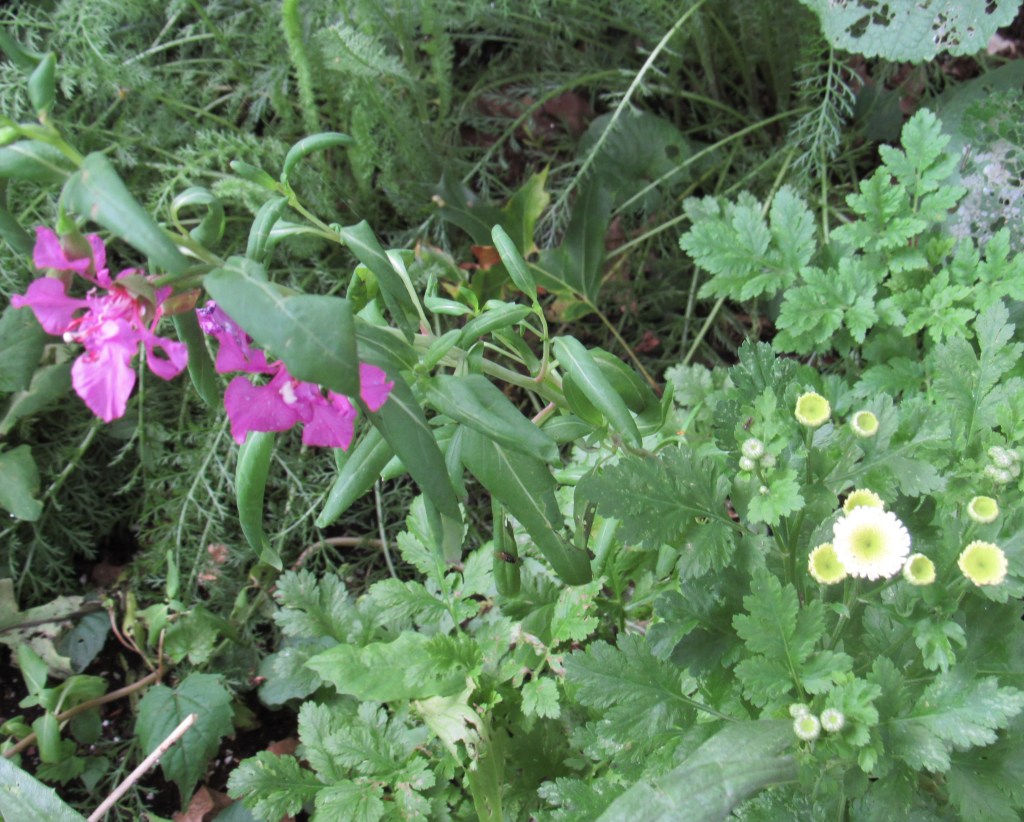
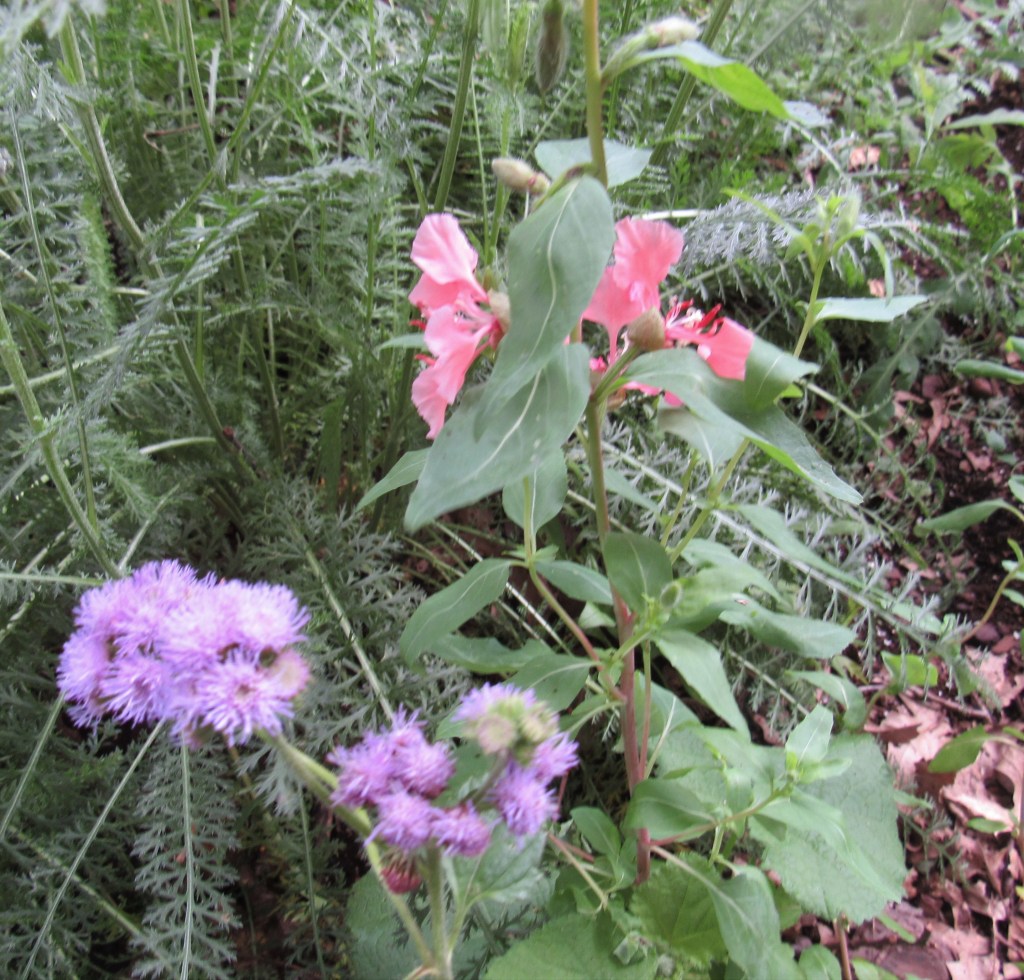
The combinations above are really pretty in person, though the camera didn’t quite get the colors true. Feverfew’s ferny leaves and pale yellow buttons seem to accent any planting well, especially contrasting with magenta. And then the blue of ageratum—bluer than the photo suggests—is the perfect match to salmon pink.


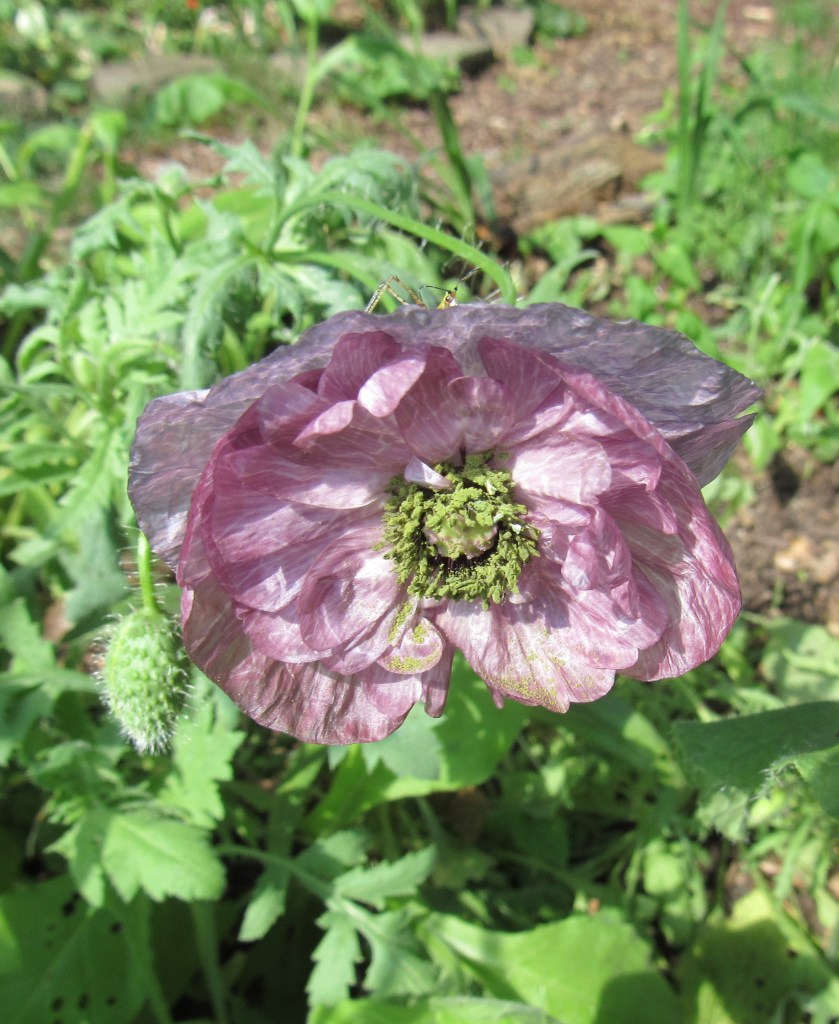
A delicate Shirley poppy, with a small grasshopper sneaking into the picture.


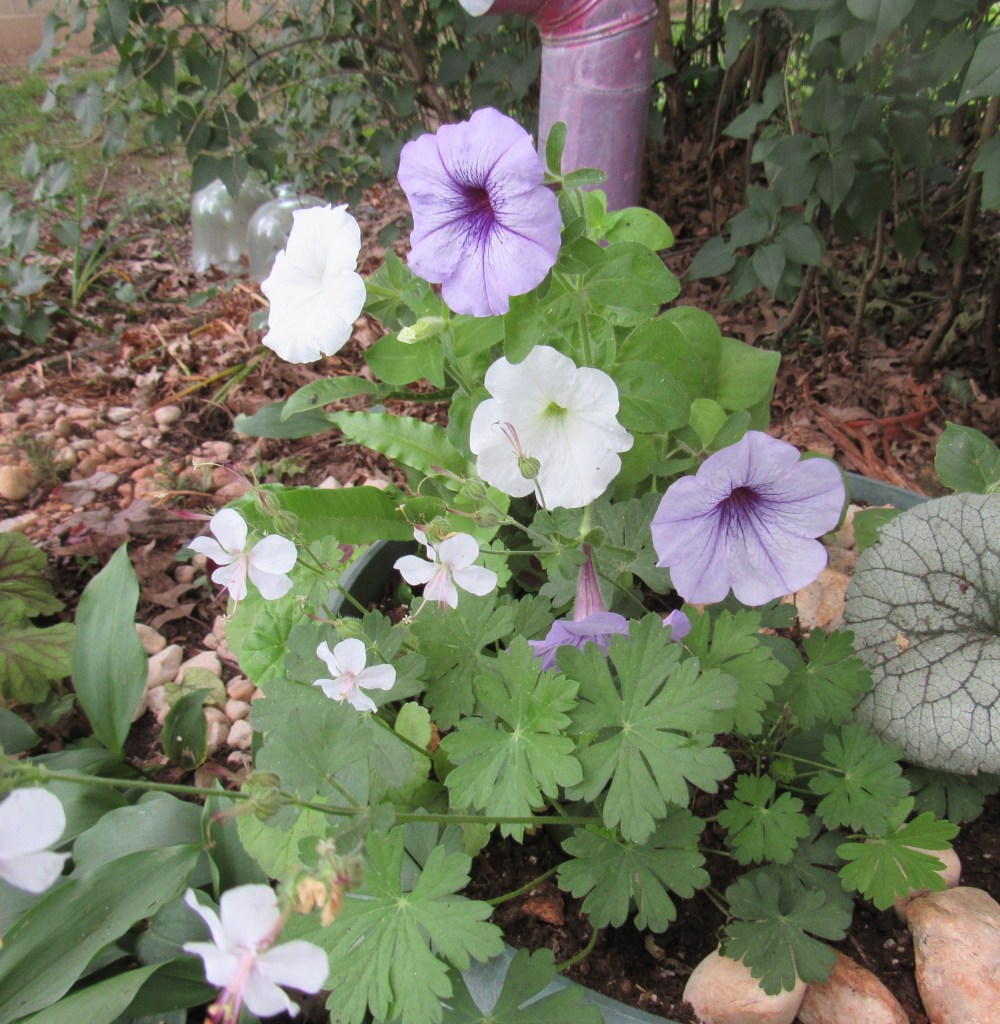
A nice effect of petunias and geraniums. Petunias grow most happily in pots, because slugs love them so much,  petunias as bedding plants are likely to be tattered to death.


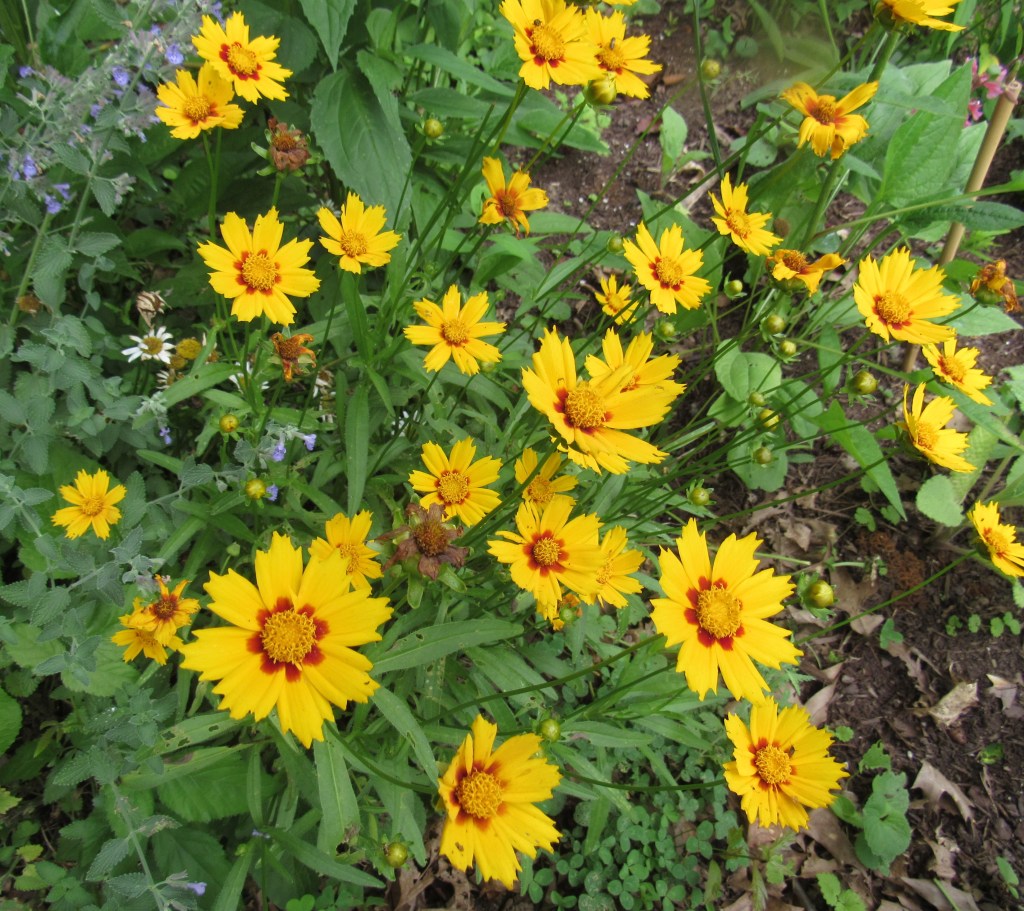
Coreopsis in its second year, after being started last year from seed. I’ve never had much luck with coreopsis, when I’ve bought it as a plant. It blooms the first year, but perennial label notwithstanding, it usually disappears by the next spring. So seed is probably the way to go.


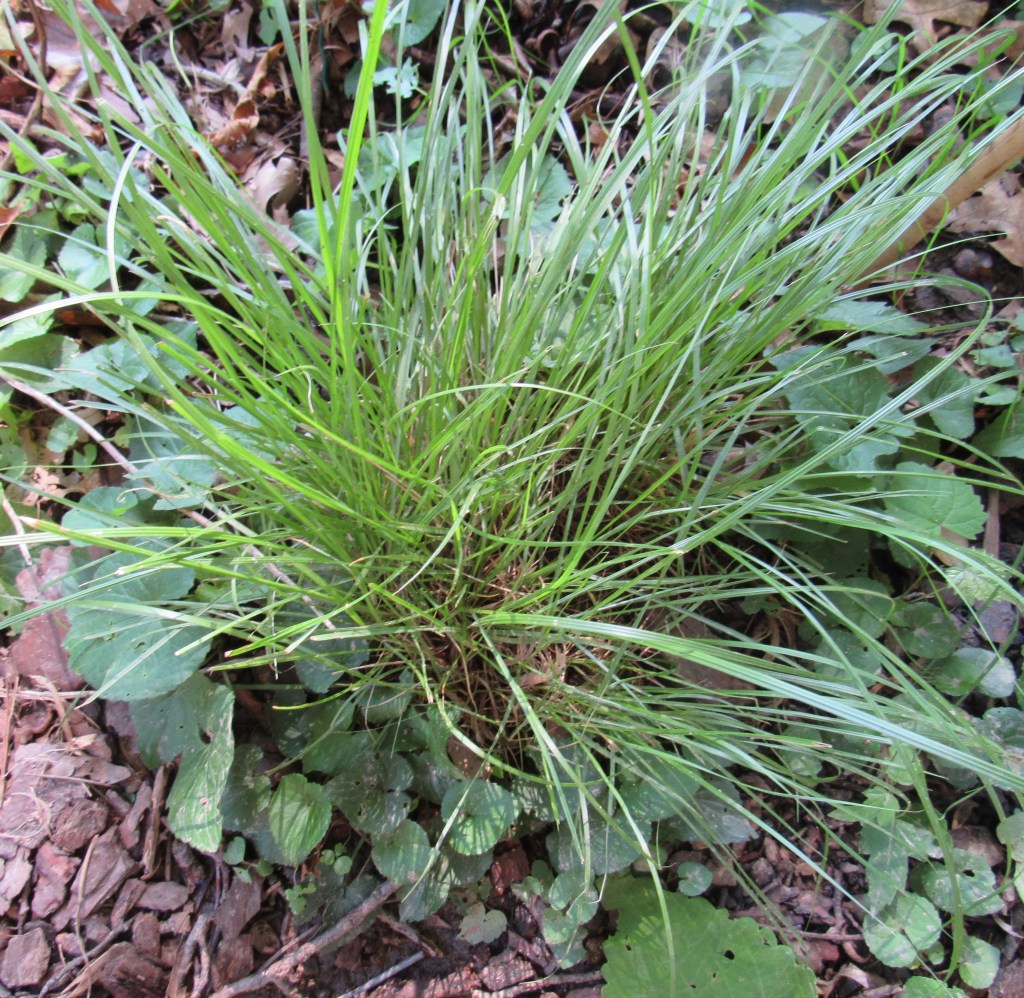
A design tip from nature. This grass, that my cats like to eat when I walk them on their harness, has come up in a collar of violets. I can see possibilities: blue fescue surrounded by primroses, red pennisetum surrounded by forget-me-nots…


Bugs and Beauty

Above, a close shot of a goatsbeard flower. If you have one, it is either male or female, and so won’t reproduce by seed unless you have the right combination of two. That trait is called dioecious. Another member of the rose family, which goatsbeard belongs to, is the apple tree. Most varieties of apple need a mate to produce fruit. The goatsbeard is native to North America, and the flowers attract their own population of tiny insects, that I couldn’t quite bring out in this picture. Whatever they are, the ladybug larvae have been hunting them.


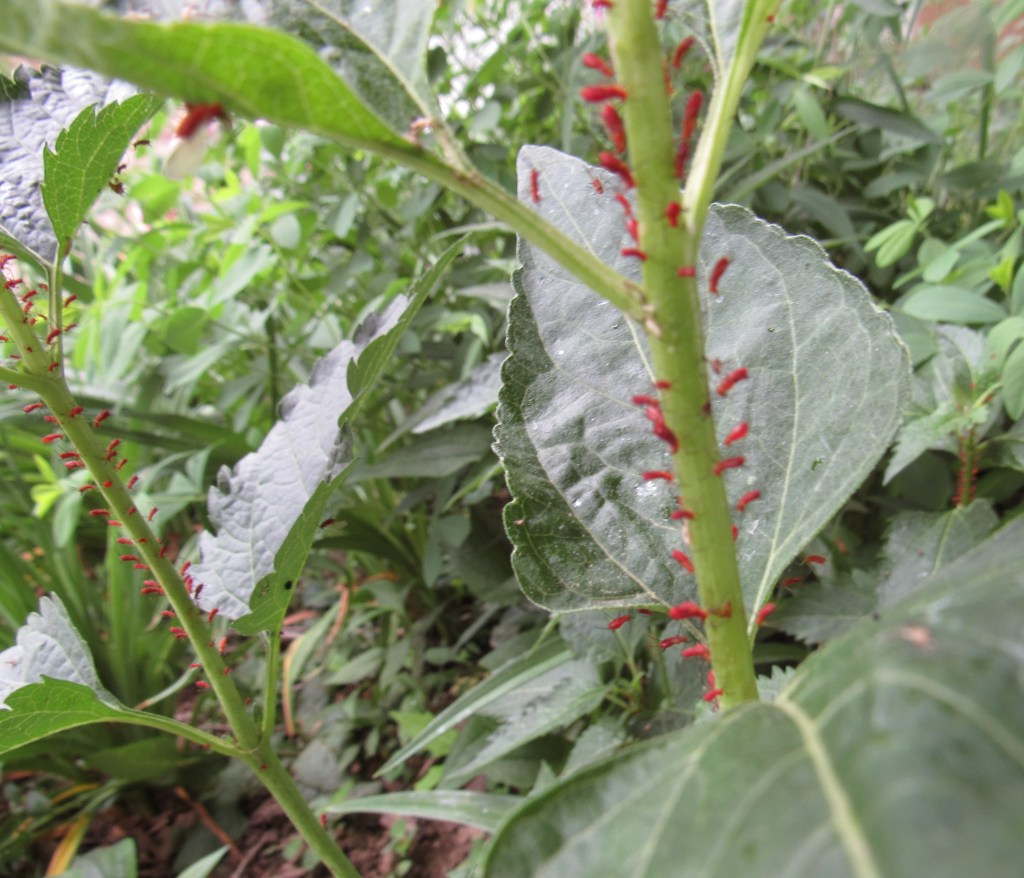
The strange red aphids above have been all over my heliopsis. As you can see, they attach themselves to the stems in a regimented way, and sort of float (on a too-tiny-to-see mouthpart, I presume). What I do about aphids, is let them be. I’ve seen yellowjackets, as well as ladybug larvae, eat them. These days, when all of nature is precious, our rule should be, Lose the Plant, Save the Planet. In fact, most afflicted plants won’t die from bugs or funguses…and if a plant can’t survive in your garden, you can find plenty of others that will.

A barn owl is said to catch as many as a thousand voles in the months raising its young. We love owls, and we don’t love voles, but it stands to reason the voles have to be there if the owls are going to thrive on them. Caterpillars that skeletonize leaves also feed migrating songbirds, and the moths caterpillars turn into feed bats. And that’s the natural order of things—prey comes before predators. When our yards can support wildlife, the creatures will arrive, but in the meantime we have to allow insects and rodents. 

Post-WWII, the suburban dream was a strange mishmash of perfect green lawn and tidy backyard vegetable plot. At the same time, suburbanites were encouraged to scorn rustic details like fences. If animals have only the choice between chemically treated grass, or flowers and tomatoes, of course they invade the garden. For decades the industry-touted solution was more chemicals, or other “kill” methods, that an organic gardener never needs to employ.

Another important rule is: Recruit Small, Fight Big. We don’t want to harangue fellow gardeners, who have at least one foot in the battle with us; we want to fight for laws to preserve and protect Planet Earth and commitment to their enforcement. 


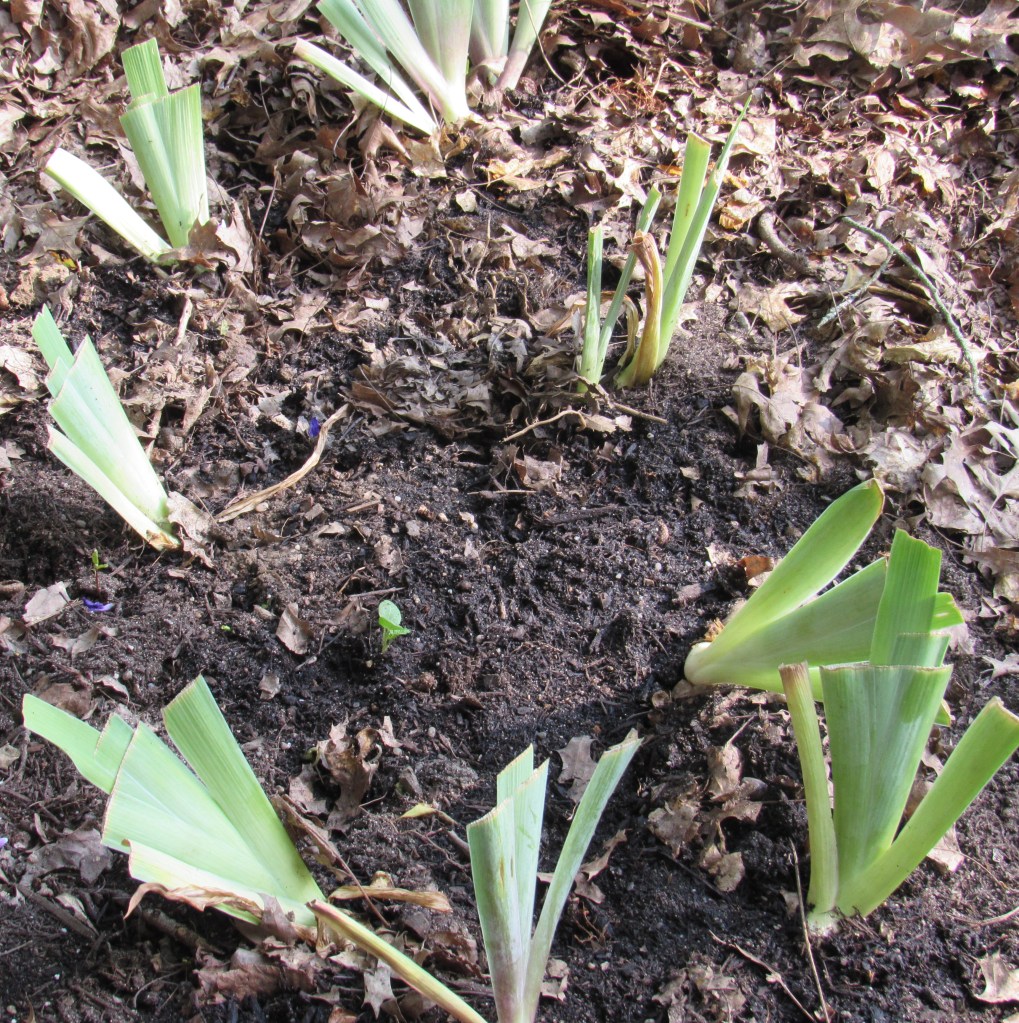
Here are the irises I mentioned last week, dug, separated, trimmed, and replanted in a sunnier spot.


And here’s what’s taken their place. Raccoons have been nasty diggers this spring, so I’ve been buying bags of egg rocks (about five dollars each at Lowe’s), and strewing them in the vulnerable spots. Except for the primroses I divided and stuck in here and there, all I’ve put in are annuals, red impatiens and a lantana. That way I can decide if I want a different perennial in this bed next spring. 

I’ve seen, at least once, a garden writer tackle the theme of excess perfection in magazine and catalogue pictures. The above is a true-to-life view of new plantings in hot weather, a little sparse and a little droopy. But since mail order nurseries are using the pernicious star rating system these days, it’s worth thinking about unrealistic expectations, the way that a permissive environment for returning anything for any reason infantilizes consumers. Plants are alive, and under assault when we put them outdoors. Patience and resourcefulness help, also the constant acquiring of knowledge; also a philosophical view. We gain a lot from gardening—all the entertainment of setting a thing in motion and seeing how it plays out—but plant by plant, we don’t always win. Maybe it would be better to show the spots and yellowing, and aphids, and heat wilt, and deer chomping…


Effects

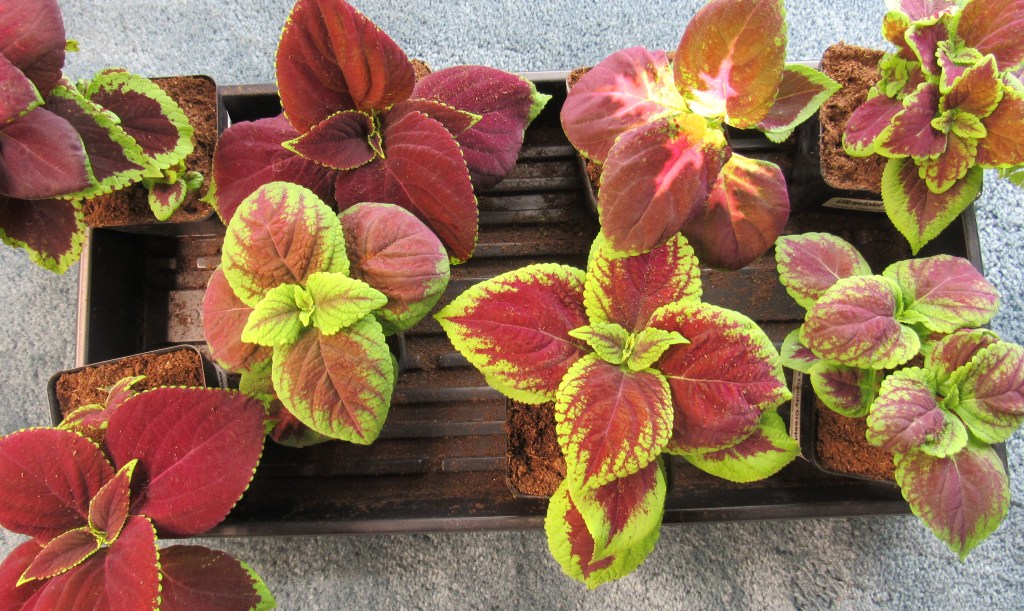
The coleus, in this bed where almost everything has variegated leaves, has the same red, yellow, and green as the heuchera (variety Electra, I think). Coleus are the easiest plants to start from seed, grow from cuttings, and store indoors through winter. So, for next to no money invested, you get the design impact of far more expensive plants.


The last issue of Garden Gate magazine talked about growing hydrangeas in pots. That seemed like a great answer to me, for this big pot that can accommodate a lot more root than a handful of annuals produces. First, note another good pairing with coleus, in this case almost an exact match in leaf shape and size, and burgundy to contrast with green. Second…I didn’t know when I planted the hydrangea that its flowers echoed the rhododendron’s in the background so well. But here are two shrubs that should mesh together nicely.


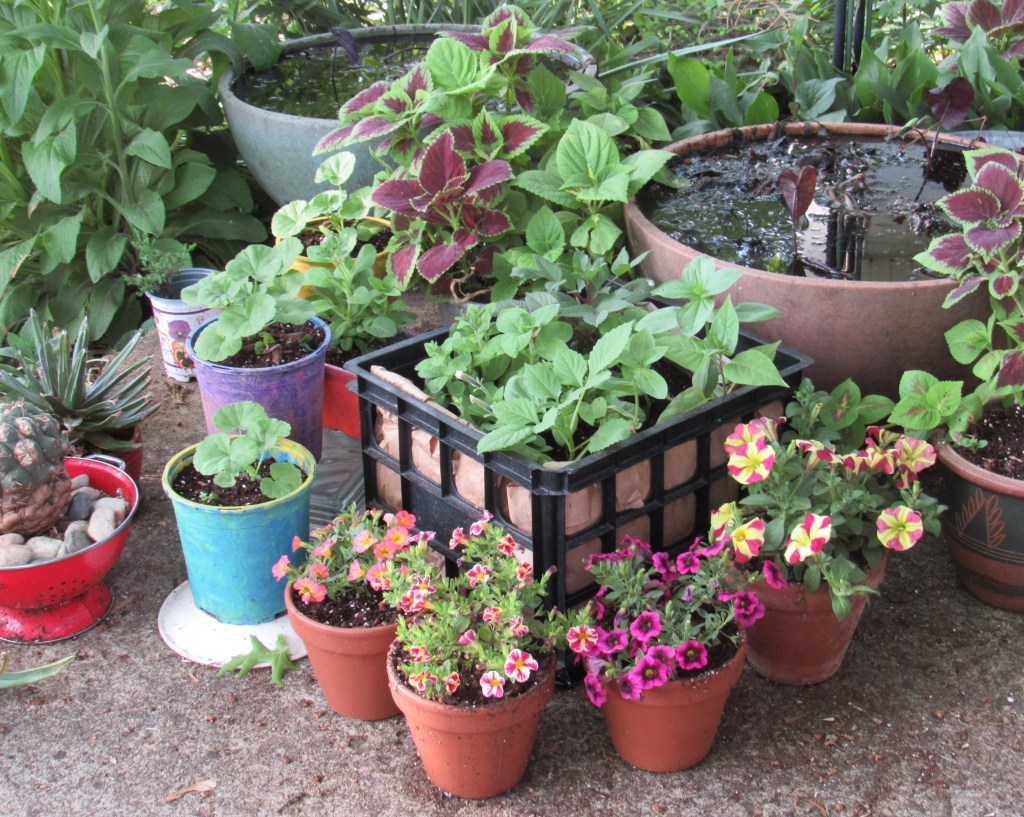
This year’s pots. The blue and purple ones are throwaway nursery pots, decorated with craft paint. It’s a way to keep plastic out of the environment, and I recommend painting pots as a waiting-for-warm-weather March or April hobby, and as a usual practice these days. Not just collecting pretty ceramic and terra cotta, but building your stock with repurposed plastic. Think…if as few as a hundred people did six pots each, that would be 600 pieces of plastic out of landfills, roadsides, waterways..

Meanwhile, the crate lined with paper is just a notion of mine. I’ll see how it works… And as to the annuals, the calibrachoa and petunia, I love pinwheel flowers, so these were great finds.


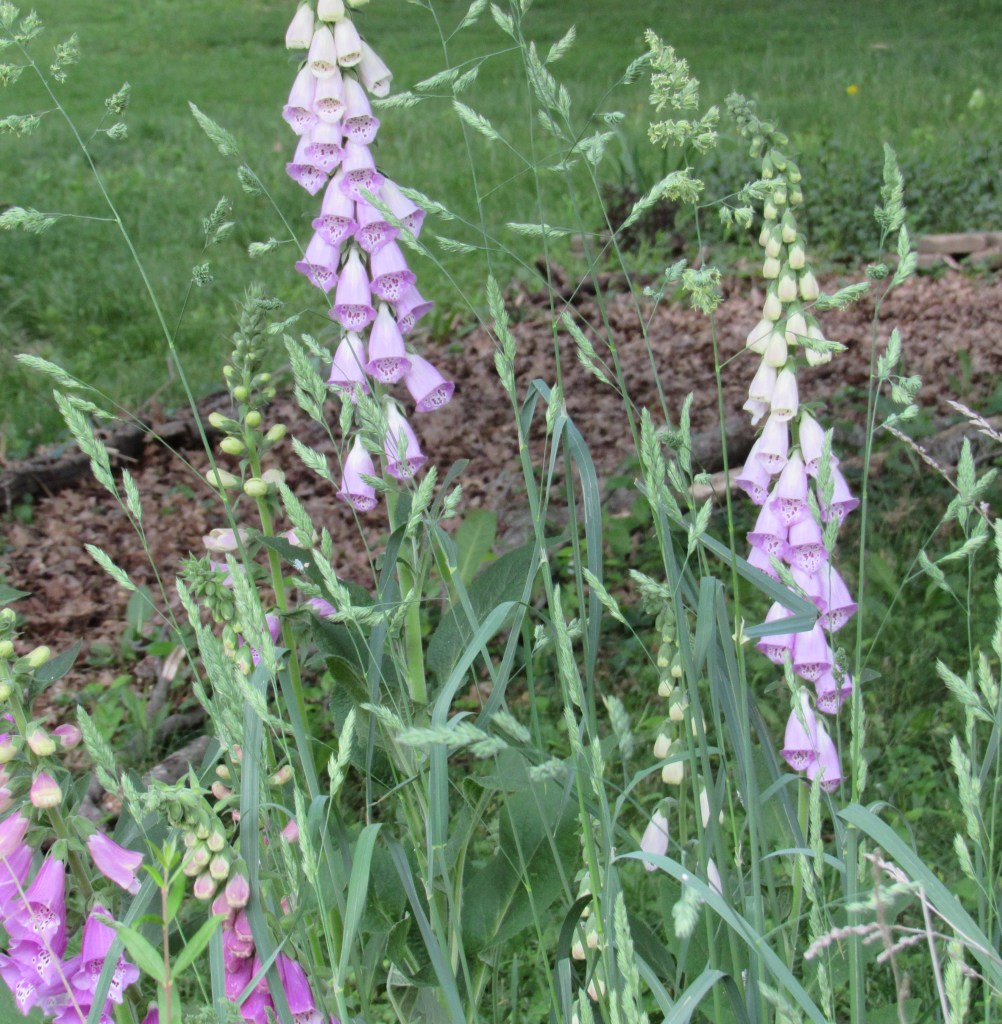
Meadow plantings are hot, but it’s worth noting that a meadow is a type of plant community created by human agricultural practices, from grazing livestock in fields, and from mowing. Meadows and their combination of grasses and flowers are easy to love, great for birds and insects, but there’s no set-it-and-forget-it aspect to maintaining one. You might like the effect on a small scale, making miniature meadow plantings among your beds. If so, mix in grasses, and in everything, look for sway…flowers with nodding heads that dance in the wind. Above, some grasses and foxglove, then a stand of catmint with daisies (the always good blue, white, and yellow combo); finally, some tall yellow columbines, with iris, monarda, and goldenrod.


The advice is always plant in threes. But I like the effect of one bright red flower in a bed of mostly pinks and purples. Primrose, as above, is good for spring, zinnia or dahlia for summer, and a peony or rose can stand out among shrubs.


Planting Out Week

Photo of backyard border bed

Last week, we were in the gloom; this week, serious spring has settled in, with temperatures forecast for the eighties in the coming week. Here is a view of the bed I showed a couple of posts back, when I talked about how many plants it takes to fill one. I now have it fully stocked with annuals: poppies, Centaurea, Scabiosa, sunflowers, Tithonias, ageratum, feverfew (a perennial). With luck, Clarkia and annual phlox, but I’m growing them for the first time, so I can’t be sure until they flower. Mostly choices that are deer resistant. (And one really lonely allium, that got included by mistake with the daffodils.)


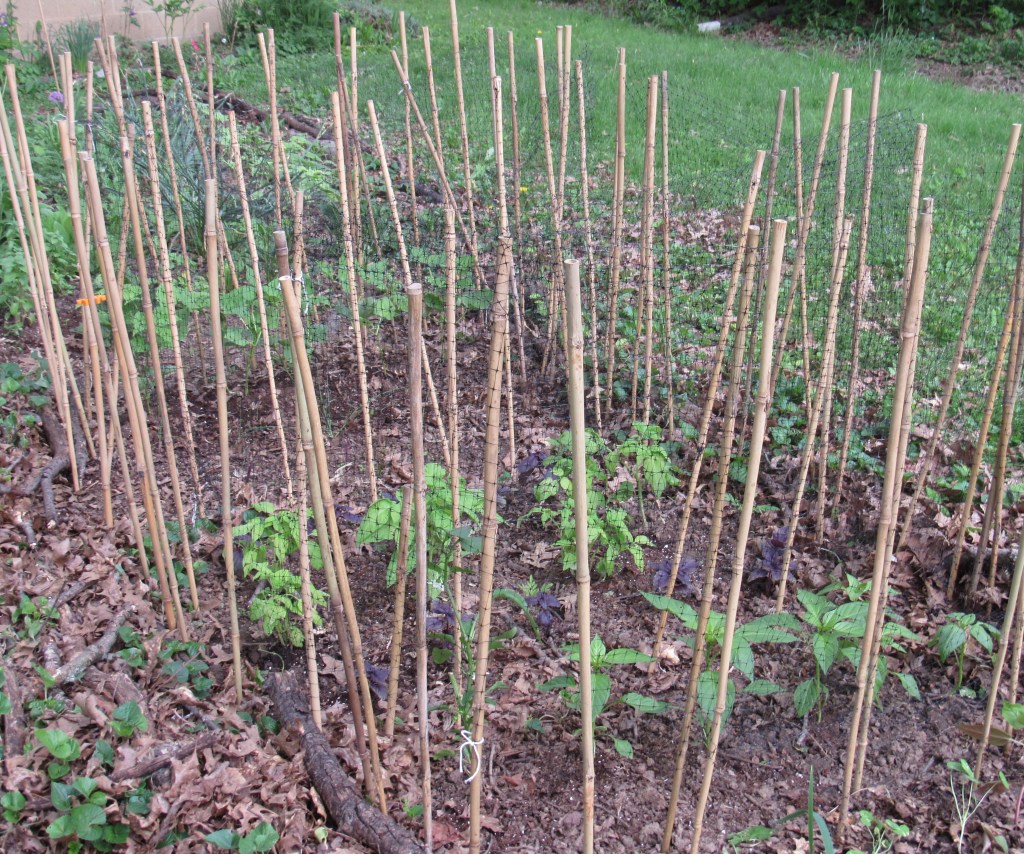
Photo of vegetable bed protected from deer

This is the way I’m experimenting with protecting my vegetables. I’ve never been able to grow many edibles, because of the deer, but that’s been partly my not wanting to construct fencing. I may yet need to make metal grid fences, but what I have here is a double baffle, a kind of deer discourager that I’ve read about and that strikes me as logical. I have an inside section of netting, strung onto bamboo stakes, then an outside section of additional stakes. The concept is that the deer will try to push their noses in, find one baffle, the outer row of stakes; and if they try further, a second baffle, the inside netting, which confusion leaves them too uncertain of safety to venture more.
Double rows of fencing, spaced at four feet apart, are recommended for this method when you’re making the investment of a serious fence. 


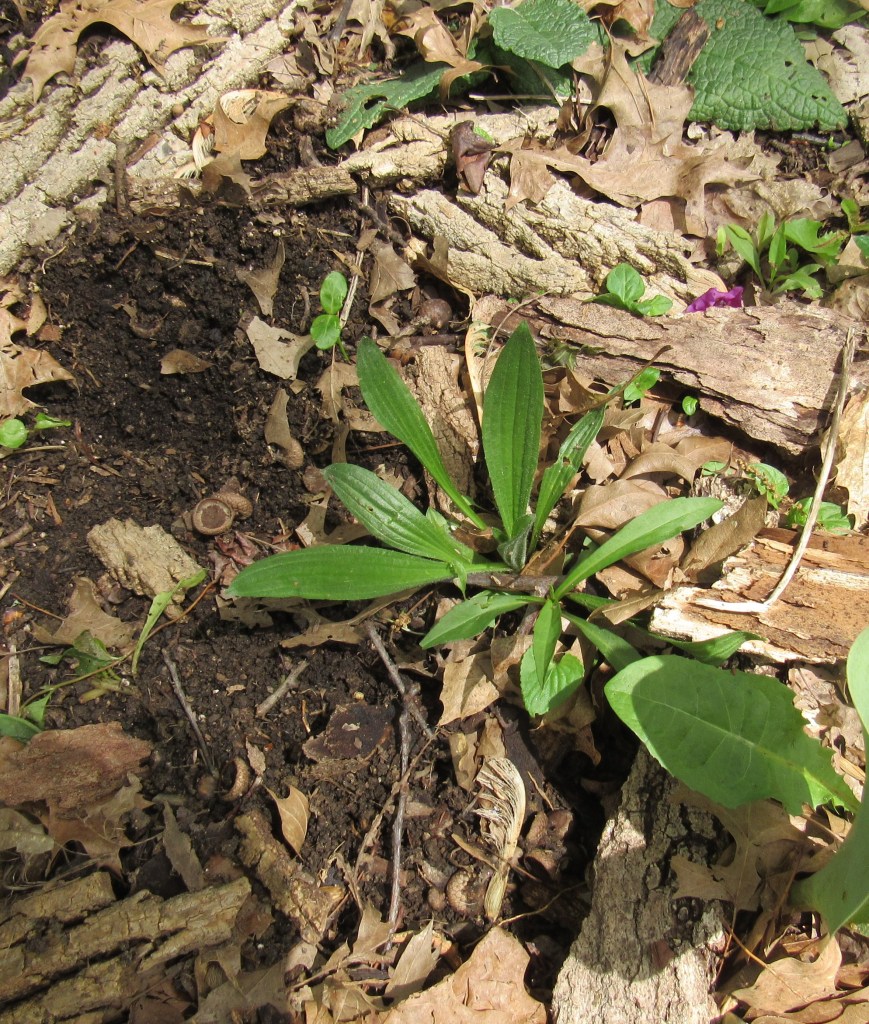
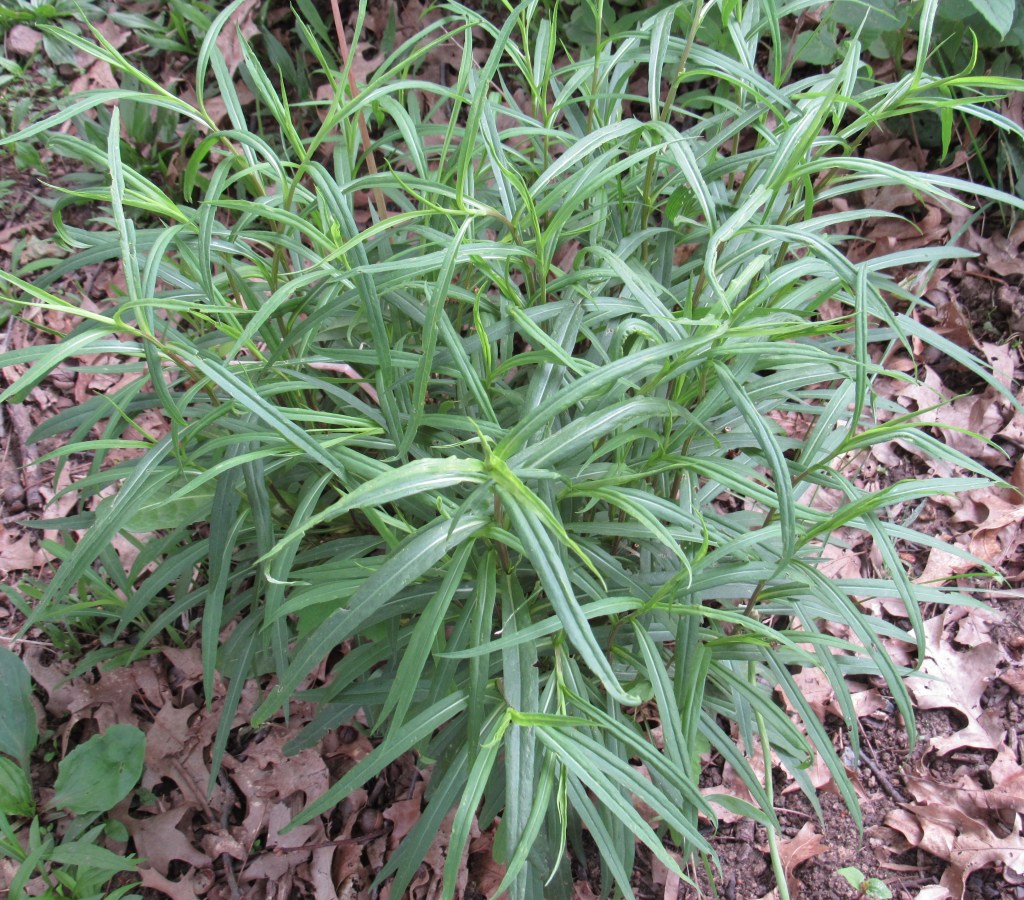
Photo of wild aster foliage

Above, a pair of wild plants that turn up in the garden, and that have elegant, attractive foliage. The first is narrow-leaf plantain, which also will form a sort of ground cover, and has the little bullet flowerheads, that some of you, like I did in childhood, may have “shot” by wrapping the stem around itself and sliding the loop to detach the flower. The second is a late-summer aster. Some aster species have broader leaves, but this one, which will bloom with a tiny white flower, has grassy leaves that look pretty most of the season. Asters are pests as well as beneficial, seeding everywhere, but they bloom when pollinators need them, so are worth allowing (to a point).  


Photo of ground ivy in flower

Ground ivy has a certain charm when it’s in bloom, with its little bluish flowers dotting among the grasses. It was brought to North America by European immigrants, for its medicinal uses, to cure coughs and bronchitis, also arthritis and tinnitus, and a few other conditions. So while we wait for Universal Health Care 😉, try some ground ivy, free and abundant, and good for the insect population in any case. 


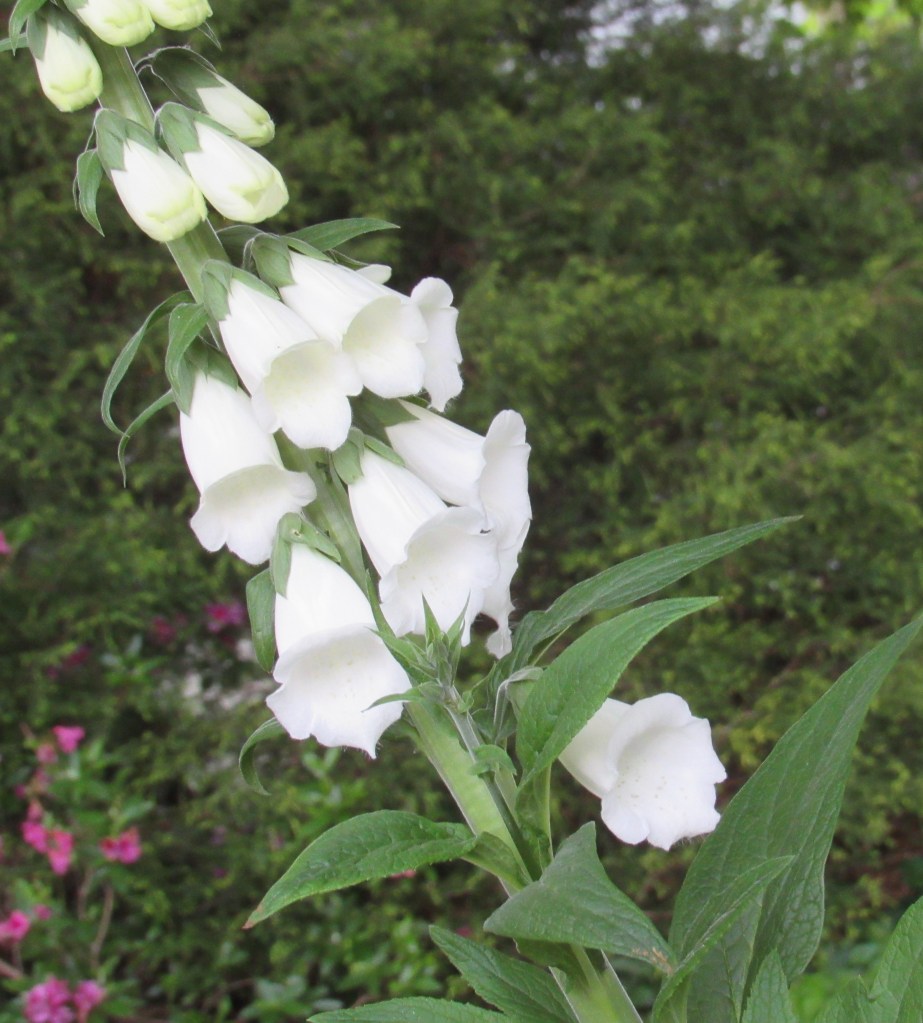
Photo of white foxglove

An almost perfect white foxglove. It barely even has spots, a claim the named white varieties don’t seem able to match. I’d have to propagate it by cuttings, since the seeds have probably been compromised already by the nearby pink foxglove.


Photo of clematis flower

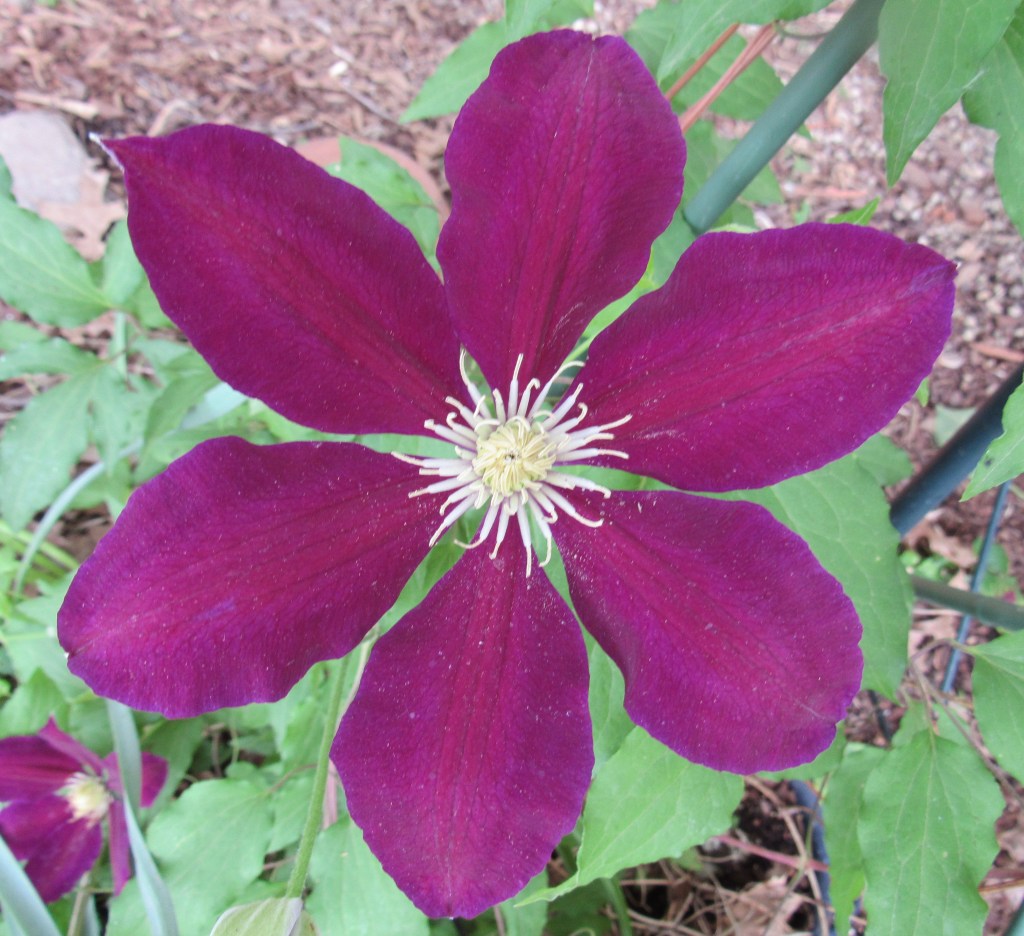
Last year I treated my clematis with bonemeal, and this year it’s taken off, climbing the arbor for the first time. It’s an average jackmanii as far as I know, but the flowers are also coming larger and more burgundy than purple. (The camera gives a magenta appearance, but the true life shade is deeper.)


Photo of Japanese painted fern with green sport

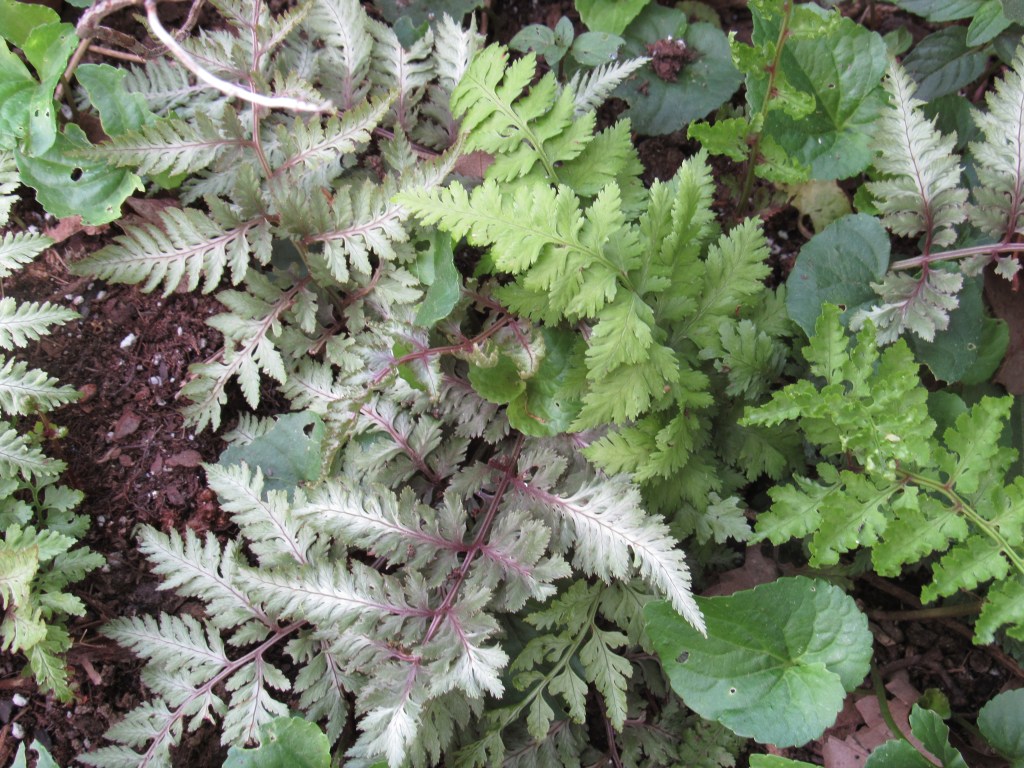
One of my Japanese painted ferns, has sported (in horticulture, a sport is a stem or branch that features a different color or appearance from the main plant). Even though it’s a plain lime green, it makes a good-looking “second fern” in its own right.


Some April 2021 Garden Sights

Photo of coleus starts for the garden

This year’s Coleus cuttings, taking on good mature shape and color. One of the secrets of coleus is that as the plants grow larger, their leaves develop new variations in pattern, so you may get dramatic veining, or something like the third from left, top row, which without the camera flash has an almost purple border with spiky red and magenta centers, surrounding a pale yellow. I also have two pretty freckled plants, one that mixes an almost true red with burgundy, and one lime-yellow and magenta. When you clone off the tops, you get bigger and better specimens, though they won’t produce the same plant from seed.


Photo closeup of Dordogne tulips

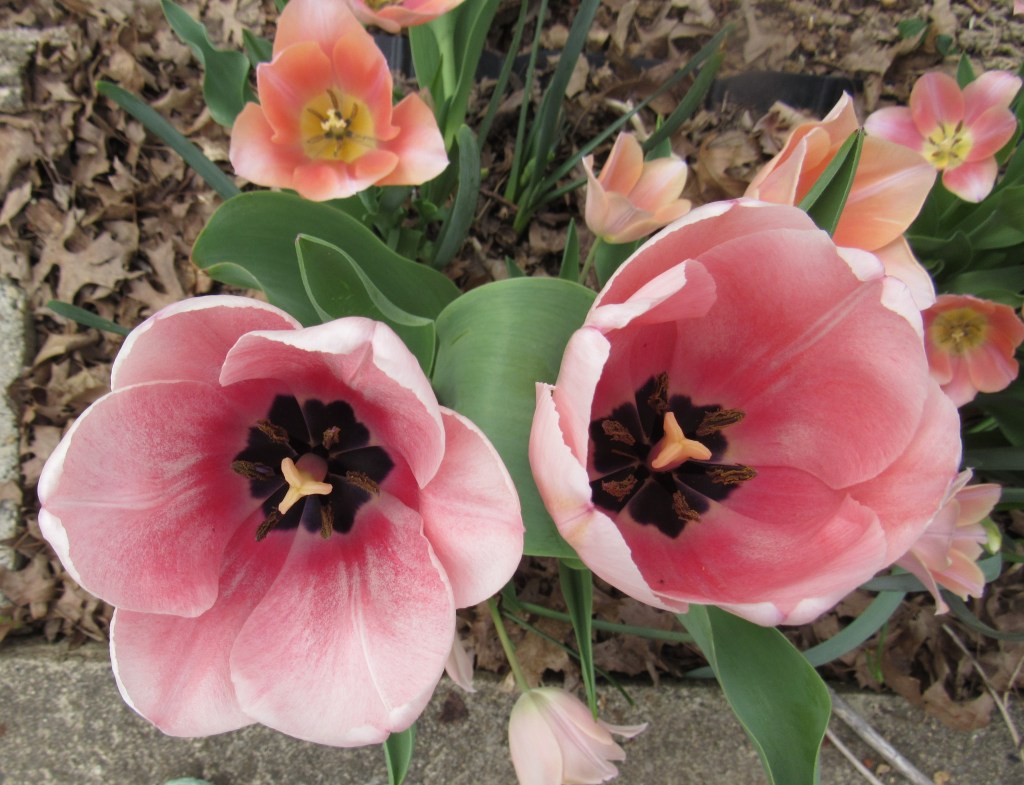
An inside view of the Dordogne tulip, one of the prettiest. It combines well with Apricot Beauty, which is shorter and smaller, but not as exaggeratedly as the camera implies.


Photo of Apricot Beauty tulip

Apricot Beauty’s hue and luminescence (and also a few speckles of deer repellent).


Photo of seedling hellebores under parent plant

These little waxy-leaved plants are baby hellebores that have seeded themselves below the parent plant. I harvested out three last year and it looks like I’ll have to find room for some others.


Photo closeup of a dandelion flower

What there is to see in a dandelion flower enlarged.


Photo of plastic repurposed as picnic dishes


I’m always looking for ways to repurpose all the free plastic stuff we get from packaging. It seems a little silly to buy picnic or party dishes, and then dump dishes we could harvest from our groceries, into the recycle bin. A lot of recycled plastic won’t be reused, due to lack of facilities, lack of demand, lack of profits. And recycling centers vary in the types of plastic they can pass on to companies willing to take them.

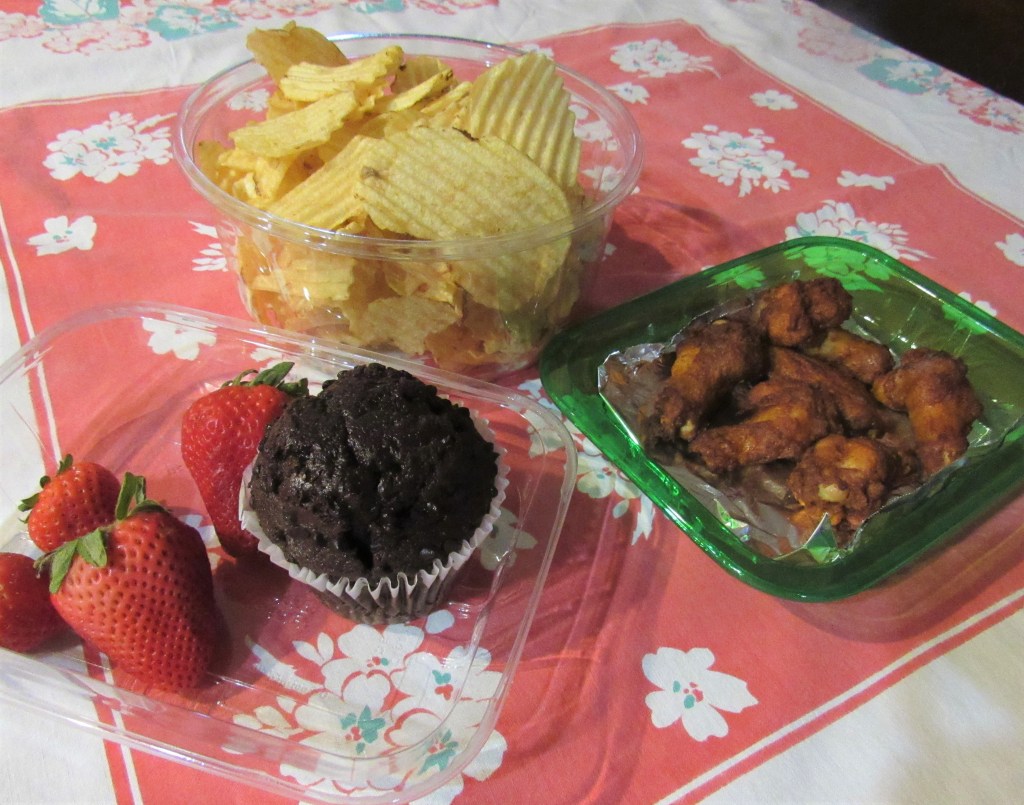
The potato chips are in a dome top from a store-bought cake. The other goodies are in trays that chicken comes packaged in. No problem, because these can go in the dishwasher; soap and hot water make them fine for general use.

The chicken trays are actually studier, a little nicer for size and balance, than picnic plates, and the sides are higher. You could easily help yourself to twice as many hot wings as shown above. And if you need drink cups, you can hang onto ones from fast food lunches—soon you’ll collect a complete service for any number of BBQ guests.

Plastic silverware doesn’t seem necessary…the point of picnic dishes is that they’re safe to jog around in the trunk of a car, unbreakable. So your own silverware from home should do.


First Flowers

Photo of Winter Aconite
Photo of hellebore flower
Photo of dwarf spruce
Photo of daffodils
Photo of crocus under netting


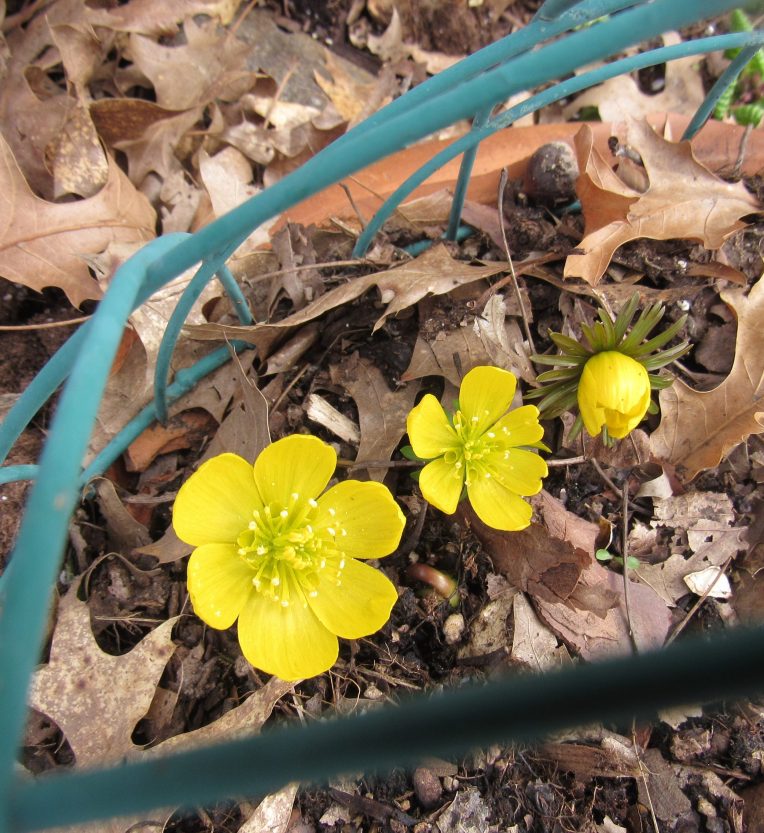
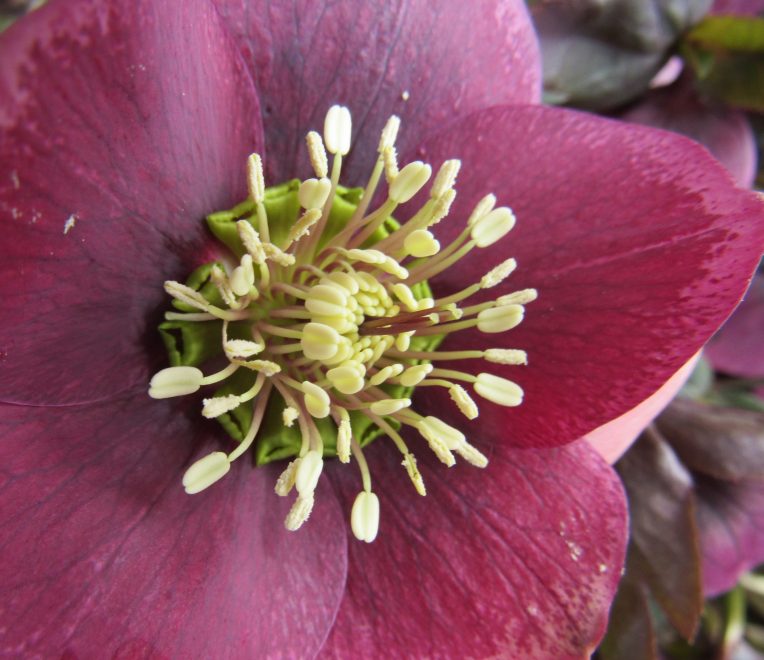
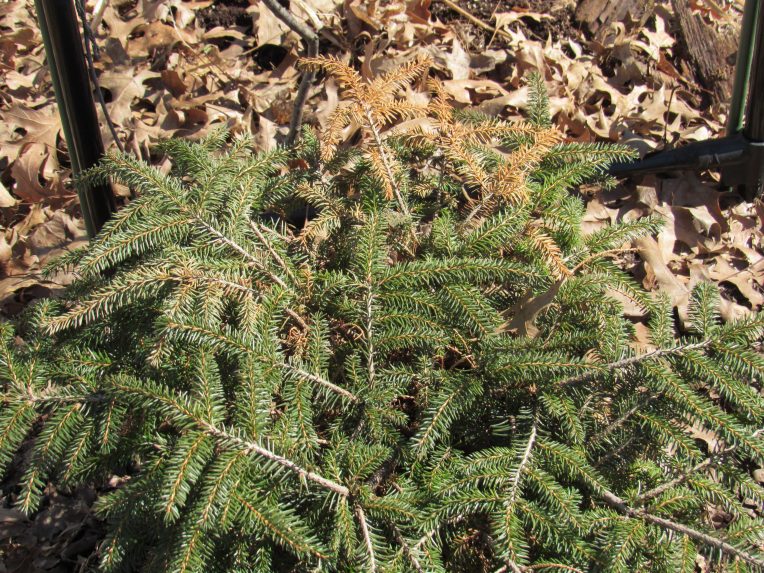
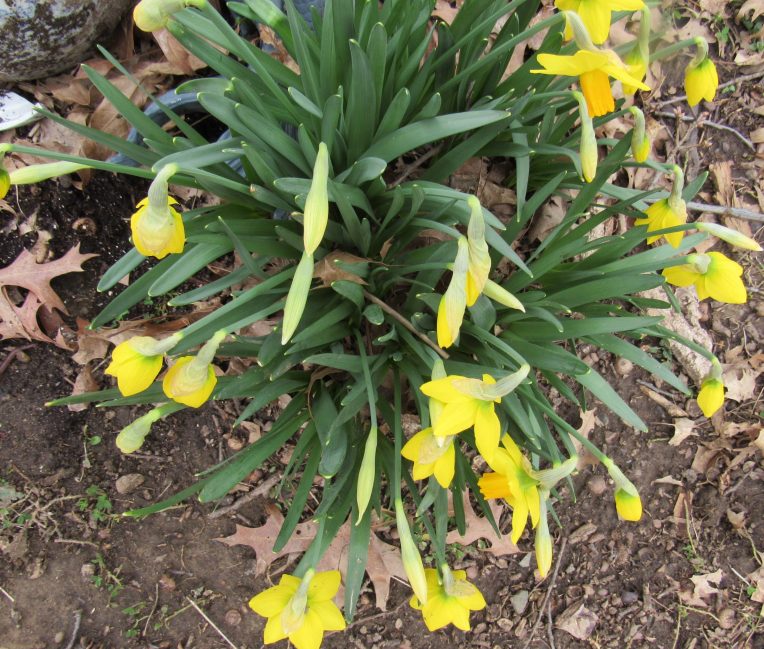
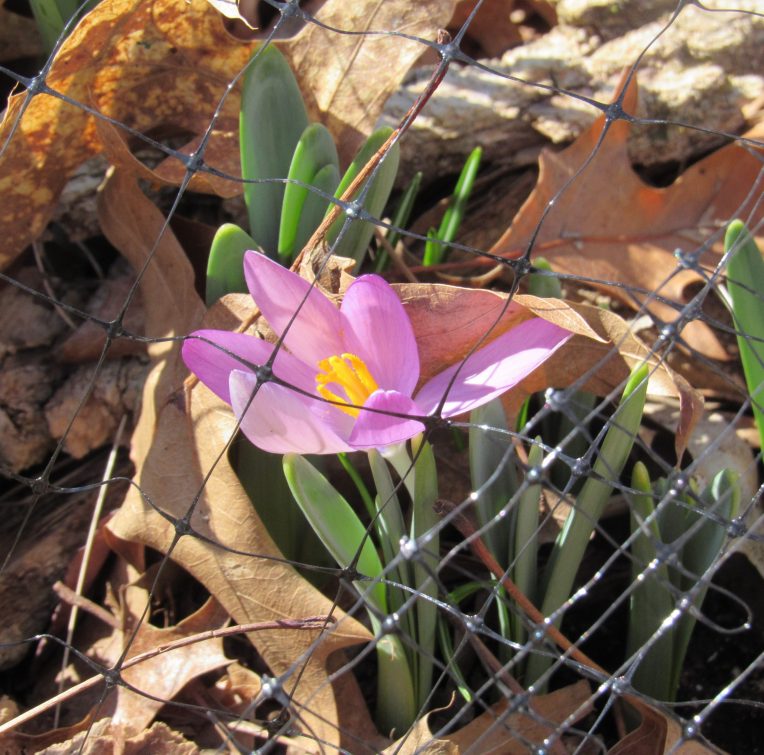
First in the lineup, cute Winter Aconites, little bulbs that I’ve never tried before, but last fall I added them to my order. Then, two interior views of hellebore flowers. You can see that they have a ring inside of what look like tiny pitcher plants. My variety is a beaut, but tends to nod, so the only way to really see the flowers is to turn them faceup. It has also grown three feet in diameter, and being evergreen, is effectively a shrub. Third, evidence that something has sprayed on my dwarf spruce. If those twigs are really dead, I’ll trim them off, but I hold out the possibility they’ll grow new needles. Fourth, daffodils, another variety that wants to nod. And finally, a little species crocus under the deer netting. Crocuses have been popping up randomly in my lawn, so maybe they are seeding themselves.


Snowdrops

Photo of snowdrop bloom
Photo of ice on tree
Photo of raked-off flower bed


Our weather was icy and snowy for a week or two; then, this Wednesday (2/24), the temperature got close to 70F. The forecast, going ahead, calls for 40s and 50s well into March. If nothing changes, that means we’re still having a warm winter, with only a handful of nights in the single digits, and no daytimes with the high in the teens.

For gardeners, the holiday (or celebratory) season is approaching: Time to Start the Seeds. But it needs holding off until the end of March, since the bigger the seedlings get, the more room we run out of indoors. Plus, the tenderest annuals aren’t safe planted out until late May. Last May, we had a nasty mid-month cold snap. I subsist meanwhile on YouTube gardening videos, and plant catalogs, of which there are fewer than there used to be.

This year, I’m trying a bunch of things that I’ve never found seeds for in the past. Pelargoniums, Hens and Chicks, Begonia, Sarracenia (pitcher plant) and Ginseng. Then, all my usual favorites. I’ll blog later on about the success or failure of the odd ones. As seen above, I tried snowdrops this year for the first time, and they’ve come up to bloom in February, as advertised. The second picture shows some of the magical sparkle of the ice storm in bright sunshine, but the camera couldn’t showcase the effect altogether.

The third picture shows a chore that needs doing as soon as the bulbs nose up, and perennials put up their first leaves; if, like me, you let nature shelter your beds with tons of free mulch. Even though we might have more winter weather, frigid temps at night, and snowstorms (looking less likely, though), it’s important to get the leaves raked down to a nice thin layer. Once they begin to decompose, they will stick tight to each other and make a mat that keeps off light, water, and air, so most leaves need collecting and composting in late February/early March. But your perennials and hardy bulbs are adapted to cold, so they will get on with the business of growing, once you’ve exposed them to the open air.