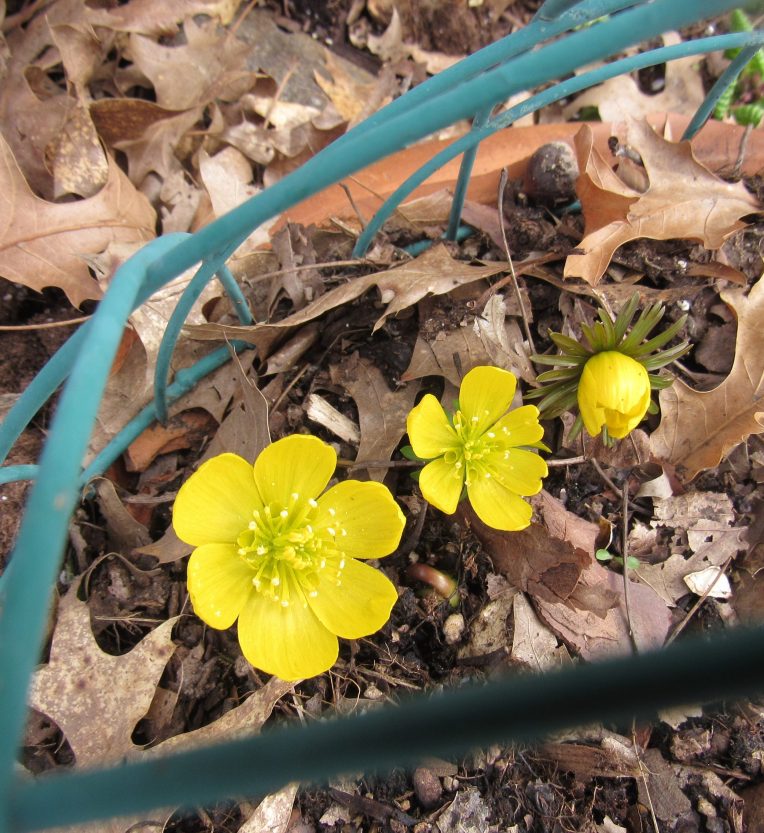
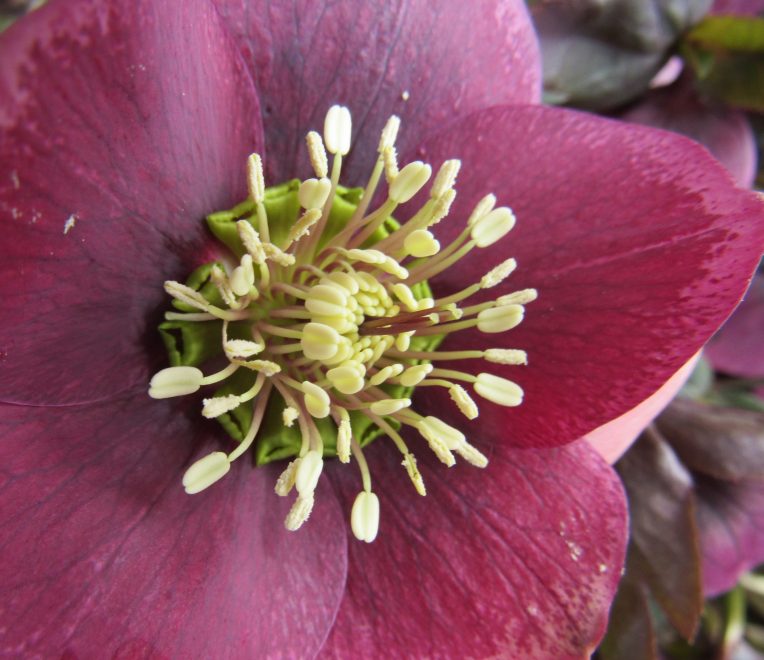
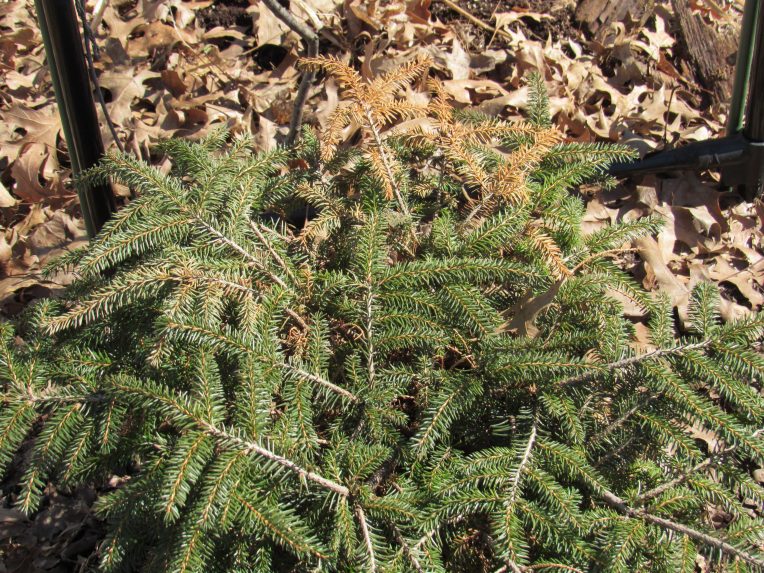
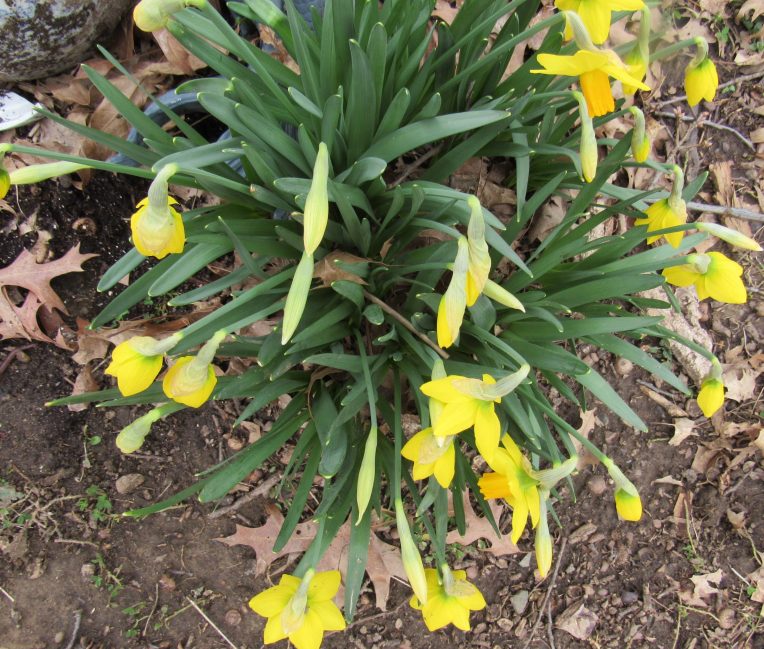
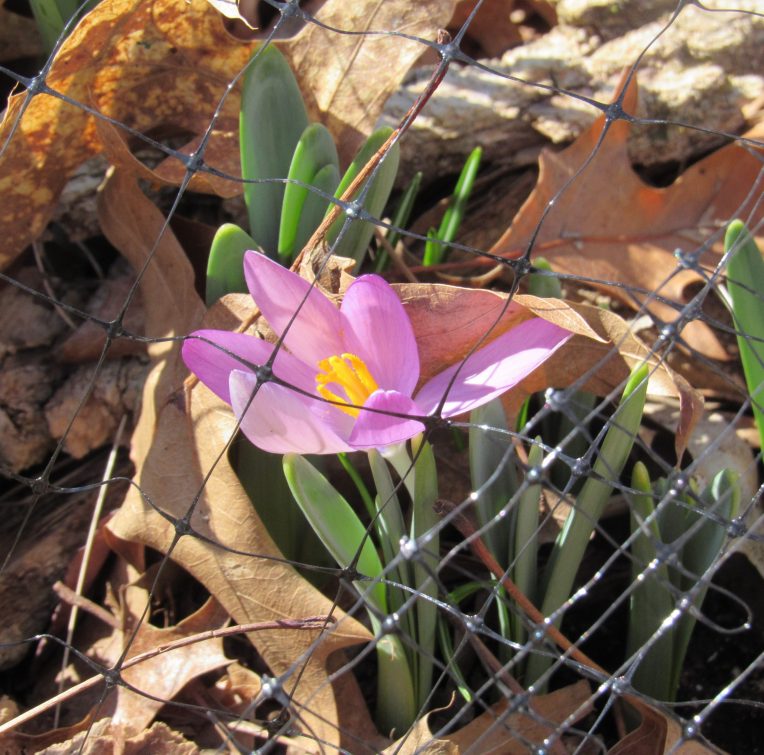
First in the lineup, cute Winter Aconites, little bulbs that I’ve never tried before, but last fall I added them to my order. Then, two interior views of hellebore flowers. You can see that they have a ring inside of what look like tiny pitcher plants. My variety is a beaut, but tends to nod, so the only way to really see the flowers is to turn them faceup. It has also grown three feet in diameter, and being evergreen, is effectively a shrub. Third, evidence that something has sprayed on my dwarf spruce. If those twigs are really dead, I’ll trim them off, but I hold out the possibility they’ll grow new needles. Fourth, daffodils, another variety that wants to nod. And finally, a little species crocus under the deer netting. Crocuses have been popping up randomly in my lawn, so maybe they are seeding themselves.
Our weather was icy and snowy for a week or two; then, this Wednesday (2/24), the temperature got close to 70F. The forecast, going ahead, calls for 40s and 50s well into March. If nothing changes, that means we’re still having a warm winter, with only a handful of nights in the single digits, and no daytimes with the high in the teens.
For gardeners, the holiday (or celebratory) season is approaching: Time to Start the Seeds. But it needs holding off until the end of March, since the bigger the seedlings get, the more room we run out of indoors. Plus, the tenderest annuals aren’t safe planted out until late May. Last May, we had a nasty mid-month cold snap. I subsist meanwhile on YouTube gardening videos, and plant catalogs, of which there are fewer than there used to be.
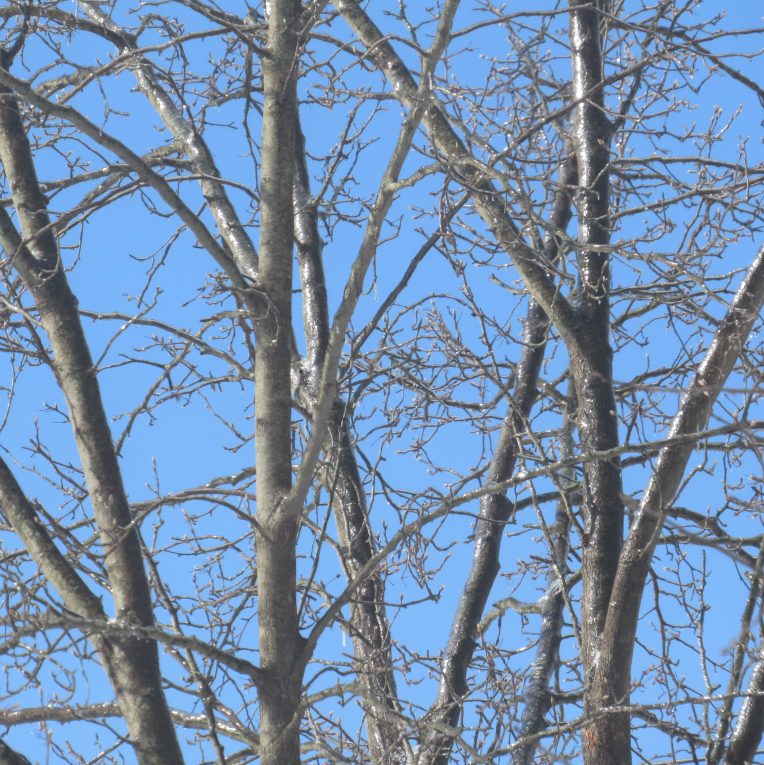
This year, I’m trying a bunch of things that I’ve never found seeds for in the past. Pelargoniums, Hens and Chicks, Begonia, Sarracenia (pitcher plant) and Ginseng. Then, all my usual favorites. I’ll blog later on about the success or failure of the odd ones. As seen above, I tried snowdrops this year for the first time, and they’ve come up to bloom in February, as advertised. The second picture shows some of the magical sparkle of the ice storm in bright sunshine, but the camera couldn’t showcase the effect altogether.
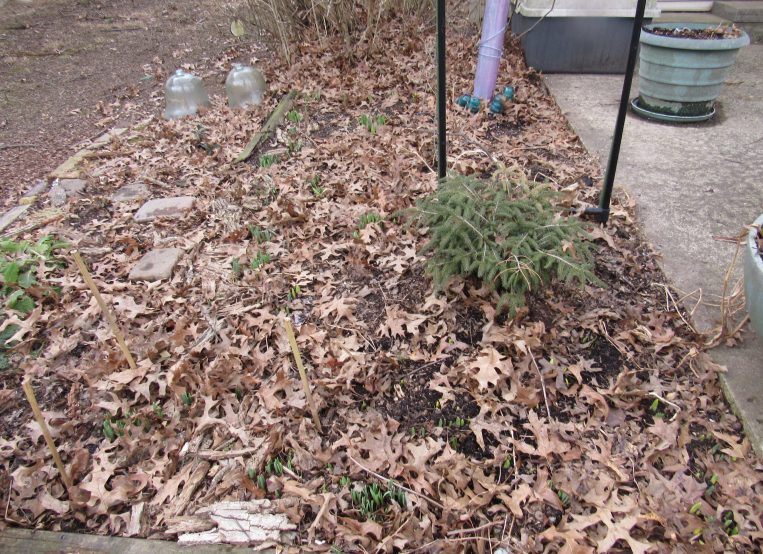
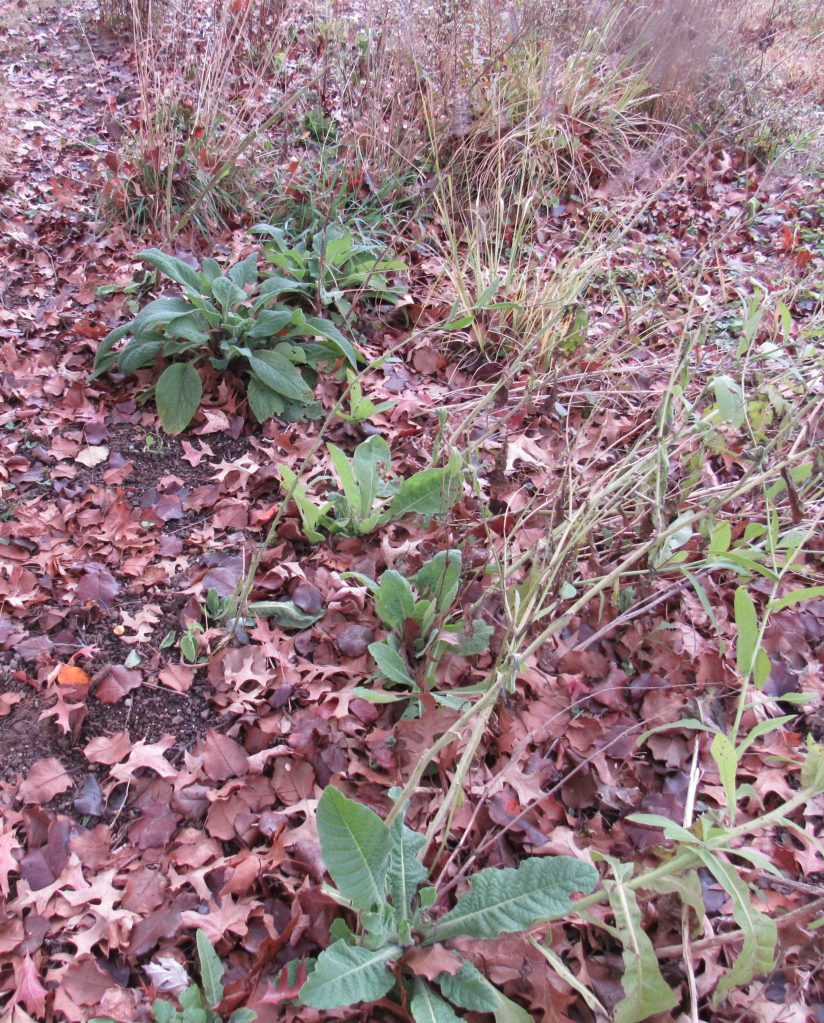
The third picture shows a chore that needs doing as soon as the bulbs nose up, and perennials put up their first leaves; if, like me, you let nature shelter your beds with tons of free mulch. Even though we might have more winter weather, frigid temps at night, and snowstorms (looking less likely, though), it’s important to get the leaves raked down to a nice thin layer. Once they begin to decompose, they will stick tight to each other and make a mat that keeps off light, water, and air, so most leaves need collecting and composting in late February/early March. But your perennials and hardy bulbs are adapted to cold, so they will get on with the business of growing, once you’ve exposed them to the open air.
The time that plants and animals spend in winter dormancy is much shorter than the season. Here in Southeastern Ohio we have a mid-Atlantic climate, more so than it used to be. Most years we get few, if any, snows having more than a few inches of accumulation. The trees drop their leaves, perennials die to the ground, the grass turns browner. But after a month between December and January, a lot of things began their cycle of return. The birds have been singing territorial call notes, and the daffodils are sending up leaves.
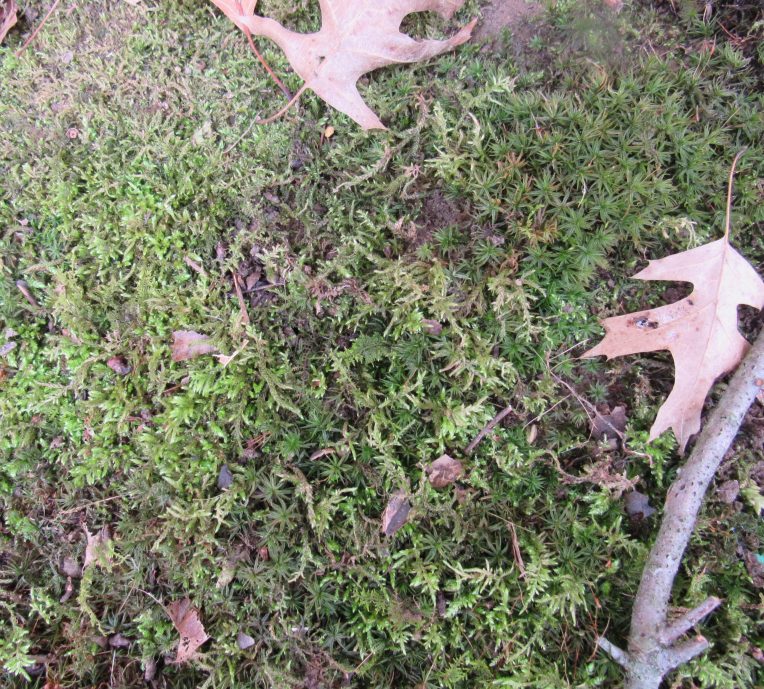
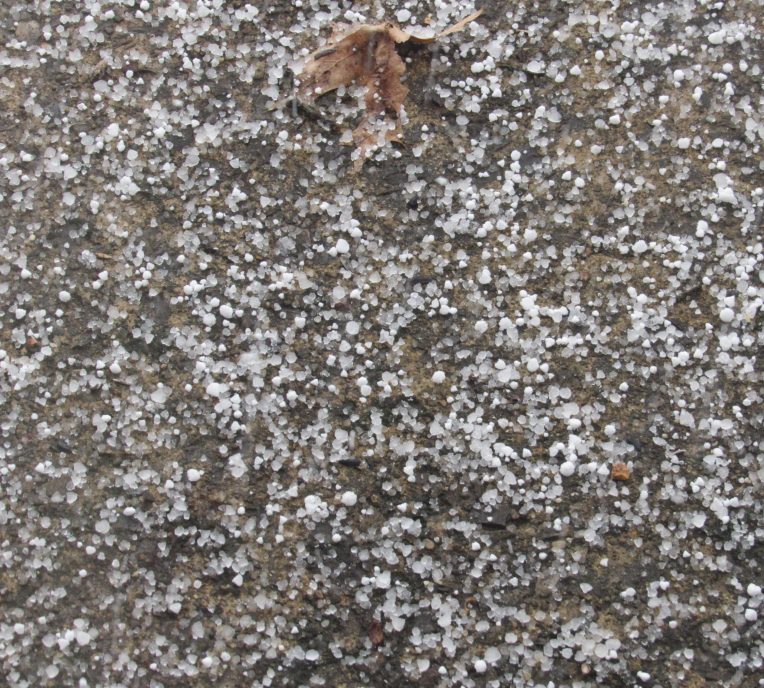
In the first photo above, you can see the strange appearance of violets in an actual phase of their growth, when the rooty aboveground stems start to bud up, and turn progressively greener. In the second photo, some new moss, carpeting up like it might in a northern rain forest. The third photo shows an odd fall of sleet mixed with hail that came down heavily for a time, before the weather turned to snow. Finally, below, a short video of summer things, to help dispel the cloudy, rainy stuff of winter.
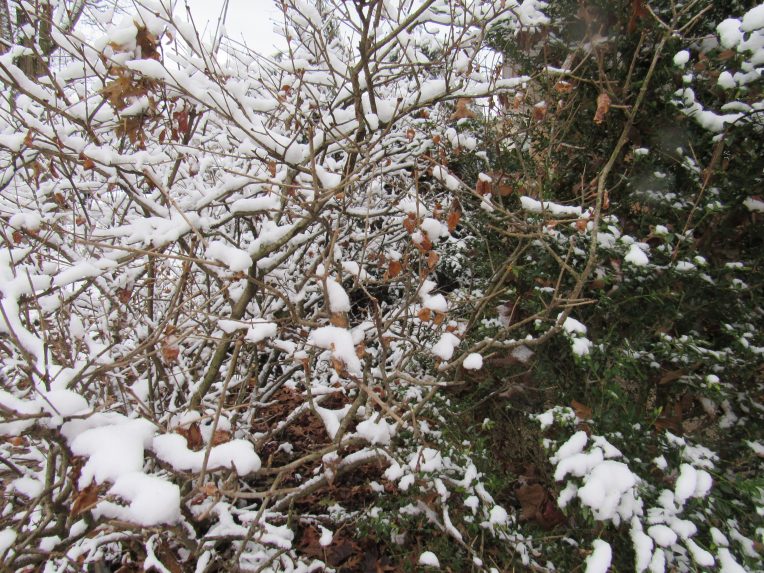
Snow, lining objects with white fluff, acts in photographs as a shape definer and contrast maker. A light snow works well for bringing out shapes and colors in the (near) winter landscape. Above, the dead ash tree with borer trails and some remaining bark.
An evergreen and a deciduous shrub, dark green and crispy white tangle of branches.
Oak trunk, ash, and the red leaves of the pear.
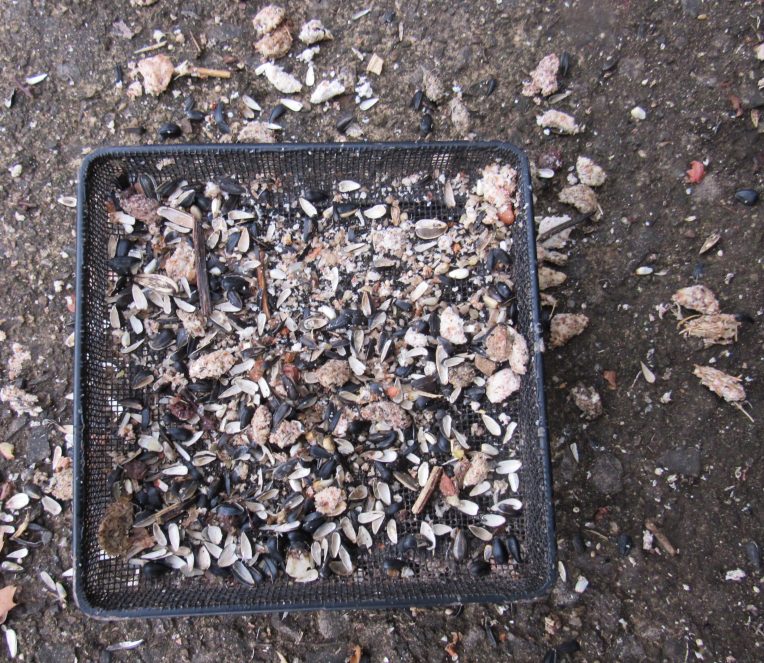
Owls have been taking prey at the ground feeder. As the contents show, a lot of not long digested peanuts make up the bulk of the pellets. (Pellets are parts of their prey that owls regurgitate, usually fur and bone fragments.)
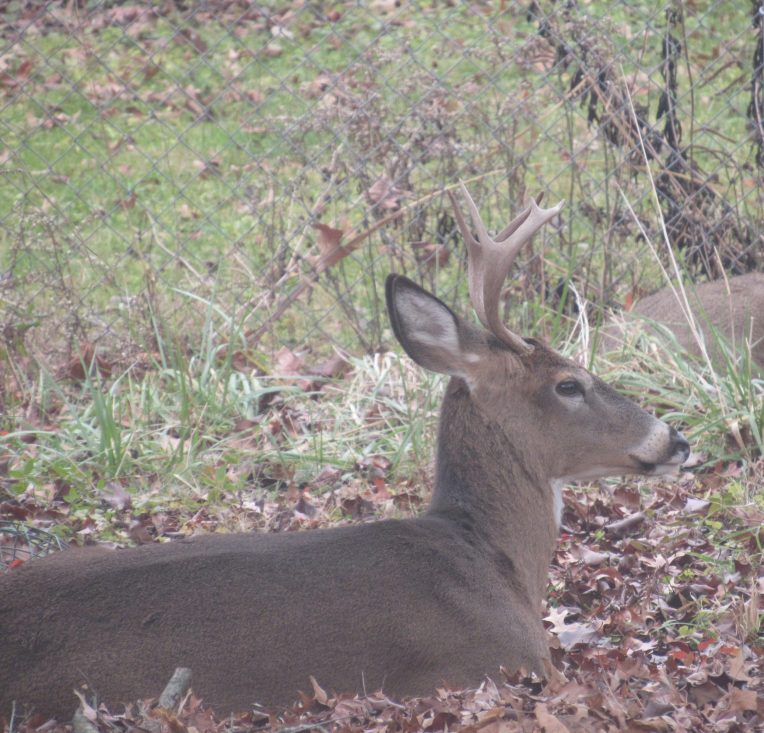
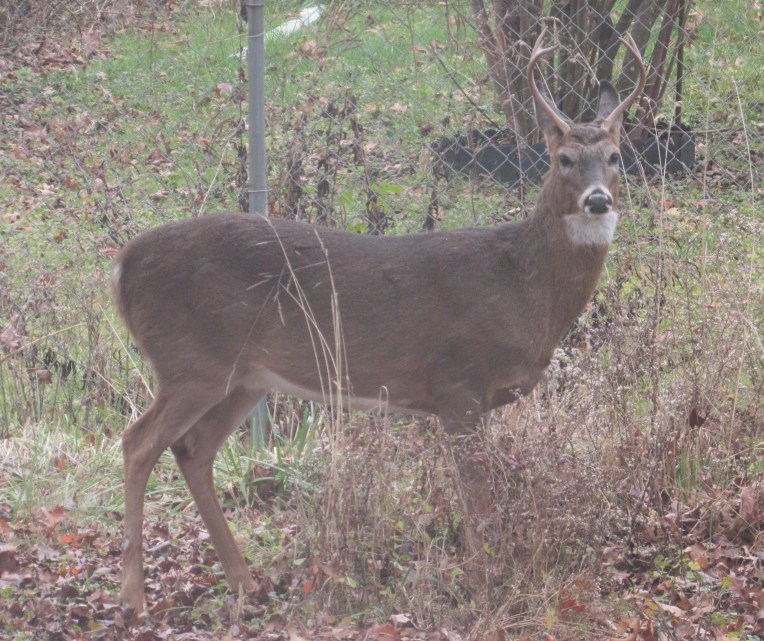
This male deer spent several hours in my yard with his doe companion.
Here he is standing face to the camera.
Animal Anecdotes
Some time back I watched squirrels in my yard flinging from branch to branch, sometimes barely catching hold, and wondered if they ever fall. Then one day I heard a big cracking noise and suddenly a squirrel came plummeting from the oak. When it got to the ground, it managed to spring off its hind legs, catch its claws in the bark, and scurry back up the trunk. I assume the answer is, one, that their bushy tails work as gauges to detect air flow from surfaces, so they know how close to the ground they are; two, that they use the skin flaps between their front legs and bellies (modest compared to flying squirrels’ but still something…cats also, famous for soft landings, have those skin flaps) to create a parachute effect. Three, their bodies are lightweight and flexible.
Next story: I noticed a technique used by the Carolina wrens at my ground feeder. They have relatively thin, curved bills, the sort insect-eaters have, and insects are a large part of their diet. But this one, having peanuts available on a flat surface, banged down with its head and drilled out a core sample. So it was able to enjoy the favorite food even without having a finch’s bill to pick one up.
Last story: on that day the deer were in the yard, a Red-tailed Hawk was hunting, flying from tree to tree. I had my cat Ed out for his walk, which isn’t really a walk, only Ed wearing his harness and sniffing at things while mostly sitting. When he noticed the hawk, he rushed for the door. Then my other cat Chester was snuggled on the bed one night, while I looked at videos. One was of a wolf howling for her friends, and as soon as Chester heard the noise he sat up with round eyes, and after a moment ran off. Interesting that little house cats have instincts about predators they rarely if ever have any contact with.
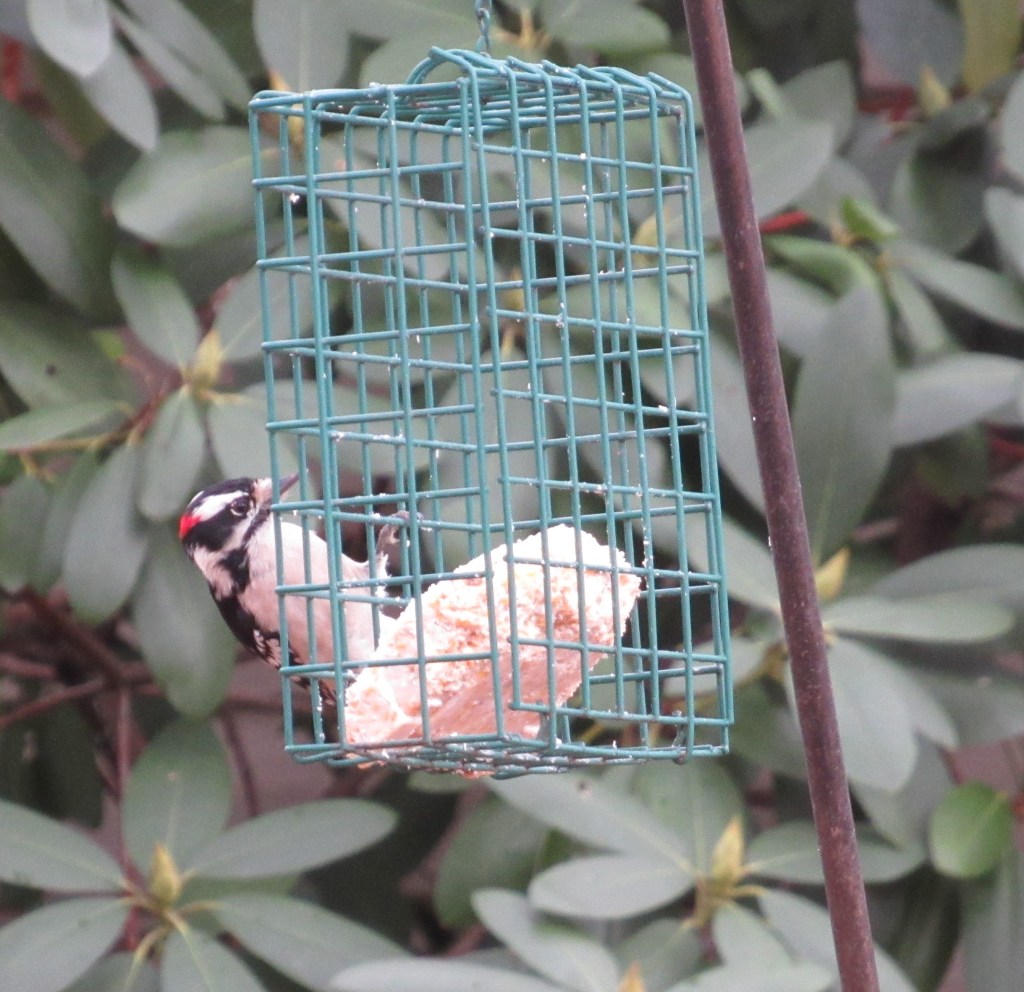
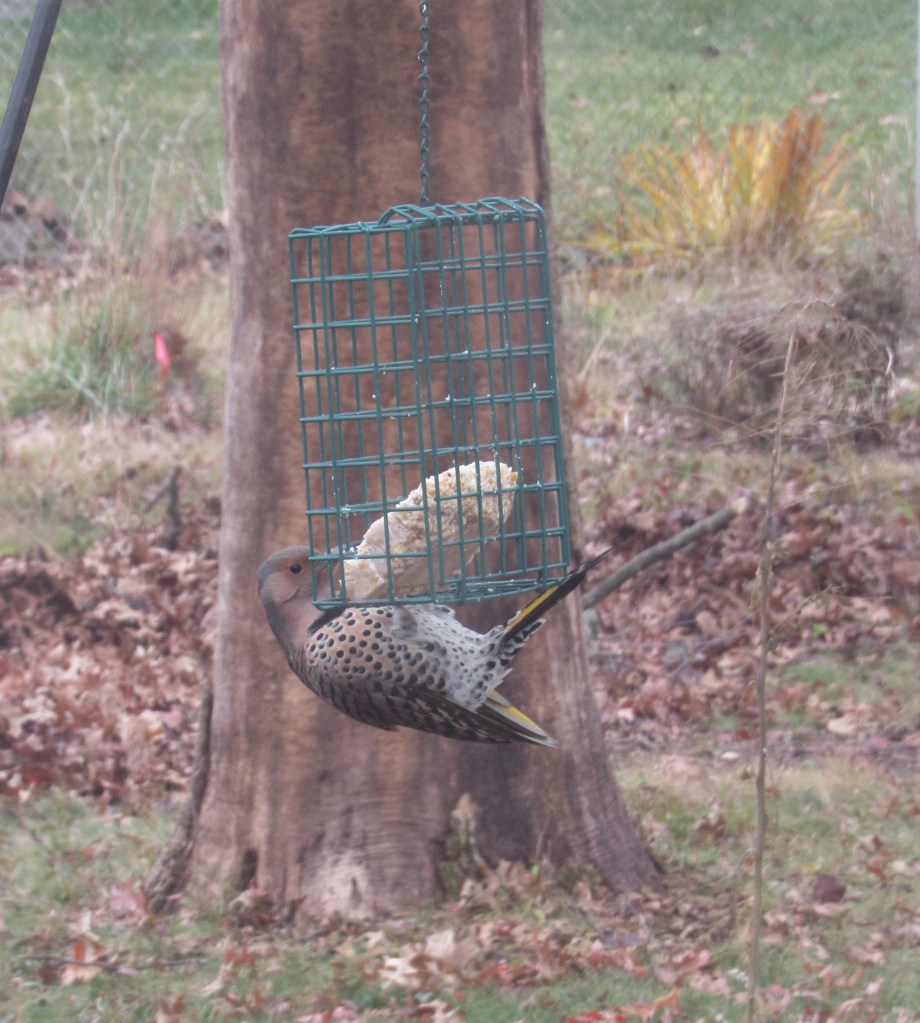
Female Northern Flicker (woodpecker) at the suet feeder.
Pretty fall color, and striking vein pattern, in an English Ivy leaf.
Here we see the microclimate effect. The exposed half of the ageratum is shriveled from nights in the 20s, while the side closer to the garage is still alive.
Here again, nicotiana looks fresh along this sheltered border, where underground water flows down from the hills, keeping the soil temperature above freezing for a longer period.
A privet in the brush pile, from a seed delivered by birds. The deer bite the growth off, leaving these fringe shrubs scrappy looking, but this one has produced excellent color.
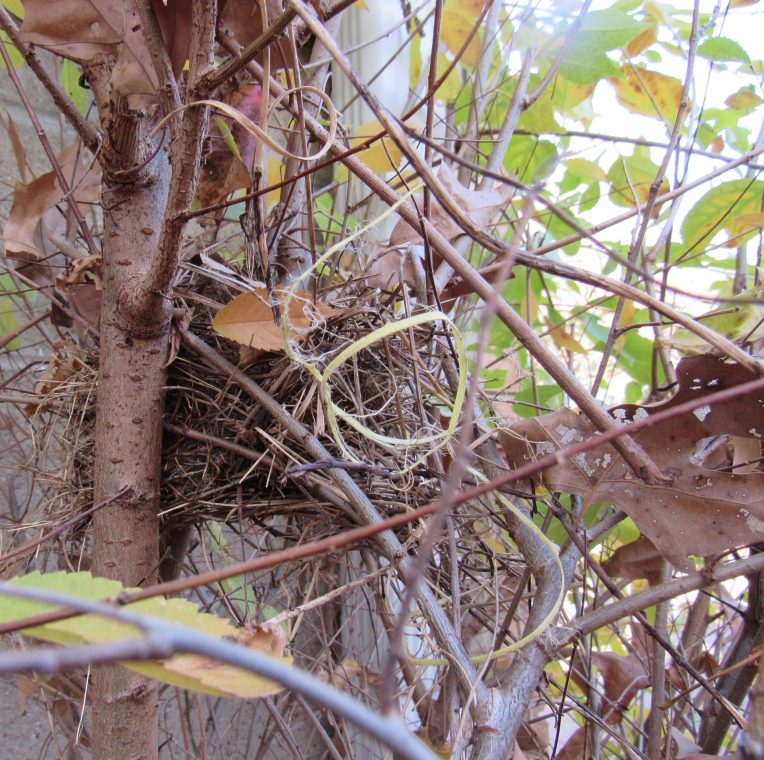
A small nest uncovered when the leaves fell off the beech (that I originally thought was a birch, but I see it’s starting to develop some distinct eyes on the trunk.) The nest is probably a song sparrow’s.
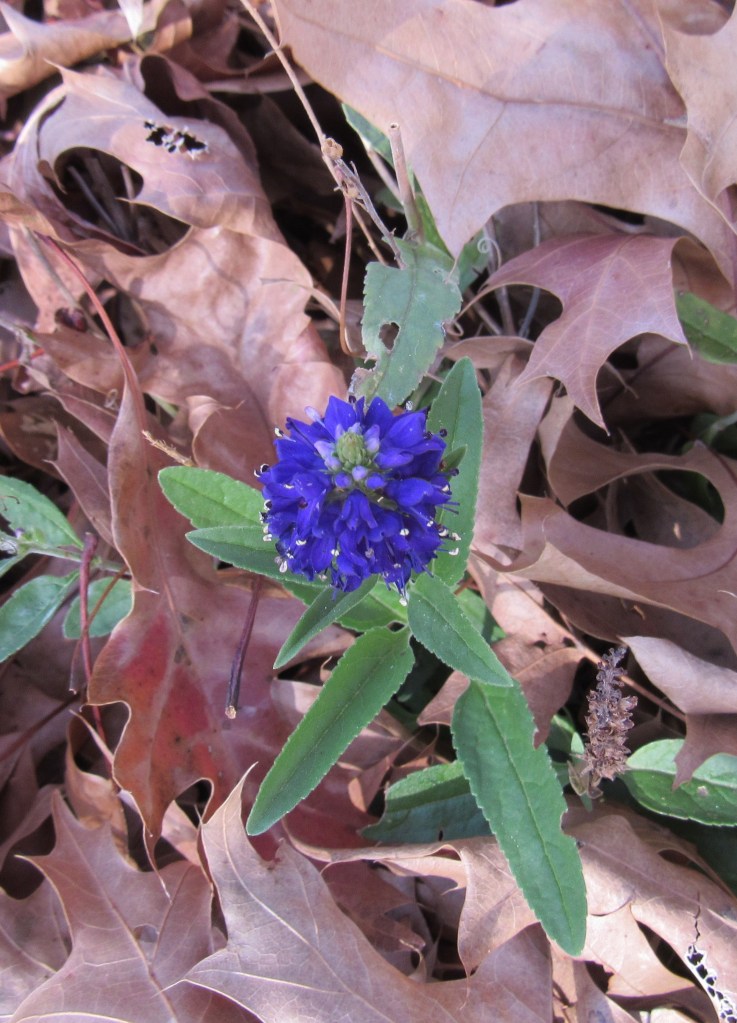
One bright blue-purple veronica bloom. A few things will pop a random flower in the late fall.
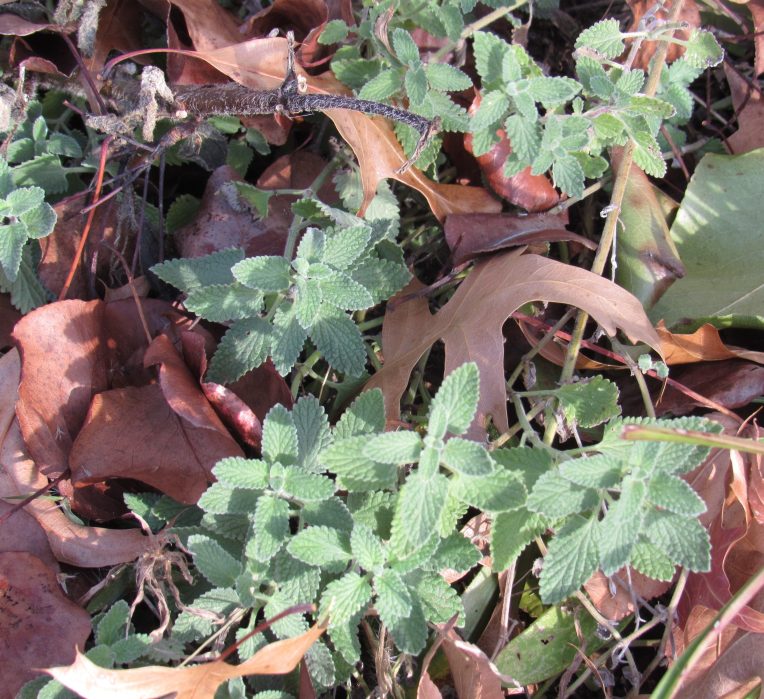
Catmint, having a fresh spate of leaf growth, in the cooler weather.
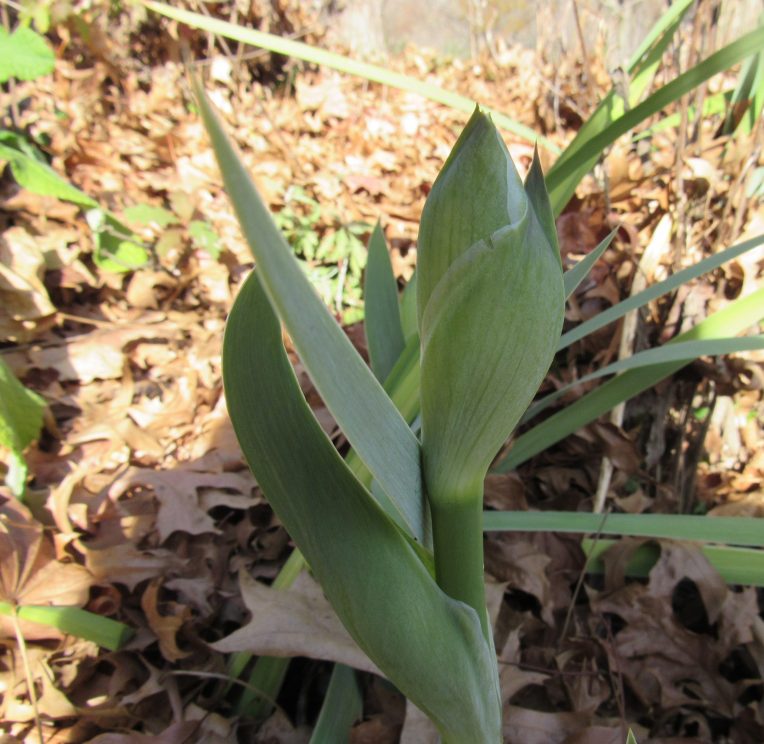
An iris, that may slip this one past the deer. All my bearded iris are rebloomers, but last summer they didn’t bloom at all.
A foxglove, with a warped little flower, and others it’s trying to open before it freezes.
One last poblano pepper. There are three ways to preserve a pepper, one of the few vegetables that may survive wintering over in a pot. You can start one from a stem cutting, pot the roots after trimming back the topgrowth, or save seeds from one of the fruits and start them in the late winter, or early spring, depending on your zone.
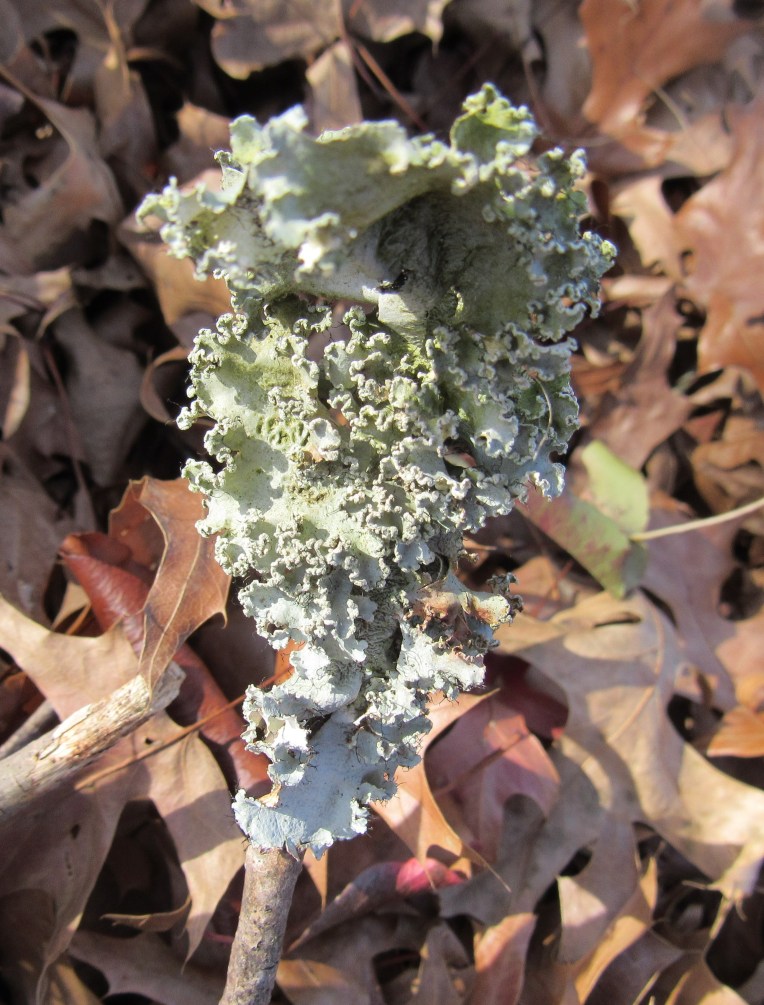
Closeup of a ruffled lichen, growing off a twig that fell out of a tree.
This was lying at the foot of one oak tree, a seed found someplace by a squirrel or bird. The only thing I’ve seen online that it much resembles is from the cocao pod. Which could have got into the local environment by a few means: someone’s potted tree, a health food store’s “grind your own chocolate” display…
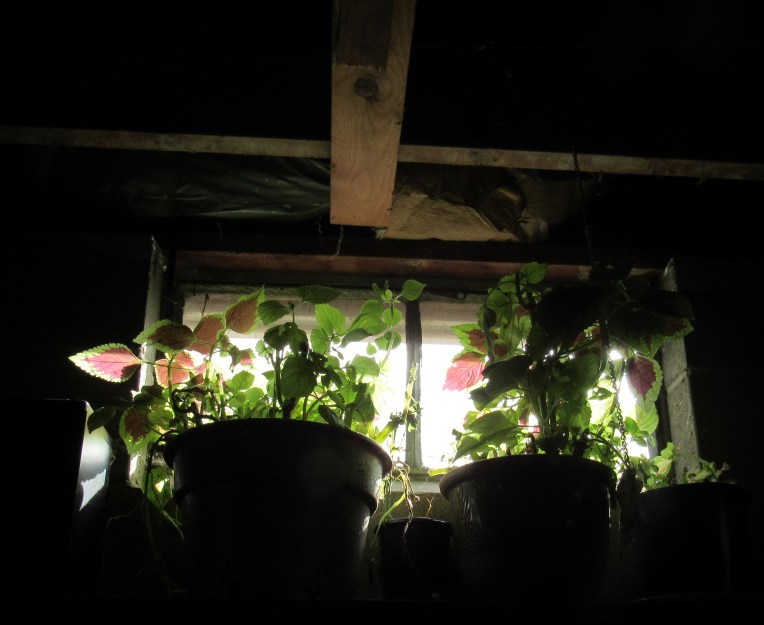
A few of the garden plants that I’m overwintering: coleus, impatiens, and one sweet pepper. They should be all right for temperature in the garage window, and I can’t have many in the house because of cats.
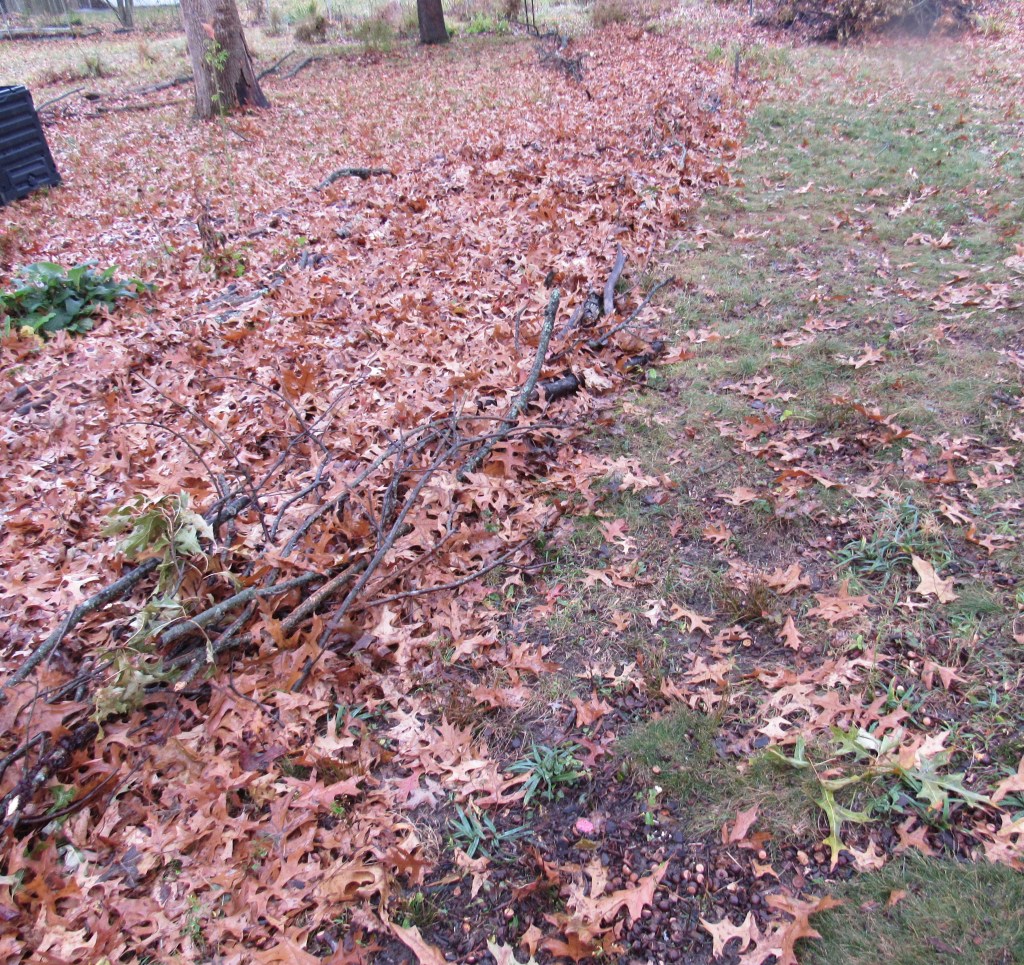
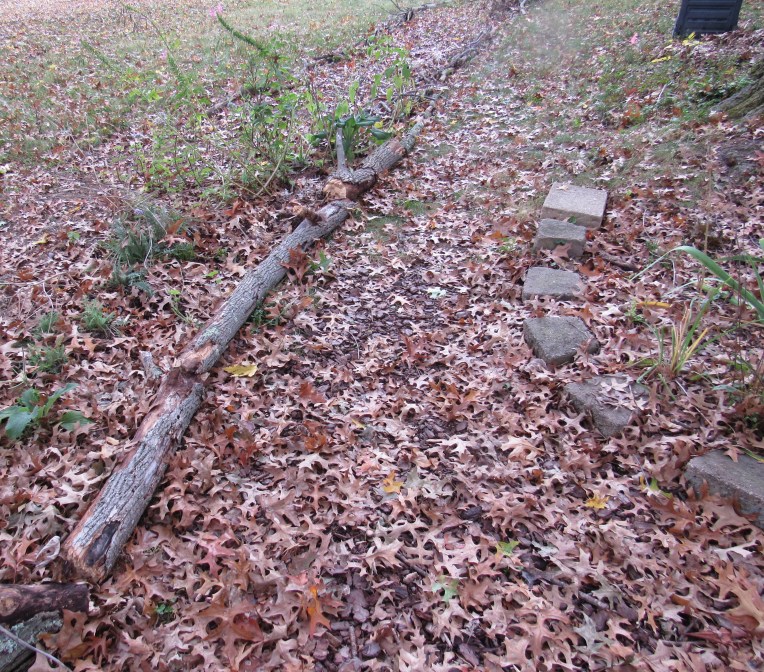
A path in its fall state. I’ve used branches dropped by my trees for bordering, which should help block the leaves from blowing away. Over winter the weather will decompose and settle the branches, and in spring fungi will reduce the leaves to a thin layer. Preserving leaves preserves your insect population; a healthy insect population feeds birds, reptiles and amphibians, small rodents, bats. My other plan is to cut off seedheads from coneflowers and rudbeckia, and place them among the branches to make flowering edges.
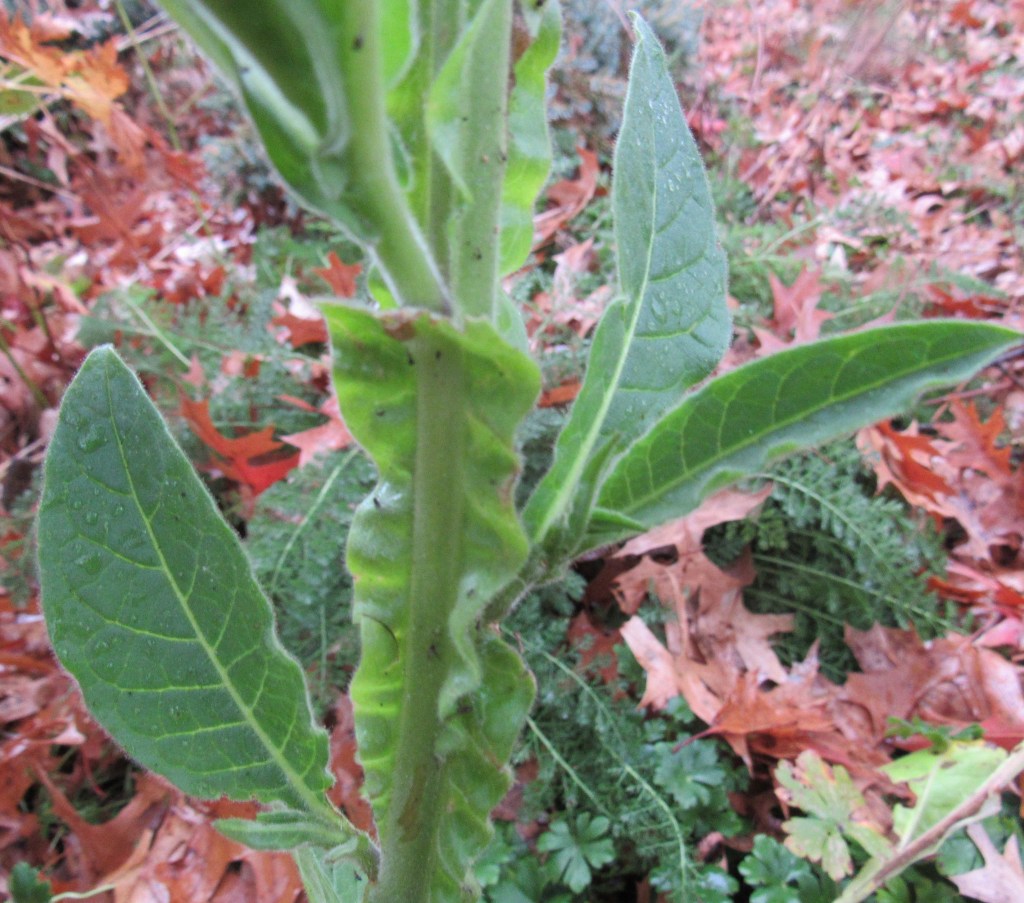
Something interesting. Deer ate all the leaves off this nicotiana. But it grew back these strange ruffly stem-leaves.
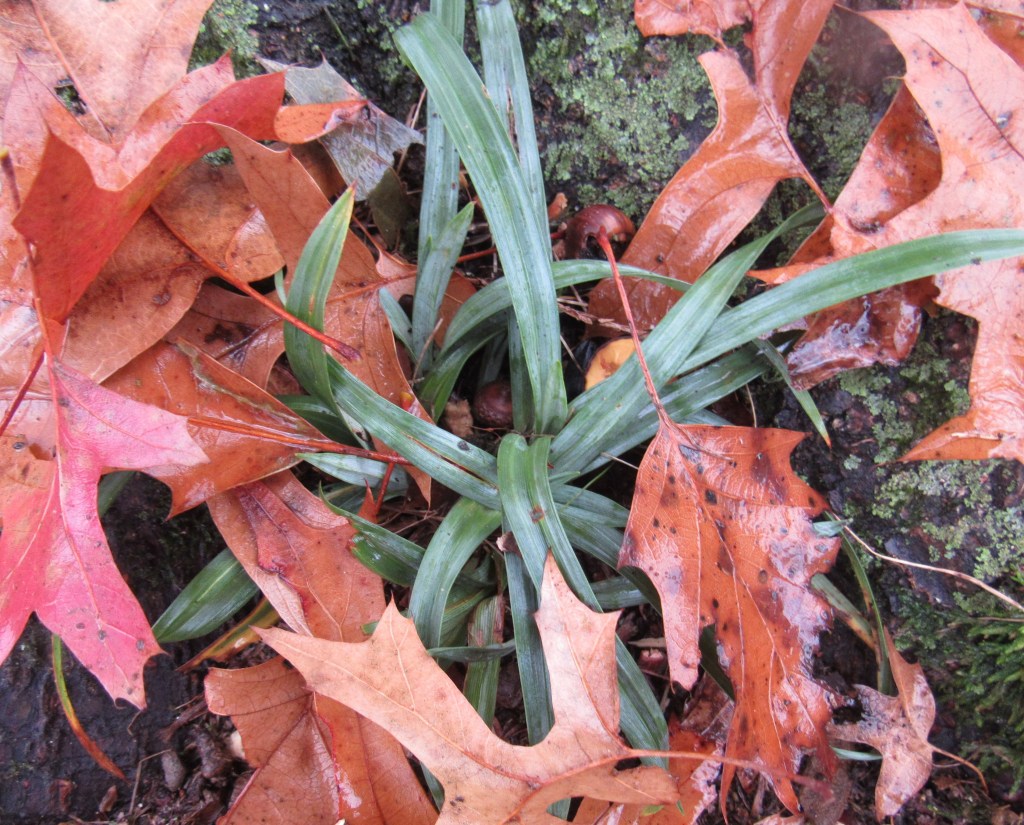
A pretty little grass, that has blueish leaves, and spreads slowly in clumps.
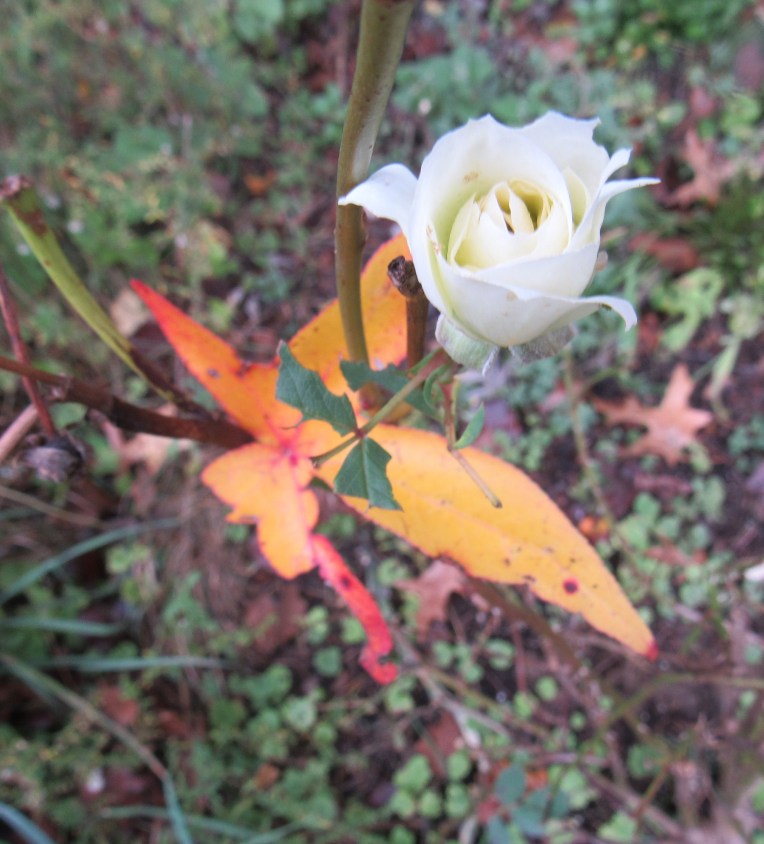
One slightly raggedy Morden Blush rosebud that finds the weather too cold to open. And a bright sweetgum leaf that landed where it makes a nice contrast.
A few annuals will hang on and flower until a hard freeze. Even then, microclimates may allow a vestige or two to carry on until December.
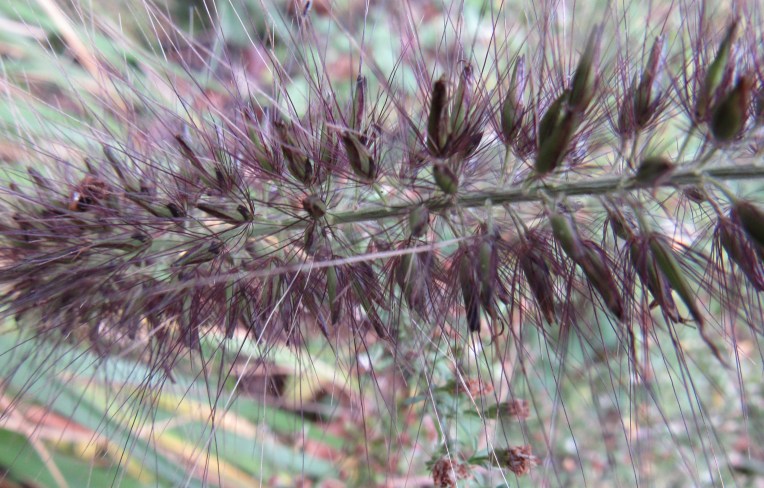
An ornamental grass seedhead that, as you can see in closeup, has an extravagant quality of awns (the parts that look like hairs). A fall treasure, but this grass starting growing voluntarily, so I don’t know what it’s called.
This big branch fell off my dead ash tree, making a nice gift for defining the border between the bed and the path beside it. And all these logs I use for bordering make miniature habitats in themselves, also protecting the root systems of my perennials.
Bulbs I’m Planting This Autumn
Allium aflatunense (lilac-flowered onion)
Apricot Beauty Tulips
Dordogne Tulips (coral-pink)
Eranthis (yellow-flowered small bulb)
Galanthus (Snowdrops)
King Alfred Tulips (sunny yellow)
Little Beauty Tulips (red with blue markings)
Mt. Hood Daffodils (pale buttery white)
Salmon Impression Tulips
Silver Smiles Daffodils (white with pale yellow center)
A few of the oak galls. (And a visiting fly.😉) Probably the number of oak galls says something positive about the health of the local environment.
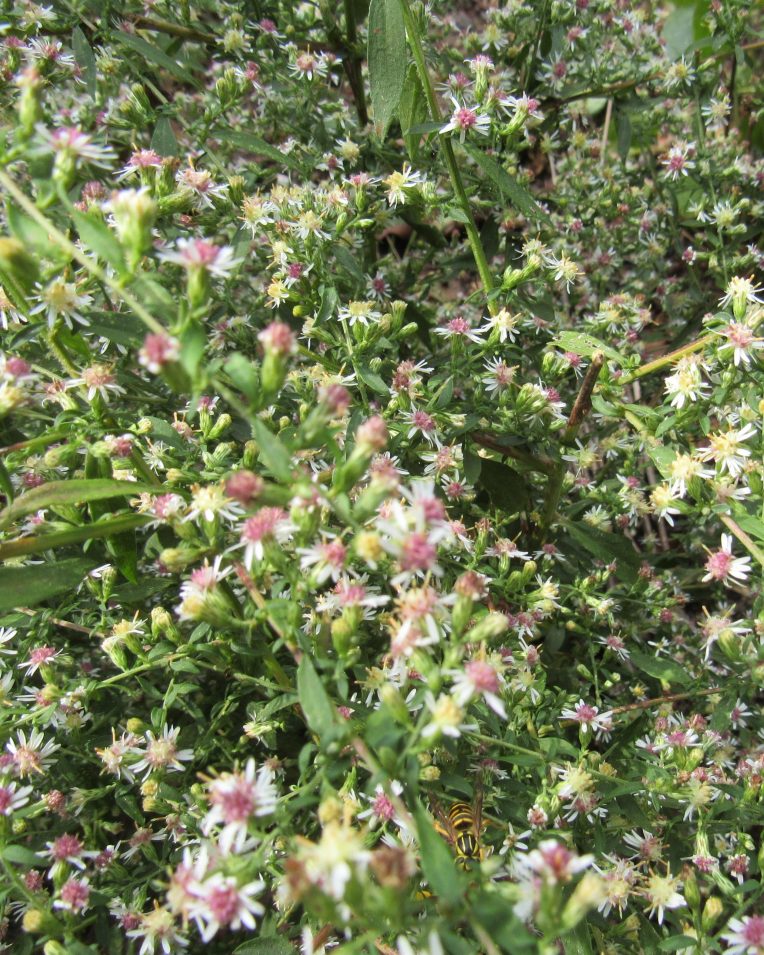
The wild fall asters are covered with pollinators, though this photo shows clearly only one little wasp. These flowers appear on each plant in hundreds, but as you see, once they’ve been pollinated they turn pink, while the ones with something to offer stay yellow to guide the wasps and bees.
Here’s a view of the cleome, which just goes on blooming until frost, and its entertaining spray of seedpods.
The deer are not supposed to bother foxgloves, but one bit off the flower stem of a late bloomer. As you can see, it still has buds at the leaf axils. But I hope it may act like a perennial and come back next spring, since its blooming was thwarted.
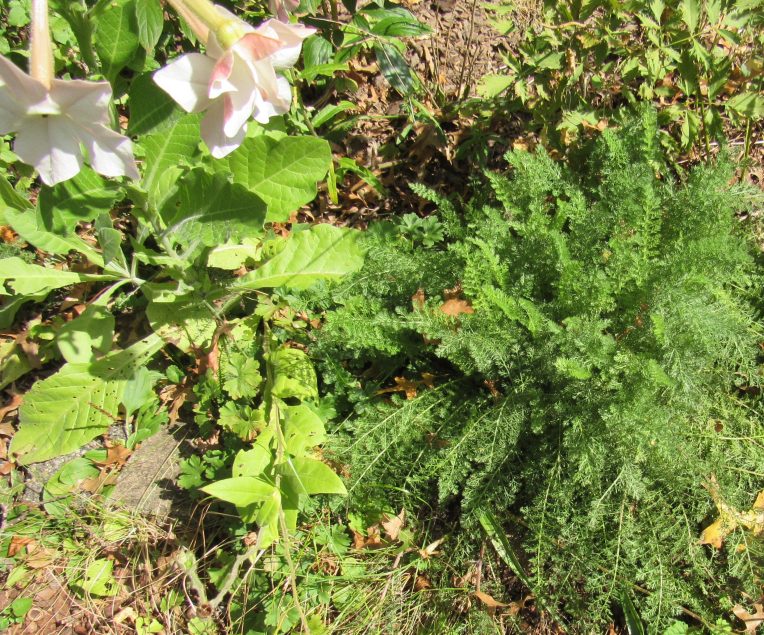
Pretty nicotiana blooms, and a view of why achillea is a great perennial (easily grown from seed). In the fall, these plants will put up a thicket of lacey foliage.
Sunshine through an elephant ear leaf. You can see the beautiful late-season color and the interesting vein pattern.
The tiny fruits of the callery pear, which in closeup definitely have the characteristics of a pear. The tree makes thousands of them, which are much relied on by all sorts of unnoticed critters. They also draw robins in late winter.


















 Memories of a Midwestern Family