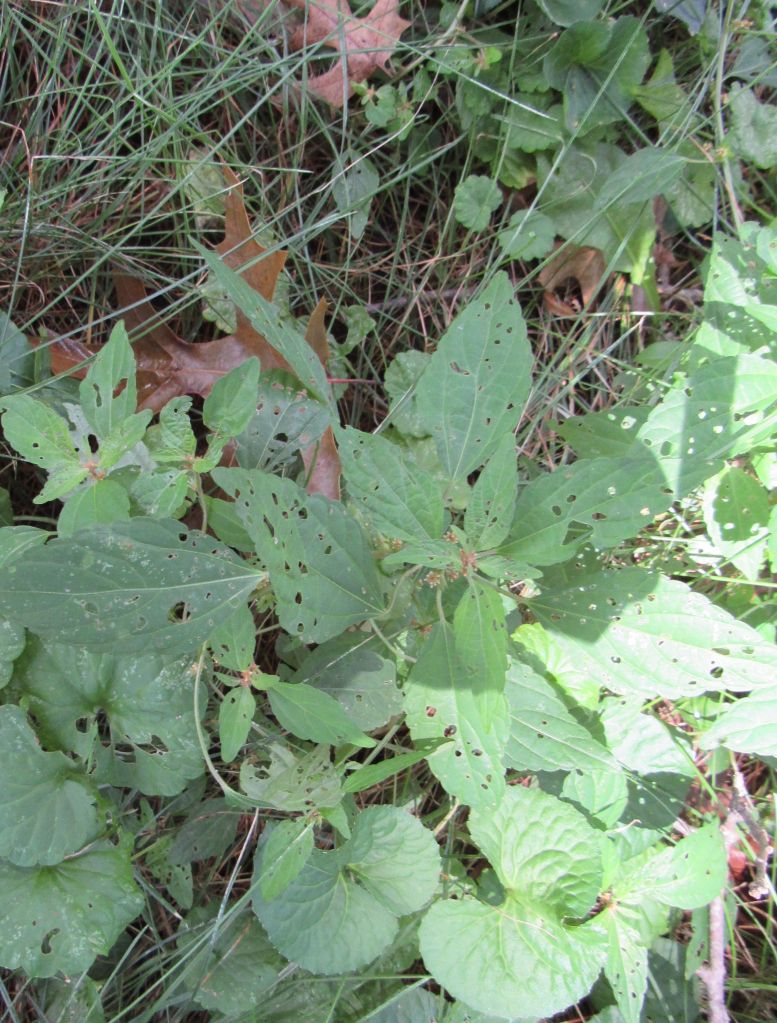
Pigweed is always seen in this condition. It’s one of the most utilized plants by insects, small rodents, and birds. Pigweed is in the Amaranthus family and has nutritious seeds, that humans can feed on as well (thinking of our climate change future, where we may have to learn to forage), though it’s often written about as an agricultural nuisance. Pigweed attracts flea beetles and hunting beetles, skipper butterflies, and moth species.
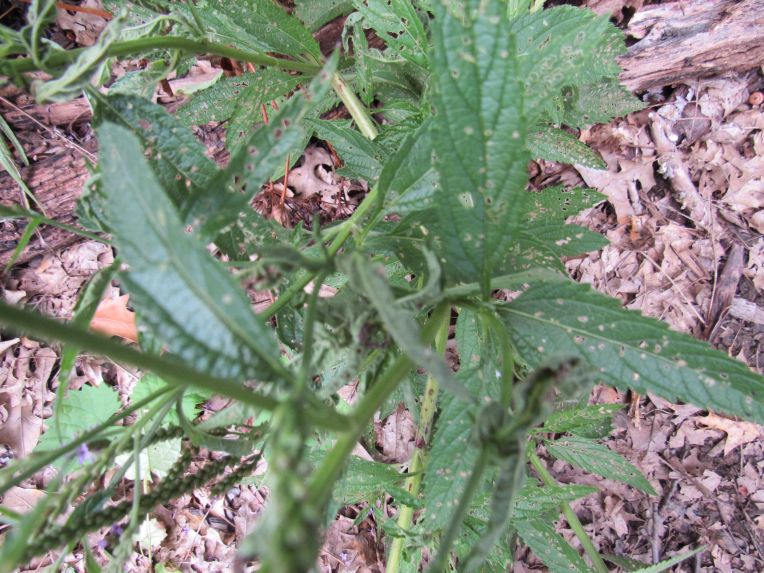
This is blue vervain, a great native you can buy from nurseries that sell native plants. It has tiny flowers, but so numerous they’re showy, too. An advantage of tiny-flowered plants is that native pollinators can use them, while larger-flowered plants may be taken over by honey bees. These leaves look just the way we want our native garden leaves to look, full of feeding holes. The Common Buckeye is a butterfly that feeds on blue vervain.
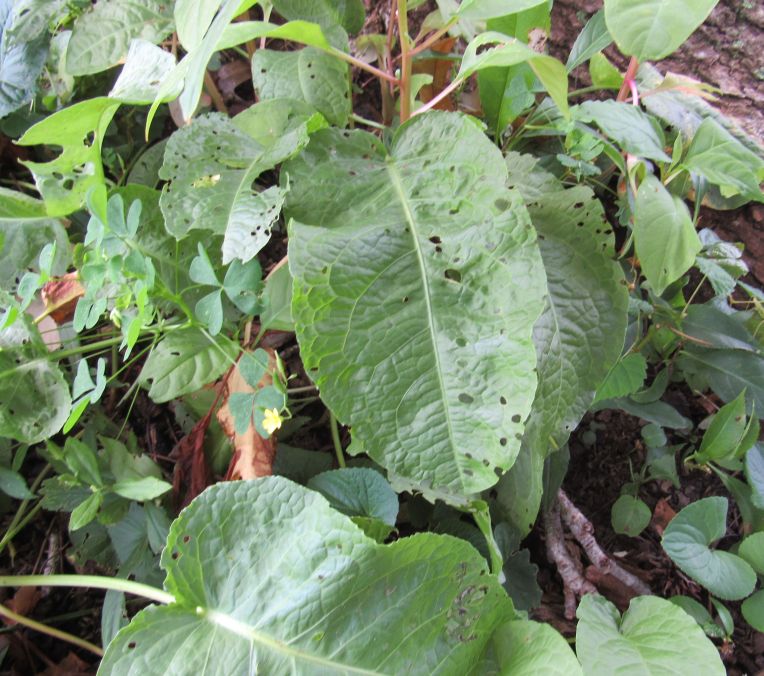
Here is bitter dock, or broadleaf dock. This plant is native to Europe, but long naturalized in North America. Bitter dock can be a host to the American Copper butterfly. Some creature has been feeding on this, while not making holes in the pokeweed next to it. I have several areas in my garden where I let things grow as they appear. Tall grasses, wildflowers that show up, make little patches of meadow, and these protect dozens of tiny moths and butterflies that feed and shelter in them. You can see moths spring up as you walk through your meadow areas.
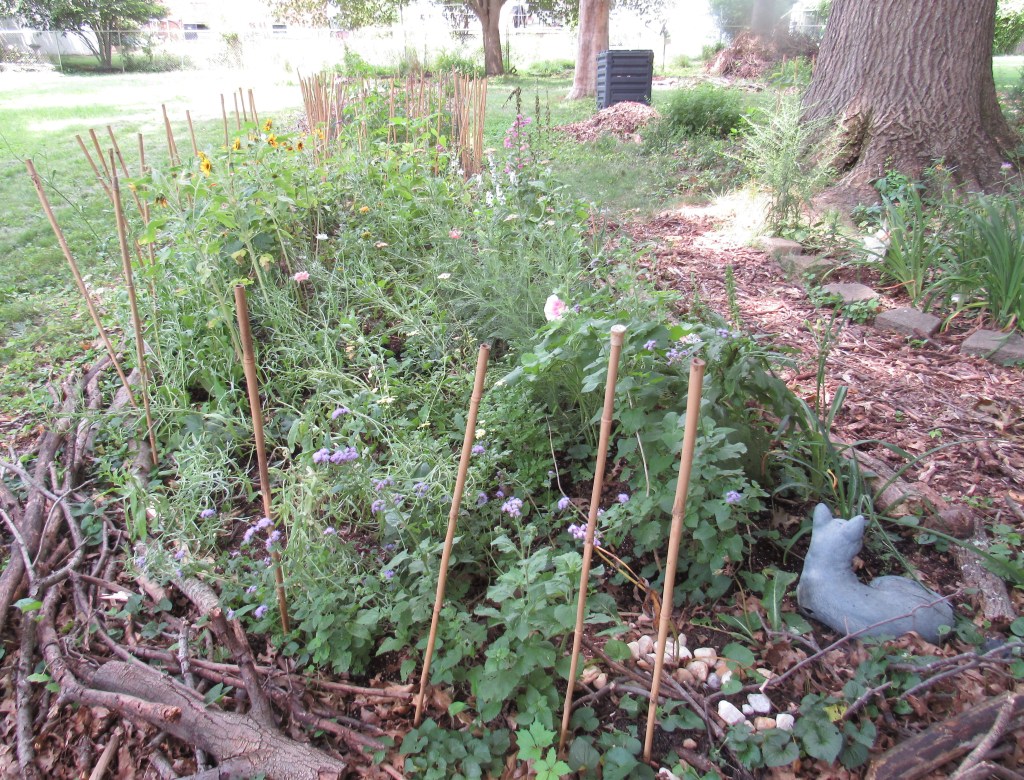
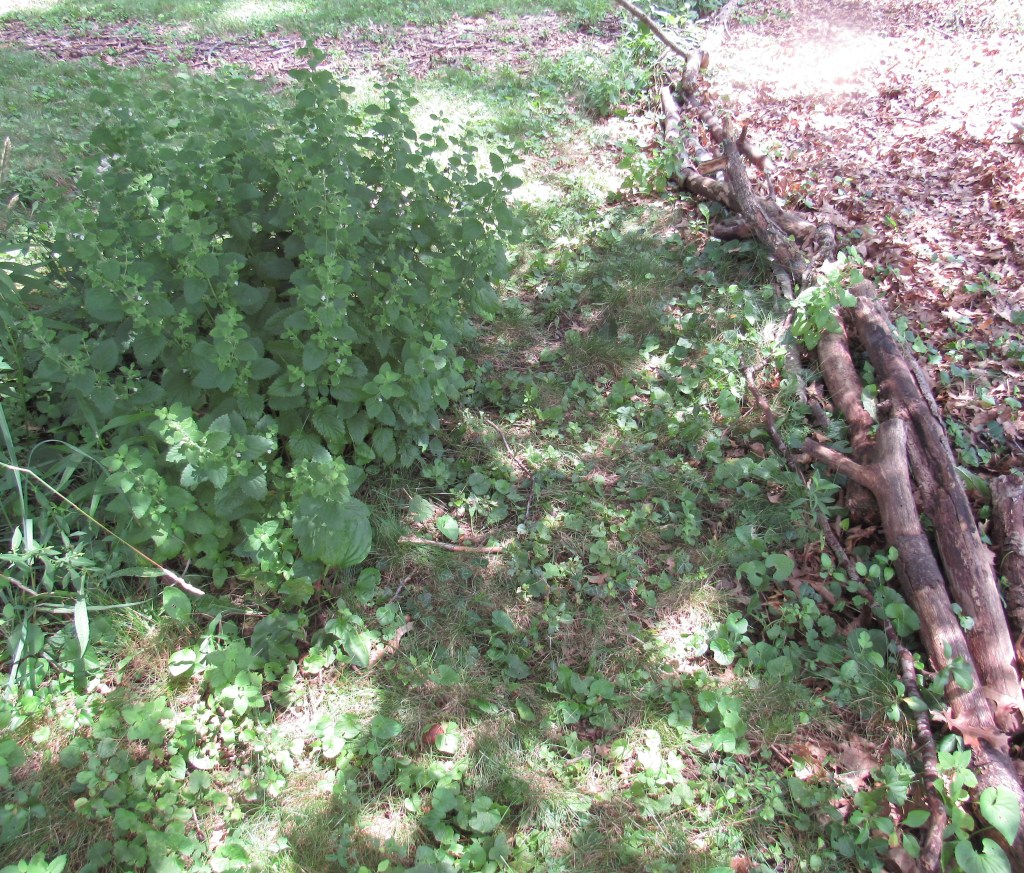
This Is my backyard border, a little collapsed at the center where daffodil leaves used to be, keeping me from planting densely there in the spring. The bamboo stakes are deer-discouragers. The mulched path on the right, I filled in with free wood chips and twigs that form naturally at the bottom of my brush heap. Windfalls from my trees are the edging. Mature logs taken from the heap can be light as paper, reduced to a crumbly texture by the fungi that feed on them. As edging, logs and sticks look nice; they also create microclimates and mini-habitats. So far, I have never seen a reptile or amphibian in my yard, but I’ve added water, stones, and rotting wood, all of which are are important to toads and turtles, etc.
Stands of mint-family plants can make great summer hedges. They tend to grow in a medium-tall upright clump; they flower generously, and are loved by pollinators. The lemon balm pictured defines the path edge, and is easily trimmed backed if it encroaches.
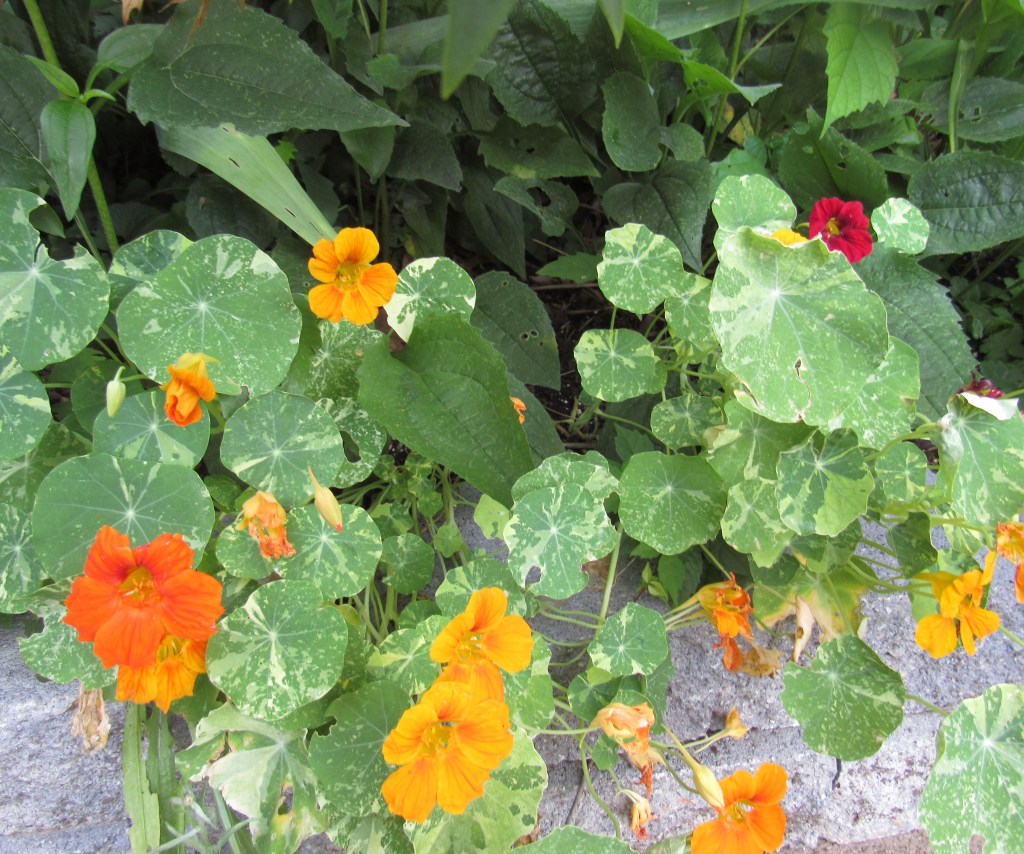
The Alaska nasturtiums blooming, with all their color range.
This annual phlox is not only lovely, but seems strongly deer resistant. In this patch of garden, I have coneflower and black-eyed Susan, of which the deer have bitten off the flowerheads. But the phlox blooming next to them has been left alone.
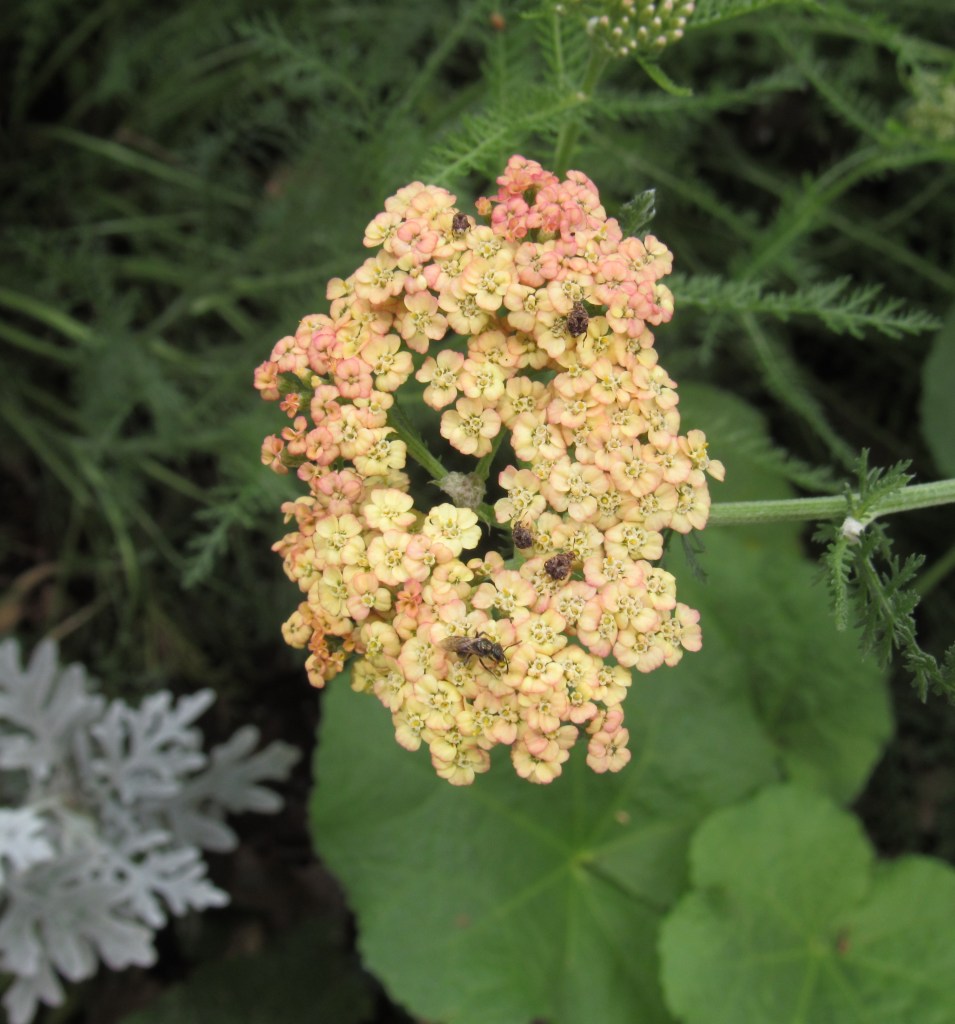
An achillea bloom in terra cotta. Also, a tiny wasp, and several of what look like little beetles.
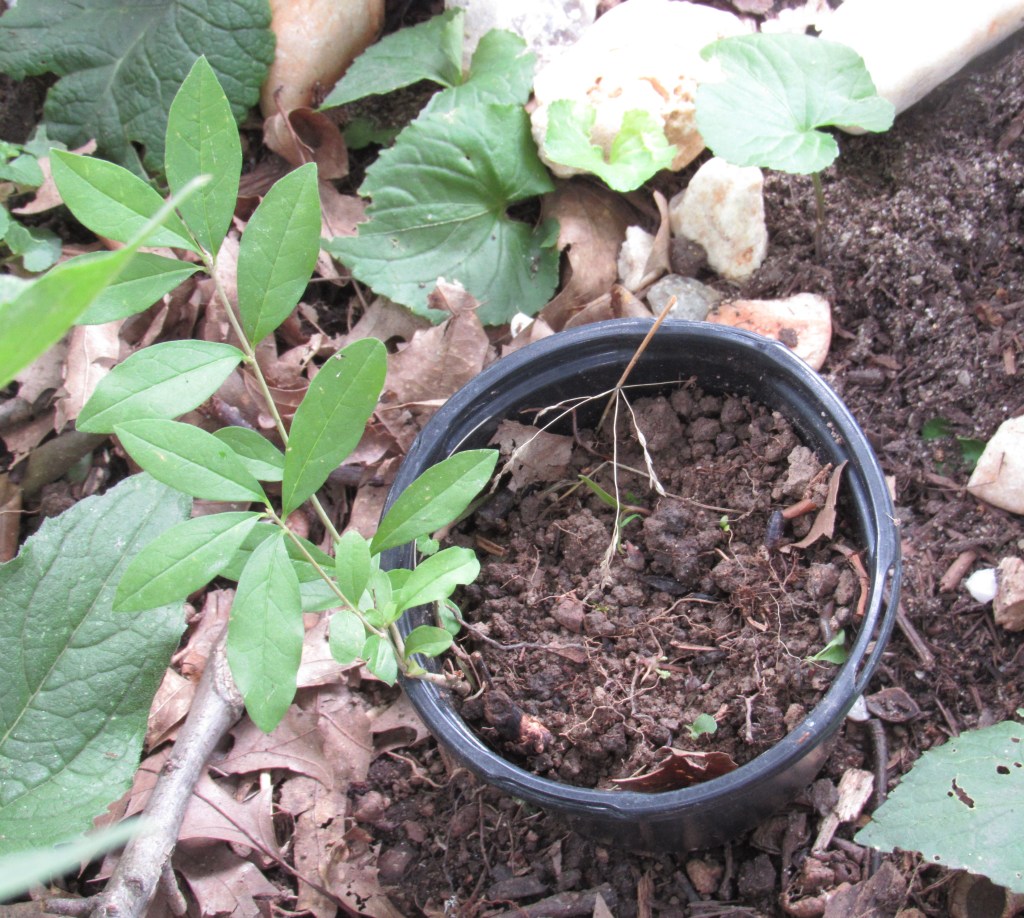
A second Paw Paw seedling. The first gift Paw Paw is about three feet tall now. I read up on them to learn when I might see it bloom, and found out it’s just as well I have another. Paw Paws, apparently, besides being fly-pollinated, are shy to make fruit, and need to have genetic input from another individual. Somewhere in the woods nearby, though, there is a fruiting Paw Paw, making these deposits in my yard possible.
Likewise for the parent mountain laurel. I found a new one, potted it up, and will think about where to plant it. I just ordered a buttonbush, and a steeplebush, and I want to put in a highbush cranberry. The Black Cherry is a superfood for native northeastern and midwestern wildlife, and I always get seedlings sprouting in my yard, since they are not rare in southeastern Ohio. But whole trees are hard to accommodate.
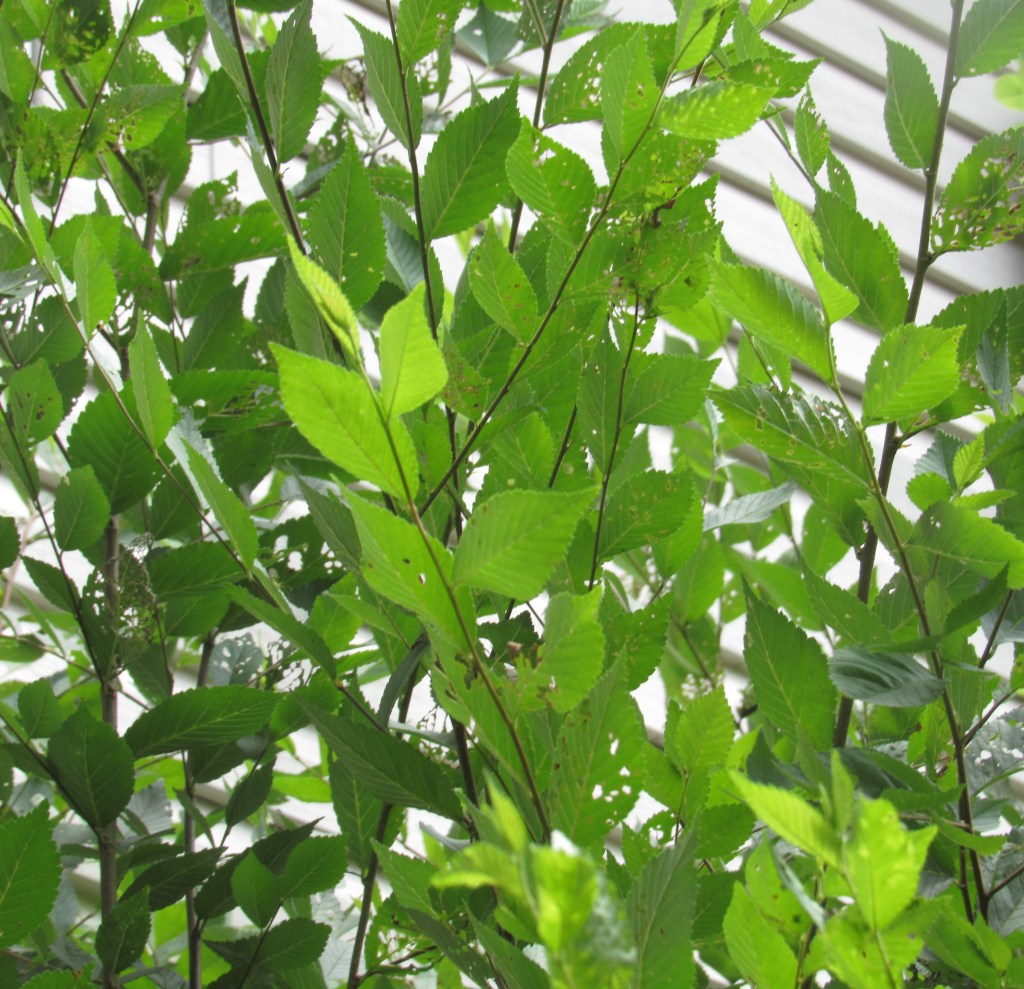
This one, that I thought was a birch, and then thought was a beech, I’m beginning to think is a hornbeam. Its characteristics don’t really fit either of the others. It’s a great favorite with everything that feeds on leaves. The skeletonization is caused by Japanese beetles. The larvae of Japanese beetles thrive in sunny expanses of lawn, while their best predator, fellow foreigner the European Starling, like most warm-blooded creatures, likes to forage (grub) in the shade. Starlings have done good work for me in keeping this particular pest under control, so I don’t worry about them…even though they are awfully noisy birds.
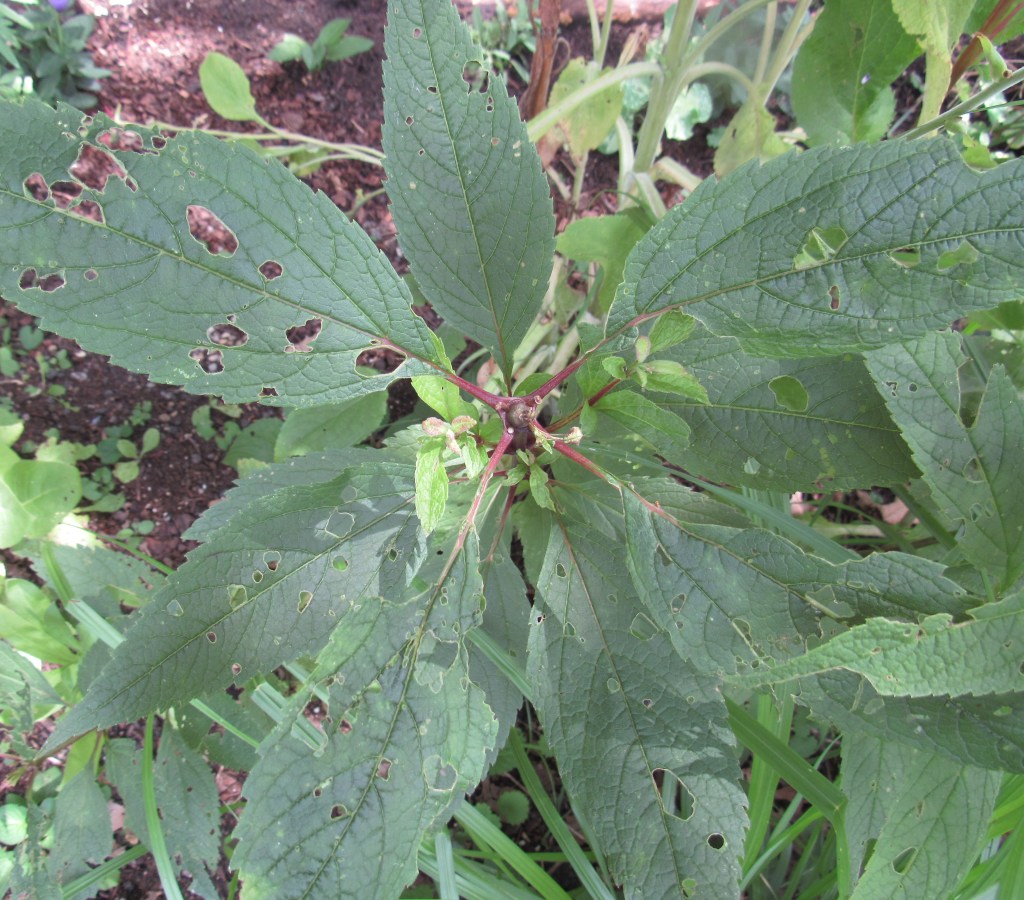
Joe Pye weed is a North American native, and its flowers are loved by butterflies. This leaf damage is a good sign that some insects, aside from Japanese beetles, are being fed. The Joe Pye is not a noted host for butterfly larvae, but feeds the adults and attracts them, so that if you have Paw Paw, a host for the Zebra swallowtail, or milkweed, for Monarchs, or pipevines, which have a swallowtail of their own, etc., your yard can help keep butterflies from disappearing—a genuine possibility these days.
By the way, I’ve walked in the woods many times in my life, and I’ve never actually seen a pipevine growing anywhere. The only one I could find to order was a Brazilian species. Of volunteer vines, I get Chinese bittersweet and Japanese honeysuckle, invasives that need pulling (the bittersweet has thorns, so wear gloves). I get poison ivy, which isn’t civilized, though in the forest it’s good for wildlife. I get lots of Virginia Creeper, which is just too abundant to have in the yard (and capable of damaging masonry), English ivy and wintergreen euonymus, nonnatives, also worth pulling, and lots of campsis radicans, the trumpet vine, which is native, and hosts a sphinx moth caterpillar.
Campsis is also tricky, like other vines, because it grows heavy and woody in time, and crawls all over things, shading them out. It probably wants a pergola, and I don’t have enough sunny parts in my yard for that.
A robber fly. I didn’t even know there were such things, but I photographed this one and looked up types of flies. It’s not really a friend or an enemy, because it’s a hunting insect that carries off grasshoppers and bumblebees alike. I just saw the first hummingbird moth I’ve ever seen in my yard, so I hope it can keep safe from the robber flies.
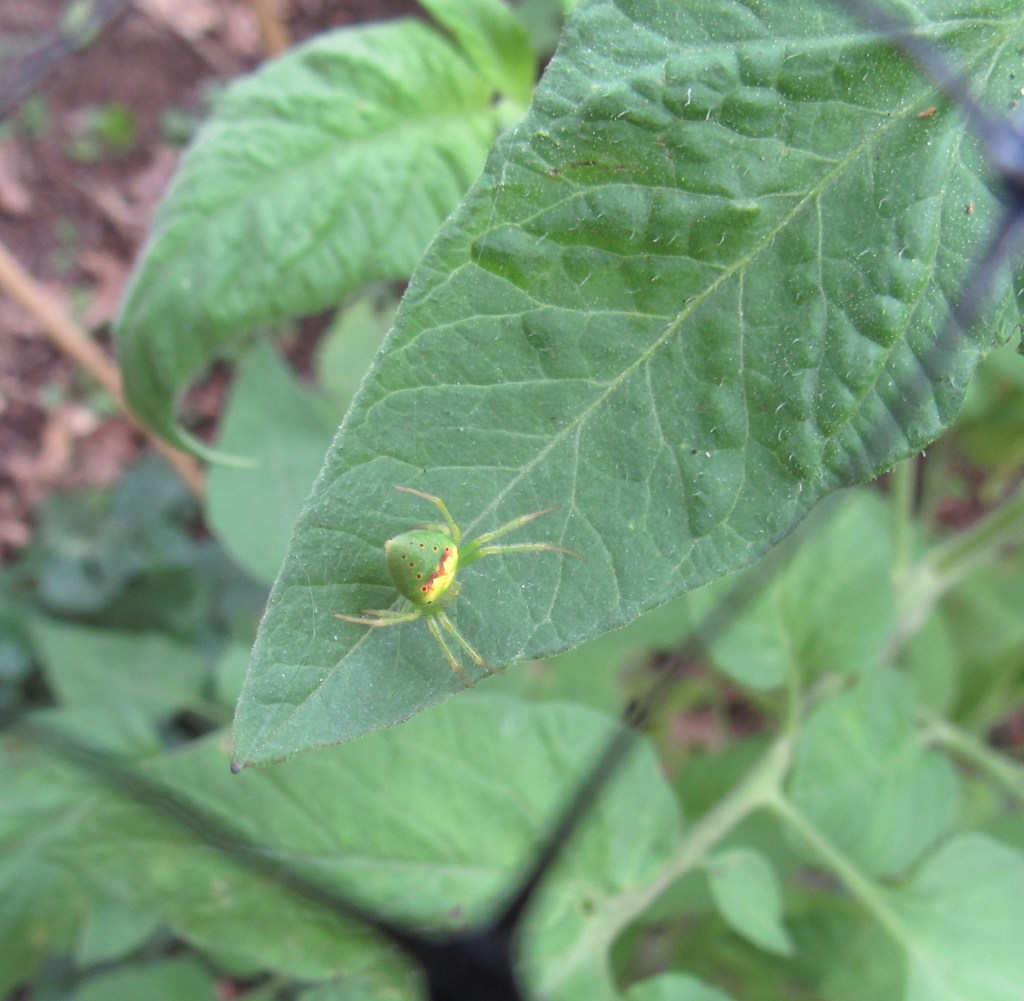
A cute-as-can-be little spider on my Brandywine tomato. It looks like he’s trying to pass himself off as a tiny tomato hornworm. Maybe this spider preys on the braconid wasps that prey on the hornworm.



 Memories of a Midwestern Family