Pushing The Zone with Loropetalum

Photo of yellow arborvitae under cloches, purple-leaved loropetalum, and abelia


I live in zone 6B, in southeastern Ohio. The terrain is hilly, and the soil is clay, but we have a lot of forest. My town is in a river valley, and my house is basically in the wider flood zone, meaning the soil in my yard is clay with a top layer of humus, formed by cycles of silt and decaying plant material. So my zone 6B is accommodating to plants that are rated hardy to zone 7. If you live in a flat, sandy, and windy 6B, you might not have much margin for zone pushing. (Zone pushing is planting a non-hardy variety for your zone and either putting it to the test, to see if it can survive a zone up, or building it a microclimate.) I wanted to try this with a Loropetalum for two reasons. Because the foliage is beautiful, and because deer don’t like them. I chose Purple Pixie Dwarf Weeping Loropetalum because it sits low to the ground—a six foot variety could not be protected from winter wind. I sited my Purple Pixie, as you can see above, on a slight elevation with a log protecting the roots. That gives it both the drainage and moisture it wants. It’s in full sun, and will get winds, blowing mostly from the southwest, but I put three Anna’s Magic Ball arborvitae in front of it. I have them protected under cloches that also should break up the wind, and because they’re slow-growing, they may be able to stay protected for a couple of years, protecting the Loropetalum in the process. I have a Brilliantina Abelia planted behind. To the left is a stand of Achillea. It’s still experimental, and I won’t know until next spring whether my Purple Pixie has survived, but if it can, it’ll be a lovely and deer-resistant shrub along my path. 
 

New Seeds and Plants (part one)

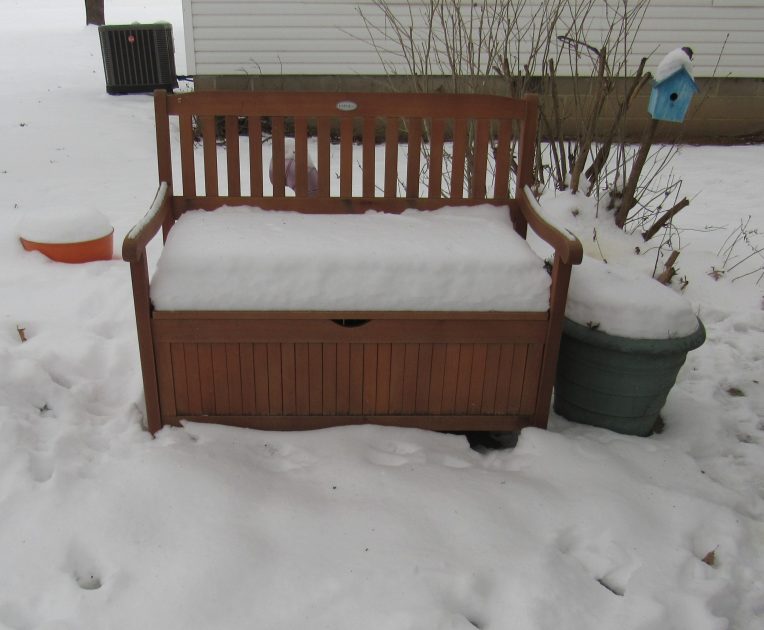
Photo of garden bench with six inches of snow on seat

The big snow of early January, about six inches.


It’s time again to order seeds and plants. My prime goal this year is reducing deer and rabbit losses. They were terrible through the drought summer we had in 2024, and this January’s sequence of heavy snow and arctic cold has kept the snow on the ground, and meant more branch-tips on my evergreens getting nipped. My shrubs are sad-looking, but I hope they’ll fill out well in spring.

Deer spray is a nuisance, but this year I’ll try filtering it so the fatty stuff that makes it stick to leaves doesn’t clog and break my spray nozzles. I’ve found some wire cloches to order, and for my smallest starts, the cotinus, red osier dogwood, and fothergilla I’ve planted at the edge of my yard, those ought protect them through summer. I’m trying to make my deer defenses a little prettier and more invisible, because I’ve been using rabbit-fencing cages and a ragtag bunch of stakes, and it doesn’t make the garden elegant.

I made a space I call Daylily Island, where I moved all the daylilies and several heucheras. I can put up some decorative fencing, and maybe enjoy the blooms without having to hustle out and spray them every time it rains. (Which doesn’t keep my daylilies from being eaten, anyway.) 

This is what I’ve ordered, with item numbers, from Pinetree Garden Seeds. I’ve shopped with them for years; they have good prices, quick service, friendly people. As gardeners know, inflation has really been crazy in plants and seeds. (I remember the 90s, when a quart perennial would cost maybe $7.99.)


544 Anise Hyssop perennial

551 Chives perennial

547 Catnip perennial

48003 Narrow Leaf Echinacea perennial

58502 Mountain Mint perennial

624 Dusty Miller annual

728 Baby Sun Coreopsis perennial

62103 Carpet Mix Cosmos annual

62106 Sonata Dwarf Mix Cosmos annual

62203 Showpiece Mix Dahlia annual

73707 Mellow Yellow Echinacea perennial

959 Strawberry Fields Gomphrena annual

70902 Burning Hearts Heliopsis perennial

70808 Helen’s Flower Helenium perennial

640 Giant Imperial Mix Larkspur annual

65501 Safari Red Marigold annual

65506 Giant Yellow Marigold annual

77705 Prairie Sun Rudbeckia perennial

77702 Indian Summer Rudbeckia perennial

69801 State Fair Mix Zinnia annual


There are a couple things on this list that I’ve seen deer eat: the dahlias and the coreopsis. Those need protection, but deer don’t really like them. Dahlias have that piney smell, and seem to be eaten later, during the fall-fattening-up time. Coreopsis can be eaten to the nubs, but I think the culprit is rabbits. Heliopsis, rudbeckia, and coneflower will get the flower buds nipped, but start toughening up and getting prickly as they mature, so the flowers begin to survive. 

What’s in the Garden

The last of the unseasonable winter-in-May has passed by, so this week was the real start of getting things planted out. All my seed-grown perennials, that I planted in April, survived the frost just fine, as most perennials will. But the annuals were getting large in their pots, and using up all their potting soil nutrients.


Photo of maple with woodpecker holes

Here is one of my front lawn sugar maples. From the time this was taken, the tree has already leafed out in full. As you can see, the dead center trunks make the best of habitats for hole-nesting birds, also flying squirrels (I’ve never seen one, but I assume they’re there, since the owls catch some sort of prey around the feeder), and ordinary squirrels in wintertime. Important to note, the tree is still quite alive and leafs robustly, so although a lot of homeowners would decide to cut down a half-dead tree, it’s worth keeping for the wildlife it supports.


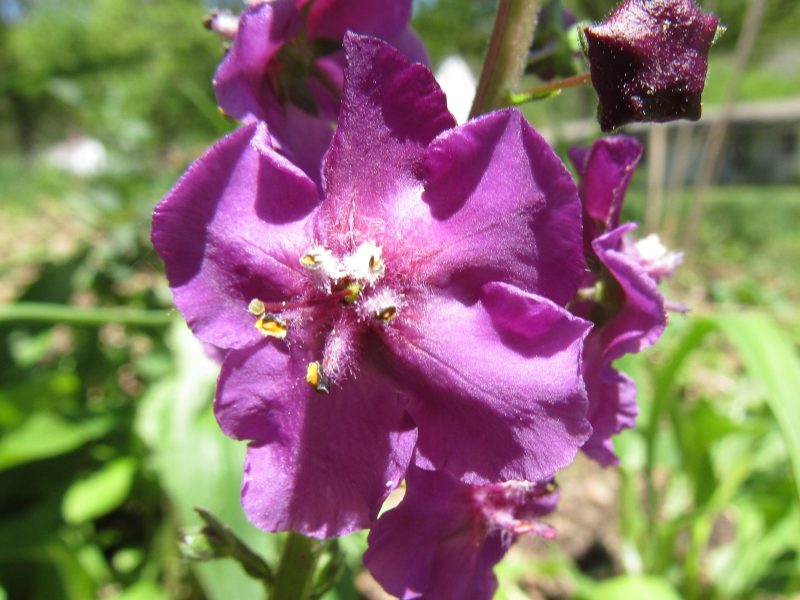
Photo closeup of verbascum bloom

A close-up view of a verbascum flower. I grew a bunch from seed last year, but had to wait for this year to see them bloom. Note the pentagon-shaped bud.


Photo of plants in garage

When it was freezing at night, and forties by day, I had to make do, finding someplace to get light to my mature seedlings. And a couple of venerable houseplants. In the background, my garage collection of dead appliances.


Photo of coneflower heads

This is all that remains of the coneflower seedheads. This structural part that supports the sepals, flowers, and seeds, reminds me of a cycad. There seems to be no purpose to it, other than as a basic derivative of the plant’s evolutionary history. Flowers of the Asteraceae family are over forty million years old, so far as the fossil record currently shows.


Photo of Cooper's Hawk nest from distance

In my callery pear, this new nest has appeared. You can see by the recently clipped branches, still green, that it’s either in progress, or just completed. It’s the type of nest, and the tree-crotch location is typical, of a Cooper’s Hawk. But it’s only about five feet off the ground.


Photo of Cooper's Hawk Nest

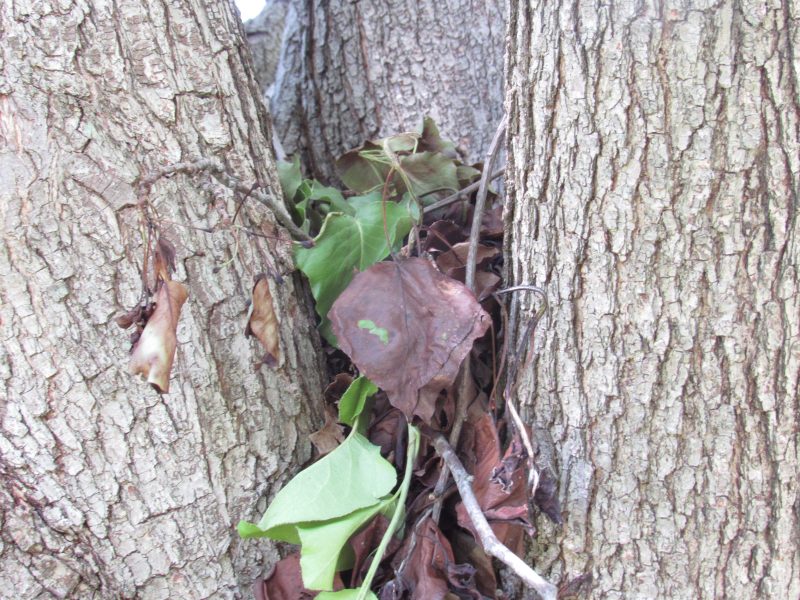
Here’s a close-up.


Photo of baptisia australis

This baptisia has been growing in my garden for several years, and this is the first year it has ever bloomed.


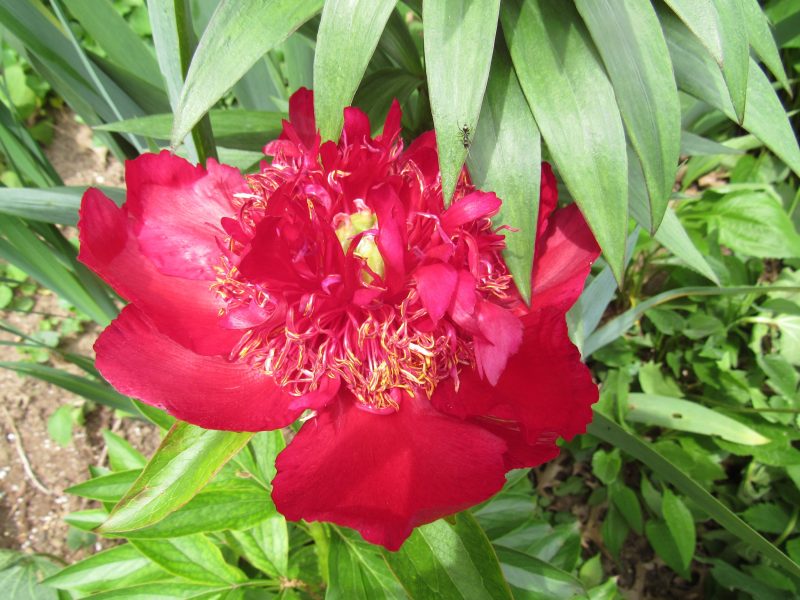
Photo of red peony

My red single-flowered peony.


Photo of wildflower

Finally, this is a wildflower we have locally. It looks like a member of the rose family, but I couldn’t find it in my guidebook. I’m going to give it a chance and see if it develops into a decent groundcover for shade, where it likes to grow. The flowers are as shown, tiny, but the leaves are like a heuchera.


Waiting for the Cold Spell to End

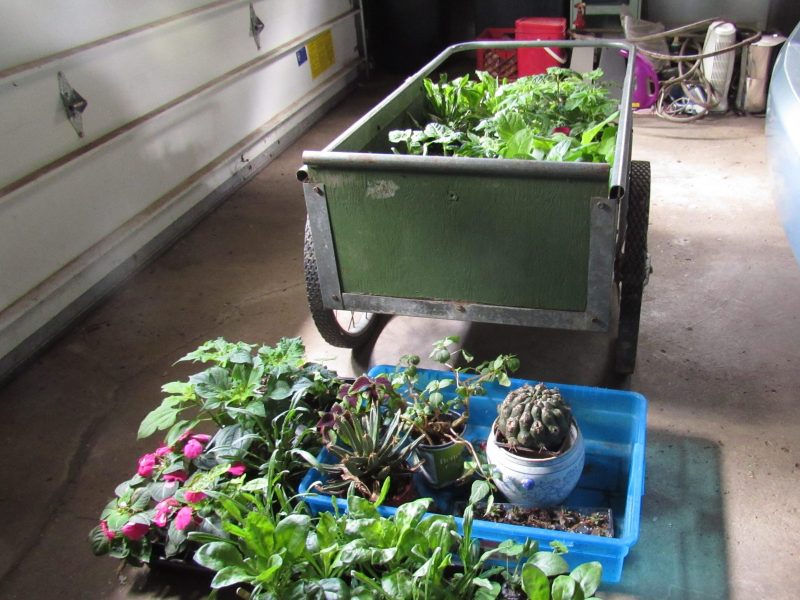
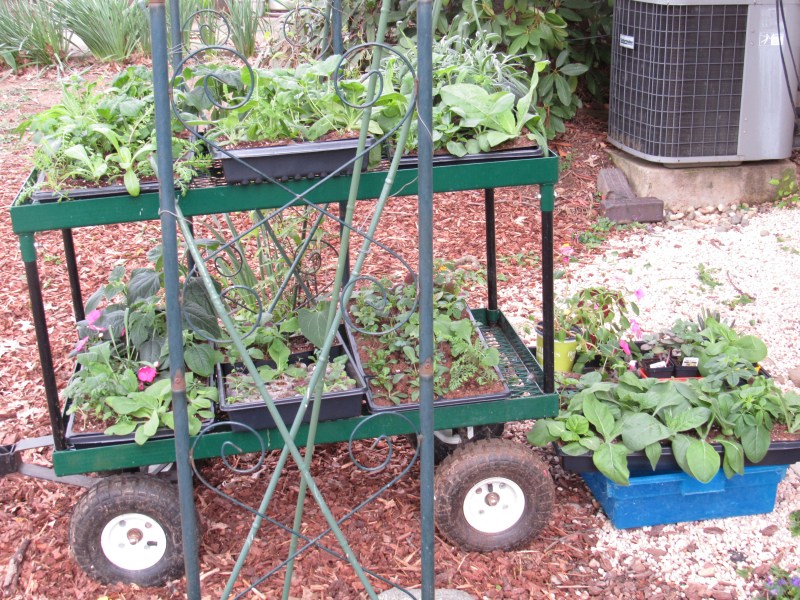
Photo of garden cart and plants

These are the seeds I started March 15. The biggest growers are the annuals, the centaurea, nicotiana, and tithonia. They toughen up well enough with temperatures in the fifties, but need an eye kept on them in case the wind blows too cold. Of perennials, I have rudbeckia, columbine, shasta daisy, lupine, achillea, foxglove, hollyhock, catmint, coreopsis, hibiscus. The slower-growing annuals are coleus, impatiens (the big ones flowering above were started from cuttings), larkspur, calendula, ageratum…and I just started the end of spring annuals, that could sprout sown directly; but, in the case of sunflower, are vulnerable to birds eating them, or need a good start to root well and bloom sooner: morning glory, marigold, and nasturtium.


Photo of Milkweed border

Along the side of the garage I have a stand of swamp milkweed (white-flowered) that grows every summer into a seasonal hedge. These plants get a lot of love from bees and wasps; so far, I haven’t seen monarchs. But, as every year, I want to tout the tithonia flower, which is very attractive to monarchs. That may be because the kind that migrate to Mexico are looking for a familiar haven along the way (tithonia is also called Mexican sunflower). When they go to seed in the late summer, goldfinches will feed on them too.


Photo of old yew bush

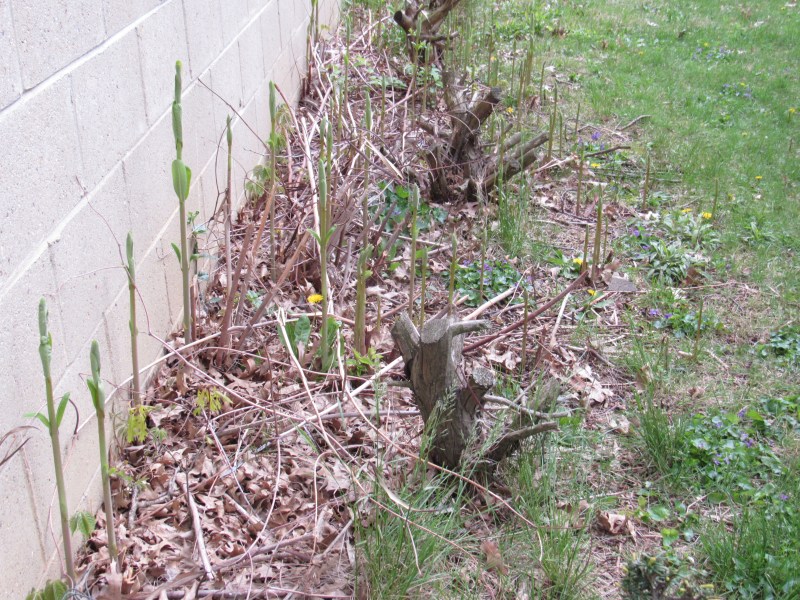
On my old property, I planted an acorn and grew a Chestnut oak about twenty or thirty feet tall at the time I left. I’d like to think it’s still there…maybe it isn’t. But owners can do what they need to with their own place. My garage was first hedged with yew, bushes grown a couple feet taller than me. If they were left alone, there’d be no moving up the side between my property and the neighbors’. I don’t myself like trimmed foundation bushes, so I cut them down, rather than try keeping them up—I couldn’t get the stumps, because my chainsaw is only a little battery-operated one. One yew, and I’m happy it did, if I can keep it small, came back and has a sort of Bristlecone pine vibe.


Photo of my grandfather and his brother

My grandfather (left), his brother (right). I don’t know who the skinny man in the center is.


Photo of my grandfather, his brother and mother

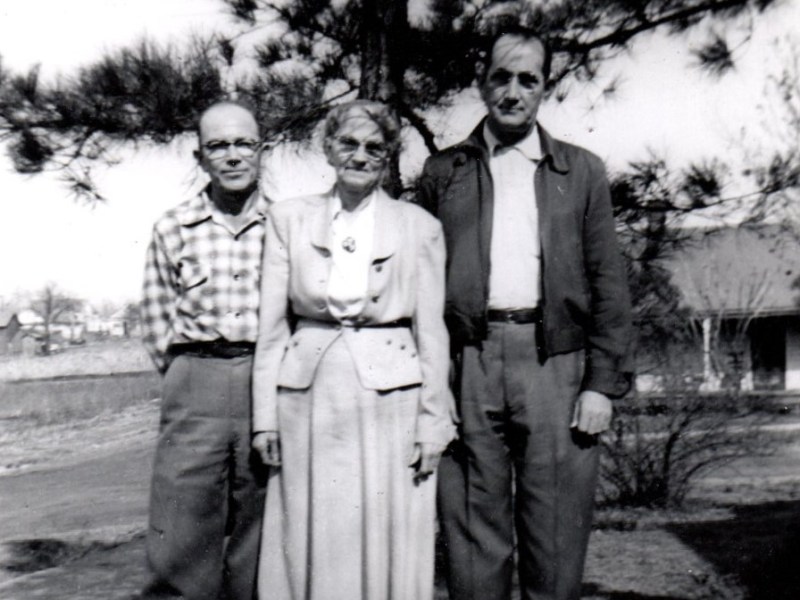
Same group, but with my great-grandmother in the middle.


Photo of my great grandmother

My great-grandmother Barker, 1960s, probably Mt. Vernon, Illinois