Fall Asters

Wild asters blooming in a flower bed, with straw and annuals near the front, and a bridged path in the background


Wild asters have an almost magical appearance when you see them up close, with beadlike buds floating among bloomed flowers. My garden is full of asters in the fall, a super plant for pollinators. They can be weedy and spread a lot, but in springtime when they get to be about 8 inches high, they’re easily uprooted anytime you want to cull them back. Asters triple in size in late summer getting ready to flower, but most of the gardening season they’re unobtrusive. In the foreground of this photo is a section of the bed I’ve built up using container and hanging basket plants. Containers get tired by the end of the season, but the plants revive when you put them in the ground.
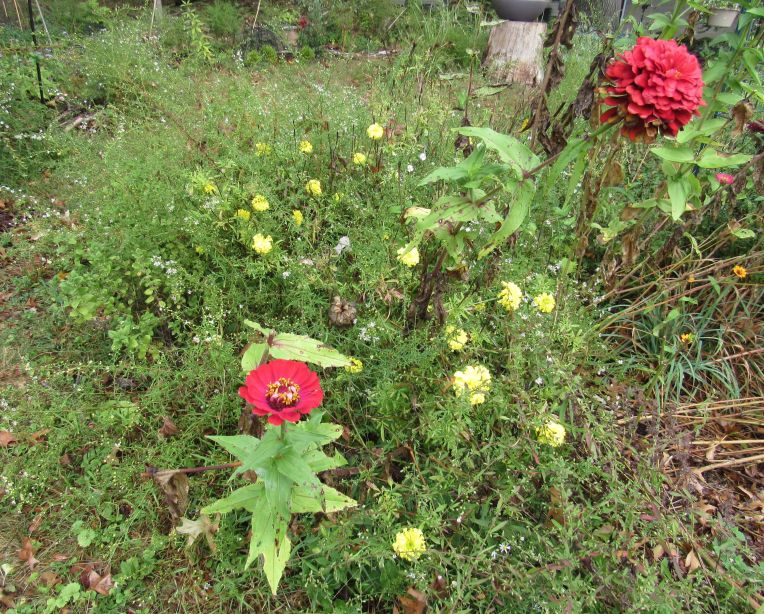
 

Red zinnias, lemon marigolds, and white wild asters blooming in a flower bed


These State Fair zinnias are the biggest attraction for large species of butterflies. I’ve done well this year with monarchs, not only having a breeding pair, but some recent visitors with bright orange scales, so they’ve probably just hatched. All the large butterflies–tigers, zebras, black swallowtails, fritillaries, monarchs–were more numerous this summer than the last few years, and several types were breeding. Late summer/fall I also have tons of tiny butterflies, but I can never get a good look at them for identification. Leaving grasses to grow tall is the best way to make a habitat, that tiny butterflies will definitely use. The other flowers above are lemon-colored marigolds, a tall variety, and the fall asters. 


Woodland path with light green planters and pots also light green, others terra cotta and orange, and fall leaves on the ground


A rainy day woodland path, with mellow greens and terra cottas. The deer have eaten a lot of leaves off the caladiums, but one is hanging on next to a flowering tobacco.
New Seeds and Plants (part one)

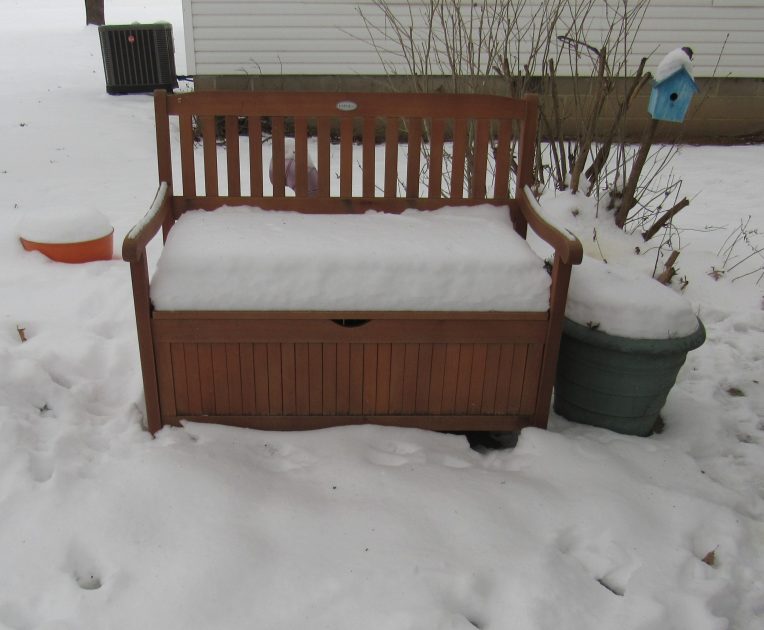
Photo of garden bench with six inches of snow on seat

The big snow of early January, about six inches.


It’s time again to order seeds and plants. My prime goal this year is reducing deer and rabbit losses. They were terrible through the drought summer we had in 2024, and this January’s sequence of heavy snow and arctic cold has kept the snow on the ground, and meant more branch-tips on my evergreens getting nipped. My shrubs are sad-looking, but I hope they’ll fill out well in spring.

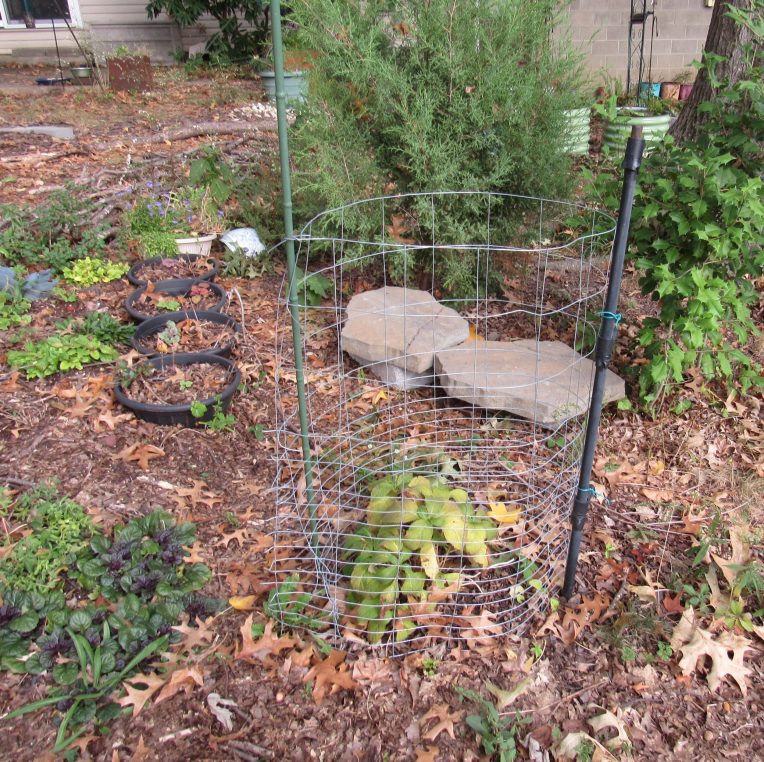
Deer spray is a nuisance, but this year I’ll try filtering it so the fatty stuff that makes it stick to leaves doesn’t clog and break my spray nozzles. I’ve found some wire cloches to order, and for my smallest starts, the cotinus, red osier dogwood, and fothergilla I’ve planted at the edge of my yard, those ought protect them through summer. I’m trying to make my deer defenses a little prettier and more invisible, because I’ve been using rabbit-fencing cages and a ragtag bunch of stakes, and it doesn’t make the garden elegant.

I made a space I call Daylily Island, where I moved all the daylilies and several heucheras. I can put up some decorative fencing, and maybe enjoy the blooms without having to hustle out and spray them every time it rains. (Which doesn’t keep my daylilies from being eaten, anyway.) 

This is what I’ve ordered, with item numbers, from Pinetree Garden Seeds. I’ve shopped with them for years; they have good prices, quick service, friendly people. As gardeners know, inflation has really been crazy in plants and seeds. (I remember the 90s, when a quart perennial would cost maybe $7.99.)


544 Anise Hyssop perennial

551 Chives perennial

547 Catnip perennial

48003 Narrow Leaf Echinacea perennial

58502 Mountain Mint perennial

624 Dusty Miller annual

728 Baby Sun Coreopsis perennial

62103 Carpet Mix Cosmos annual

62106 Sonata Dwarf Mix Cosmos annual

62203 Showpiece Mix Dahlia annual

73707 Mellow Yellow Echinacea perennial

959 Strawberry Fields Gomphrena annual

70902 Burning Hearts Heliopsis perennial

70808 Helen’s Flower Helenium perennial

640 Giant Imperial Mix Larkspur annual

65501 Safari Red Marigold annual

65506 Giant Yellow Marigold annual

77705 Prairie Sun Rudbeckia perennial

77702 Indian Summer Rudbeckia perennial

69801 State Fair Mix Zinnia annual


There are a couple things on this list that I’ve seen deer eat: the dahlias and the coreopsis. Those need protection, but deer don’t really like them. Dahlias have that piney smell, and seem to be eaten later, during the fall-fattening-up time. Coreopsis can be eaten to the nubs, but I think the culprit is rabbits. Heliopsis, rudbeckia, and coneflower will get the flower buds nipped, but start toughening up and getting prickly as they mature, so the flowers begin to survive. 

Deer Damage

Photo of landscaping stones


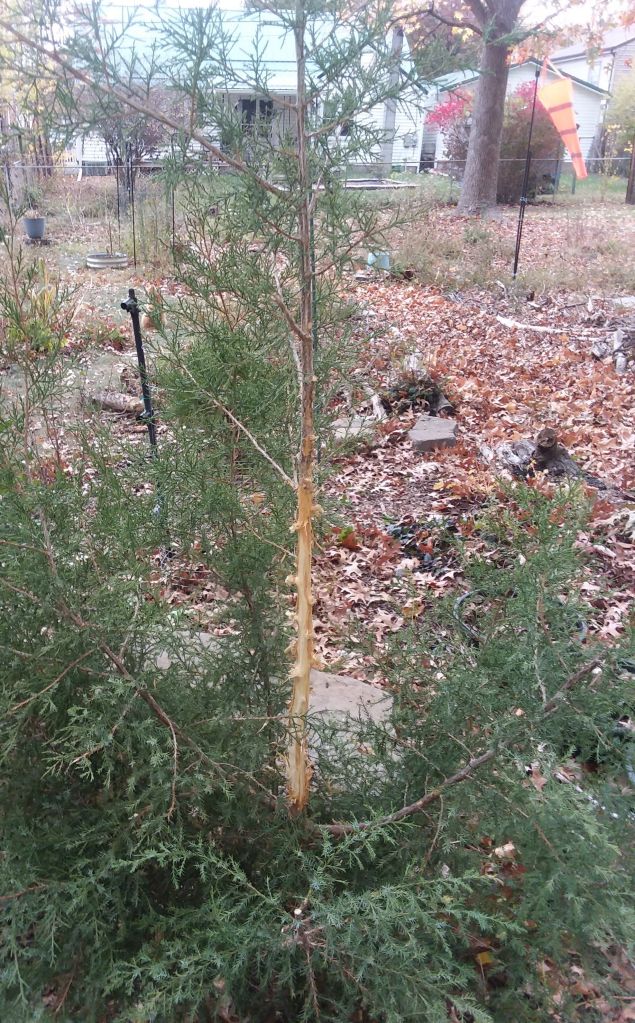
At the top is a photo I was going to share, but didn’t get around to writing the post. You can see my nice juniper, and the little plantings curving around it. I did have my hydrangea protected, since I know deer like to eat them. But I never thought I’d have a male deer tearing my trees apart with its antlers. The Rose of Sharon I talked about a couple of posts ago, that I’m trying to tree form, got attacked too. I think both will survive, since they’re both mature and have good root systems, but I may have to grow the Rose of Sharon as a shrub, or take a long time to get a leader back. The juniper, too, still has healthy growth down below, but it was such a nice tree. I think the drought has made the deer more destructive this year, and they’re ranging farther for food and water. I would thank them not to treat my yard as a territory for marking, though. 😐

Ohio Drought 2024


The very parched grass, seen behind my new driveway planting. I don’t water lawn, but I water plants I want to keep (which is all of them). The Caryopteris is blooming beautifully in its first year, started from a quart-size pot, and grown to a respectable shrub. I’ve had dozens of tiny butterflies in my garden late in the season. A couple of skippers are on the flowers, but hard to see in this photo. Caryopteris is a huge pollinator attractor. I’m still getting the effect of yellow (Chamaecyparis) and blue I chose these shrubs for, so considering we’ve had three rains from late June to mid-September, I’m not doing badly with several of the vignettes in my flower beds.


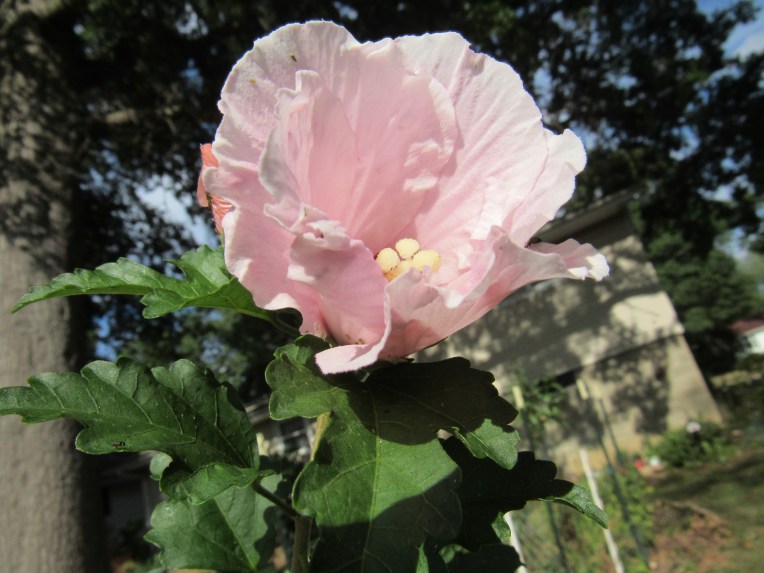
I mentioned a while back that I had a volunteer Rose of Sharon I was training to a tree form, to climb a clematis on. I didn’t know what color it would be. But what a great gift, to end up with this pale pink! I’ve never seen a Rose of Sharon this color outside of the brand new ones they’re breeding—and since this tree form’s an experiment, I wouldn’t want to spend a lot of money on it. It also has lobed leaves…a different genetic profile altogether, for whatever reason.  Whether the clematis will survive can’t be told til next spring.


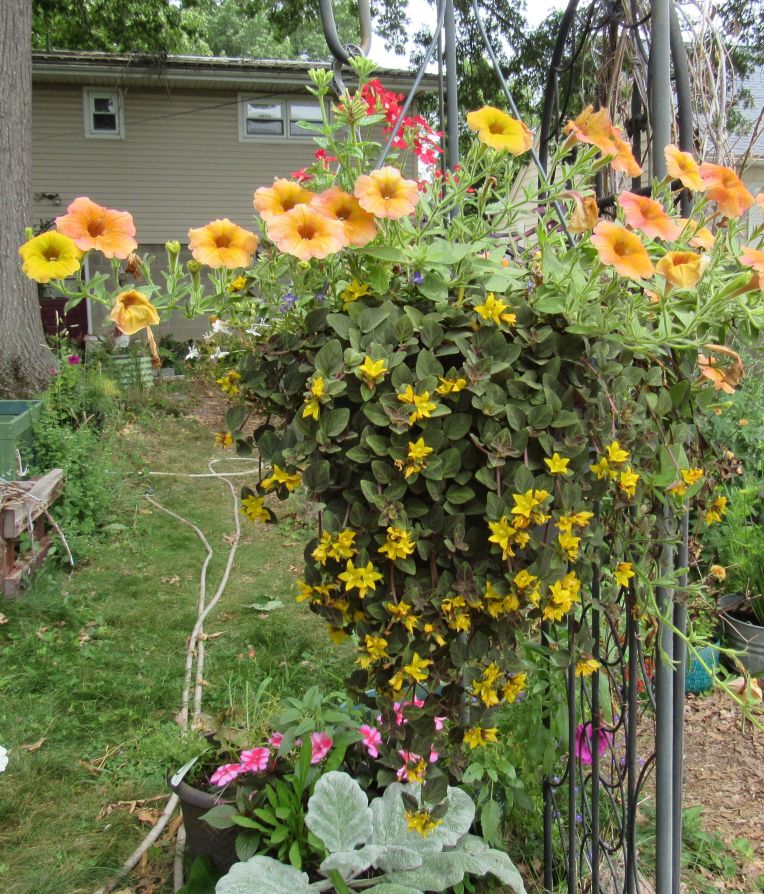
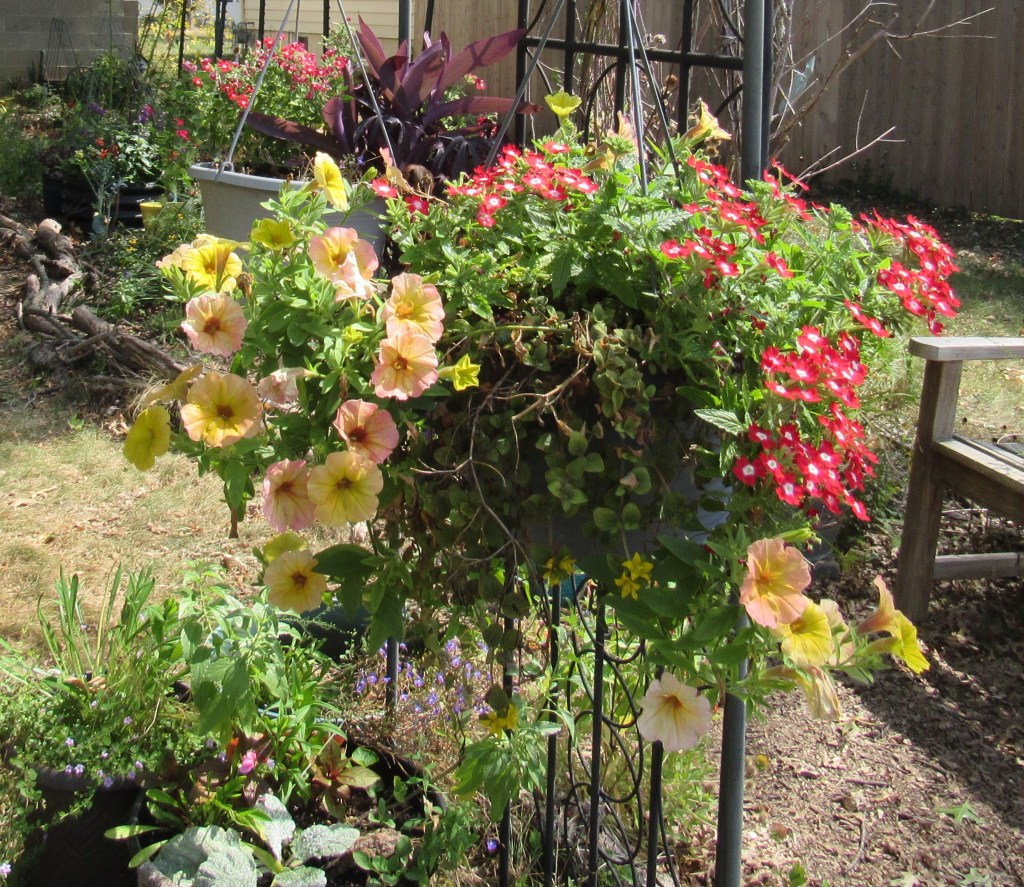
Photo of hanging basket with petunia and lysimachia


I’ve been keeping hanging baskets watered, though I had to retire a few, emptying the basket and planting the whole arrangement into a border where it could get more shade. The first picture above was taken June 27, and the second September 13. This “Honey” Supertunia and the red Superbena are great as a pair. The basket behind has red Superbena, Tradescantia, and a black-leaved sweet potato vine. These two baskets are holding up and giving my money’s worth. We’re in the season of super-hungry deer, so I never know if even garlic-sprayed plants will be waiting for me tomorrow.

Pushing Little Things Ahead


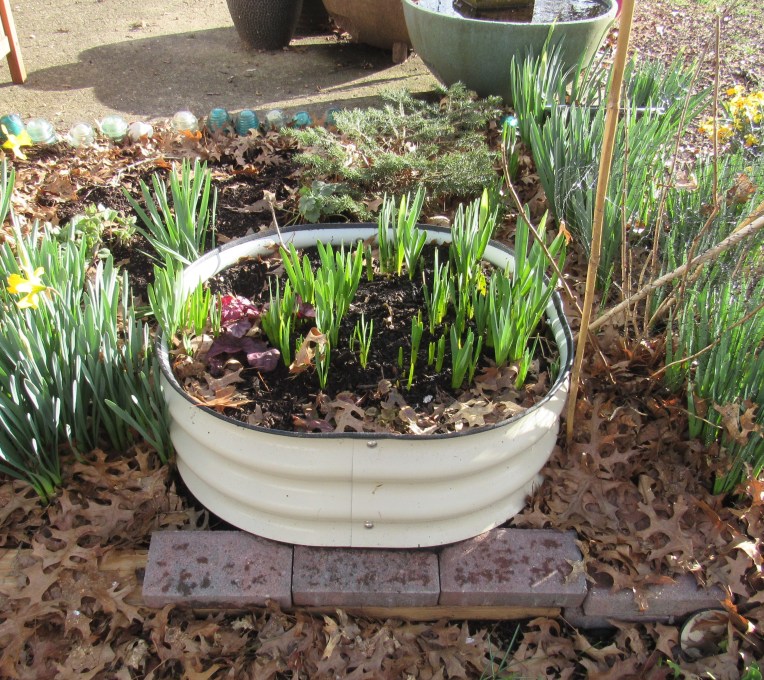
This picture is a few weeks old now. I’ve been meaning to get some garden chat on the blog, but keep having so many other tasks. I love these metal planters. The configuration above measures about a two-foot circle. I’ve been wondering for a while why you can’t buy pots open at the bottom, so you can plant shrubs and dwarf trees that need to root into the ground, but need the protection of a planter. Raised beds also serve a certain aesthetic; plus they have a habitat function, a topic I’ll have more on later. Anyway, the aluminized steel planters are open, easy to put together, fun to choose colors, etc. I thought one would give definition to this bed, as well as suppressing my non-blooming daffodils. (I actually had 6 blooms, but tons more foliage that I just snipped away today, since I don’t really want these daffs.) I’ve told the story before of how they’re so deeply buried a shovel blade’s depth can’t reach the bulbs. I can’t dig them without destroying my other plantings. But…

As you can see, they grew all the way through a foot of dirt. Now they’re even deeper! (I’ll just have to kill them slowly.)


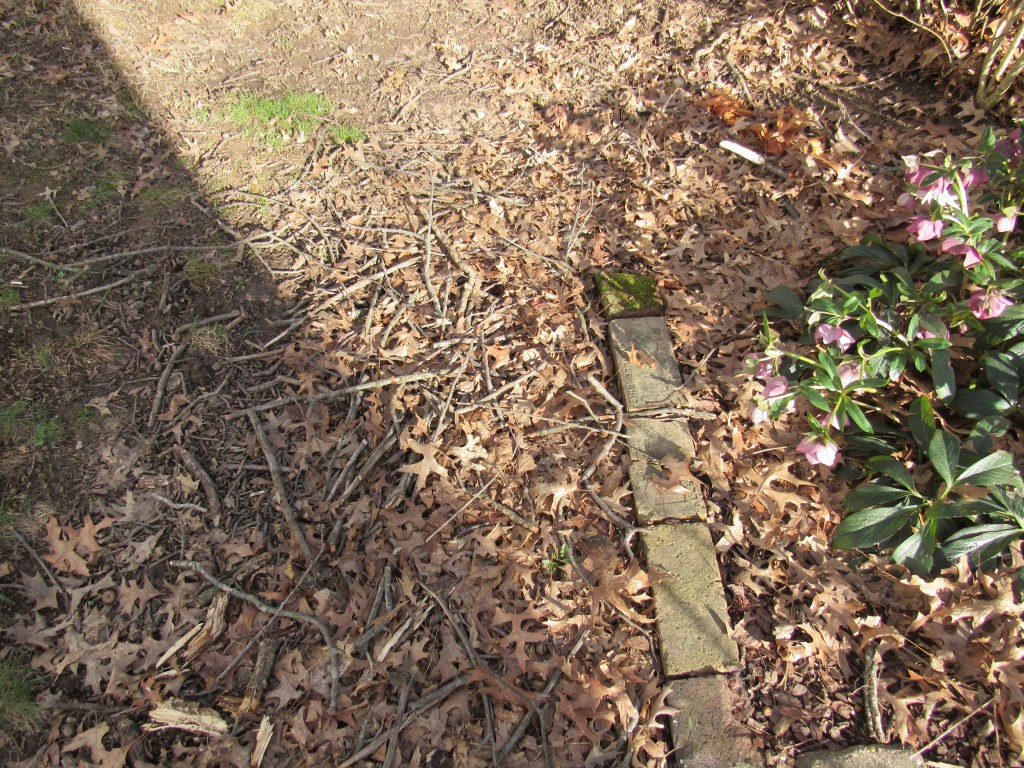
Here’s an area where every heavy rain washes the ground bare. You can see plain mud at the top of the image. When I gather sticks, I break them up and strew them over leaves and garden cuttings. It makes a good free path cover, and stops the washing. But I’ve got a ways to go to stabilize this shallow ditch between my property and the neighbor’s.


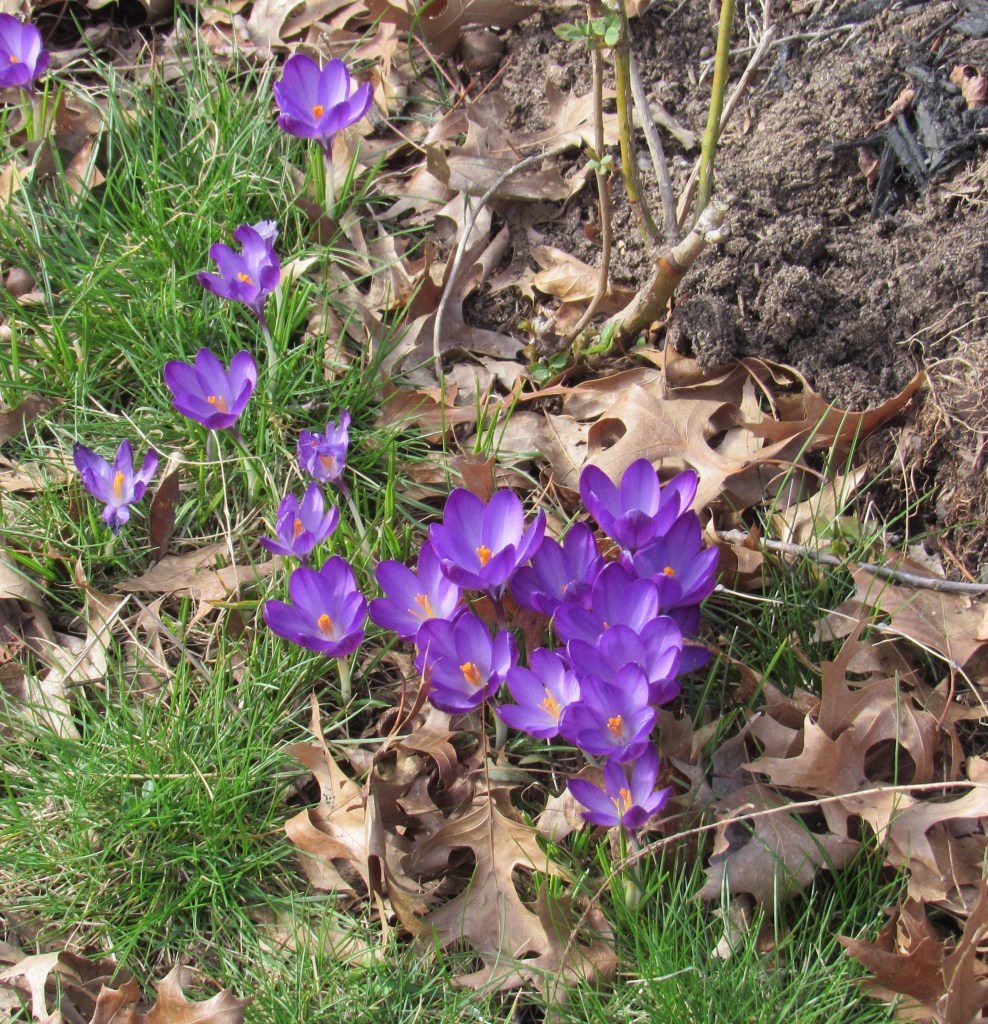
When I was shopping for bulbs last summer, I felt kind of unenthused about crocuses. I bought a few species ones, that I wrote about planting under store bought soil. But the usual purple, white, and yellow just wasn’t inspiring… Until this spring, when I saw how great these clusters of purple were looking. The daffodils (the ones I have where I want them) have been fantastic this year, too. My next orders will be mostly daffodils and crocus.

Though, next spring, I may get inspired by my alliums and “uncommon” bulbs, and decide I need a lot more of those.


Sprouts and Winter 2024 Bits

Photo of ash stump being drilled by pileated woodpecker


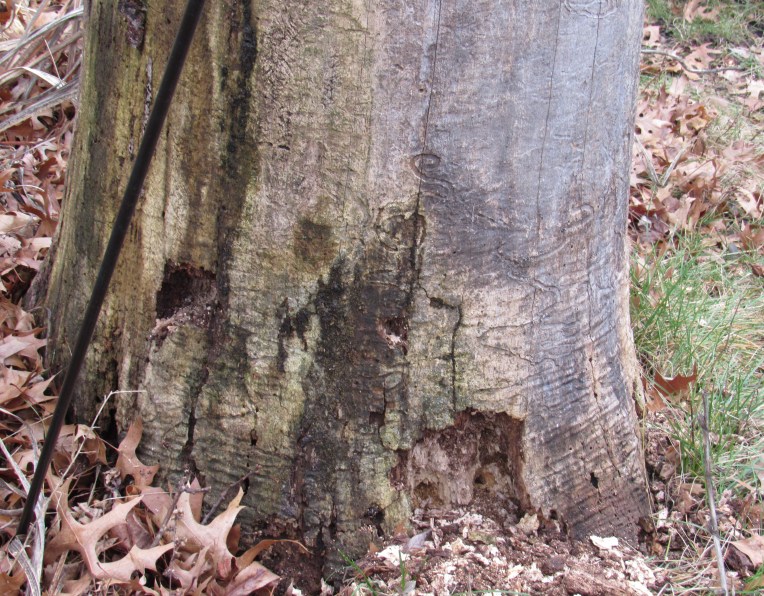
Above, the ash stump I’ve been using to support a large pot. I bought a new pot in the fall, the dish style that’s becoming popular. A lot of pots are too vertical, and plants don’t benefit from soil that packs at the bottom and ends up either soggy or dry.

Now the pileated woodpecker is taking my stump apart. We’ll see if it survives as a garden feature! But it’s wonderful to have an insect-intensive habitat, attractive to our largest woodpecker. What larger animals need most crucially is space—enough trees, in the case of the pileated, to hammer out their nest holes. If the babies live to adulthood, each male will have to find a territory of his own. The more we build habitat in our back yards, the more we sustain a path for nature to migrate, with food, water, and breeding sites, and the more nature we have on Planet Earth.


Photo of landscape with line drawn to mark topographical profile


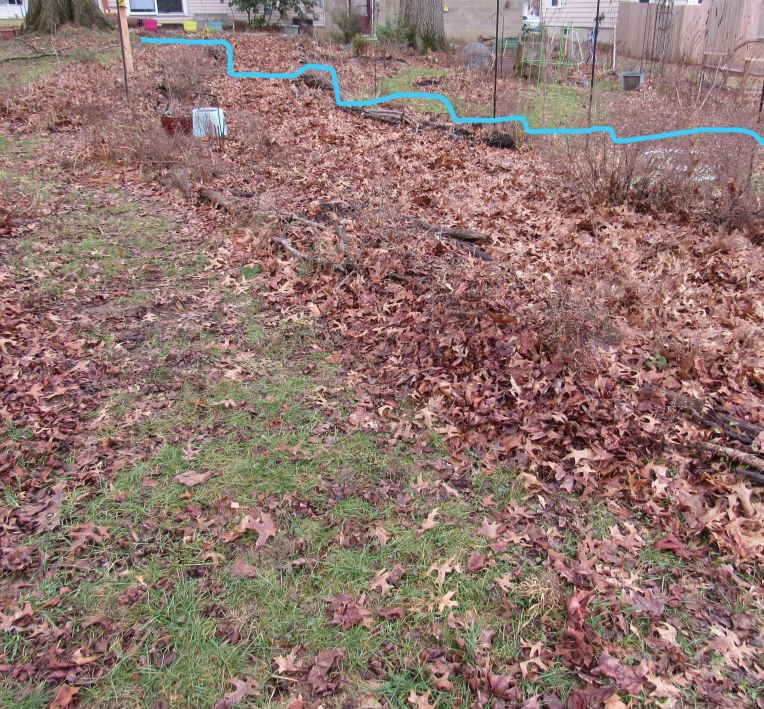
We’re having very pleasant spring weather, this late mid-winter. Even so, it’s a little worrisome, because a bubble of warm, dry air that lingers more than a week is not a pattern we want repeated through summer. Hopefully, El Nino interruptions are passing, and things will be as normal this summer as they can. The blue line above shows how I’ve changed the lay of my yard with shallow terracing. When we get heavy rains, the water goes downhill slowly, mostly soaking in. This terracing keeps my garden water-retentive, so plants root deeper, and can hold their own in dry spells. It’s easy to terrace your own yard, even if it has no natural hill. Make paths edged in fallen logs and sticks, or in wall blocks from the garden center, or even a load of firewood, repurposed. Use compost, yard waste, and purchased soil to fill in planting areas. The flow of water, plus soil activity from all the creatures you’re inviting, shapes the surface.


Photo of crocus leaves rising from the ground


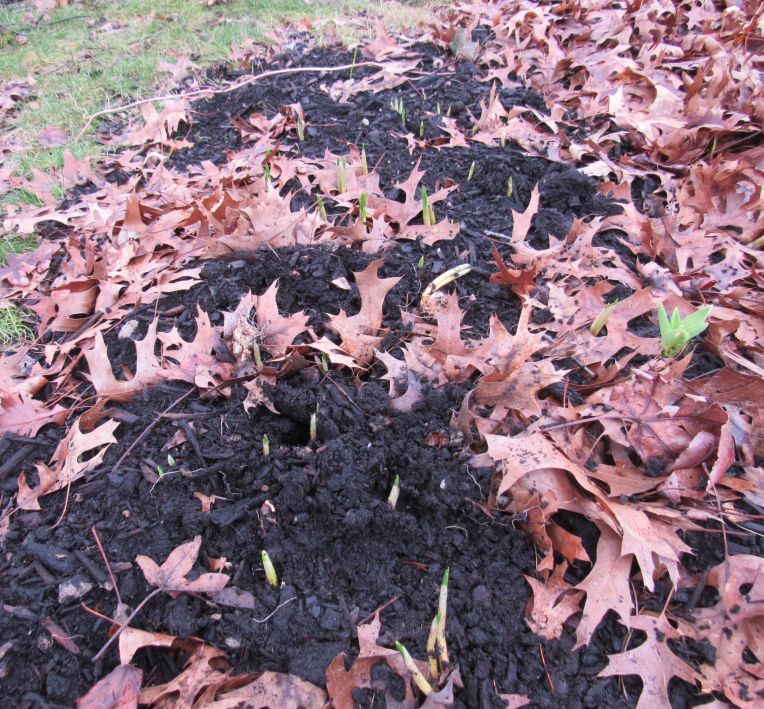
A few posts ago, I showed the easy way to plant small bulbs. Here are my crocuses coming up, and when they’re finished blooming, I can fill in around them with annuals and new perennials.


Photo of Rose of Sharon shrub pruned to a tree form


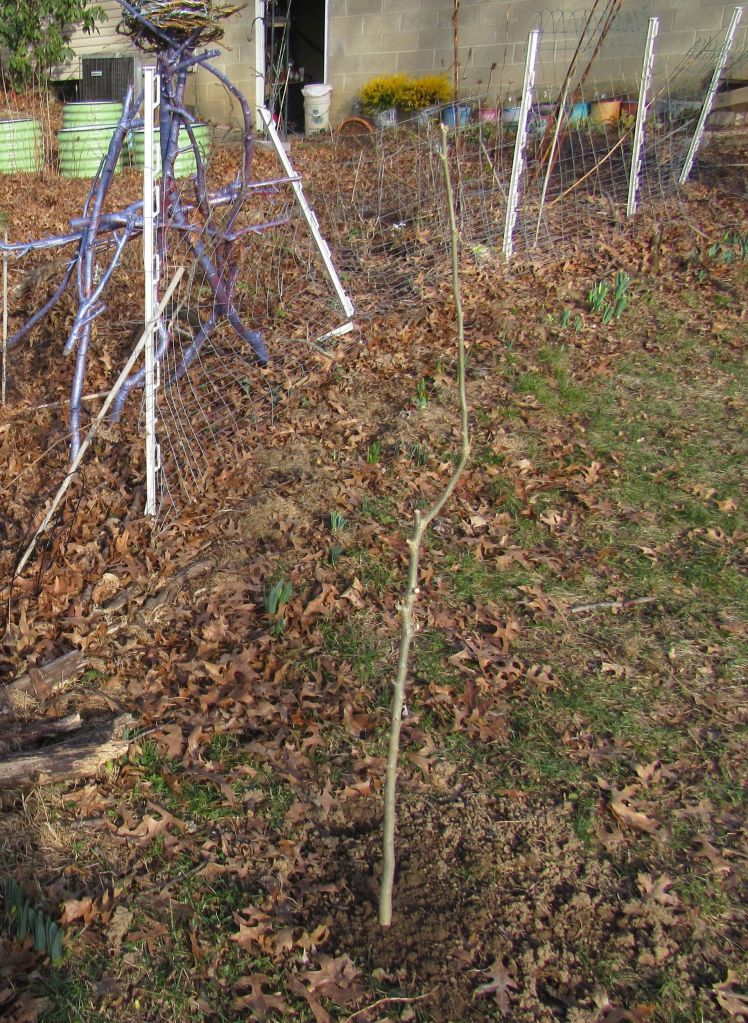
This is not a tree, it’s a Rose of Sharon. I’ve been pruning it to grow straight up, and my plan is to train a clematis on it. With luck, I’ll have the “post” flowering as well as the vine. Since Rose of Sharon is free—at least many of us find them sprouted in our yards, whether we like them or not—we have room to experiment.


Photo of three shrubs recently ordered by mail


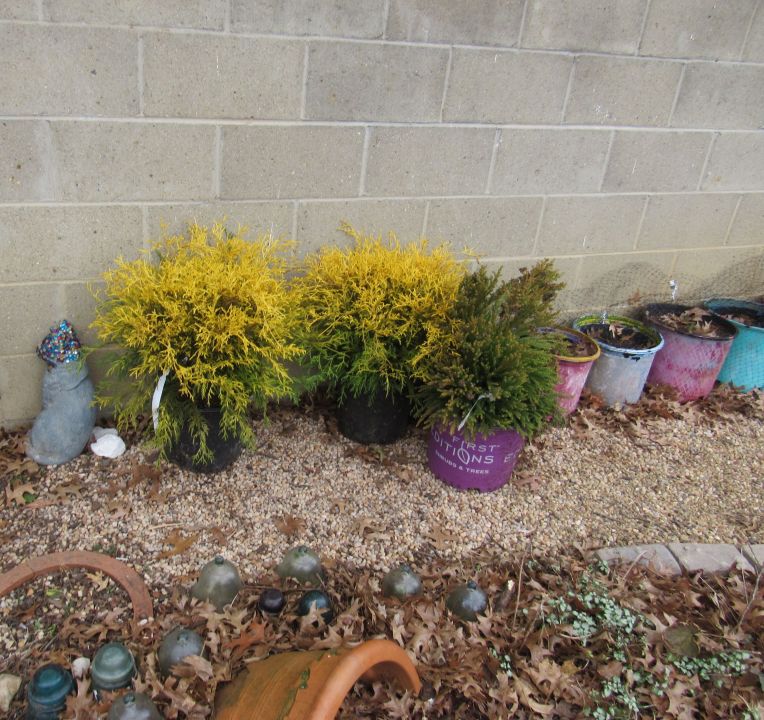
Finally, a pic of some shrubs, two yellow chamaecyparis, and a green cryptomeria, that should turn bluer when it gets new growth. I ordered them from Plants by Mail, and you can see that what arrives on your doorstep is impressive. 


Easy Crocus Planting


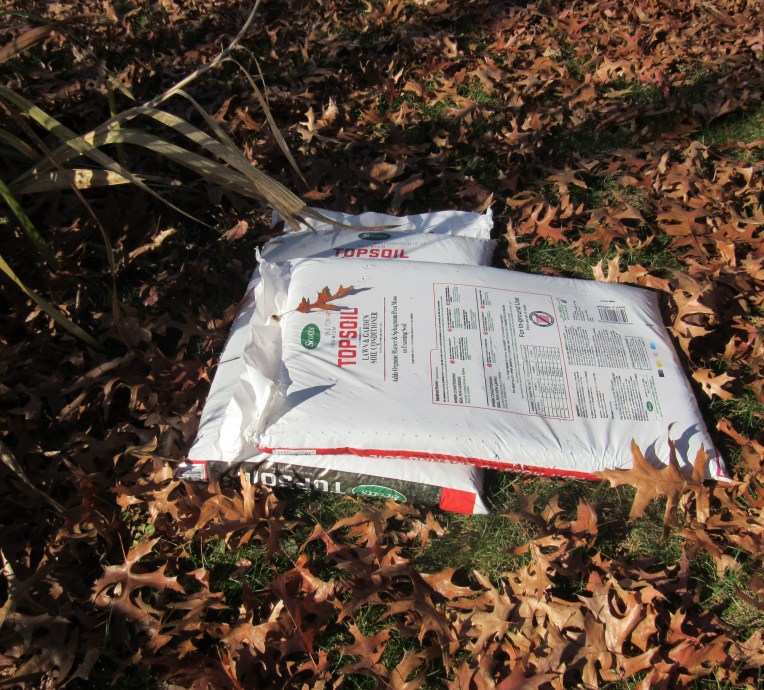
If you’re planting small bulbs, like crocus or several of the allium varieties, which can be placed under a few inches of soil, here’s a way to avoid digging at all, while laying the ground for a bed-expansion in next year’s garden. Buy a few bags of topsoil….

I know you can find advice out there against it. But the bagged products have the reputation of both the manufacturer and the chain store selling them to support, and they have laws to comply with. It’s not the same as topsoil delivered from a random seller online. I like this less augmented (with fertilizers) product, that allows soil organisms to build fertility for you. The brand above is like half-decomposed mulch, not heavily peaty, and after a good rain its light particles sink below the heavier ones, forming a mulch layer on their own. Of course, you can buy a lot of commercial brands, and should pick the kind best for the soil you have.


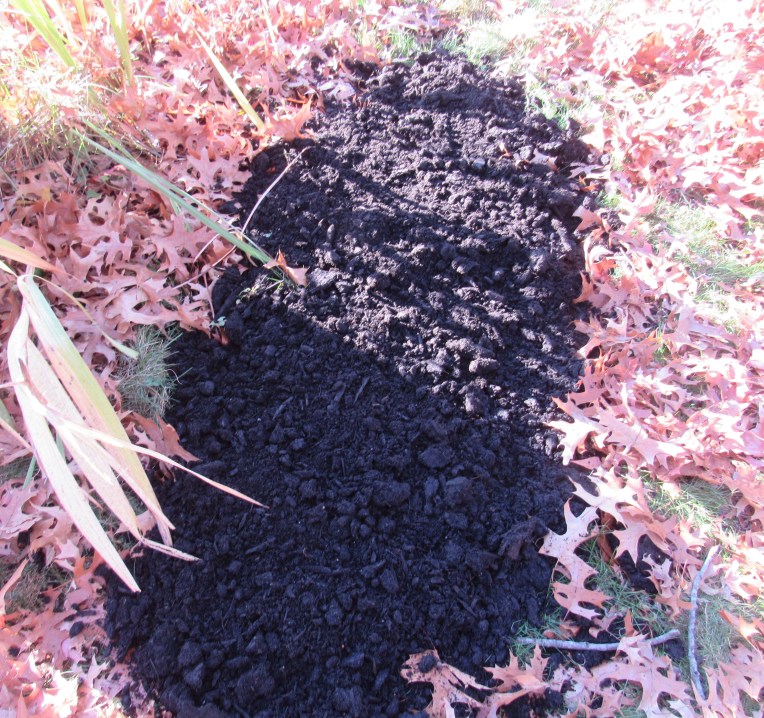
Distribute the bulbs, which will root by themselves whether upright or on their sides, in a natural flow. Never mind the grass. Fescues mostly die when well covered, and the stringy roots are easy to dislodge in the spring. 


Distribute soil over the whole planting,  to about three inches depth for crocuses. 


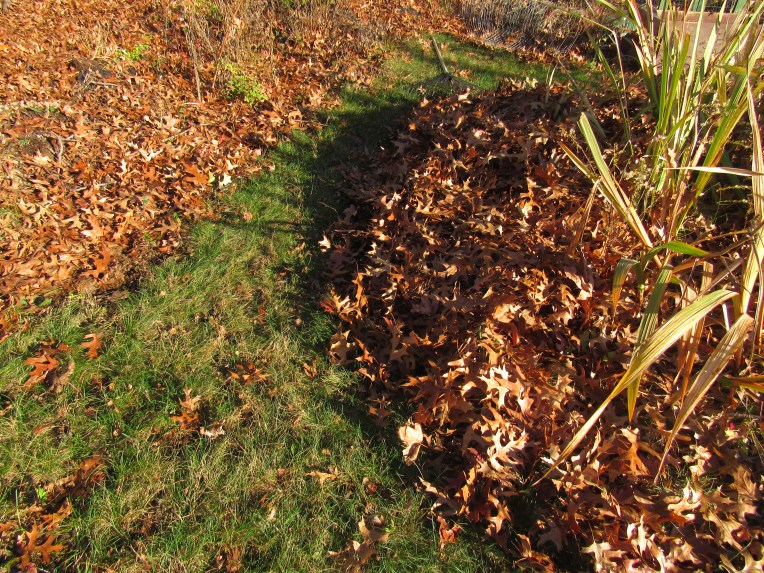
Finally, I’ve raked on leaves to protect the bulbs from squirrels, and keep them from being exposed by rains. The leaves will add richness to the bed, but if they’re oak, should be thinned in time. When they begin to form a mat, your bulbs and perennials alike need light and air, so you should do a general midwinter raking (that is, late January, early February), taking about half the leaves away for composting.

Dahlias, purple velvet vine, colocasia

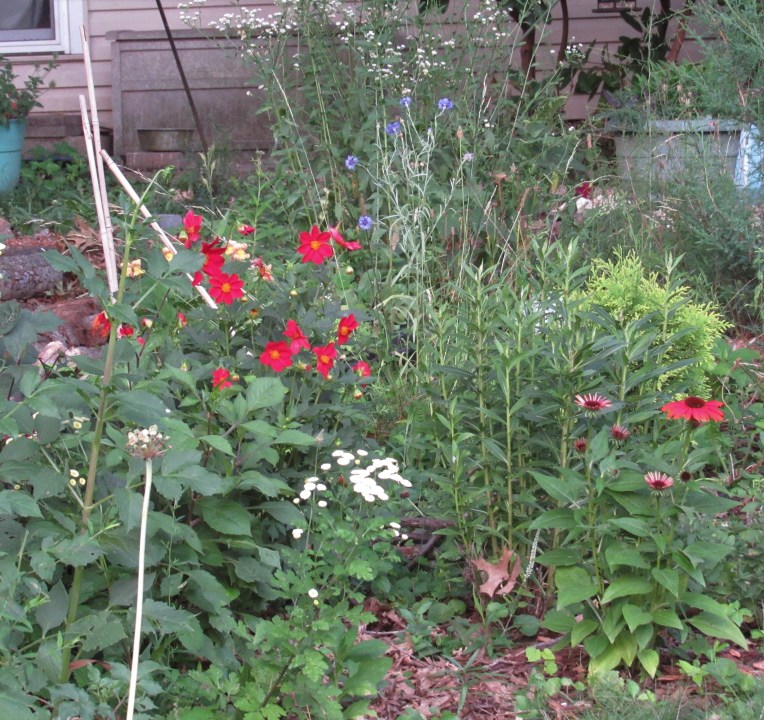
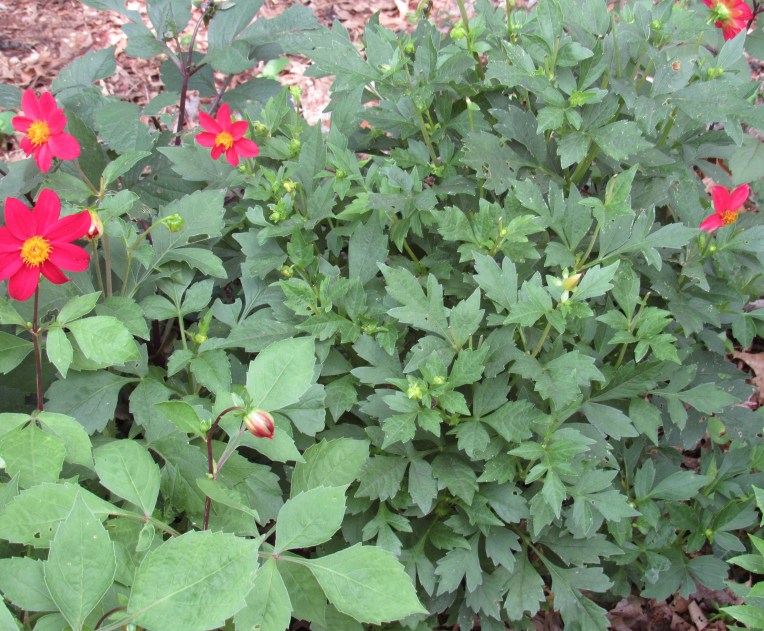
From mid-summer of this year, a meadowy mix of cultivated and wild flowers. The erigeron in the back is a volunteer. I don’t know what species, but one that puts out dozens of small white flowers, wafts in the breezes, and grows two to three feet tall. Then I have red dahlias, blue centaurea, light-yellow feverfew, rosy-orange coneflower, and the yellow-tipped foliage of Golden Globe arborvitae. 

Here are the red dahlias up close. They’re the open flowered, pollinator-friendly kind, and as you can see, the one on the right thinks it’s a mum. Lots of small leaves, lots of flower buds. But they still bloom dahlia-style, in succession—so for all the buds, it can’t quite achieve the loaded look. These have a sheltered spot along the path, and survived from last winter.


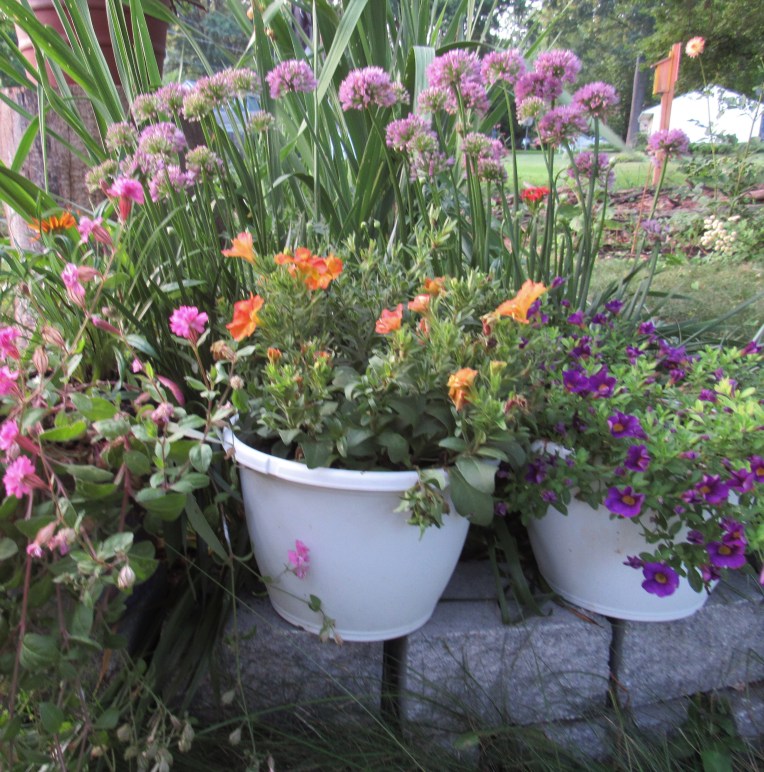
Here are two hanging baskets I got for five dollars each. I took the hanging part off and perched them on this little wall, where until fall arrived and the deer ate them (two calibrachoas in this color-wheel perfect combo of orange and purple), they bloomed gorgeously.

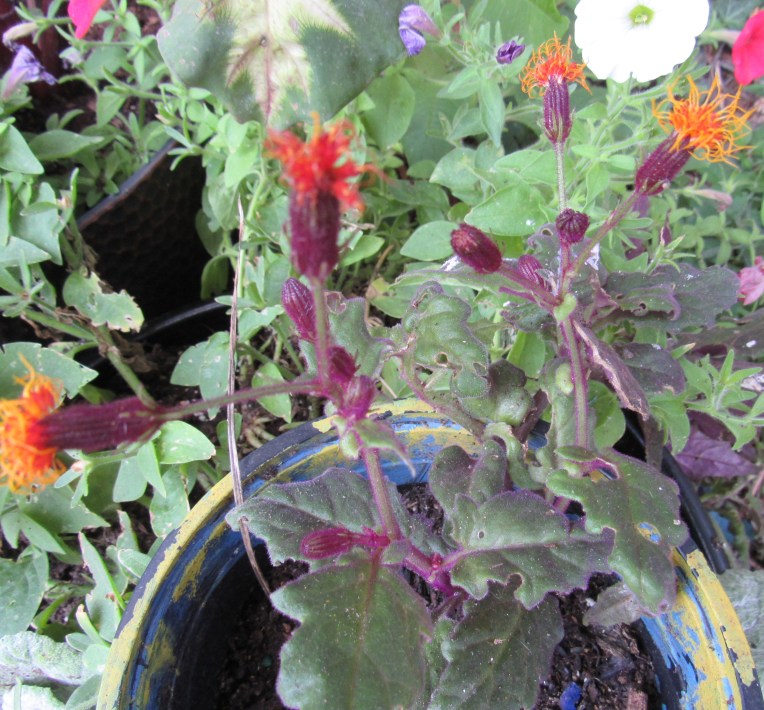
Purple velvet vine looks exotic, and is usually sold as a houseplant. Mine got an intractable case of mealy bug, so I put it outside. Here you see its fantastic little flowers. When they’re finished, they turn into white puffs, like asters. And that’s because this fancy plant is a member of the aster family…who would guess? I brought it indoors for winter, found it still had mealy bug (though it seems not much bothered). I put it in a hanging basket before an isolated window in my garage. If it survives, I’ll let it bloom outdoors next summer.

I used a Waikiki and a black-leaved colocasia together in one large pot. (With a few wave petunias.) I think next year I’ll get a third colocasia type, and have three sets of contrasting leaves. I’m wintering these over against the garage wall, and I’ll cover the pot in bubble wrap. That’s how I keep pitcher plants in winter, and how I kept the black colocasia last year. Colocasias can thrive in pots in the house, but you need a really big space for them. For me, keeping tender tubers, corms, etc., in lightly damp sand, or whatever is recommended, just never works. Letting the plants go dormant in an area that won’t freeze is better. 

Leafing Out

Photo of seedlings in flats

Flats of my strong seedlings this year…a mixed blessing. After advising that in zone 6b we should start seeds around February 25, I couldn’t wait and started mine two weeks earlier. And I was growing some things I hadn’t tried before, so I had no database for decisions. The dahlias I thought would be pot-sized are a couple of feet tall already, upending my plans. I’ll have to expand the dahlia bed and buy other things for pots. 

Celosia are too sensitive for a long sojourn, and should be started late so they don’t live in pots for months…maybe I’ll learn this time! (I’ve brought a couple indoors to my plant shelves so their roots can warm up.) The tomatoes and cosmos, as you can see, are good and healthy in confinement, but more than ready to be in the ground. I have upwards of twenty flats altogether, a big job to carry in and out of the garage…

And nothing to do but wait. A weather phenomenon called an Omega Block is keeping Ohio in winter, and we won’t get real May temps until the end of this week.

Photo of frog designed bird waterer and bog pots

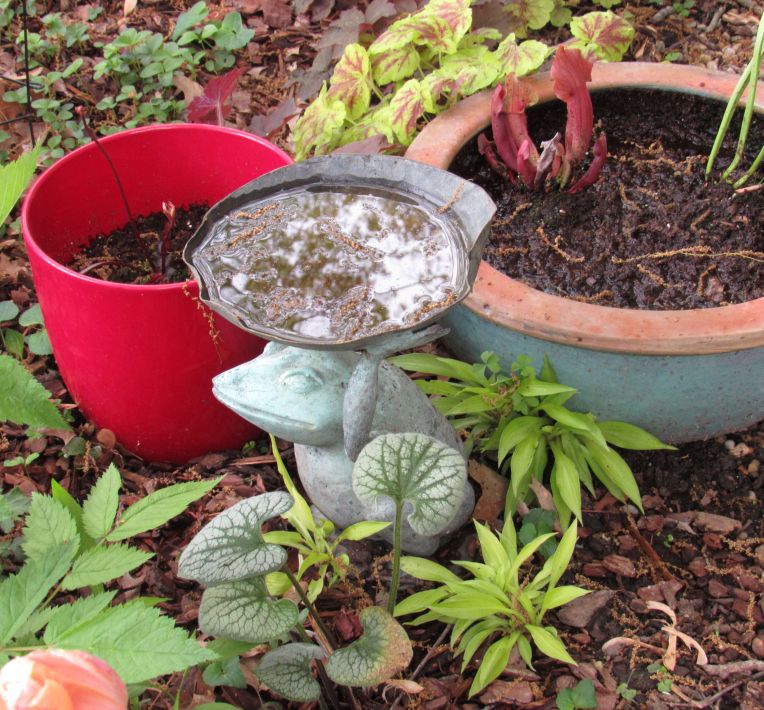
Last post I discussed how helpful it is to the roots of plants to have a rock over them. A pot works in the same way. You can see that the mini-hosta (Munchkin Fire) under the edge of the bog bowl is bigger and hardier than the other two. The bog bowl holds pitcher plants, and the red pot has a Venus Flytrap. [Plant Delights is a great place for variety in bog plants, with trustworthy sourcing.]

Photo of small tub pond and surrounding plants

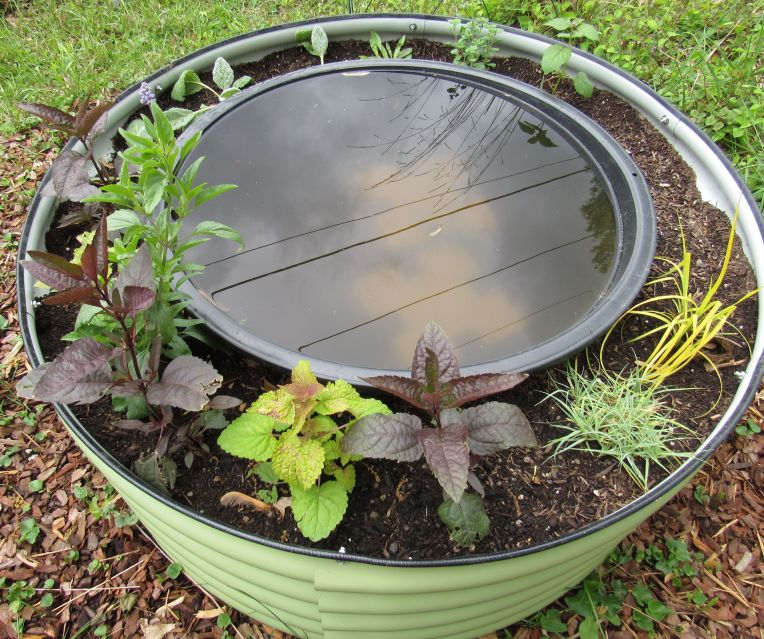
I added this tub pond at the rear of my yard. I tried a couple of times to get it leveled, and it went off each time, due to settling of the planter’s fill. But I think the uneven water line is a good thing, in fact. If an animal gets in, it has a way of reaching the edge and climbing out. Once the leaves grow over the tub, it will look fine. The plants are purple-leaved heliopsis (Burning Hearts), two types of carex, chartreuse-leaved hyssop, Blue Victory salvia, silver sage, calamint, and coreopsis. These should all be deer resistant, so I won’t need to spray much close to the pond. Inside, you can see a couple of the new blocks that stores like Lowe’s are selling for constructing raised beds. I thought they’d make great supports in ponds for water-plant baskets, as the niches can shelter tadpoles.

Photo of a hugel bed with logs showing, mulch, and plants

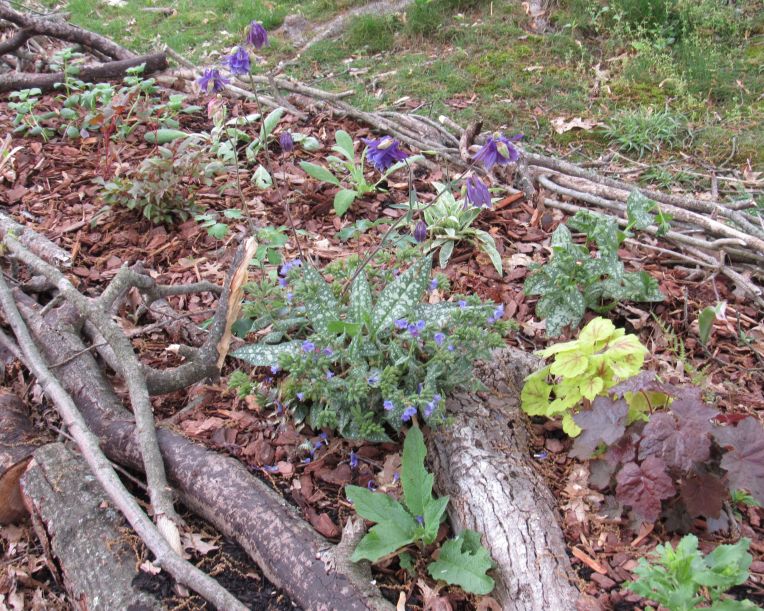
My hugel bed, maturing nicely. The logs are slowly being buried by soil activity, and their tops make an attractive feature. Last year’s plants have deepened their roots and are benefiting from the microclimate, that keeps them warmer than the outside temp. The new plants are two more pulmonarias, snapdragons, and woolly lamb’s ears. My yard has tons of fireflies in the summer, because these stick and log borders are perfect insect habitat. 

Photo of brunnera and bleeding heart mingling

Photo of yellow-leaved bleeding heart

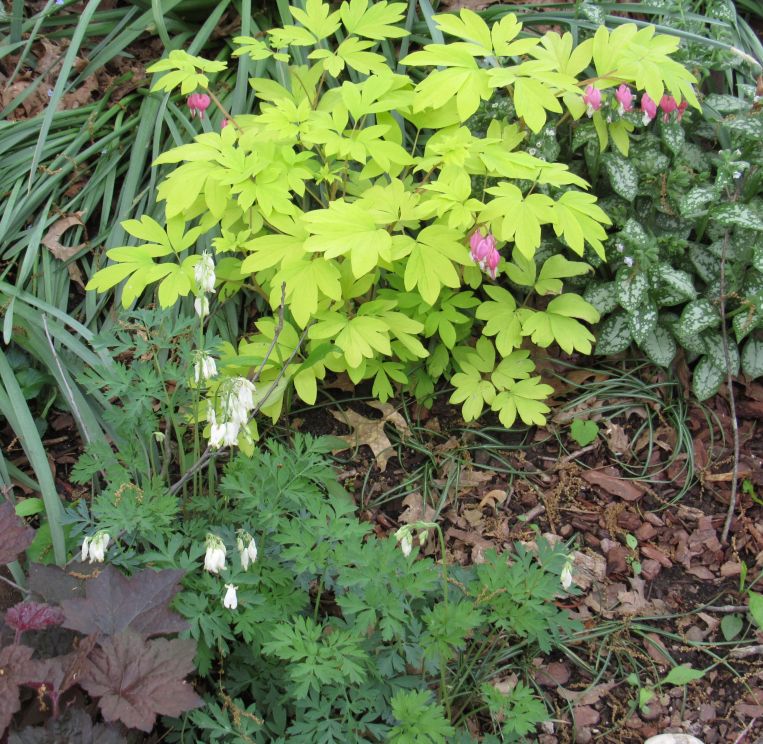
One of my shade beds, with brunnera and bleeding heart mingling to a pretty effect. Below, the bright yellow bleeding heart that’s become a star of this area. I was looking for a plain one when I bought it, and didn’t want the yellow leaves. I’d thought of adding one in late spring, and that year the yellow was all I could find. As it turns out, it’s a perfect plant.

Photo of giant Empress Wu hosta

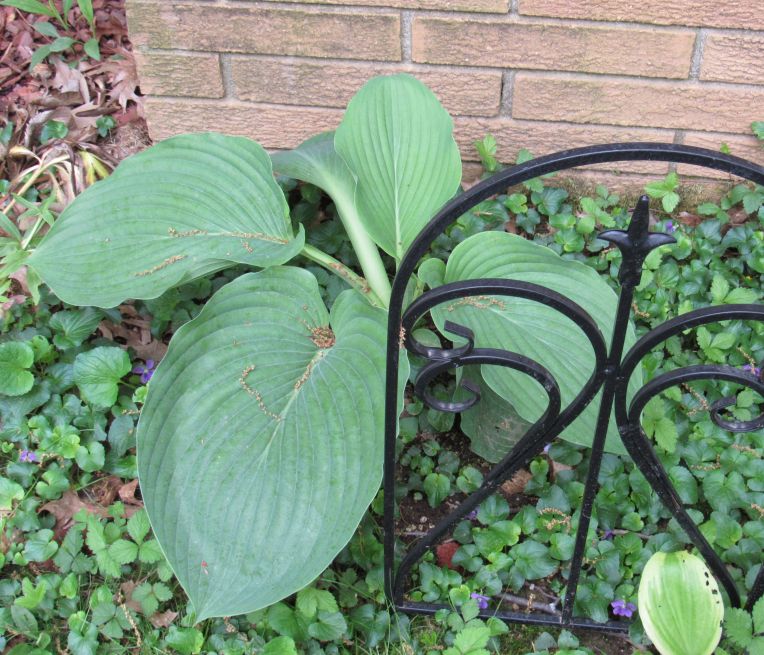
They say hostas don’t like to be moved. These Empress Wus did nothing their first year. The second year, because I’d got them as a BOGO and hadn’t really paid attention to what they were, I read up on them and learned their claim to fame is huge size. Then I knew the Wus needed a bigger space, and moved them by the chimney. But they aren’t sulking at all; they’re taking off and sporting footlong leaves. (The little fence is a deer-snout-bumper, which actually works pretty well in deterring them.)

Photo of bright coral heucheras and blue green hosta

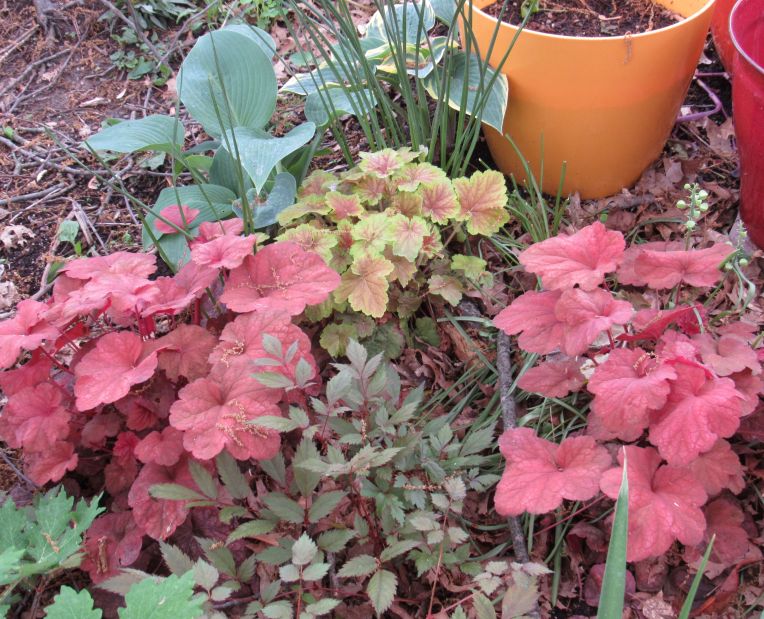
Finally, some heuchera that I bought cheap at Walmart, with no variety name. Their first foliage is a velvety corally-copper, going great with the astilbe, the Solar Eclipse heucherella and the blue green hosta.