This is a high school play that my father (Ted Foster) acted in in the 1950s. He is in the dark suit, standing at the right. I don’t know what play…one with a body (or a zombie) behind the sofa.
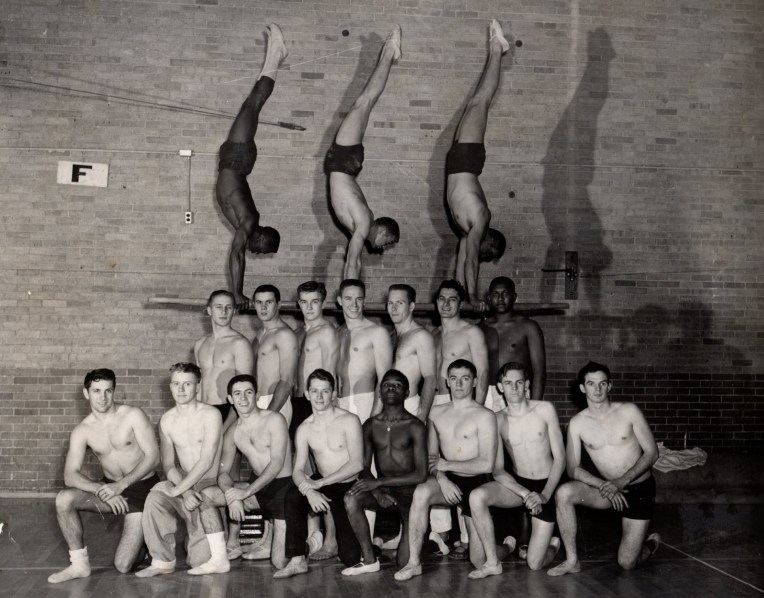
This is my father (second from left, from row) with the gymnastic team. I don’t know if this is high school or college. 1950s.
This is me, in a school picture that might be second grade. 1960s.
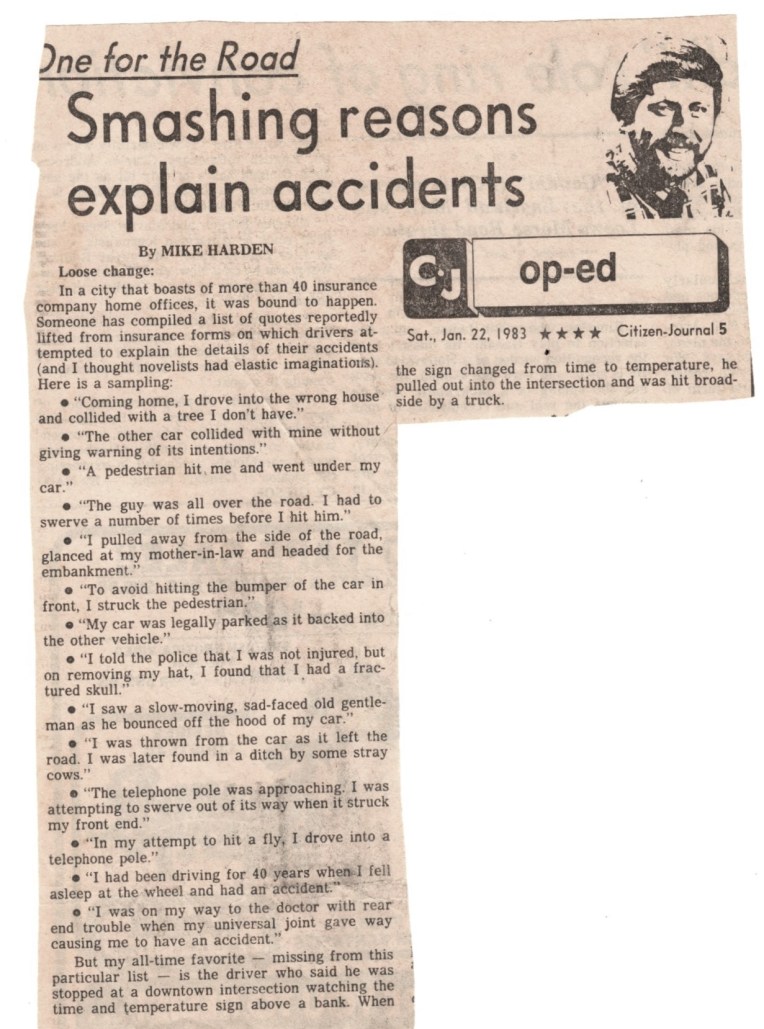
And finally, here’s a clipping from the Columbus, Ohio Citizen-Journal of 1983, that I’ve kept around for a long time, just because it’s still funny.
Extending the Gaither connections farther back, through my great-grandmother’s maternal line, below are a few Joneses, with another Revolutionary War veteran.
And for fun and interest, here’s a piece from a paper called The Mirror, of May 14, 1903 (source: U.S. Library of Congress), on early trials in laser facials. Despite the headline, this item is fact: Here’s a link to a bio of the Finsen’s light’s inventor.
In the early 1980s I was able to afford, on less than five dollars an hour, a two-bedroom townhouse apartment, off Route 161 in Columbus, Ohio. My weekly food budget was twenty dollars, and I had about fifty dollars a week for disposable income—which I spent on clothes, decorating, houseplants, fish tanks, LPs. I was a Pier One shopper, buying those peacock feathers 80s people displayed in floor baskets; giant floor pillows, too, with a folkish loose-woven fabric, and straw mats I used for wall hangings. One purchase I carried from house to house for several years before it fell apart was a twenty-five dollar rattan chair, bought with Christmas money from my grandparents (typically a check for twenty-five dollars).
I used to hurry home on my lunch break in those days to watch videos on MTV (and at Gold Circle we didn’t have to clock in and out, so I pushed the time). I was crushing on the band Split Enz, loved Elvis Costello, bought an album by Squeeze on the strength of a Rolling Stone review. (Agreed with…however, reviewers in those days had the power to snuff out a lot of good music. The internet’s democratic openness is an improvement.)
I had the Steve Miller Band for “Fly Like an Eagle”… I had a couple of Styx albums (when I was a teenager I thought “Come Sail Away” was the most beautiful song), but I started to go off them in the 80s. Of course, “Mr. Roboto” is immortal.
Check out this Tommy Shaw solo number from the 80s. A truly great song that wasn’t the hit it should have been.
The job I had was general clerking in what I think was called the Merchandise Information Office (I’m not sure about the “I”) at the chain’s central office in Worthington (next to the Jack Maxton car dealership). People from the region—but also from California, where a string of stores sat detached from the others—will recall GC as Kmart-like.
They had (the one on Morse Road, the one I shopped at) just before I quit my job started stocking a little section of higher-end brands, as a marketing experiment…
So, in that last month or two, with the employee discount, I drove off in my Chevy Chevette (I think it was a stick, light metallic blue, only AM radio) to shop for a brand I liked, Outlander. One purchase was a silk-angora blend collared sweater in off-white, that I paired with a turquoise pinwale circle skirt. The waist on this was too tight; I had to fix it with a safety pin…so not the most successful look. I liked the turquoise and white combo, though. One of my 80s outfits was a pair of huge parachute pants I wore with a white eyelet-collared blouse. I still have an Outlander red lambswool blend with three-quarter sleeves and v-neck, now somewhat moth-eaten, that I wore with a long midwale corduroy dirndl, dark brown (bought during a Myrtle Beach vacation), and some Nine West boots, dressy in cinnamon with a stacked heel.
Why so much detail? Just to paint the picture for you, if you remember those fashions. And because a lot of things in life are measured in clothes. (If you don’t remember, you’ll have to Google parachute pants to get the full sense of them.)
There was a sort of dynamic I didn’t understand, coming into the work world as a poorly socialized eighteen-year-old. Once, for example, some of the supervisors were throwing a party for the office staff at Chuck E. Cheese’s, and I didn’t want to go. It was an after work-hours affair, so I understood it to be voluntary. I got the impression my opting out was being held against me, in a background gossipy way.
There are voluntary things on the job that are not voluntary, such as overtime. (But I’ve steadfastly refused overtime whenever I could.)
And I still think a lifetime of never setting foot in a Chuck E. Cheese has done me only good.
Favorite Foods of the Day
Lender’s Garlic bagels, that they stopped making. Toasted, with peanut butter.
Granny Smith Apples. (There are lots of great, crispy apples these days, but back then, you could have Granny Smiths or mushy, bland golden and red delicious.)
Honey Nut Cheerios
Stouffer’s Mac and Cheese (This always had to be made in the oven to brown the cheese topping and bake the filling to a custardy quality. Microwaving wouldn’t do. But, last time I bought any, they’d changed it weirdly and it tasted like it sat open in the refrigerator for a week.)
There was a candy, a type of M & Ms called Mint Royales, that I loved.
And once, you could get really good Dolly Madison Danish. I think they’ve gone by the wayside.
The first street my family lived on in Athens (Ohio) was Grosvenor. The house was on a hillside, and had underneath, where the structure was built to overhang—so the house would sit more or less level—soft loamy dirt, that was always dry and made a place to play.
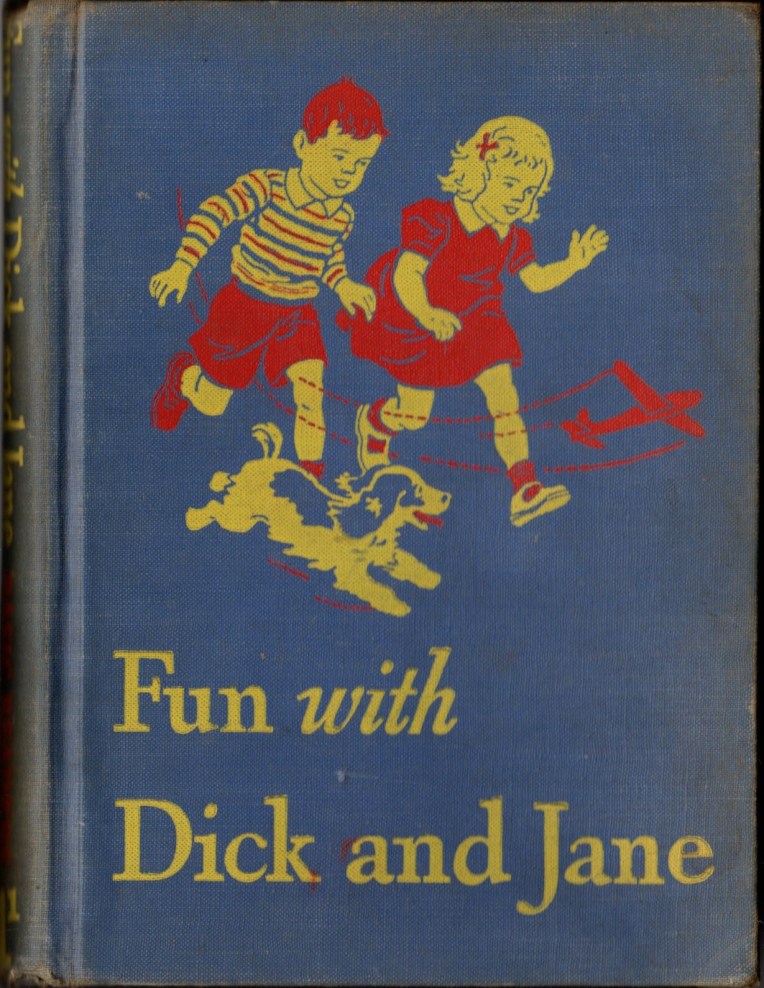
Since my grandparents had worked in the Mount Vernon, Illinois, public school system, we had a lot of old schoolbooks around the house. By the time I was in first grade, where kids began learning to read, I’d had a head start; and a lot of the reading I did was Dick and Jane. My first grade class had a Dick and Jane workbook; the characters in those days still in use for teaching.
They way we played pretend games, we had to choose who to identify with. I don’t recall if we specifically played Dick and Jane. I know we played Star Trek, a cool show that came on after bedtime, that we had to beg to watch. (My sister liked Chekov, and I had to be Captain Kirk, though I liked Riley, who was barely a character—because we had childish rules that two of us couldn’t like the same actor…but, readers, Mark Goddard all the way on Lost in Space, even though my sister claimed him. She let me have Colonel Foster on UFO. And note, the women on sci-fi shows didn’t get to do much, so it’s unsurprising in imagination we would rather have been the crew members allowed to explore planets.)
At any rate, in this hierarchy, I was the little sister, Sally. One of our cats of those days was named Puff.
And, coming full circle, I can recall marveling that the name pronounced “Grovner” could be spelled the way it was—but I wasn’t school age during the year or two we lived on that street. I think my sister was the one who could read the sign, and that was how I got the information, though I remember looking up at it and seeing the name in letters.
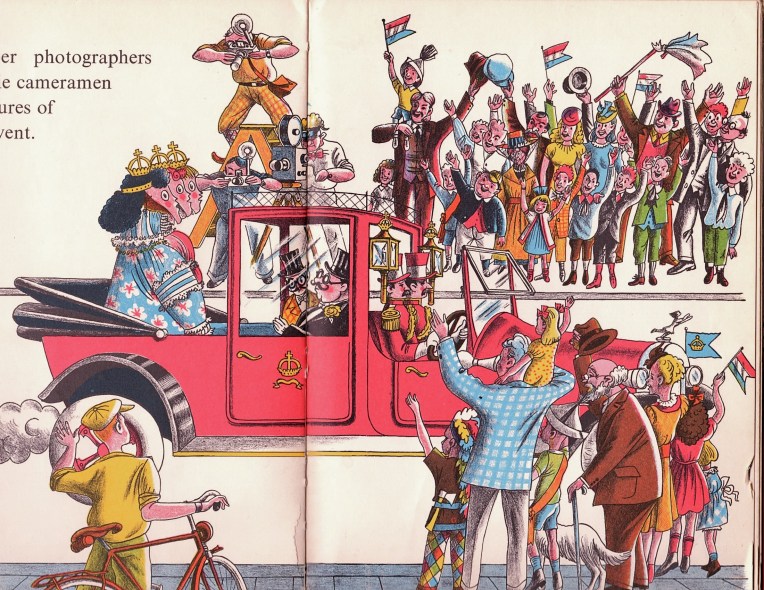
Here’s a page from one of my favorite books from childhood, Piet Worm’s Three Little Horses, a somewhat odd story about an artist who befriends horses, and takes them into town dressed as women—but a story terrifically illustrated.
Books in the Athens Middle School library
Favorite books some of you may remember. The first grouping were my own discoveries, and the second, books my sister read first and recommended. They are all look-upable, so I’ve written very brief descriptions of the plots.
Why Not Join the Giraffes, Hope Campbell, 1970
Girl tries to impress boy by adopting rebellious look.
The Whirling Shapes, Joan North, 1968
Girl has power to stop mysterious force.
The Apple Stone, Nicholas Stuart Gray, 1965
Siblings find magic object, adventures ensue.
The Power of Stars, Louise Lawrence, 1972
Visit by alien force causes havoc for teenage friends.
The Ghost of Opalina, Peggy Bacon, 1967
Family is aided through generations by cat’s ghost.
Campion Towers, John and Patricia Beatty, 1965
During English Civil War, girl on Roundhead side has cavalier adventures.
A Candle in Her Room, Ruth M. Arthur, 1966
Haunted doll causes trouble for newly arrived family.
My Darling My Hamburger, Paul Zindel, 1969
Pregnant teen gets abortion.
Knee-Deep in Thunder, Sheila Moon, 1967
Girl travels to tiny world, where her friends are insects.
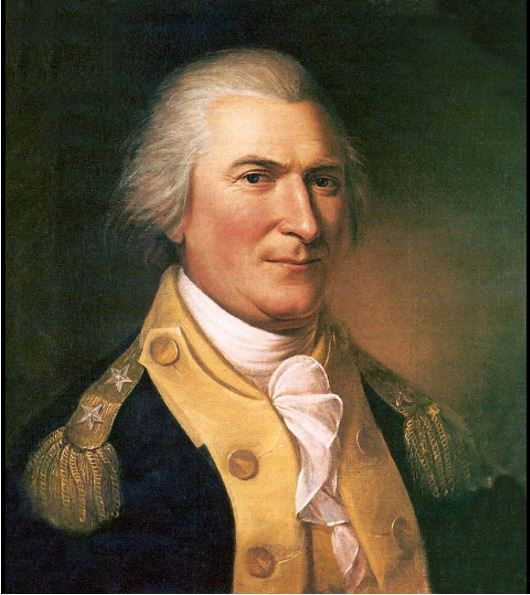
NW territory Governor Arthur St. Clair (public domain)
Vanderburgh County is the place of my birth, and so I share below some historical information on the man for whom the county is named. An additional note: Governor St. Clair, in his written opinions on slavery tended, as did many early leaders, to rely on English Common Law, and its well-known emphasis on property rights. He could be passionately in favor of states formed from the Northwest Territory being free, and yet fall back on the argument that laws can’t fairly obtain retroactively, a great truth in and of itself. But to claim that therefore, to emancipate slaves belonging to settlers in the territory prior to the Ordinance of 1787, would be unjust unless they received compensation—as would be correct in expropriation of actual property—is to use a narrow legal focus to evade confronting the higher injustice. This question rested on an ethical issue, one that must supersede any property claim, and nullify any representation of fair exchange. That slavery is inherently wrong, that human beings cannot be property, sat uneasily, in the political environment of post-colonial America, next to the notion that an infant government, to hold its power, must respect the individual rights of its citizens. And like many officials, the “fathers” seemed to have hoped attrition would solve the conflict.
In the summer of 1794, Judge Turner, who had gone to Vincennes to hold court, became involved in an extensive quarrel with Henry Vanderburgh, who was then probate judge and justice of the peace for Knox County, and Captain Abner Prior, of the United States Army, who was supervising Indian affairs on the Wabash. Several matters were in controversy and bitter feelings were produced. In the midst of this a negro and his wife, held as slaves by Vanderburgh, applied to Turner’s court for emancipation by writ of habeas corpus, instigated possibly by Turner. That Turner would have held that the ordinance* freed them is beyond question, for he expressly declared that they were “free by the Constitution of the Territory”, but before the cause came on for trial the negroes were seized and carried away by a party of men who, as Turner alleged, were employed by Vanderburgh. Turner then had the kidnappers arrested, though some of them resisted, and one threatened the sheriff with a knife. Complaints from all parties were made to St. Clair, who, though declining to adjust the difficulty, took sides against Turner and proceeded to give him some information as to the meaning of the Ordinance, which will be noticed later. The French settlers were greatly excited over this attempt to release their slaves. The grand jury of the county found a presentment against Turner, and later on, the citizens preferred charges against him which were submitted to Congress as grounds for impeachment, but, on the suggestion of the Attorney General, the House of Representatives recommended a trial in the courts as preferable.
Jacob Piatt Dunn, Indiana, A Redemption from Slavery, 1888, c. renewed 1905 and 1916.
Some years previous to these transactions Hugh McGary, a Kentuckian and a sturdy pioneer, had emigrated from his native state to the new territory and settled in what is now Gibson County. In 1812 he purchased from the government the land on which the city of Evansville now stands, and leaving his inland cabin pushed his way to the bank of the river and there established his home.
McGary’s place was not central, but when the commissioners appointed to make the selection were assembled at the old Anthony mill, he presented the claims of his location in the best light possible. It was not the first choice, but was finally selected. At the direction of the court of the new county, the town was laid out, and officially designated as Evansville, in honor of General Robert M. Evans, a distinguished soldier and citizen of Gibson County.
McGary became very enthusiastic over his prospects and confidently felt that his town was destined to be a metropolis at no very distant day. His hopes, however, rested on a weak foundation. By the formation of Posey county in the southwest corner of the territory the boundaries of Warrick county were so altered as to place Evansville at one extremity of its river border, and before the town was three months old, the legislature enacted, September 1st, 1814, that the seat of justice for the county should be moved to a place subsequently called Darlington, and situated some four miles above the present site of the neighboring town of Newburgh, and about one mile from the river.
In those days it mattered little what natural advantages a town possessed or what resources lay about it undeveloped; all its hope for prosperity was based upon its being the seat of justice for some county. The founder of the village set about with great zeal and industry to supply this desideratum. As the first step he enlisted the active interests of Gen. Robert M. Evans and James W. Jones, both of Gibson county, by conveying to them on June 20, 1817, for $1,300, 130 acres of land, being all that part of fractional section No. 30 which lies above the center of Main Street in Evansville, except thirty acres previously conveyed to Carter Beaman. On the 17th of July following, these three gentlemen, Evans, Jones, and McGary, prepared a plan for a town, ignoring that previously laid out. What they platted appears on the maps of the present time as the “original plan” and is bounded by Water and Third, and Chestnut and Division streets. The combined exertions of these three men were now set forth to accomplish the end already adverted to. The greatest obstacle to their success was the opposing influence of Col. Ratliff Boon, a man of more than ordinary ability, a courageous patriot and pioneer leader whose influence was not confined by the limits of his own county.
Enthusiastic and deeply in earnest in the contemplation of his favorite theme, Col. McGary did not allow his courage to weaken, and his complaints of Col. Boon were full of bitterness. His address was not displeasing, and his conversations on the subject of the ultimate greatness of his embryonic city, sparkling as they did with genuine ardor, were deeply interesting. About this time Gen. Joseph Lane, afterward of national repute, known as a wise and upright representative in the state legislatures, a hero of the Mexican war, a member of congress, and governor of Oregon, then a young man, figured in the drama beginning to be acted by becoming the means of bringing the weightier men together. Young Lane was engaged with others in rafting logs near Darlington, and floating them to Red Banks, where J. J. Audubon, later the foremost of American ornithologists, had erected, somewhat in advance of the times, a steam sawmill which afterward failed. When rowing back to his home, he stopped on the banks of the river near McGary’s house to spend the night, and then fell a victim to the enthusiastic and pleasing manner of the sanguine Colonel, walking with him over the site of the hoped-for city, then wild with forest trees and underbrush, hearing without resentment the bitter speeches of his companion against Col. Boon, whom Lane admired and counted among his best friends. Lane was soon afterward employed in the clerk’s office in Warrick county, and there suggested to Col. Boon the opportunity in his power of making valuable friends by assisting in the formation of a new county and yet leaving Warrick county large enough to serve his own purposes. Whether or not this suggestion brought the chief actors together, it is true that during the next session of the circuit court at Darlington, an informal conversation was held in the clerk’s office, which led finally to the consummation of McGary’s hopes.
The force of these arguments [in favor of dividing the territory into counties for jurisdictional efficiency] was conceded, the only objection being that Darlington would receive a fatal blow by such legislation, because the relocation of the seat of justice would necessarily follow. At length a plan satisfactory to all was agreed upon. It provided for the organization of two new counties with boundaries so fixed that Evansville and Rockport, then called Hanging Rock and not yet the site of a town, would be the most favorable points for the seats of justice. Darlington was to be left to continue its struggle for existence as best it could deprived of all public support.
In shaping these deliberations and leading to a conclusion, personal interest was doubtless a controlling factor. But be it said to the credit of the actors that private gain was not made at public expense, for great permanent good to the communities affected was the result.
Thus Vanderburgh county, as an organic unit, owes its existence more to the unyielding perseverance and untiring zeal of Hugh McGary in his efforts to maintain the village of Evansville, than to any other single agency.
It mattered little to McGary what name was given to the new county. If any was suggested or agreed upon in the conference which determined the question of its formation, it was abandoned for reasons of policy. Judge Henry Vanderburgh was worthy the honor conferred upon his memory, but he was in no way identified with the formation or development of the county.
History of Vanderburgh County, 1889 [compilation with no single author]. The paragraphs above are extractions of key information from a longer narrative.
The above selections have been lightly edited for punctuation.
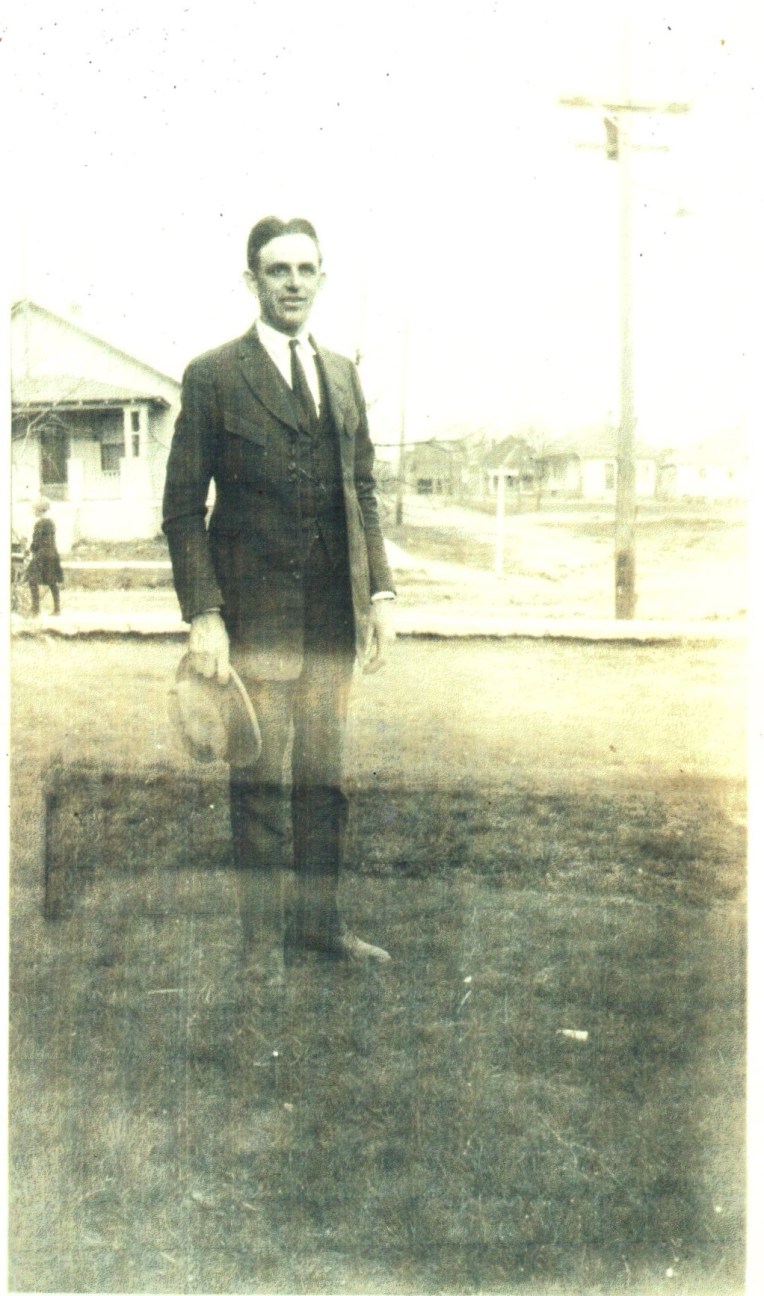
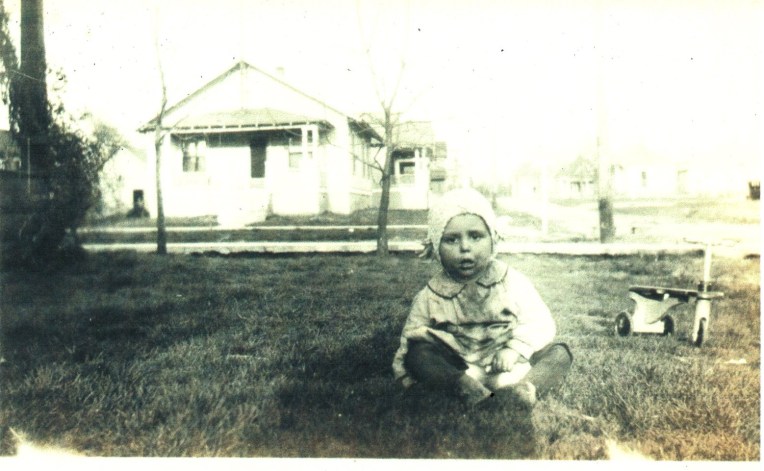
Below are two of my grandmother’s Brownie snapshots from the 1920s, taken on the back streets of Mount Vernon, Illinois. I don’t know who the subjects are, but both compositions have a sort of existential quality.
My G3 grandfather [Ramsey line], Silas Thomas Gaither (1832-1862) was married to Mary Marinda Clark (1842-?), who was the daughter of James Jordan Clark (1818-1897). James Jordan’s wife was Elizabeth Brewer. His own father was Edmond Clark, whose wife was Catherine Crane. The family at that time lived in Rutherford Co., NC.
From Lineage Book, The National Society of the Daughters of the American Revolution, 1906
Under listing for Mrs. Florence D. Foster Crowell, of Indianapolis, Indiana:
(Mrs. Crowell would be a connection, not in the direct line, but the common ancestor, William Foster II, was my direct ancestor.)
William Foster II, 1746-1809, served as corporal and sergeant of minutemen in Capt. Josiah Wood’s company, which marched on the Lexington Alarm. He was born in Walpole, died in Worcester County, Mass. [married to Abigail Chapin 1748-1786]
William was the father of Jonathan Foster, who was the father of Jared Foster, who was my G3 grandfather.
This squirrel with the red tail was part of my yard’s population for a while. But, I have hawks…
Mary Osgood Confession
My Foster ancestors settled in Massachusetts, some in the town of Salem. I don’t know that I have any direct descendancy from those involved in this famous event. But the Foster name comes up. As the story below relates, Mary Osgood was charged with tormenting a Rose Foster; also among the victims of this early hysteria was an Ann Foster, who died in jail. I feel the topic is worth a few analytical paragraphs. After all, the victims are often casually referred to as the “Salem witches”.
There is a strange sort of transmogrification, where feminism and political correctness join to color the story. Witches somehow, within our culture, much fueled by TV shows and books, are used to represent a kind of female power. The idea of the witch becomes iconic. At the same time, the notion of a protected class, a marginalized minority (and American history is rich in the marginalizing of minorities), gets woven in.
And what happens to justice?
An important lesson, for the times we live in, falls by the wayside. These people were not witches, a thing that doesn’t exist (while we make allowance for adopted religious practices). So we can’t “champion” their cause, by superimposing onto it pop culture and political creeds, resulting in an odd presumption of guilt. Our ancestors would not have wished to be told, “You’re a witch, and that’s okay!” They would have asked that their innocence be shouted from the rooftops.
Thus, the salient point, about application of the legal process: the case was not prosecutable. It would have been necessary to determine the validity of the charges first, before undertaking to bring them. The trials preceded on a circular basis: People made accusations against individuals; due to those accusations, the accused were brought to trial, to have the charges “proven” by the testimony of the accusers. There is a present danger of the same sorts of proceedings; and a bandying about, lately, of the term “witch hunt”. The fantasies the Salem accusers indulged were a product of those things culturally available to them; nothing unimaginable occurred, even in their heads.
So let’s bear this in mind—in the world of fiction, witches can be admirable characters, and carry the role of empowered feminist icon, or beleaguered minority, or both. The accused of Salem were ordinary people, innocent of the charges made against them, and murdered by the system.
The examination and confession (September 8, 1692) of Mary Osgood, wife of Capt. Osgood, of Andover, taken before John Hawthorne and Majesties’ justices. She confesses, that about eleven years ago, when she was in a melancholy state and condition, she used to walk abroad in her orchard; and upon a certain time she saw the appearance of a cat at the end of the house, which she yet thought was a real cat. However, at that time it diverted her from praying to God, and instead thereof she prayed to the devil, about which time she made covenant with the devil, who, as a black man, came to her and presented her with a book, upon which she laid her finger, and that left a red spot; and that upon her sinning the devil told her he was her god and that she should serve and worship him; and she believes she consented to it. She says further, that about two years ago she was carried through the air in company with Deacon Frye’s wife, Ebenezer Barker’s wife, and Goody Tyler, to Five Mile Pond, where she was baptized by the devil, who dipped her face in water, made her renounce her former baptism, and told her she must be his, soul and body, forever, and that she must serve him, which she promised to do.
She says the renouncing of her first baptism was after her dipping, and that she was transported again through the air in company with the aforenamed persons, in the same manner as she went, and believes they were carried upon a pole.
Q. How many persons were on the pole?
A. As I have said before; viz.: four persons and no more, but whom she had named above. She confesses she has afflicted three persons: John Sawdy, Martha Sprague and Rose Foster; and that she did it by pinching her bedclothes and giving consent, the devil should do it in her shape, and that the devil could not do it without her consent. She confesses the afflicting persons in the court by the glance of the eye. She says, as she was coming down to Salem to be examined, she and the rest of the company stopped at Mr. Phillip’s to refresh themselves up, and the afflicted persons, being behind them on the road, came just as she was mounting again, and were then afflicted and cried out upon her, so that she was forced to stay until they were all passed, and said she only looked that way towards them.
Q. Do you know the devil can take the shape of an innocent person and afflict?
A. I believe he cannot.
Q. Who taught you this way of witchcraft?
A. Satan; and that he taught her abundance of satisfaction and quietness in her future state, but never performed anything, and that she has lived more miserably and more discontented than ever before. She confesses further that she herself, in company with Goody Parker, Goody Tyler and Goody Dean, had a meeting at Moses Tyler’s house last Monday night, to afflict, and that she and Goody Dean carried the shape of Mr. Dean, the minister, between them, to make persons believe that Mr. Dean was afflicted.
Q. What hindered you from accomplishing what you intended?
A. The Lord would not suffer it so to be; that the devil should afflict in an innocent person’s shape.
Q. Have you been at any other witch meetings?
A. I know nothing thereof, and I shall answer in the presence of God and his people, but said that the black man stood before her and told her that what she had confessed was a lie; notwithstanding she said that what she had confessed was true, and thereto put her hand. Her husband, being present, was asked if he judged his wife to be any way discomposed. He answered that, having lived with her so long, he doth not judge her to be any way discomposed, but has cause to believe what she has said is true. When Mistress Osgood was first called, she afflicted Martha Sprague and Rose Foster by the glance of her eyes, and recovered them out of their fits by the touch of her hand. Mary (Foster) Lacey and Betty Johnson and Hannah Part [probably Post] saw Mistress Osgood afflicting Sprague and Foster. The said Hannah Post and Mary Lacey and Betty Johnson, Jun., and Rose Foster and Mary Richardson were afflicted by Mistress Osgood in the time of their examination and recovered by her touching of their hands.
‘I’ underwritten, being appointed by authority to take this examination, do testify upon oath, taken in court, that this is a true copy of, the substance of it, to the best of my knowledge, January 5, 1692-3. The above Mary Osgood was examined before their majesty’s justices of the peace in Salem.
John Higginson, Just. Pac.
Source: Foster Genealogy, Frederick Clifton Pierce, 1899.
(Mary Osgood was released, and died in 1710; the John Hawthorne mentioned, was the G2 grandfather of author Nathaniel Hawthorne.)
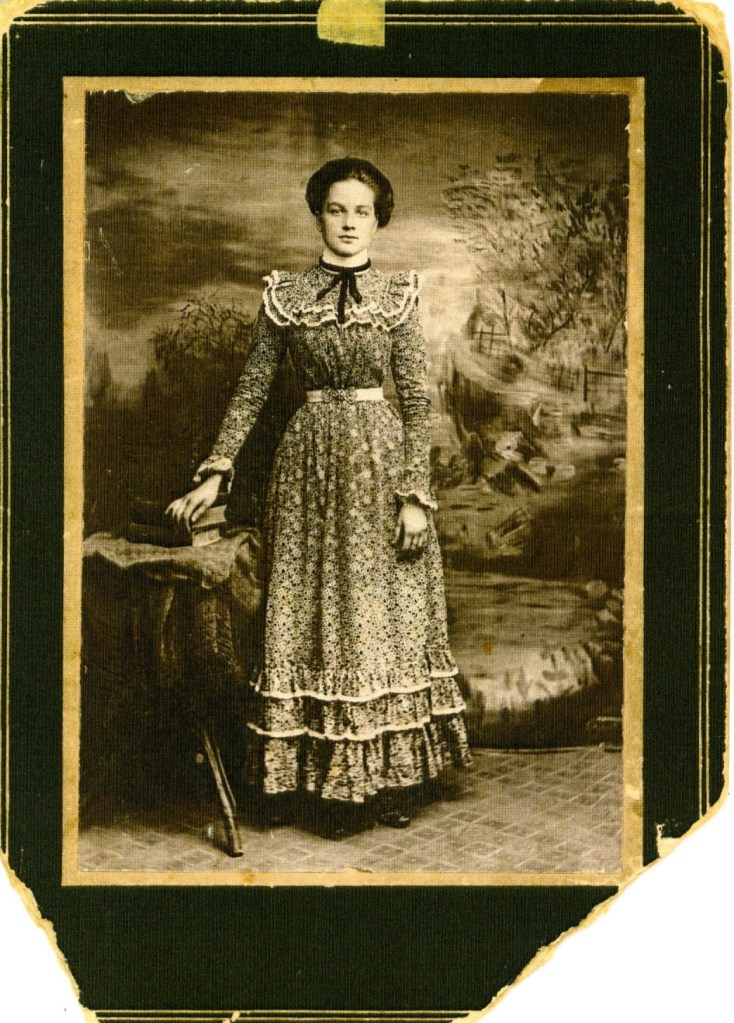
My grandfather, Randall Barker, with my mother. I don’t know the location…it looks like a country church. And below, my great-grandmother Barker, an Illinois teenager in the 1890s, wearing the true prairie dress.
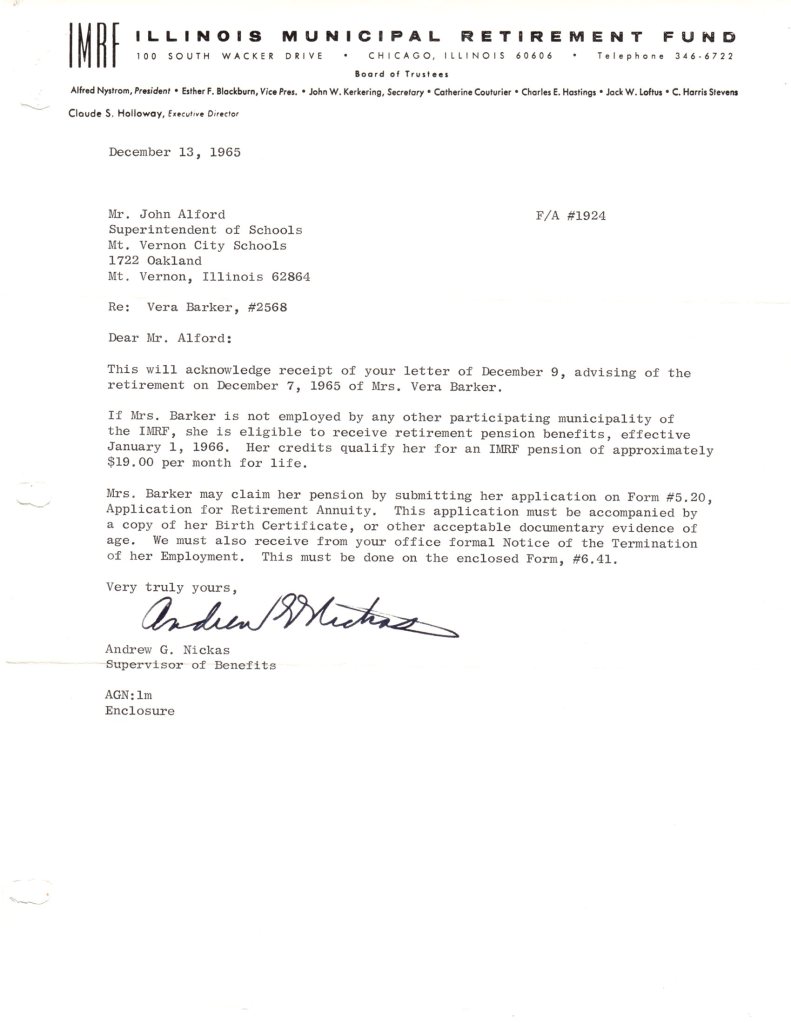
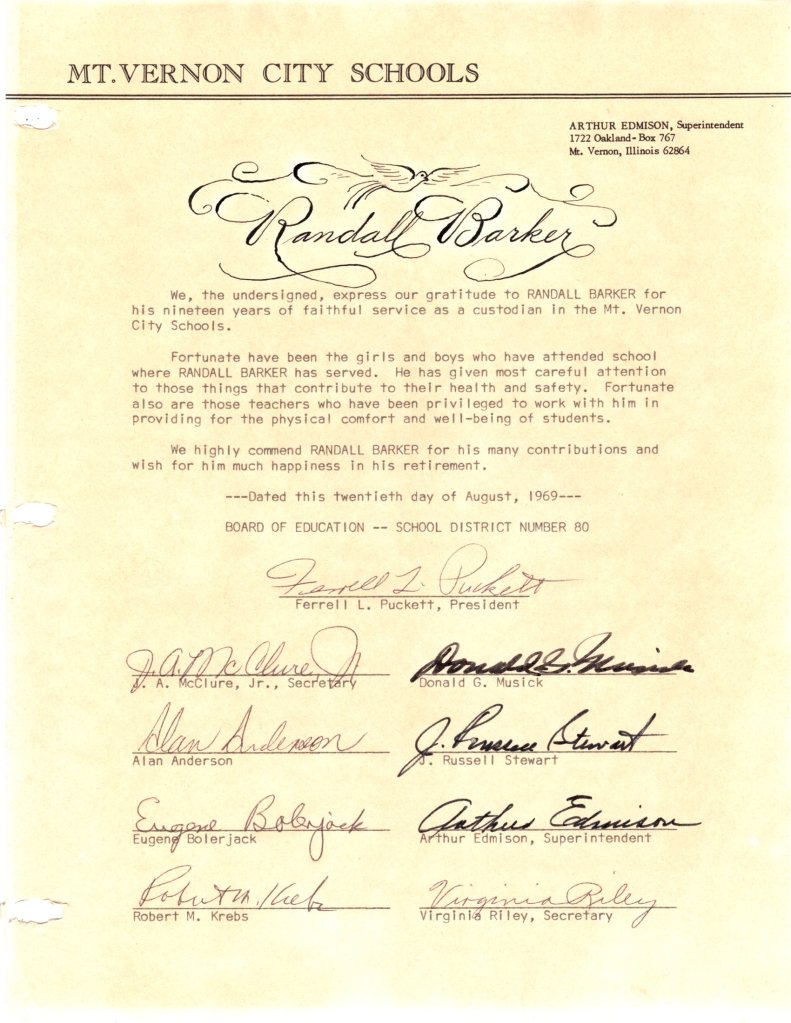
My grandmother had only an eighth-grade education, and grew up on a farm. She and my grandfather were able to work at a variety of jobs, at the Mount Vernon shoe factory (Brown Co., I believe), eventually in the school system. Just to editorialize, let me raise the question of whether the changes in the workplace reflect a difference in the work force itself? Do “unskilled” people today get pushed farther to the margin, although they, like the generations before them, will learn how to do their jobs, on the job? We have certifications and diplomas, the lack of which shut people out, while the people themselves must be as intelligent and capable as ever. My grandparents saved, bought and paid off a house, saved more, and left a legacy that helped me pay off my student loans. Are today’s unskilled workers not shut out of the housing market, for the disproportionate cost by percentage of income?








 Memories of a Midwestern Family