This Week’s Doings in the Garden

Below, a very short video, answering the question I posed a while back, as to who’d be using the treehole for a nesting site this year.


Photo of yellow primrose


My mother gave me this yellow primrose (a red one too) when I moved to my present house, ten years ago. That’s not even how old it is, having lived however long before I got it. So, if you’ve got some rocks to plant your primroses among, you’ll find them some of the most reliable and long-lived perennials.


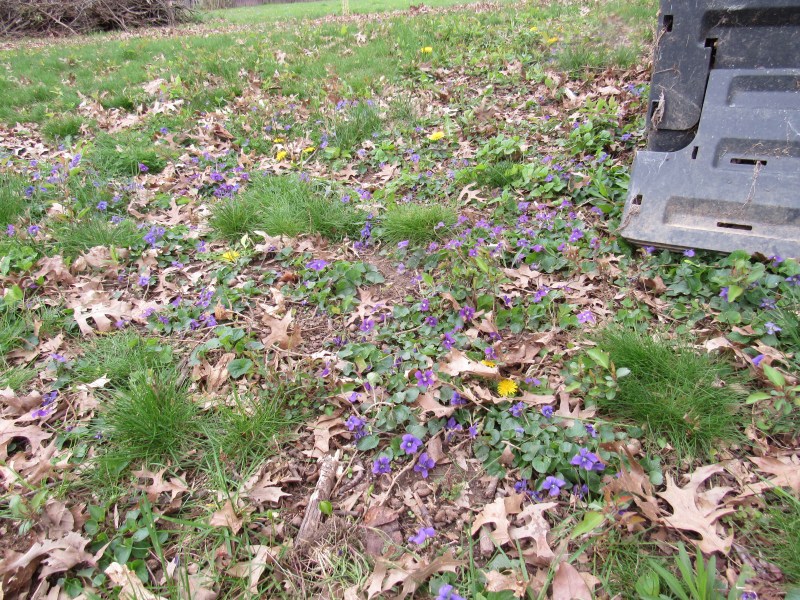
Photo of violets in yard


My yard is full of violets, one of the nicest things to see in the springtime, when they bloom in swaths. The leaves will also stay green even in a drought. All the more mystery why anyone would want a chemically green lawn, instead of a beautiful meadow. Photographing violets doesn’t work on bright sunny days. You need a good overcast sky to get the colors to show true.


Photo of seedlings being hardened off


This is the time of year when caring for the seedlings gets laborious (a little). They can’t spend the night outside, both for temperatures and creature interference. So, for a week or two, I have to carry them out, set them up, carry them back inside, repeat… But they need wind and natural light as soon as possible, when they get to the potting on stage. Hardening off is not just to get them ready for the garden, but because a little pot of soil won’t keep them fed well enough when they’re really growing. Wind gets the root and leaf systems respirating properly, and sunlight cranks up the photosynthesis.


April Garden News

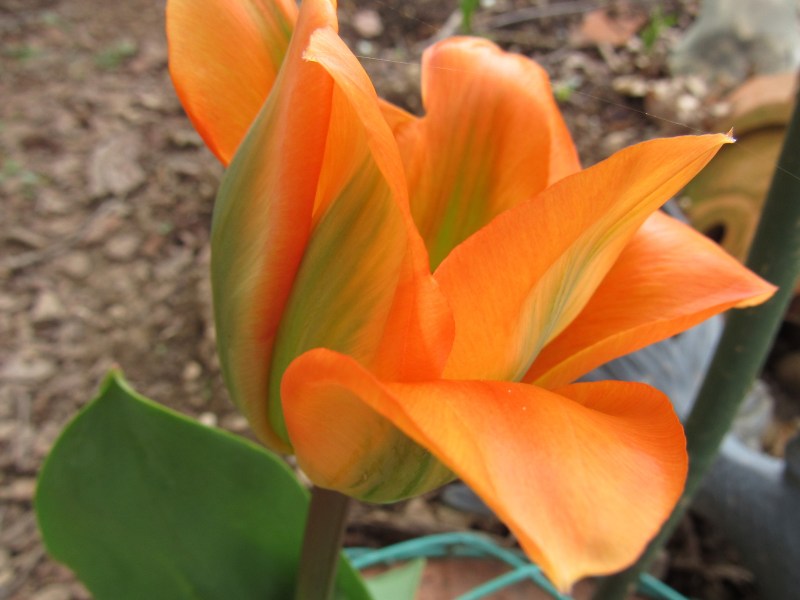
Here’s a sassy orange tulip I saved from the deer. I have two blooming, and one that will probably get away with making a flower. The others have had their heads bitten off.


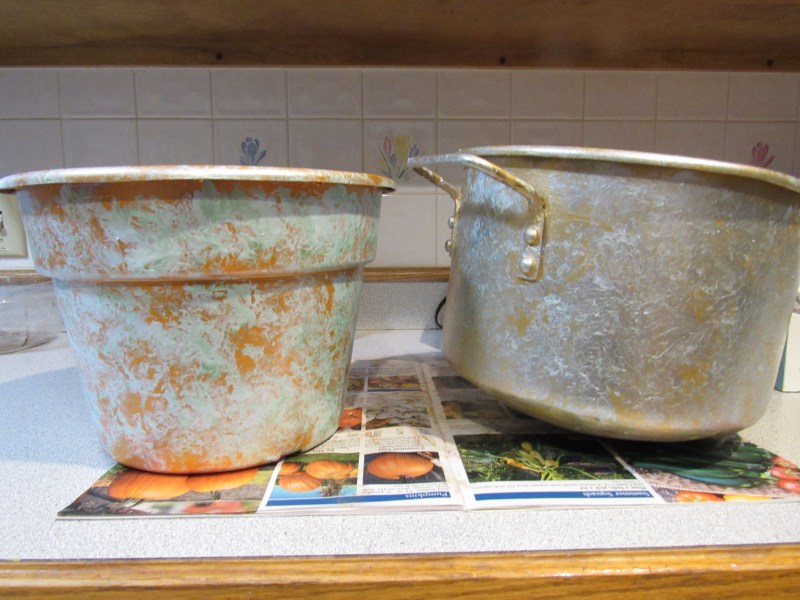
I’ve been getting into the gardening magazines, getting inspired by projects. I don’t subscribe anymore, but still have a stack never read. So, I’ve gone through my garage, finding every pot or article (large pieces of pipe, an old dryer vent), that could be spruced up with craft paint. At the left is nothing but a shrub-sized plastic pot, such as garden centers use. Here’s one kind of recycling to keep plastic out of circulation altogether! The paints are Martha Stewart metallic and pearlized, and the decoration is done by dipping crumpled plastic wrap in contrasting colors after a base coat dries, then tamping on the freeform design. When they’re ready to go out, add a coat of car wax, to make them more rain resistant.


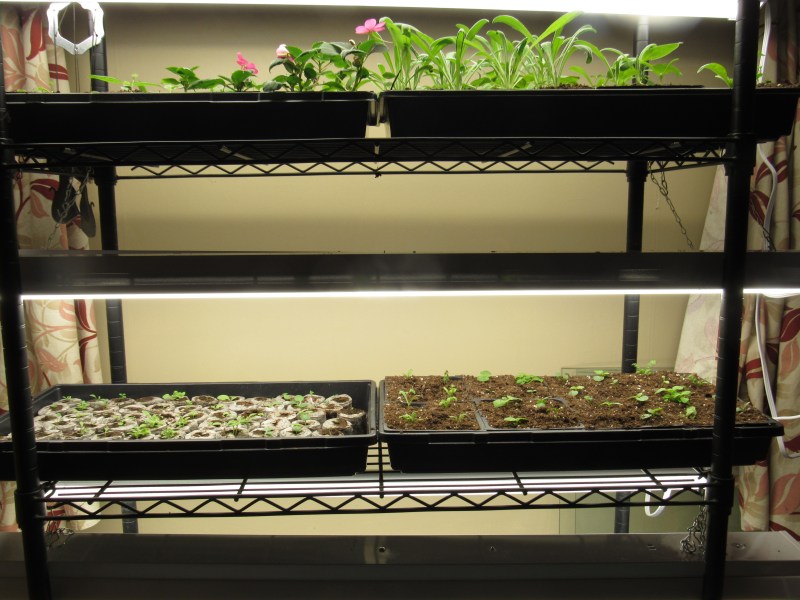
Here are my garden seeds, sprouted and on their way, after two weeks. It’s something of a balancing act to get them early enough they have a healthy amount of growth, comparable to plants you’d buy at the garden store. But growth is especially important with perennials. Last year, for example, I put out probably a dozen hollyhocks, which like most perennials won’t bloom the first year. This year, I count less than half that number surviving, from voles and deer, and crowding by the roots of other plants. Last year’s achillea (deer resistant) has pretty much all come back, but this is the first season they’ll bloom. I had good monarda (also deer resistant) last year, a plant that will flower like an annual, but this year a couple stands don’t seem to have returned. But since even tender annuals can go outdoors in April during the daytime (unless the temperatures are below the upper fifties), it’s better to start early, and have big plants that will bloom as soon as possible.

Seedlings, though, then young mature plants, do get to be a lot to handle indoors.

And by the way, the impatiens flowering pink, above, are from cuttings. They’ll grow easily that way—just snip a top with buds, making your cut between two sets of leaf nodes, and stick it in potting soil. It will root and start blooming within a week or two. The downside is that cuttings are clones. Impatiens are also very easy to start from seeds, and that genetic diversity will improve their chances of not picking up disease.


A Damp Climate

The air, when I lived for a few years in Columbus, Ohio, was always notably drier than down in Athens. My town is part of the greater Ohio Valley, built alongside the Hocking River, that feeds into the Ohio. It’s a moist part of the world, but has been especially rainy for several weeks. Last week we got two days of heavy rains in a row.


Photo of fungi in brush heap

Here in my brush heap are a nice collection of fungi and lichens.


Photo of purple mold on limb

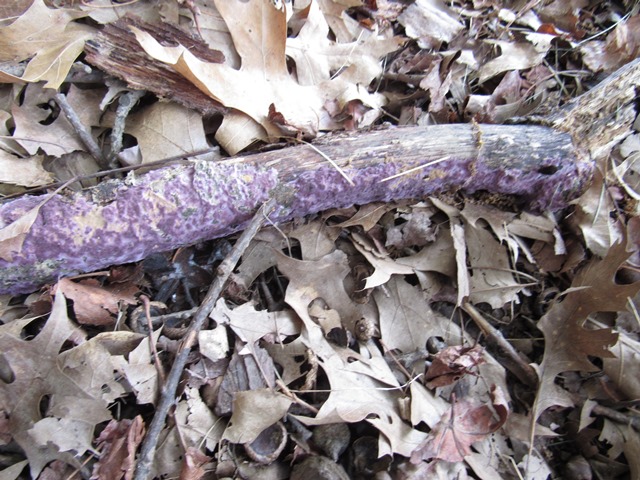
And an interesting one from a couple of years ago, that looks like a purple mold growing on a lichen.


Photo of streaming water in yard

The rainwater in this patch of my yard just streams, and builds itself miniature sandy shoals.


Photo of burrow filled with water

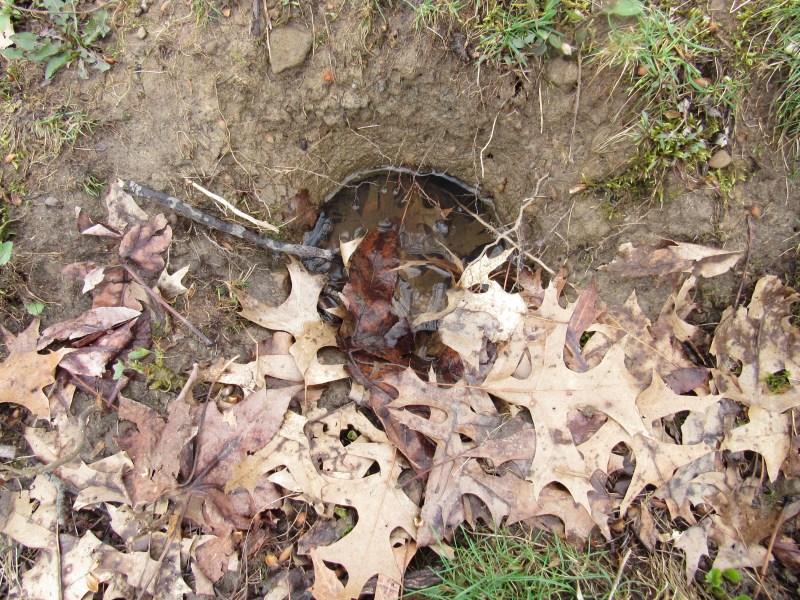
And the reason the water streams is because this animal burrow fills up, and appears to run underground from the pear tree to the brush heap.


Photo of pickerel weed in tub

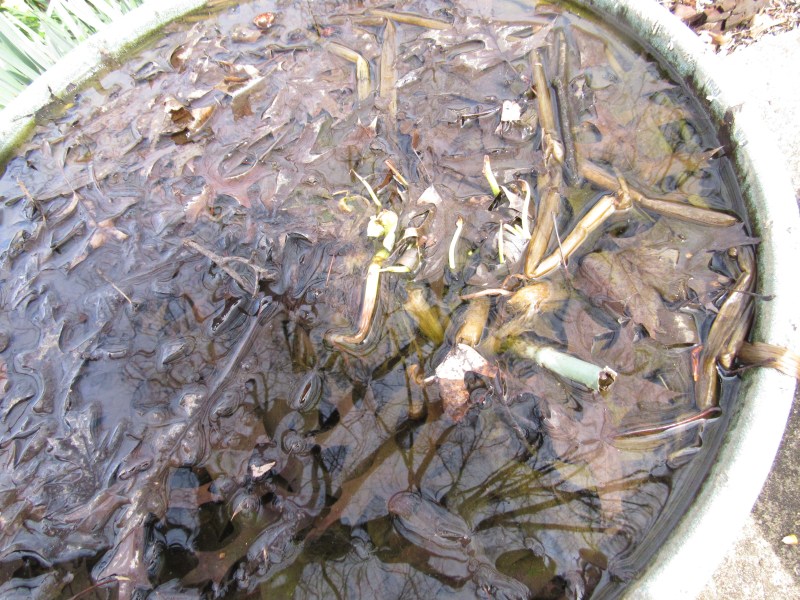
But, good news. My water tubs are shaped like big shallow bowls, so I never do anything for them in the winter, because when the water freezes it just expands outwards and doesn’t harm the tub. So I usually don’t keep my water plants and have to buy new ones. This year, either for mildness on the part of the weather, or hardiness on the part of the pickerel weed, I have one plant that’s pulled through and is starting to grow again.


Be a Backyard Naturalist

If you’re having a down week…because you can’t go to work, or can’t go anyplace other than work, and it isn’t officially spring, try getting outdoors in any case. Find out what nature is gifting you with this year. Go online and hunt for the plants you can’t identify. If you’re feeling well, fresh air and exercise will keep you that way (fingers crossed), and keep your spirits up. Take a bag to a city or state park, and pick up trash. Take some photos. And observe the natural world in this interim between seasons.
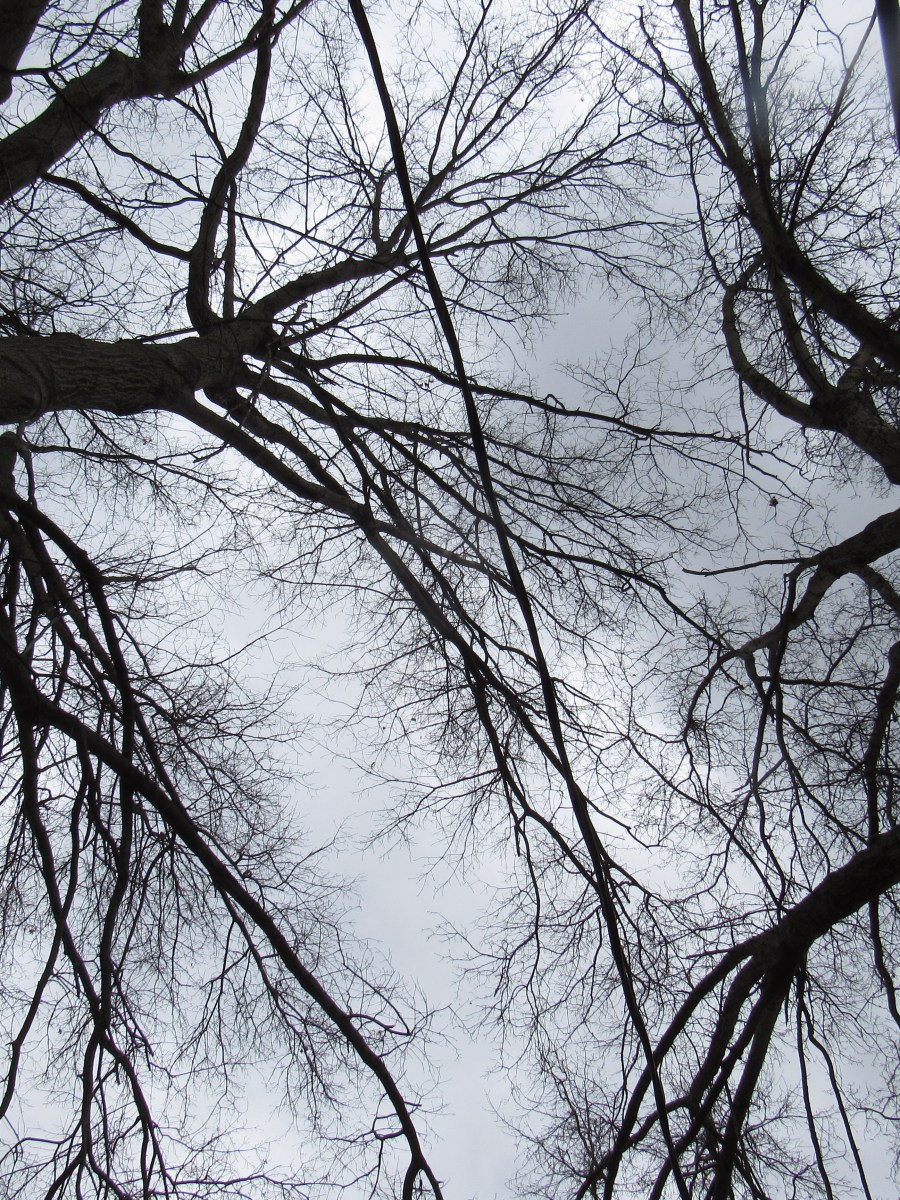
 

Photo of crowns of two oaks


Here are the two crowns of my mighty oaks, which is why I’m still bagging up their humongous leaf fall, and finding ways to re-assimilate so much organic material into the environment.
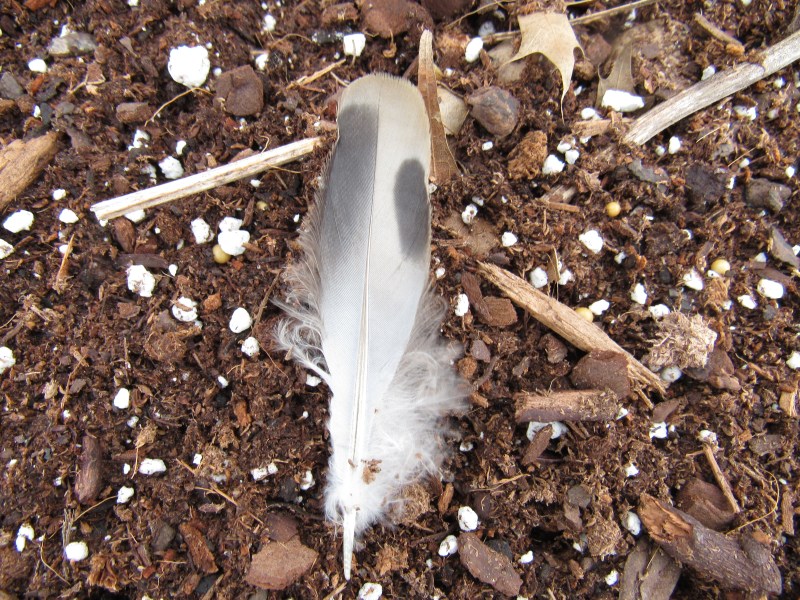
 

Photo of bird feather


This feather is likely from a mourning dove. Notice the beautiful downy stuff at the bottom of the shaft.
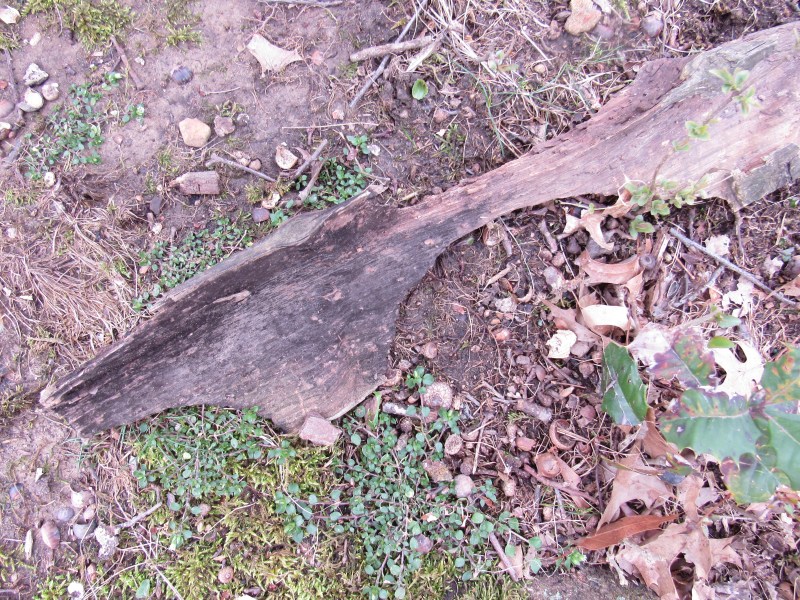
 

Photo of piece of wood gnawed by squirrel


What’s left of an old landscape timber, having long since lost its weatherproofing. See how these curved spaces are cut out? That’s from squirrels (possibly chipmunks) gnawing to hone their teeth.


Photo of hole in tree trunk


Here the choicest real estate in the animal world of my yard. Last year red-bellied woodpeckers nested here first, then northern flickers, then through the winter, squirrels. The opening has gotten quite a bit bigger than originally. We’ll see who gets the house this spring.


Photo of cypress branches used to prevent washing


While doing such chores outside as I can, I clipped back the branches of a cypress shrub. Last time, I talked about the “wash” problem, with so much rain as opposed to wintertime snow. This is one way to improve sloped beds in your garden. Evergreen branch-ends are airy and won’t stop perennials from pushing up, but they’ll slow water running downhill.


Photo of daffodils in spring


Here’s another chore, when the foliage dies back. You can see I’ve got some good-sized stands of non-blooming daffodils, that need dividing and replanting.
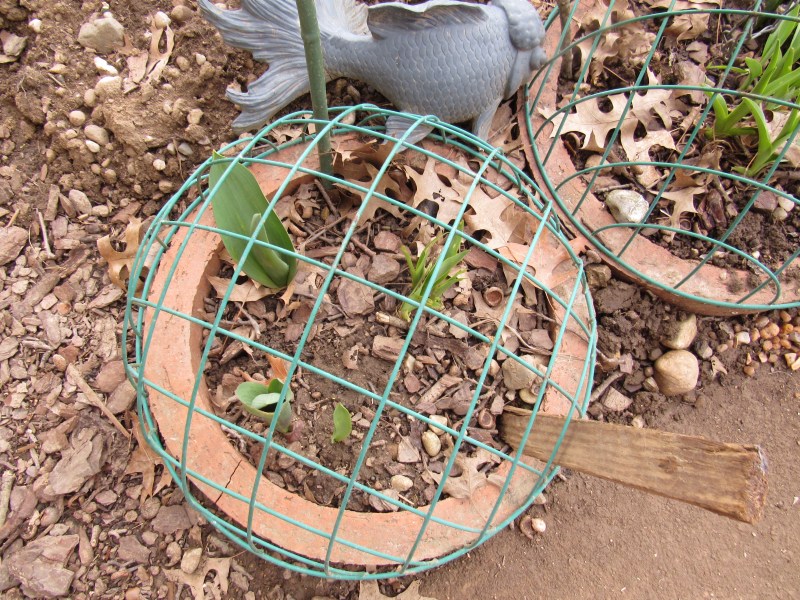
 

Photo of tulips caged to protect from deer


I love tulips. When I was growing up, Sunday papers had little magazines, and the magazines always had ads at the back for Dutch tulips, showing fields with rows and rows of color. I don’t know, tulips’ optimum blooming life being short, whether that would be practical and affordable, but it was a little dream of mine to plant so many tulips, one day when I had a yard. Right now, I can hardly keep them safe from the deer (maybe strength in numbers would make a difference), but here’s a way to protect your vulnerable bulbs: cage-style hanging baskets turned upside down.
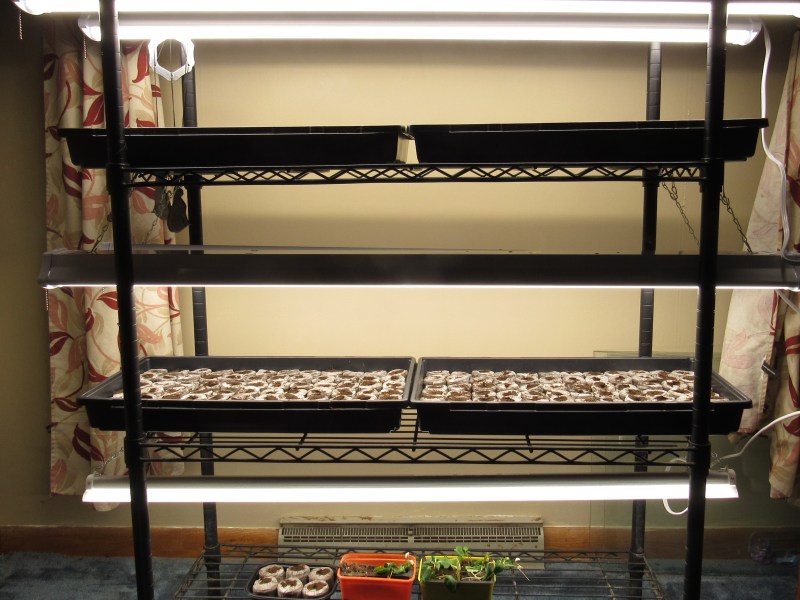
 

Photo of seeds started under lights


And here are this year’s seeds, just now started. Mostly, members of the Compositae family (daisies, black-eyed susans), the flowers deer hate most. I do keep my shelves in a bedroom, where the plants are warm and safe from the cats. It’s not that hard to avoid making a mess. Tip: if you spill dirt, leave it until it’s completely dry before you vacuum.
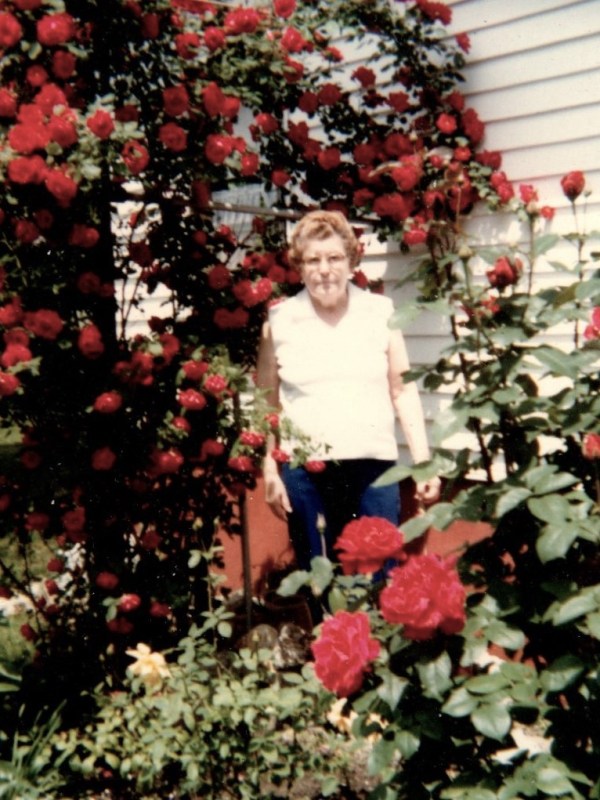
 

Photo of my grandmother in her rose bed


And here’s my grandmother (Vera Barker) in her rose garden, probably from the 1970s. This corner at the back of the bungalow was covered in broken concrete slabs, always a thing I liked playing stepping stones on. I suppose it kept the weeds off…I don’t know if concrete is good for roses. She never grew a lot of flowers, but always had opium poppies, salmon-colored. That might sound strange, but old farmstead gardens were planted with medicinal flowers and herbs, and Grandma kept up the tradition by saving the seeds.


Spring Fever

It’s that time of year, when the weather warms up, the garden starts to grow, and  it gets hard to sit at your desk and work. 


Photo of sky during hailstorm


We had a late winter thunderstorm with hail on the third of March, during which I saw a weather phenomenon I never had: the sky turned a shade of pink. By the time I got my camera it was almost gone, but there’s a hint of it in this picture. Otherwise, it’s a nice moody shot, showing how at this time of the year greys can look bright and the landscape eager to get started. And today (the 8th) I had a pair of courting turkey vultures flying over my yard.


Photo of backyard drainage project


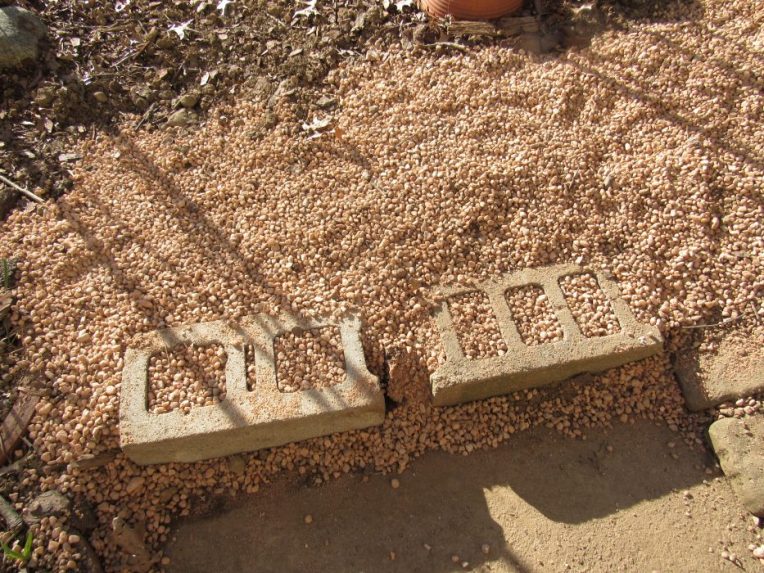
Here’s a shot of my drainage project. My yard has a steep little slope going from the house to the garage-level. In southeastern Ohio for the past several years, we’ve hardly had any snow, nothing like the six inch or more longterm storms we used to get. Now, in a winter, we get one or two events that drop a couple of inches at the most, then melt off within days. Meanwhile, we’ve been having huge downpours of rain; this year, it seems, every week. All that is a reflection of the changing climate, but when you have rain instead of snow, you get a lot of washing. The wash carries away the topsoil, and keeps anything green from growing back. So backyard drainage should be purposed not to channel, but to slow down and spread the runoff, make it trickle down into the soil, rather than stream to the ditch. Pea gravel is a great choice, and if the cinder blocks are set this way, they can function as a step and a place for rainwater to burble away slowly.


Now, in about a week, it’ll be time to start seeds and root cuttings from the impatiens and coleus I saved from the garden last fall!


Bulbs and Burls: Late Winter Interest

One or Two Things to See This Time of Year


The daffodils are pushing up; daffodils, being the easiest bulbs to grow when you have a lot of deer, I plant more of these than any other, although I’m trying to build a good effect with grape hyacinths. The birds are making their spring plans. The redtailed hawk couple have been circling to locate a nesting site for the year. The other day one was being chased by a flock of crows, and when she or he sped off, the other arrived. That suggests the hawks take advantage of the crows’ behavior. I don’t know how you’d prove it, but I suspect the hawk watches, flying over, to see what shelters the squirrels run to, and keeps its eye on the brush heap, knowing prey will emerge from that spot after awhile. A pair of cardinals have been at the feeders, the male very bright…the local cardinal population has seemed a little down the last couple of years. Today, I saw a mockingbird fly up into the oak, calling in imitation of a hawk and some other bird I didn’t recognize. So he also is staking a territory to make use of in the next few weeks.


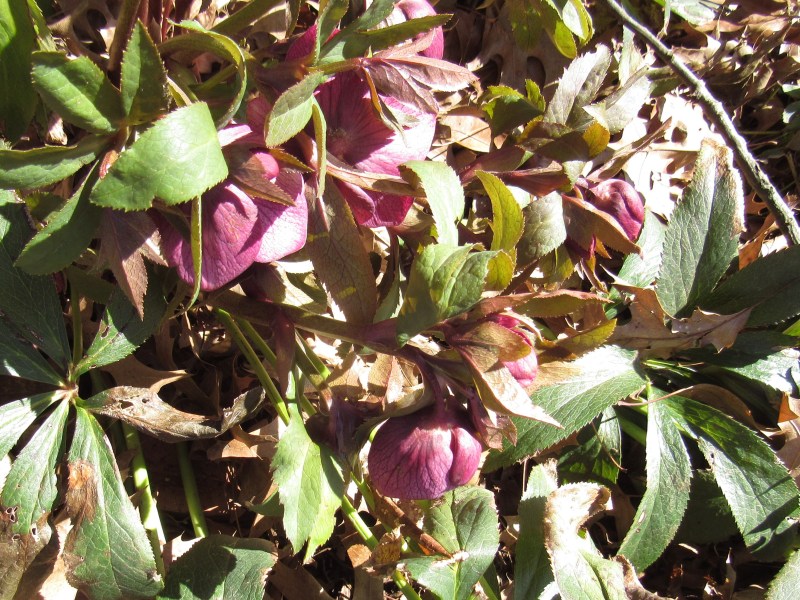
The hellebore languished for some years after I planted it. But then, I think in 2017, we had a huge cicada generation born, and the emergence from deep in the ground must have freed up the roots from struggling against those of the giant oaks. That summer the hellbore took off, and it’s been a big, healthy plant ever since, spreading out and making new hellebores. This lenten rose always blooms early and prolifically.


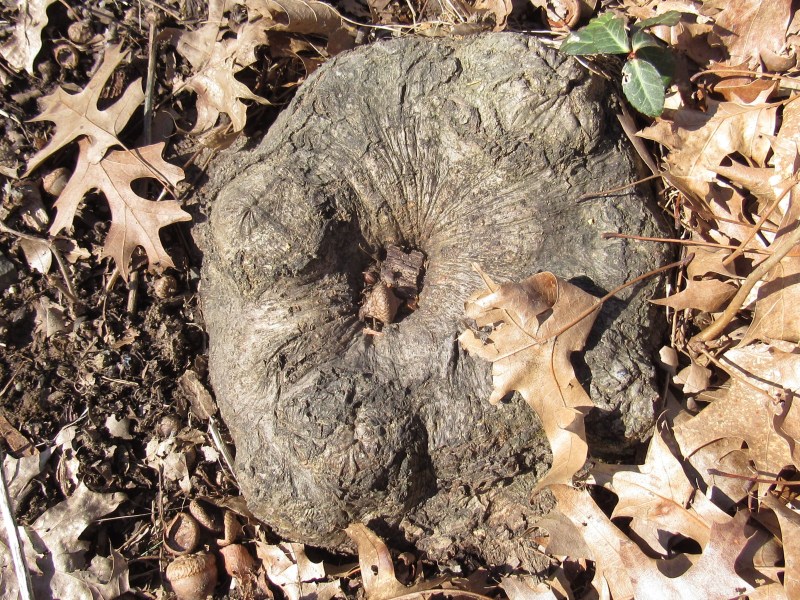
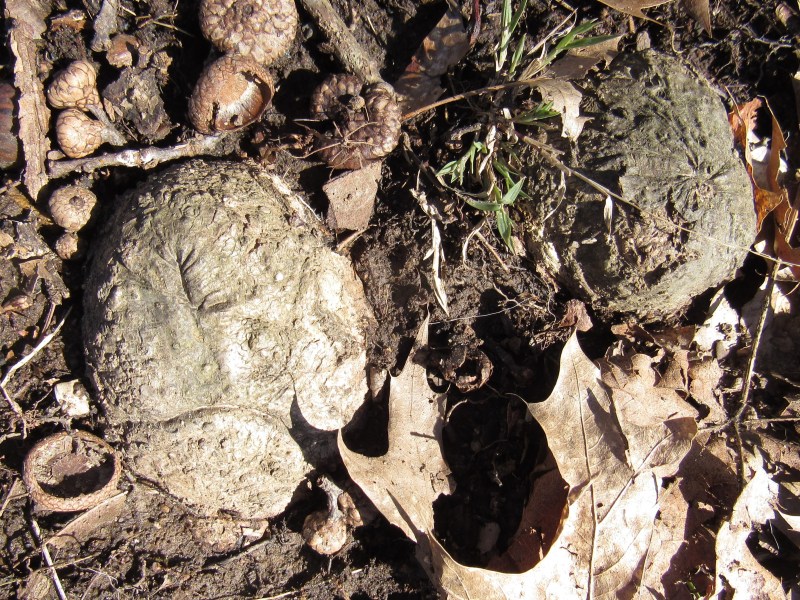
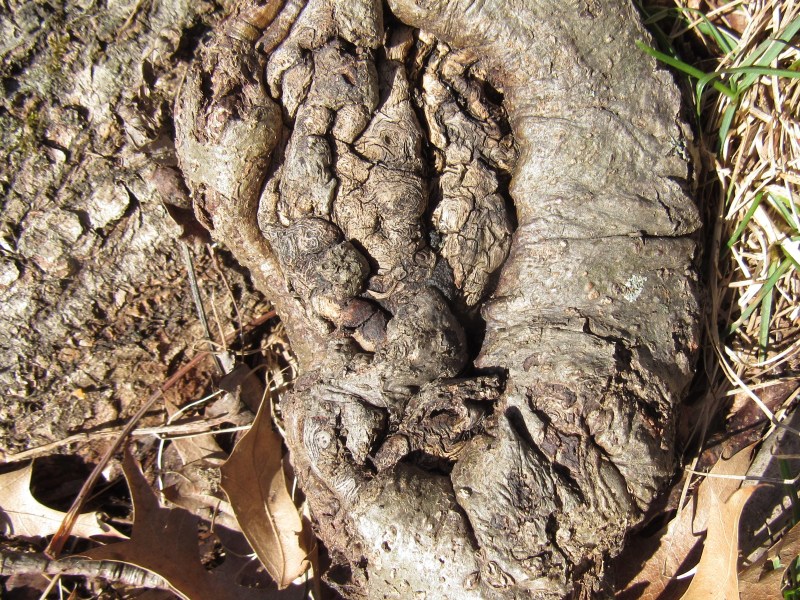
Below are some ornamental burls in a young phase. At center, you can see how small these two are, by comparing them to the acorn caps. They make interesting little ornaments for the flower bed they push themselves up into.


The Gardener Looks Forward

Photo of yellow-bellied sapsucker sapwells on tree


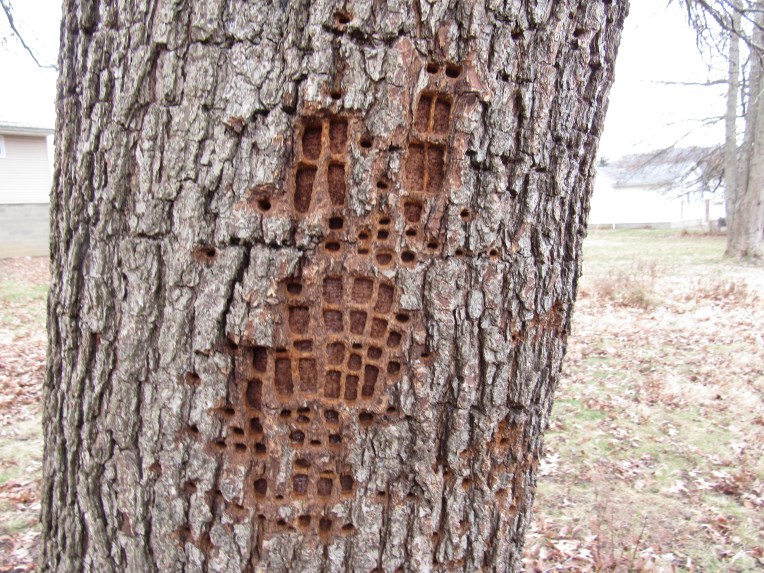
This is the effect of a yellow-bellied sapsucker on my callery pear tree. These sap-wells won’t start to flow until the springtime. The male I’ve seen, who owns this tree and comes out to patrol it, may be living a little out of his traditional range (there must be a female around, too). He’s been making rows of holes on this tree for years, but seems to have moved to a new stage. Sapsuckers can actually kill trees—for myself, I’d rather have happy birds. They aren’t likely to attack species of tree that don’t produce volumes of sap, those being mostly maples, birches, and fruit trees.


Photo of frog statue in snowy garden


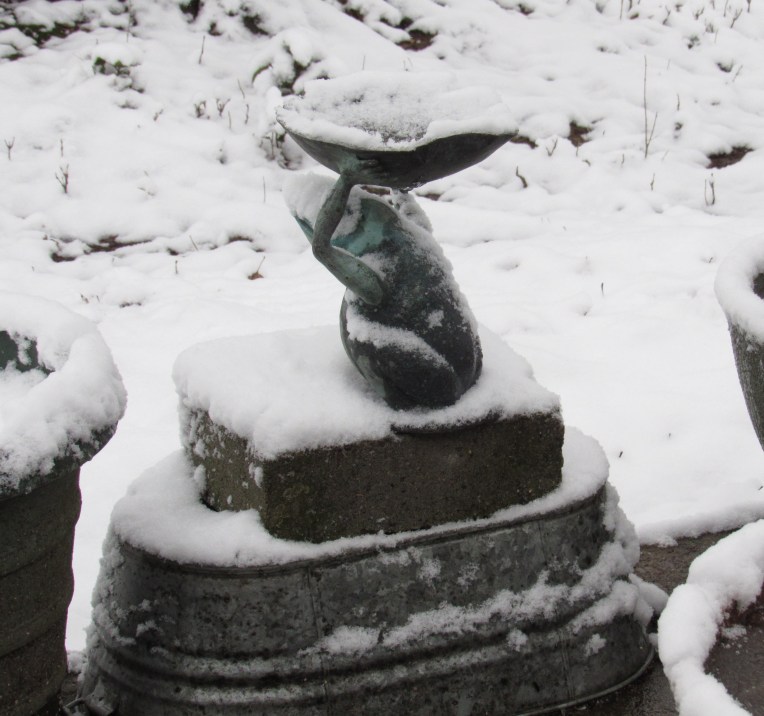
The frog is always getting knocked off his perch. I have visiting deer who come every night looking for corn around the feeder. A couple of males have racks, and I’m guessing they bump the frog trying to maneuver their heads into the space around the tubs and pots.


Photo of Tufted Titmice on snowy branches


These guys were easy to capture in the lilac. Tufted titmice are some of the tamest birds, and don’t mind letting a person with camera get close. They, the chickadees, the downy woodpeckers, and the Carolina wrens, all prefer to go on eating, whether I’m there or not, than fly off to hide in the brush pile.


Photo of seed packets


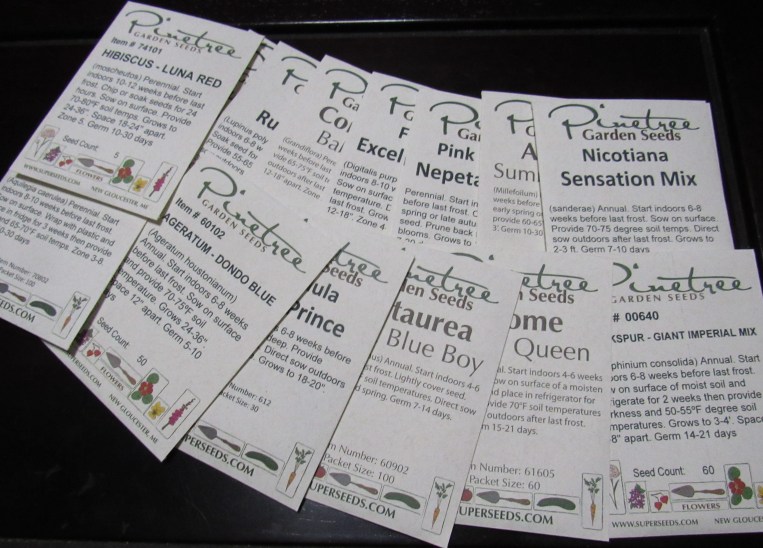
Here are all the seeds I’ll be starting around the last week of March, and in early April. It takes a few weeks for sprouting to begin with, and nothing other than hardened-off perennials can go out until the end of May, when frost is really finished. Growing your own gives you some gardening fun until the outdoors is ready, and also saves a lot of money these days, when a single perennial can cost fifteen to twenty dollars.