A Few Things Linger

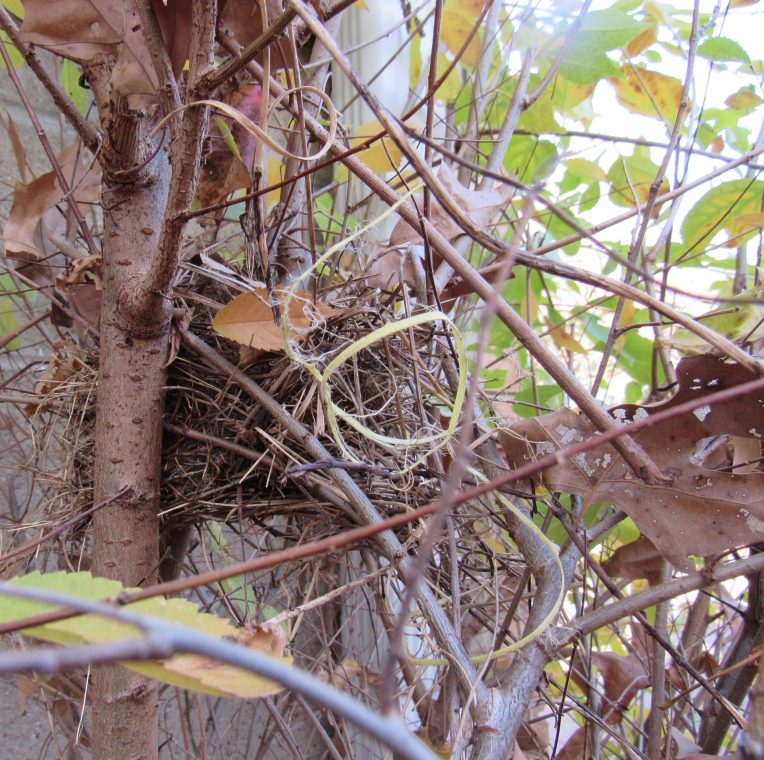
Photo of small bird's nest

A small nest uncovered when the leaves fell off the beech (that I originally thought was a birch, but I see it’s starting to develop some distinct eyes on the trunk.)  The nest is probably a song sparrow’s.

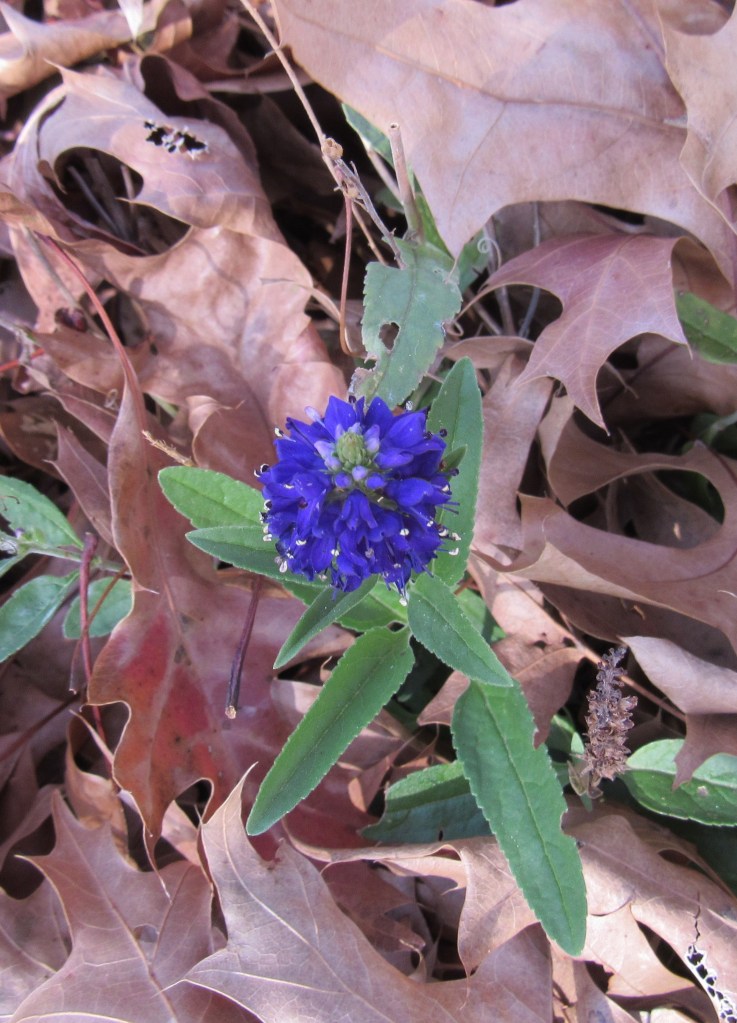
Photo of blue veronica bloom

One bright blue-purple veronica bloom. A few things will pop a random flower in the late fall.

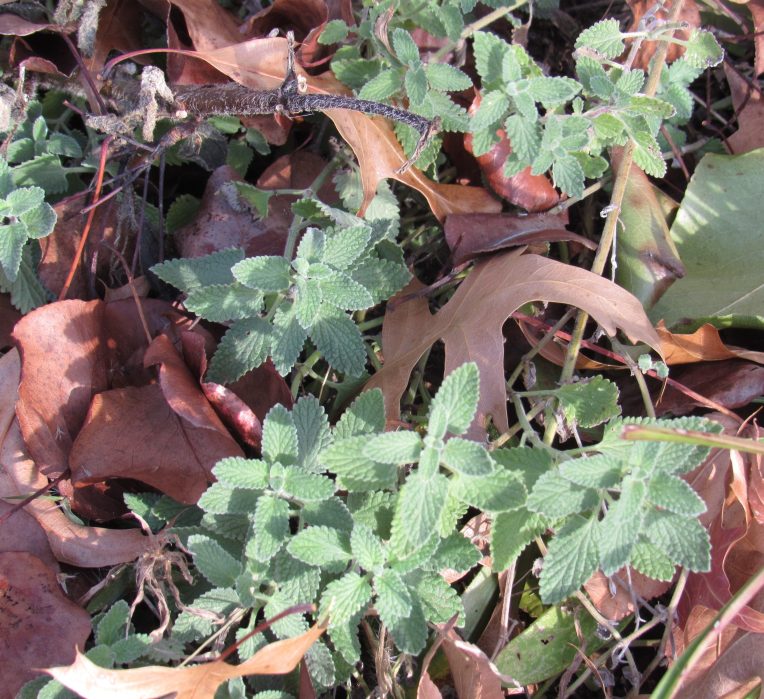
Photo of catmint growth

Catmint, having a fresh spate of leaf growth, in the cooler weather. 

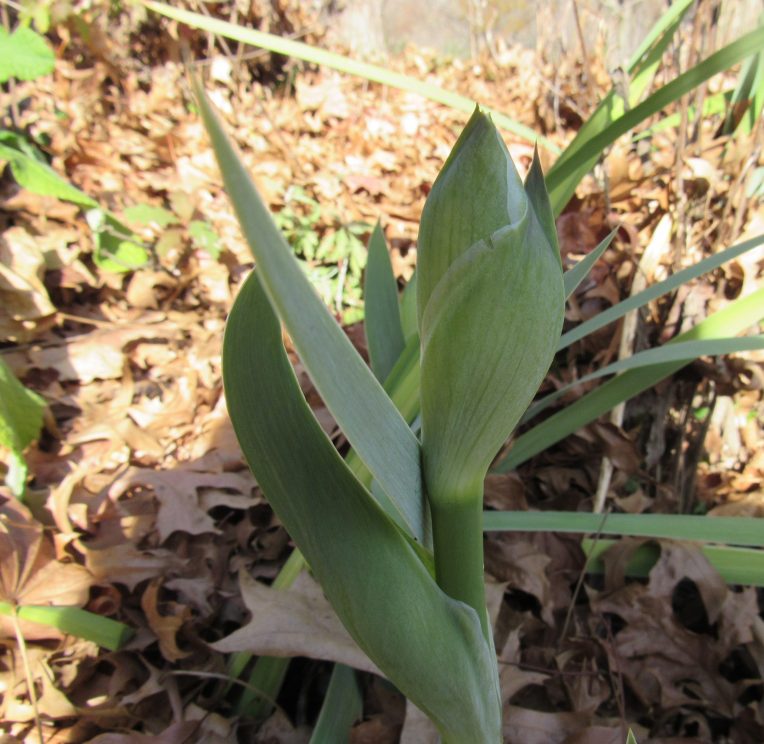
Photo of iris blooming in fall

An iris, that may slip this one past the deer. All my bearded iris are rebloomers, but last summer they didn’t bloom at all.

Photo of foxglove bloom

A foxglove, with a warped little flower, and others it’s trying to open before it freezes.

Photo of poblano pepper

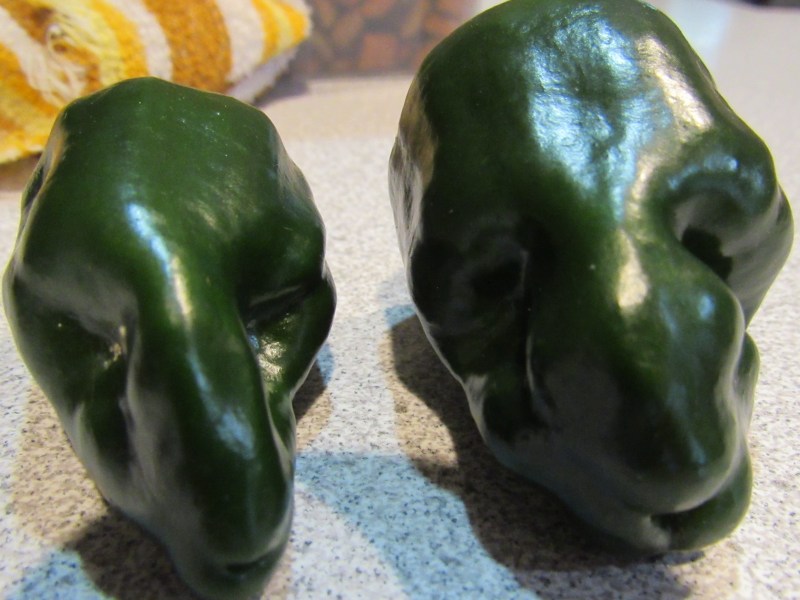
One last poblano pepper. There are three ways to preserve a pepper, one of the few vegetables that may survive wintering over in a pot. You can start one from a stem cutting, pot the roots after trimming back the topgrowth, or save seeds from one of the fruits and start them in the late winter, or early spring, depending on your zone.

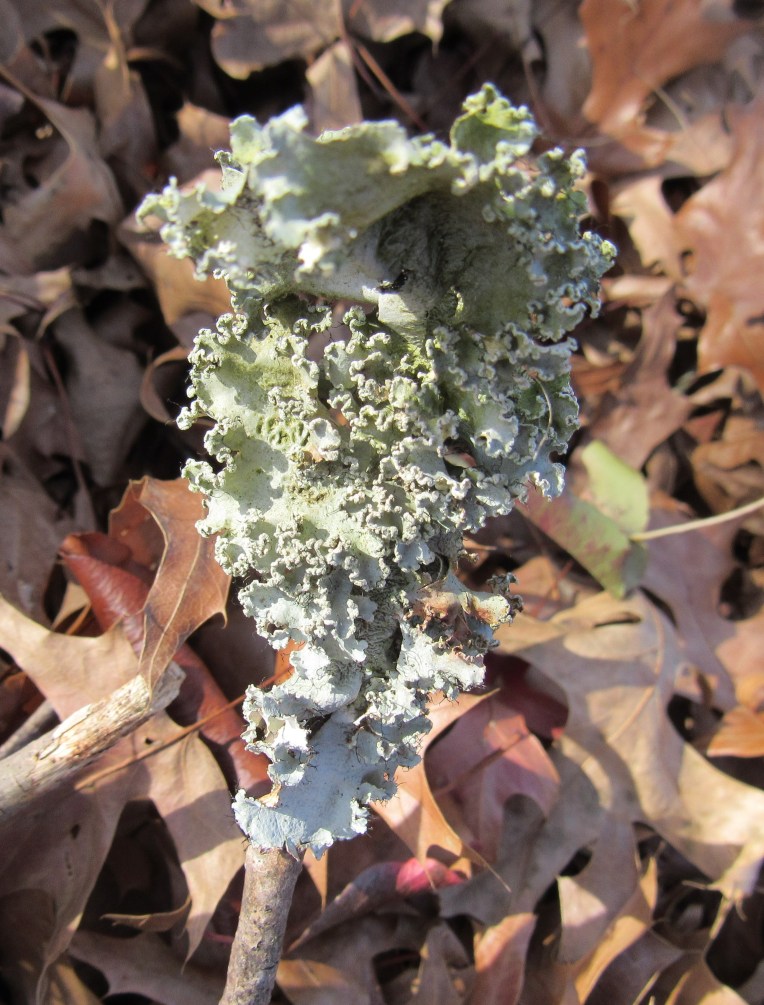
Photo of ruffled lichen

Closeup of a ruffled lichen, growing off a twig that fell out of a tree.

A Strange Seed

This was lying at the foot of one oak tree, a seed found someplace by a squirrel or bird. The only thing I’ve seen online that it much resembles is from the cocao pod. Which could have got into the local environment by a few means: someone’s potted tree, a health food store’s “grind your own chocolate” display…

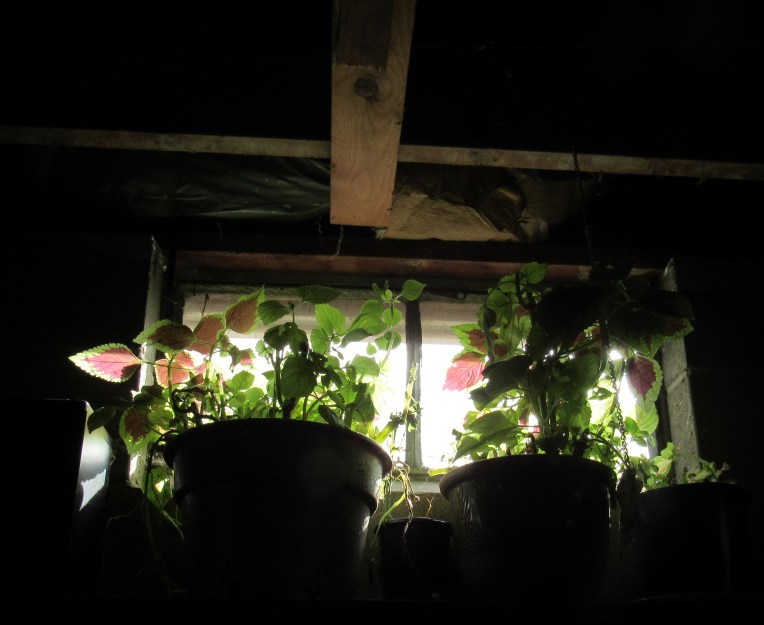
Plants rescued from garden

A few of the garden plants that I’m overwintering: coleus, impatiens, and one sweet pepper. They should be all right for temperature in the garage window, and I can’t have many in the house because of cats.

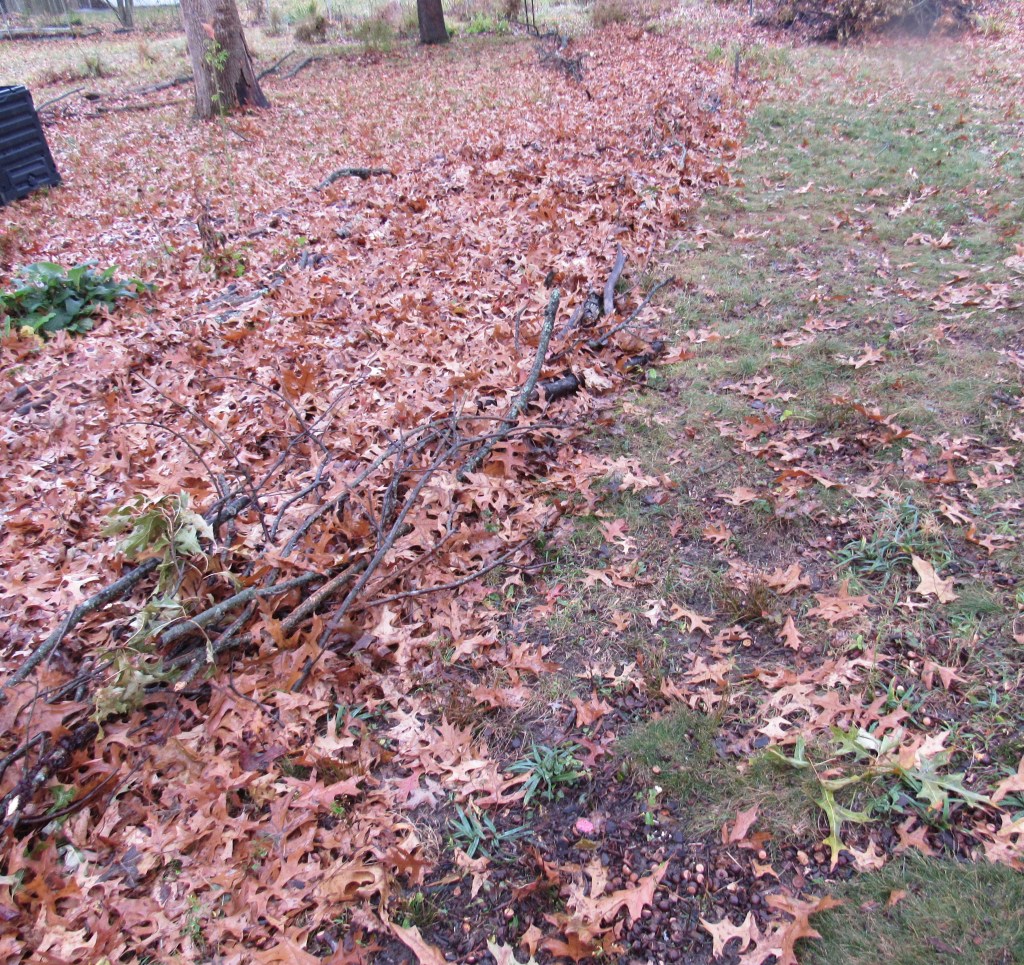
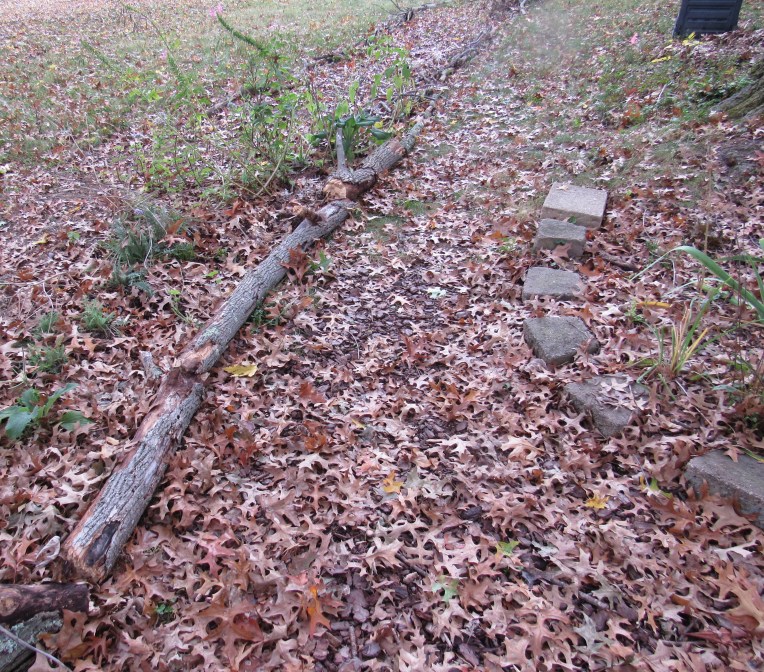
A path in its fall state. I’ve used branches dropped by my trees for bordering, which should help block the leaves from blowing away. Over winter the weather will decompose and settle the branches, and in spring fungi will reduce the leaves to a thin layer. Preserving leaves preserves your insect population; a healthy insect population feeds birds, reptiles and amphibians, small rodents, bats. My other plan is to cut off seedheads from coneflowers and rudbeckia, and place them among the branches to make flowering edges.

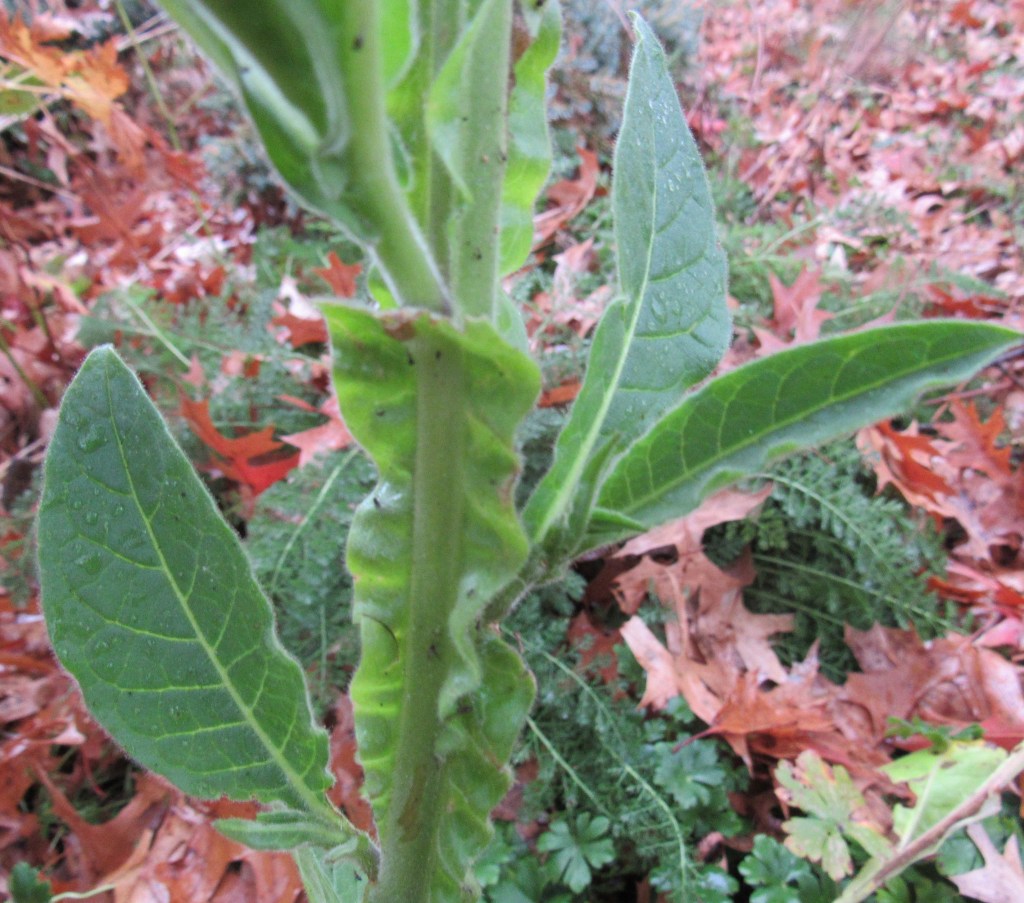
Something interesting. Deer ate all the leaves off this nicotiana. But it grew back these strange ruffly stem-leaves.

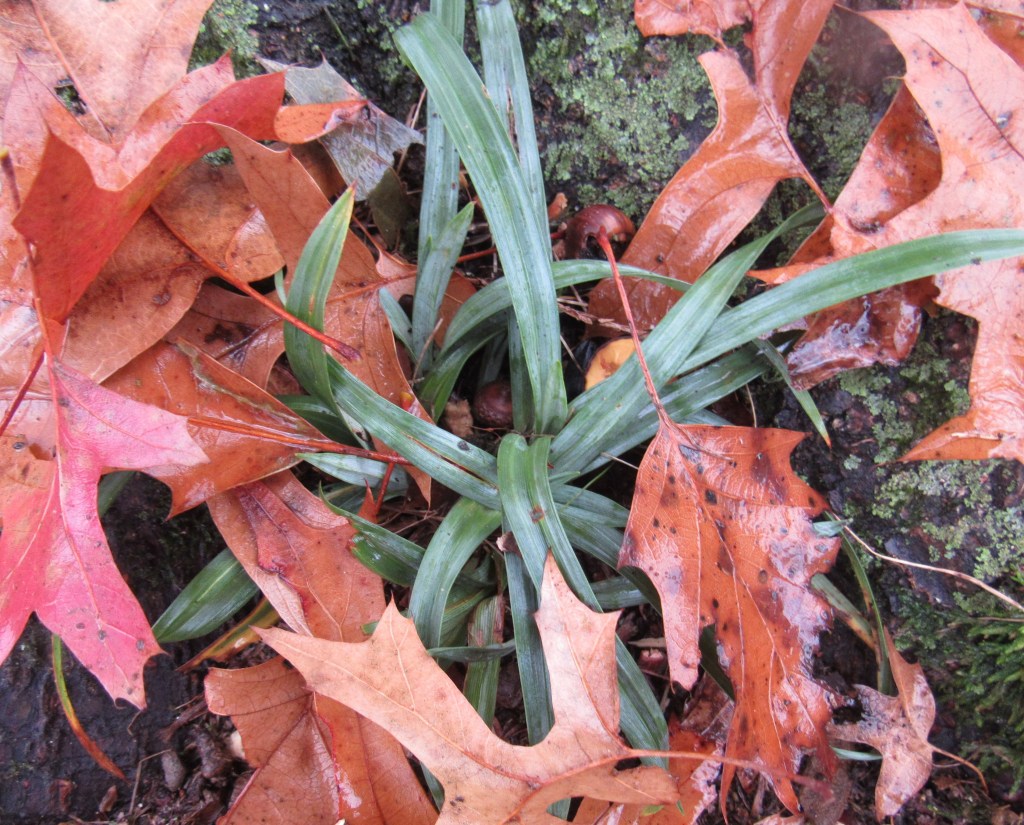
A pretty little grass, that has blueish leaves, and spreads slowly in clumps.

Garden Bits and Plans for Next Year

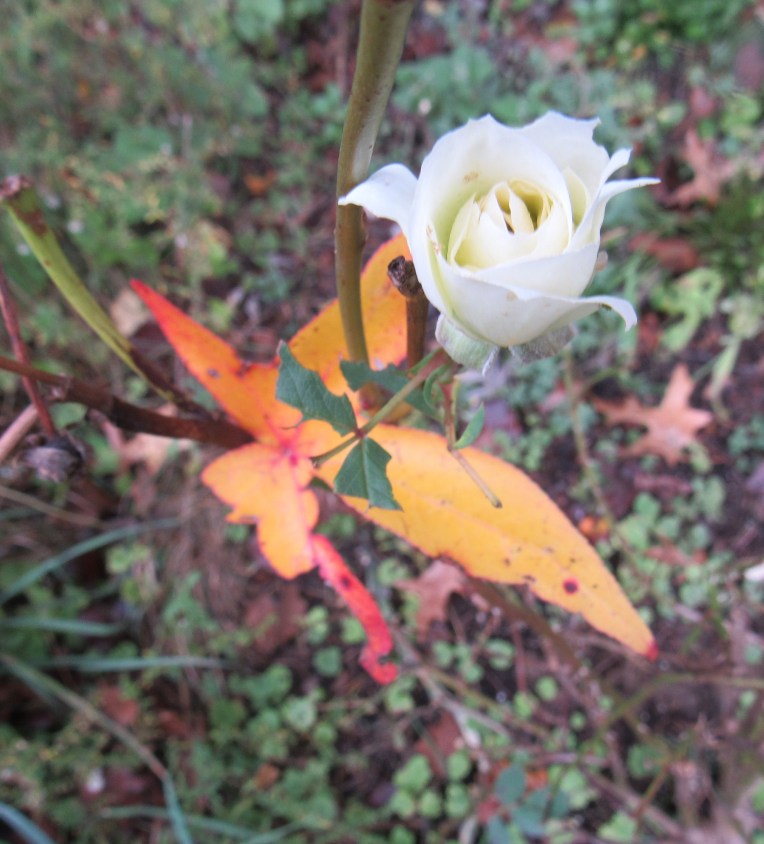
One slightly raggedy Morden Blush rosebud that finds the weather too cold to open. And a bright sweetgum leaf that landed where it makes a nice contrast.

A few annuals will hang on and flower until a hard freeze. Even then, microclimates may allow a vestige or two to carry on until December.

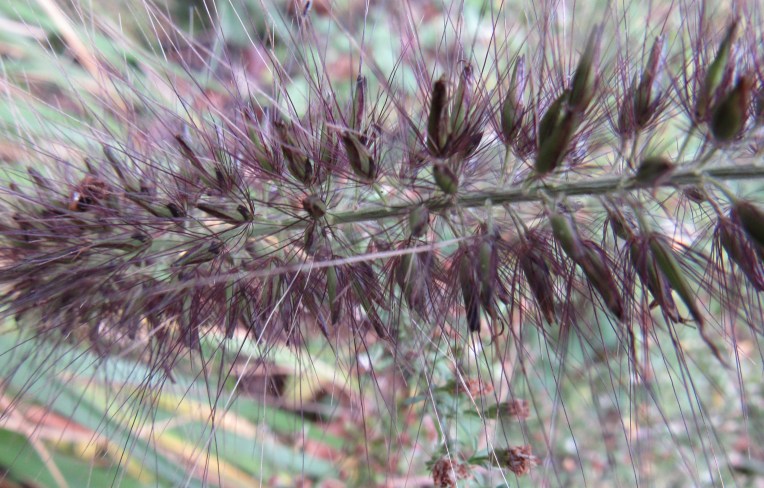
An ornamental grass seedhead that, as you can see in closeup, has an extravagant quality of awns (the parts that look like hairs). A fall treasure, but this grass starting growing voluntarily, so I don’t know what it’s called.

This big branch fell off my dead ash tree, making a nice gift for defining the border between the bed and the path beside it. And all these logs I use for bordering make miniature habitats in themselves, also protecting the root systems of my perennials.


Bulbs I’m Planting This Autumn


Allium aflatunense (lilac-flowered onion)

Apricot Beauty Tulips

Dordogne Tulips (coral-pink)

Eranthis (yellow-flowered small bulb)

Galanthus (Snowdrops)

King Alfred Tulips (sunny yellow)

Little Beauty Tulips (red with blue markings)

Mt. Hood Daffodils (pale buttery white)

Salmon Impression Tulips

Silver Smiles Daffodils (white with pale yellow center)


Wish List Perennials for Next Spring


Artemisia

Astilbe (assorted colors)

Campanula persicifolia

Columbine (assorted)

Dalmatian Peach foxglove

Ferns (assorted)

Georgia Blue Veronica

Heuchera (a few pretty leaf types)

Hollyhock

Johnson’s Blue geranium

Old-fashioned Bleeding Heart

Poppy

Primrose

Pulmonaria

Rodgersia aesculifolia

Southern Charm Verbascum

Tall phlox (assorted)

Tall Sedum


Annuals from Seed


Ageratum

Bachelor’s Button

Cleome

Coleus

Datura

Double Impatiens

Marigolds

Meadow Sage

Nasturtium

Petunia

Salpiglossis

Scabiosa

Sunflower

Tithonia

Zinnias


Fall Arriving

Photo of oak galls and fly

A few of the oak galls. (And a visiting fly.😉) Probably the number of oak galls says something positive about the health of the local environment.

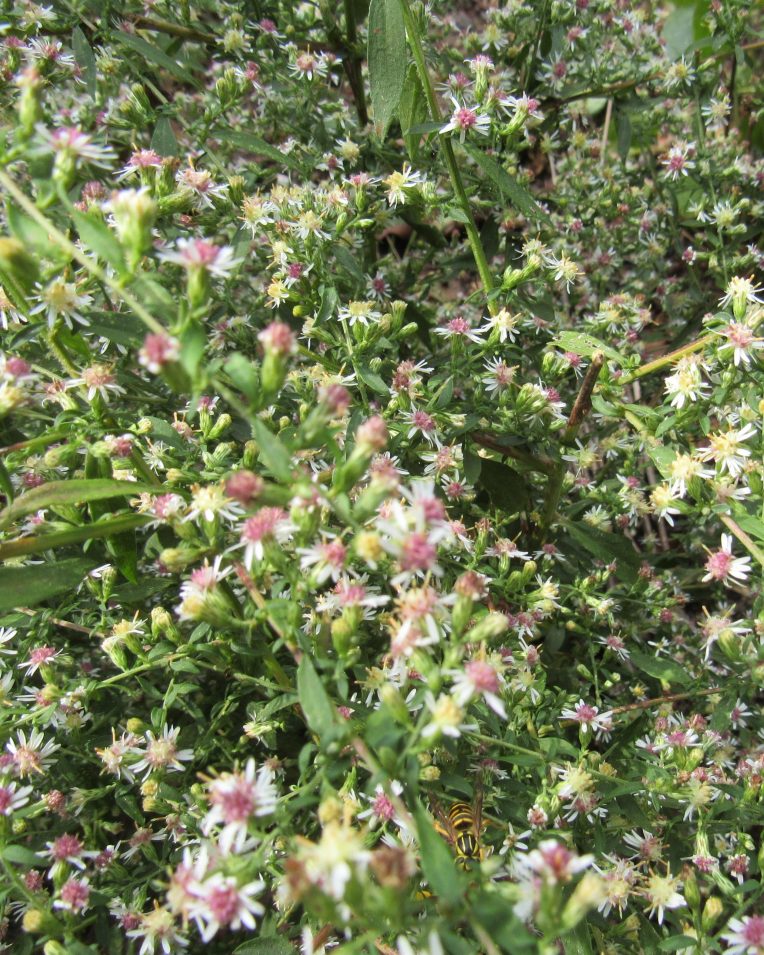
Photo of wild asters with wasp

The wild fall asters are covered with pollinators, though this photo shows clearly only one little wasp. These flowers appear on each plant in hundreds, but as you see, once they’ve been pollinated they turn pink, while the ones with something to offer stay yellow to guide the wasps and bees.

Photo of cleome flower with seedpods

Here’s a view of the cleome, which just goes on blooming until frost, and its entertaining spray of seedpods.

Photo of foxglove flowerstem eaten by deer

The deer are not supposed to bother foxgloves, but one bit off the flower stem of a late bloomer. As you can see, it still has buds at the leaf axils. But I hope it may act like a perennial and come back next spring, since its blooming was thwarted.

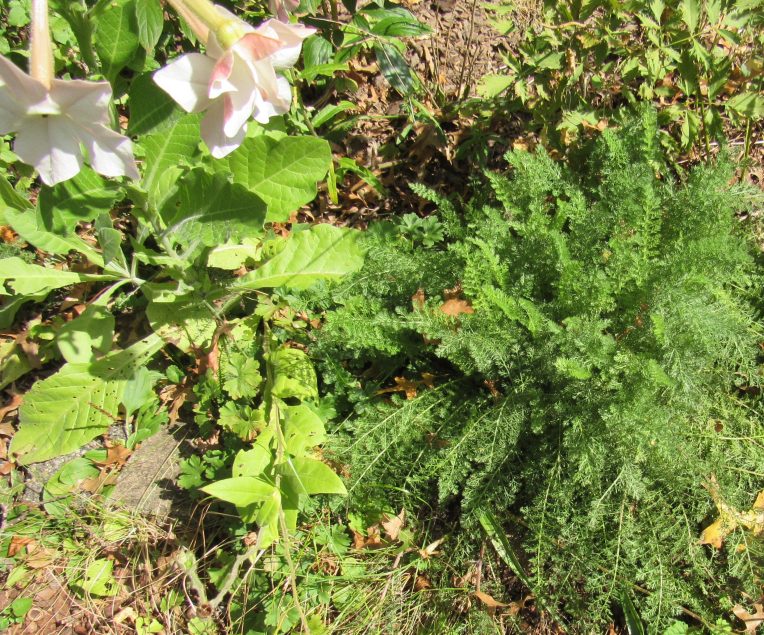
Photo of achillea foliage

Pretty nicotiana blooms, and a view of why achillea is a great perennial (easily grown from seed). In the fall, these plants will put up a thicket of lacey foliage.

Photo of burgundy elephant ear with purple veins

Sunshine through an elephant ear leaf. You can see the beautiful late-season color and the interesting vein pattern.

Photo of callery pear fruit

The tiny fruits of the callery pear, which in closeup definitely have the characteristics of a pear. The tree makes thousands of them, which are much relied on by all sorts of unnoticed critters. They also draw robins in late winter.

September Garden Photos

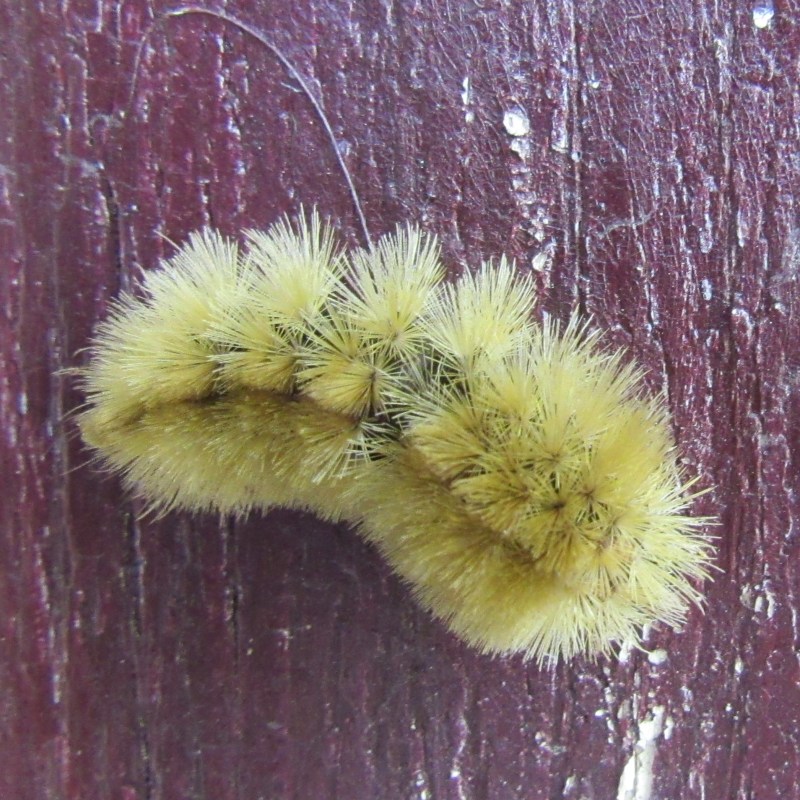
Photo of yellow haired caterpillar

Close shot of a lemon-colored caterpillar.


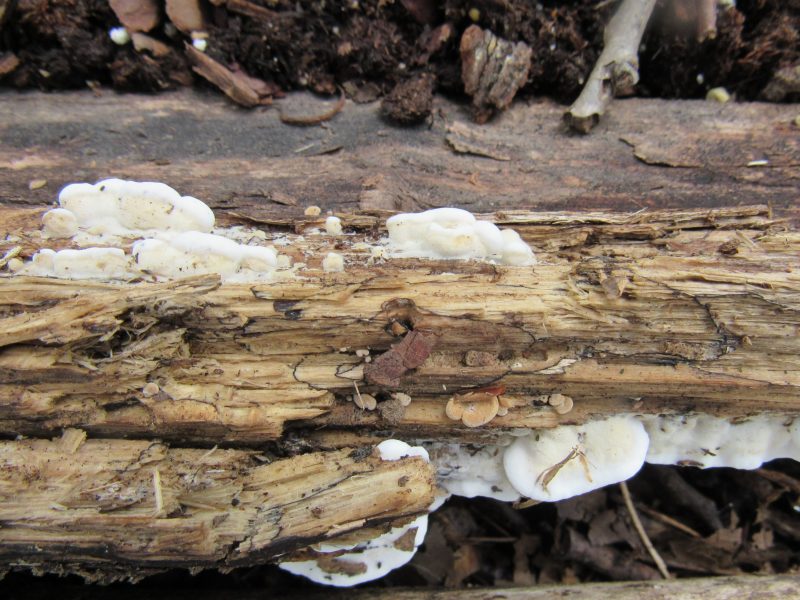
Photo of small mushrooms on decaying log

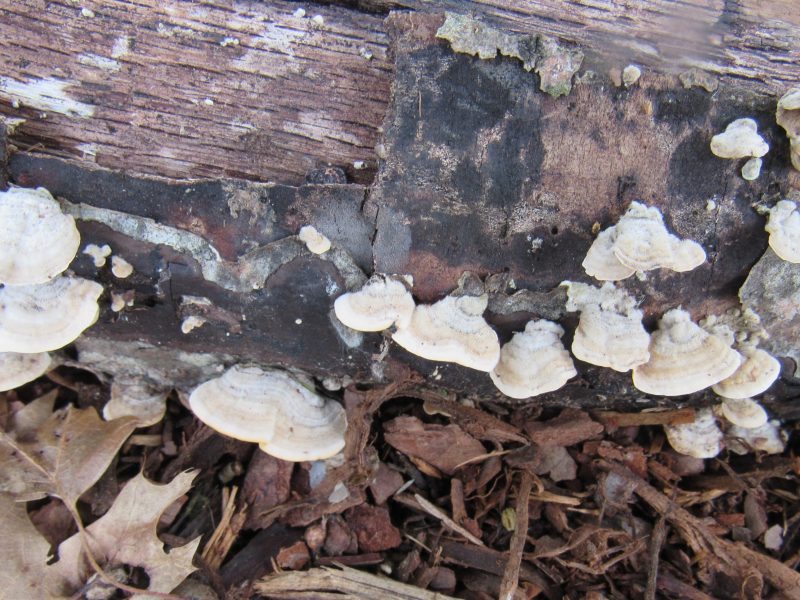
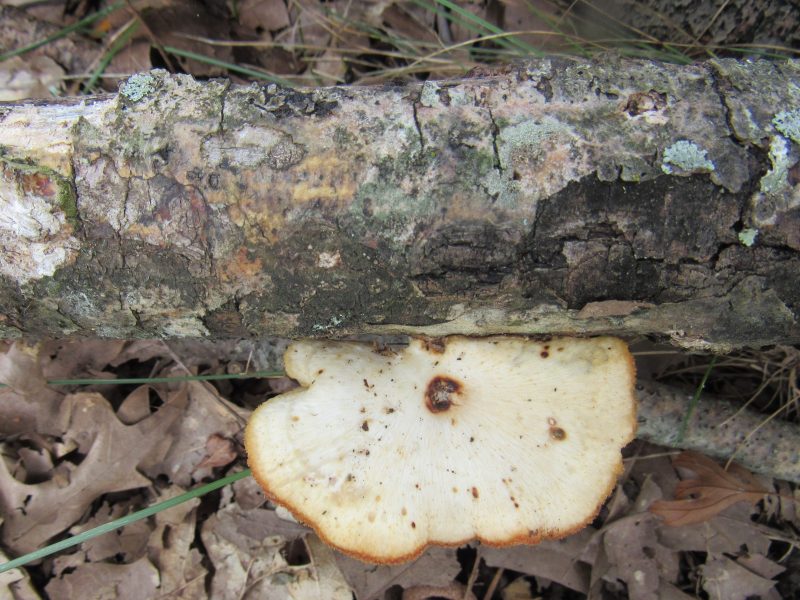
This, and the following, some small shelf mushrooms fruiting out of the logs I line my path with.


Photo of small mushrooms on decaying log

Photo of small mushrooms on decaying log

Photo of small mushroom on decaying log

Photo of poblano pepper in bloom and fruit

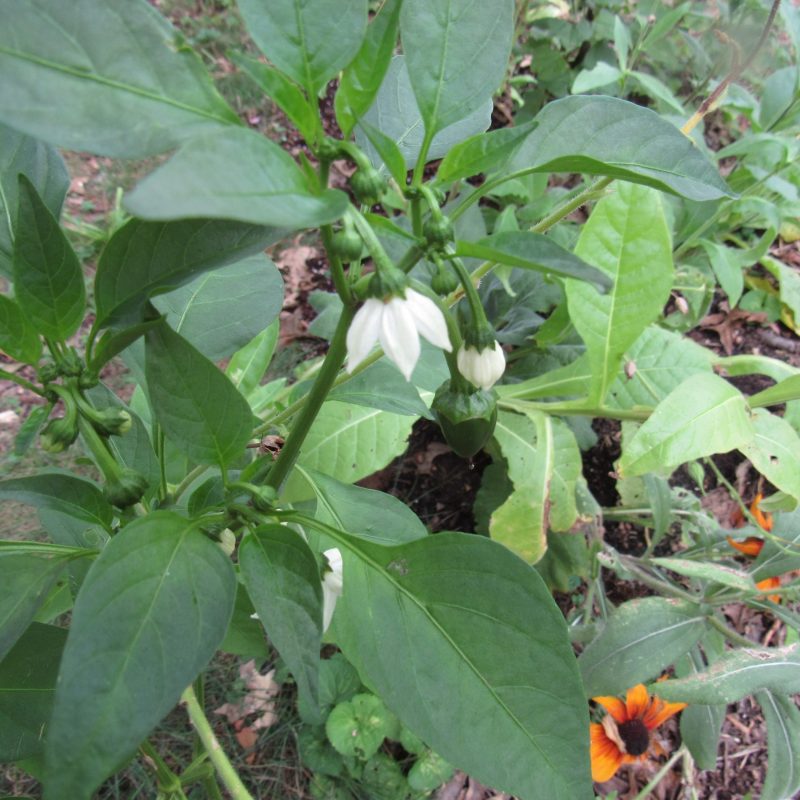
A few weeks ago, I posted a pic of my tiny poblano harvest. But now the plant has taken off in a flower-making frenzy, and I have several new peppers coming along.


Photo of morning glory flower

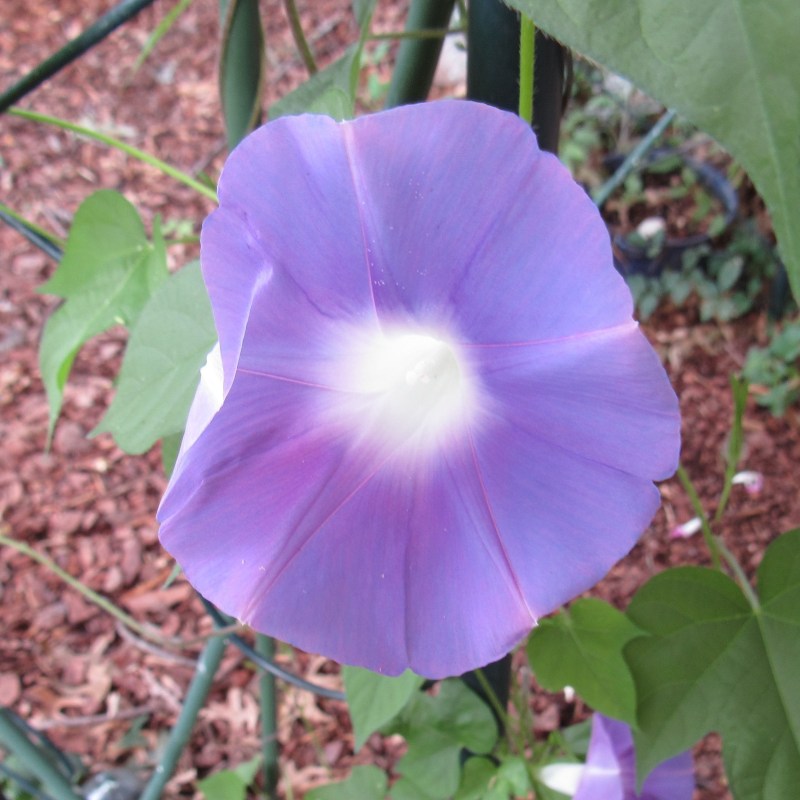
My morning glory, blooming. The color is luck of the draw, since I bought assorted seeds. You can see here the paper-thin petals and the ethereal quality of light shining through the center.


Photo of Liriope flower

What the flower of the liriope plant, a groundcover, looks like in close-up.


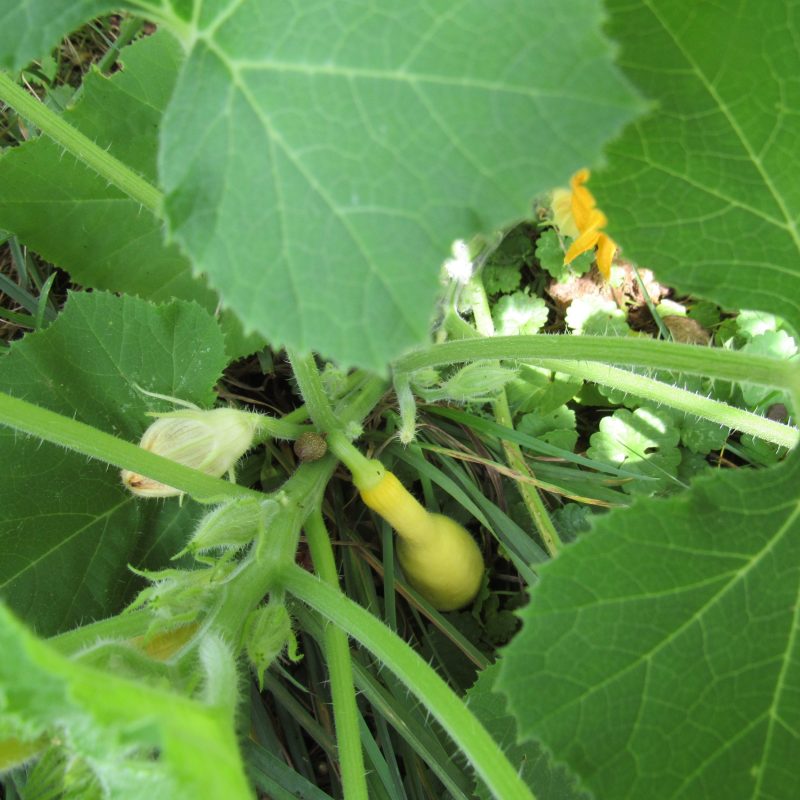
Photo of crookneck squash tiny fruit

Finally, this tiny squash, just starting when I photographed it, has grown in a week to almost full-size.


A Few Things of Interest

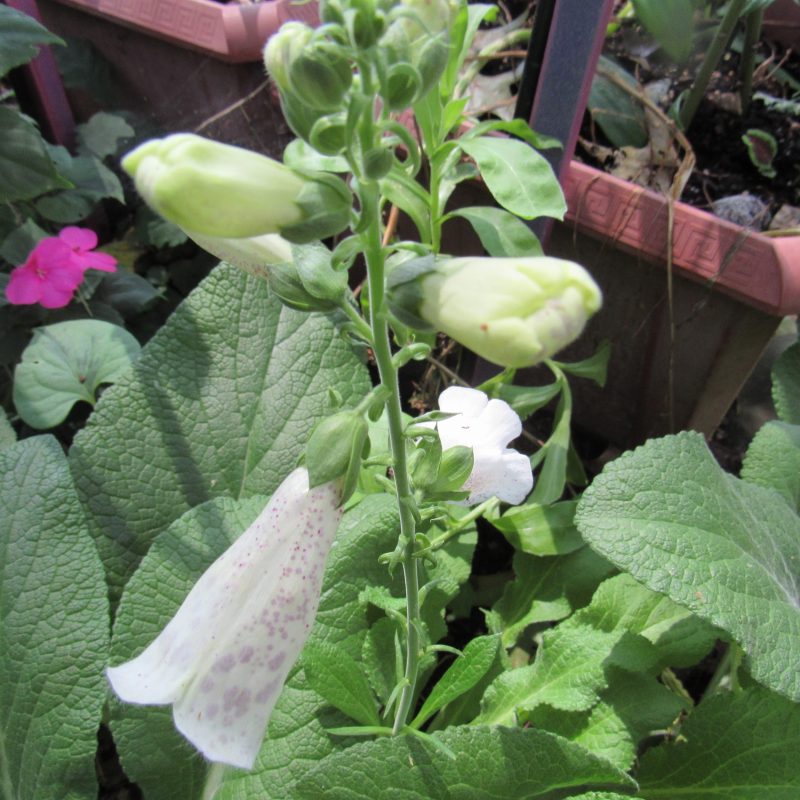
Photo of foxglove flowerstalk

At this time of year, you don’t mind seeing the garden chores diminish. There are plenty of other projects to do! One of this year’s foxgloves decided to shoot up its flower stalk after all, a pretty white with dark magenta spots.


Photo of foxglove blossom

Here’s what the flower looks like when I hold it upright for the camera.


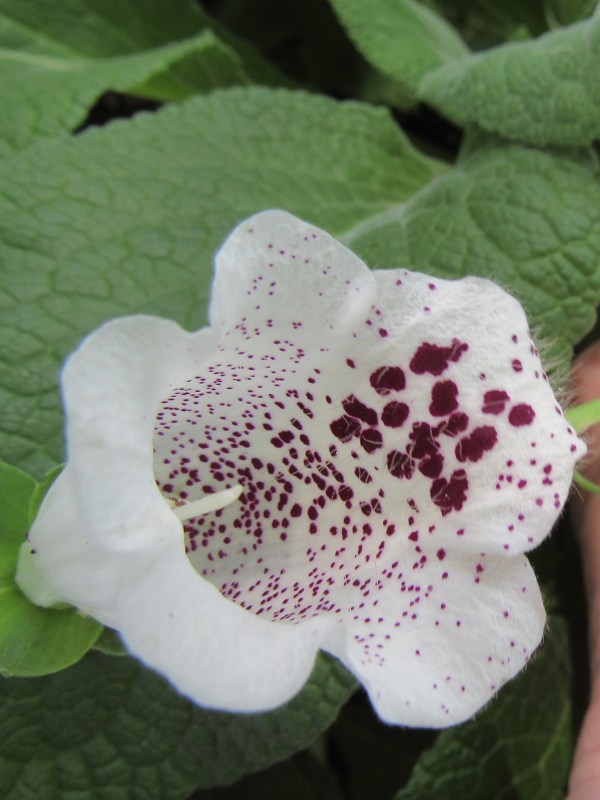
Photo of super closeup foxglove

And in super closeup, we learn something new. The bloom usually hangs down, so the bottom petal has a fringe of hairs, maybe for the pollinator to take hold of; then, there are hairs coming out of all the guide spots going up into the heart. A female ruby-throated hummingbird has been working on this one, but the hair arrangement is probably beneficial to small bees.


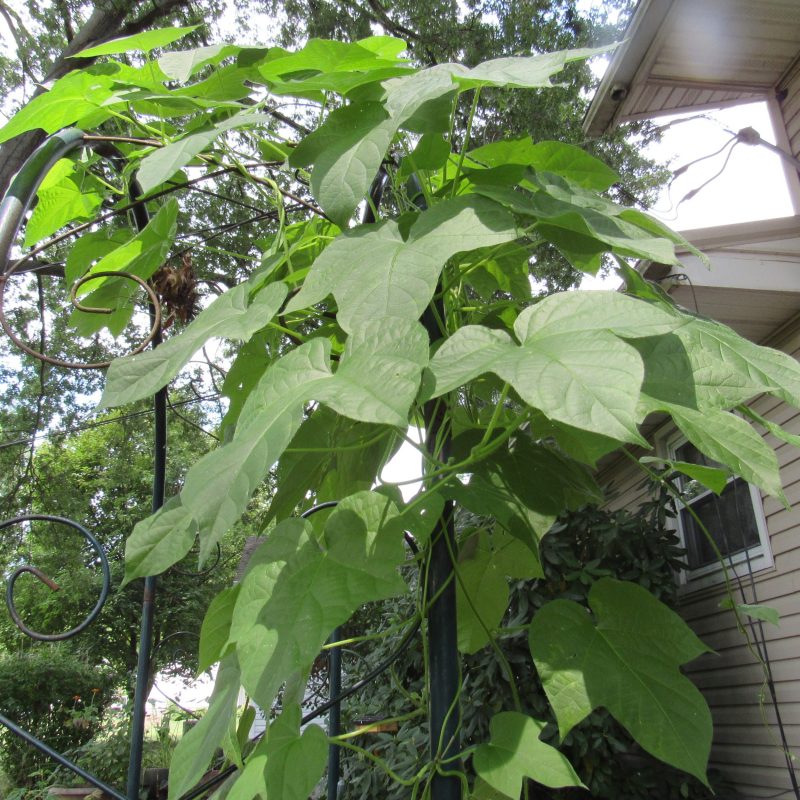
Photo of morning glory vine

As robust a climbing vine as you could ask for, but this morning glory has yet to make a bloom.


Photo of goldenrod and aster

Goldenrod, one of the wildflowers I let grow in the beds, because they bloom late in the season, along with the wild aster in the background, so they do the local insect and bird populations some good.


Photo of elephant ear leaf

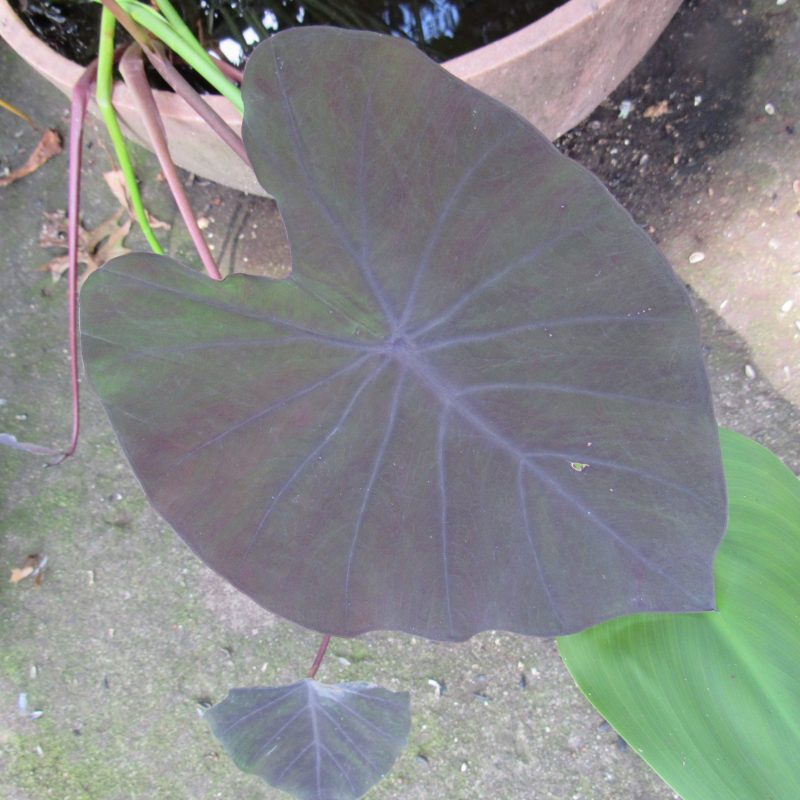
Pretty veining in dusty purple, with background shading of burgundy and dark green, on this elephant ear leaf.


Photo of spotted bird feather

Last week, I had a bat in the garage, which fortunately scared my cats, so they didn’t try to hunt it. I left the door open, and it went away. For the last two nights, something has been giving off rasping shrieks in my yard (unless its prey has been giving them off). Some bird with spotted feathers was made a meal of, but note, of the creature’s remnants, how the feather is translucent and the mulch shows through.


Mature Days of August

Three Poblano peppers (one already cooked with garlic and chicken breasts to make sandwich meat) are my harvest this year. That’s not so bad, because I never usually grow vegetables, thanks to the deer. I gained a handful of Pinto beans, to use for seed next spring—but that was from trying the experiment of sprouting those things I could scavenge from my cabinets. And, as to the experiment, it’s a kind of fun apocalyptic exercise, where you challenge yourself to make a food garden out of whatever you have in your house right now. I learned that peanuts from bird seed sprout easily, but aren’t easy to keep going outdoors, where everything wants to eat them. Later, I bought one tomato plant, but it’s not getting enough sun in its safe location, and hasn’t made a flower…probably too late for fruit to mature at this date. Also, I have a single bell pepper that hasn’t disappeared yet; but it hasn’t got bigger than a pea yet, either.


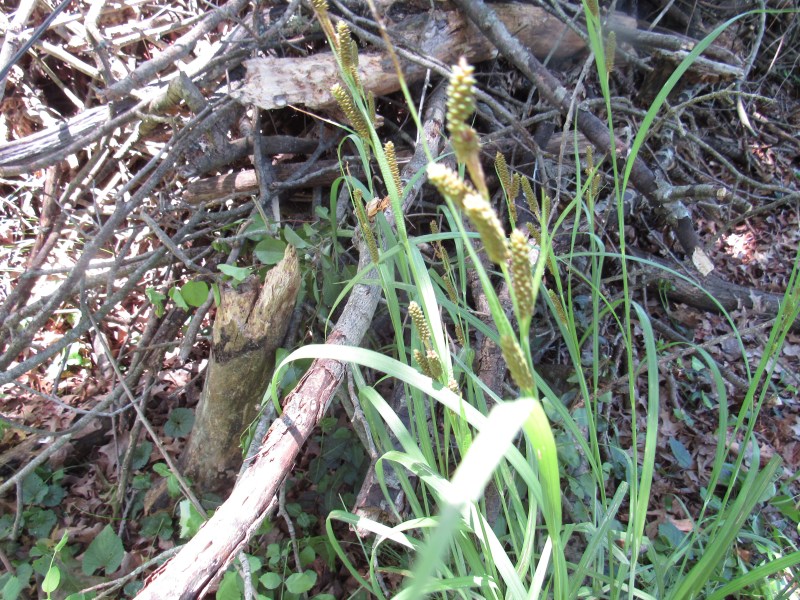
This is an earlier picture of a curious wild grass, with seed heads like wheat. Prairie grasses do a great job conditioning the soil, their habit being to grow from a clump one year, then die at the center and spread out in a circle. The dead roots decompose back into the earth, acting both as fertilizer and having a spongelike effect of absorbing water. This is why the prairie soil of pioneer times was described as rich and black, before overuse degraded it. If you start a bed with prairie grasses, you can easily mow and layer on cardboard or paper, covered with bought topsoil or compost, which you can plant in directly (the roots will make a way)…or just hold it down with leaves, if you want to wait a season and rake off the dead stuff under the cardboard.


Another earlier picture of a pretty little red-capped mushroom.


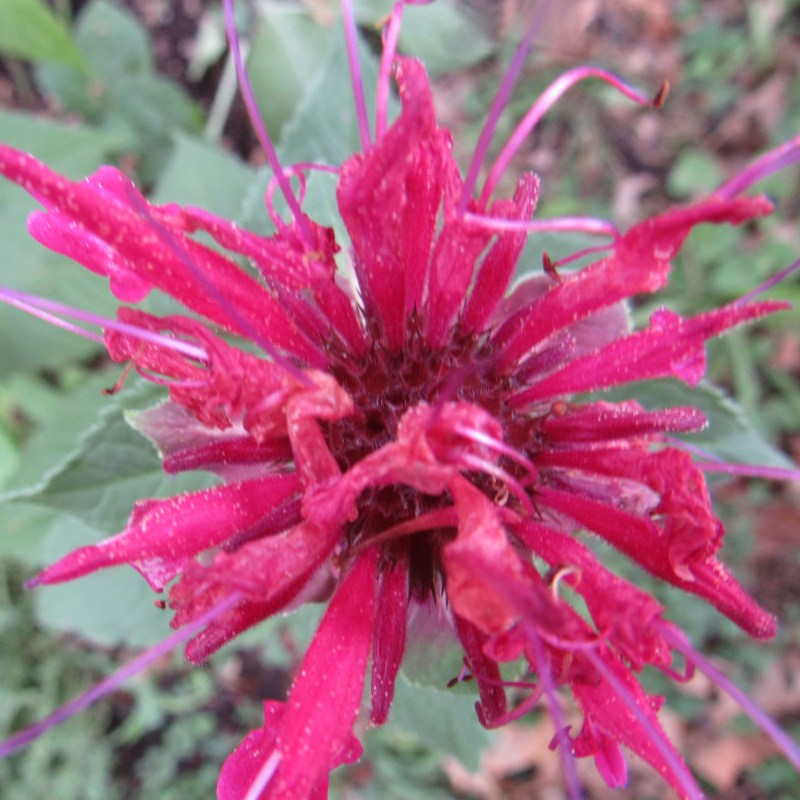
Here’s what closeup photography can teach. I think these are some kind of very tiny insect on this monarda bloom. They can’t be seen with the eye.


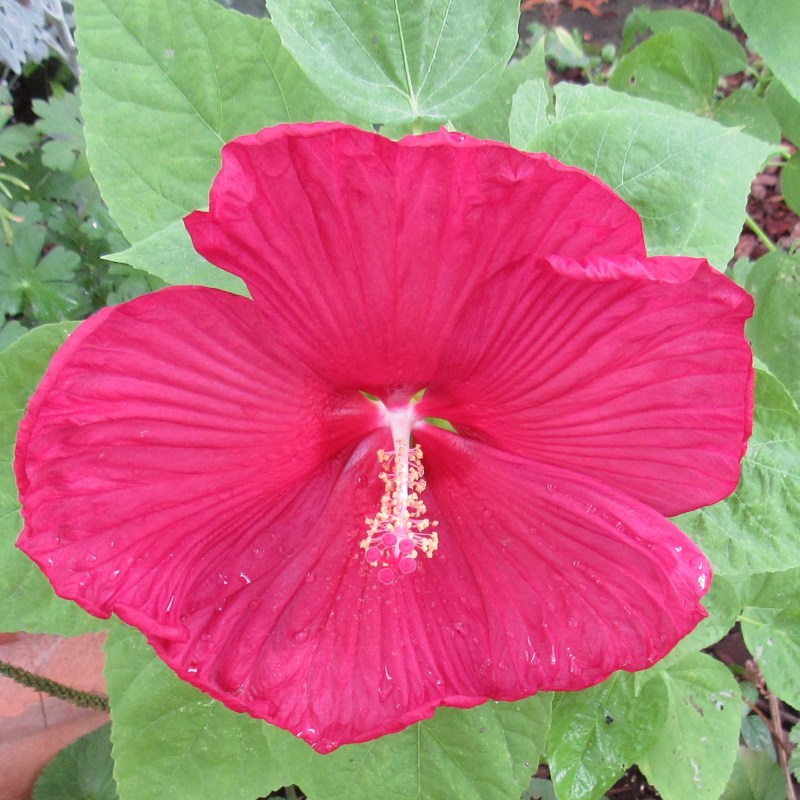
A hibiscus I grew from seed this year. I never noticed, somehow, from growing them in the past, that the flowers last only a day.


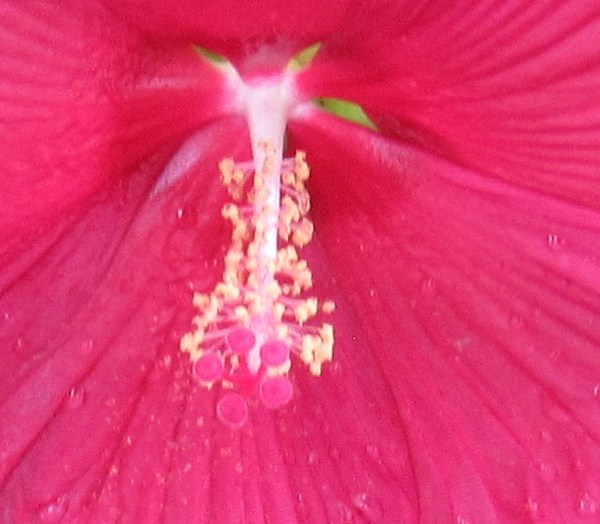
And here’s the full Georgia O’Keeffe, showing how the little round female parts (I believe) have a ring of hairs that seems to reflect a glow.


Close Views in the Garden

Photo of lily pads in bog tub

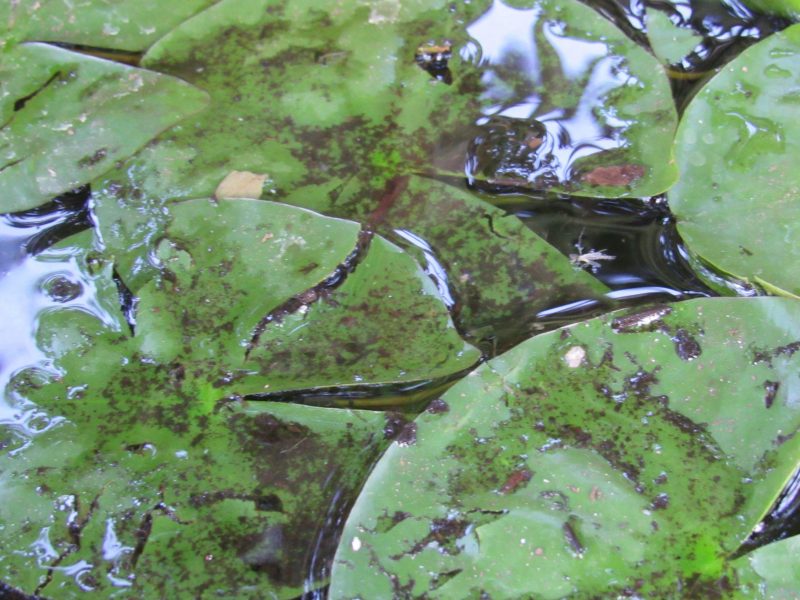
Lily pads in one of my bog tubs. Being stagnant, the tubs have no frogs or fish. I saw a song sparrow plucking out mosquito larvae, a nice natural control for them. The lily pads themselves, when they’ve covered the surface will also keep mosquitoes off.


Photo of black-eyed susans

Black-Eyed Susans and a couple of tiny insects.


Photo of centaurea bloom

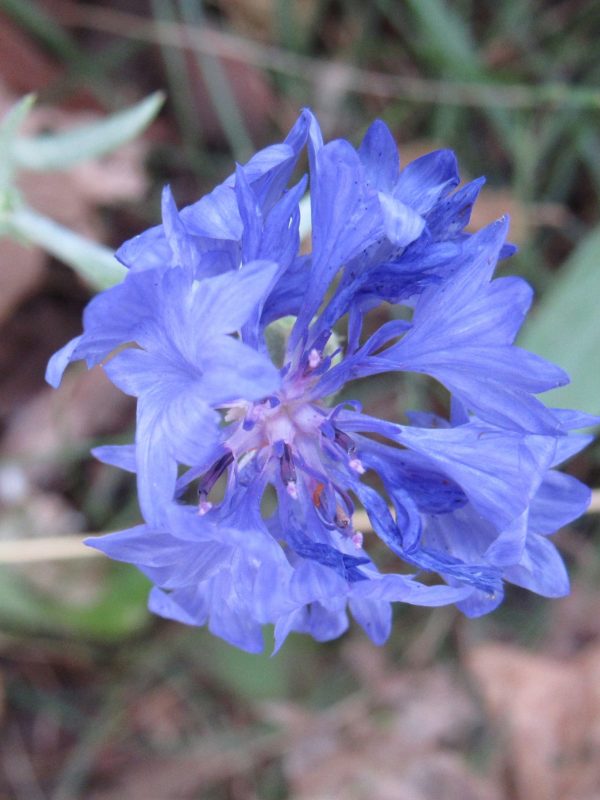
A centaurea in detail, made up of these lily-shaped florets—while the reproductive parts can be seen at the center, so the flower-like shapes are really just a petal formation.


Photo of small juniper

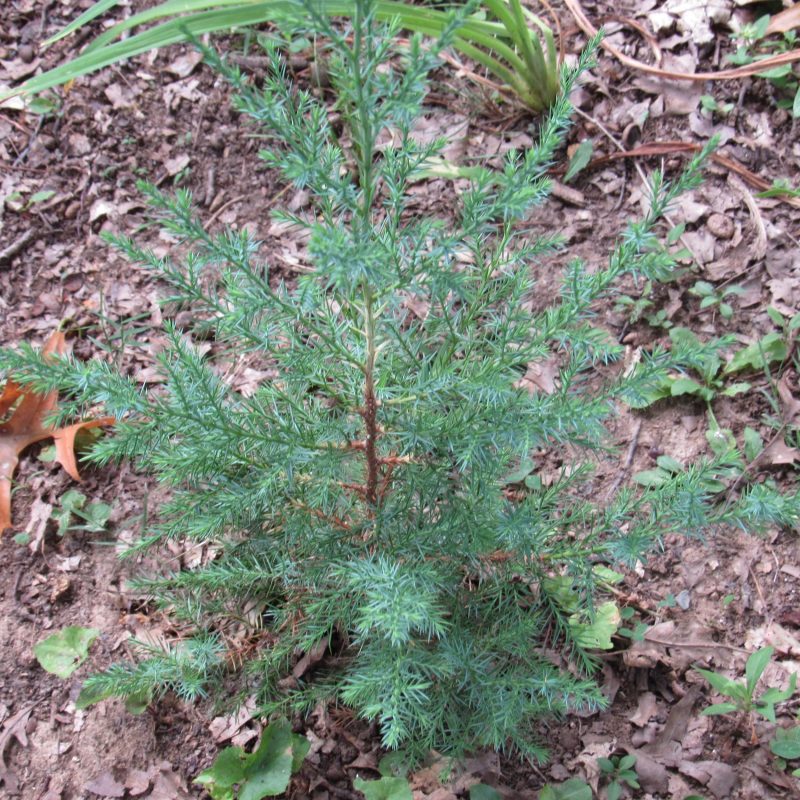
A juniper bush that was brought by the birds. I have several of these sprouted up, and I’m allowing some to grow (this one is about a foot tall) because for habitat my yard is a little short on evergreens.


Photo of weed with tiny flowers

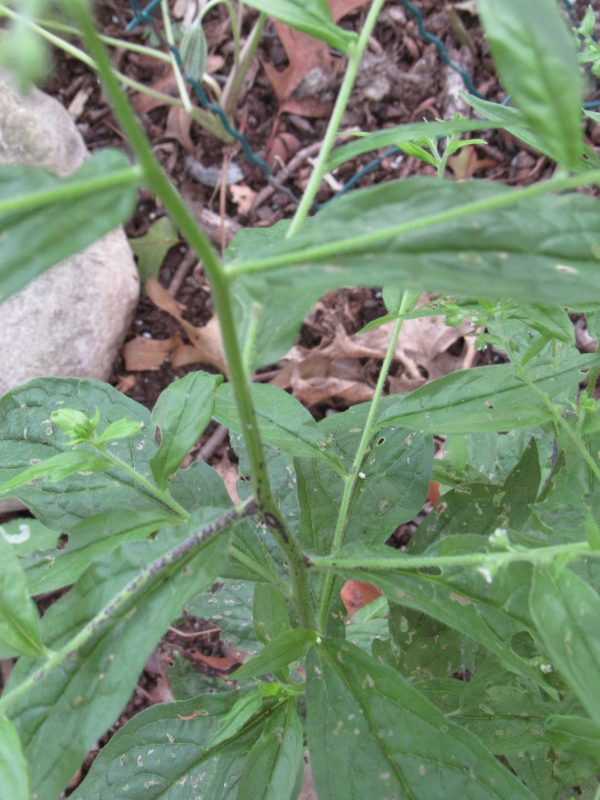
This weed seems to fool me every year. The leaves look like coneflower, or some other desirable perennial, but when it matures, it puts out clusters of stems sporting the tiniest white flowers. I think it’s really a sort of bur.


Photo of bumblebee on tithonia flower

A smallish bumblebee that seems the most common type in my yard.


Photo of Spicebush Swallowtail in motion

A Spicebush Swallowtail in motion.


Photo of Spicebush Swallowtail wing detail

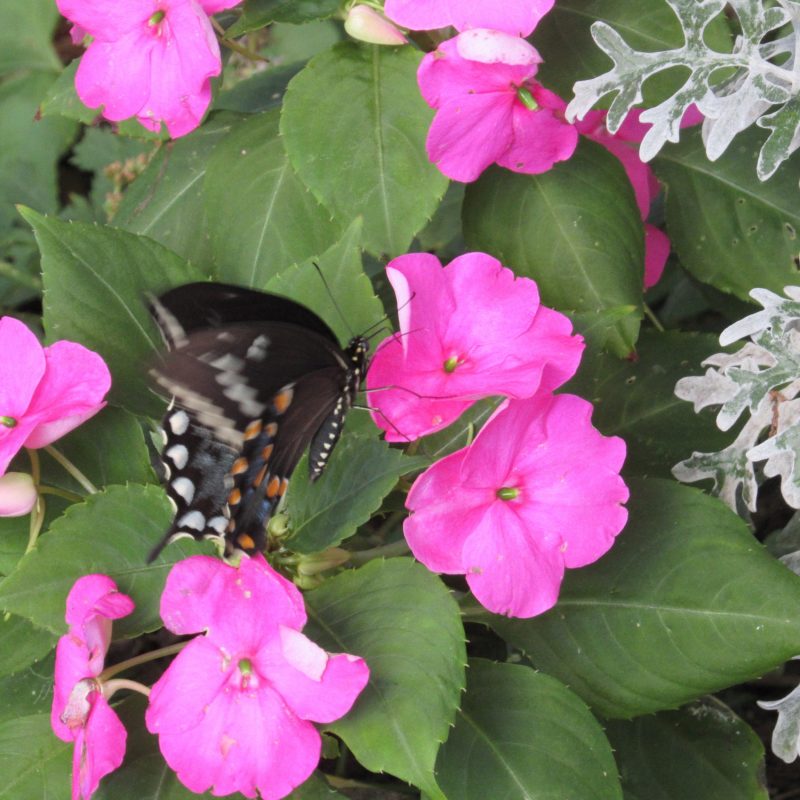
A crispier view of the wing pattern. Some members of this species don’t seem to have the double row of white dots on the upper wings, but I don’t know if that’s a gender distinction. Notice the striking mother-of-pearl coloration on the lower wings.


Pests and Volunteers

Photo of skeletonized hollyhock leaf

Hollyhocks are typically attacked by the tiny larva of some kind of insect, which skeletonizes the lower leaves, as in this fairly elegant achievement above. Wherever I’ve grown hollyhock, I’ve always seen this pest develop. My gardening practice is radical organic, meaning that in almost every case I don’t interfere at all with bugs and diseases. I let plants employ their own defenses, or otherwise replace them with ones more suited to the immediate challenges. I use only products that are truly harmless—and not all labeled organic are, such as Bacillus thuringiensis. This bacteria may occur naturally in the environment, but never in the quantities used to “organically” control pests. It stands to reason we can’t ramp up one factor in the equation of the biome, without having an altering effect on other factors.

So I allow these creatures to eat my hollyhock leaves, and the hollyhocks (being at the best of times not the tidiest-looking plants) always come back and flower.
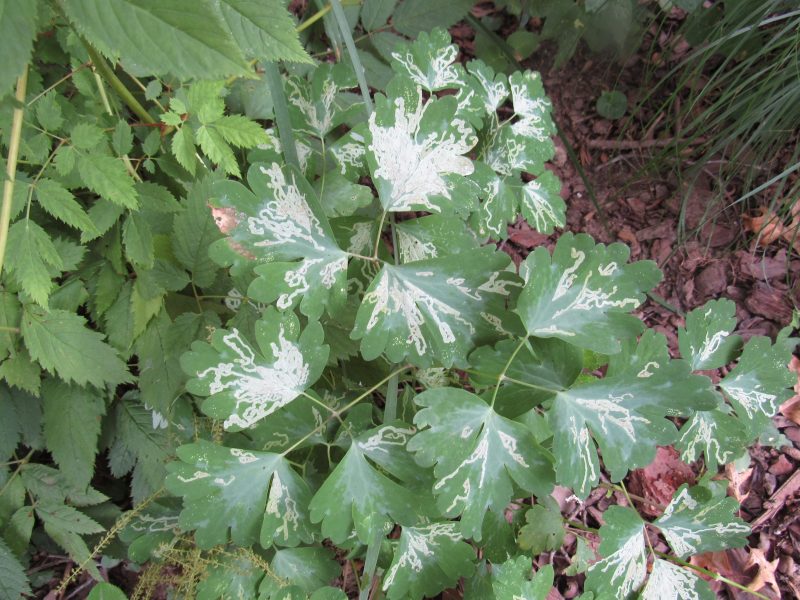
Photo of columbine leaf miner damage

And here is the work of the columbine leaf miner, a bug I have never tried to get rid of. Individual columbines don’t live for many years. Their garden value is in their ready self-sowing. The leaf miner tends to attack after the ones that are mature enough to bloom have flowered and set seed.
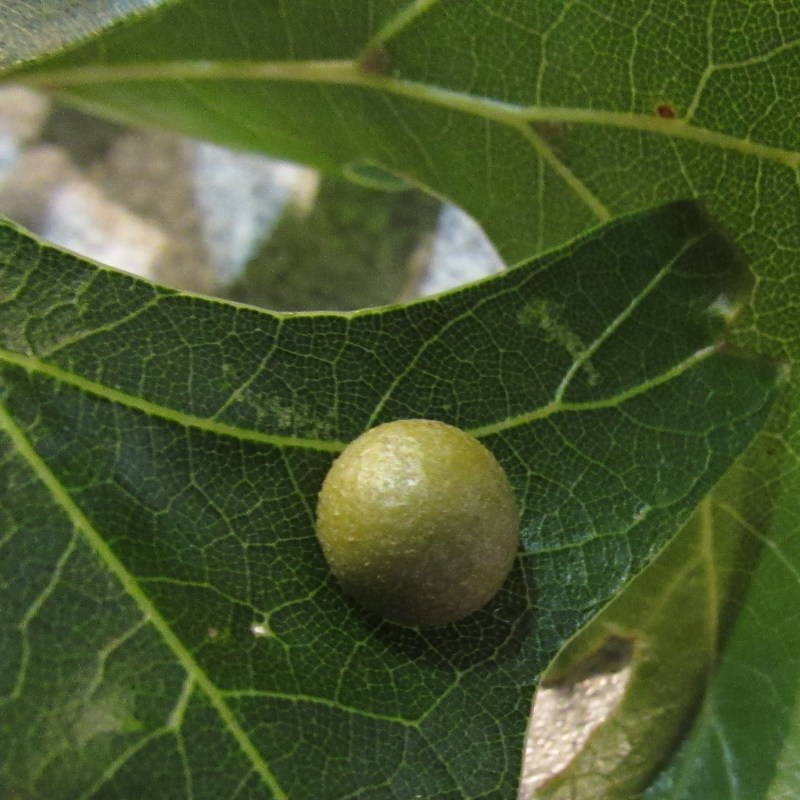
Photo of oak leaf gall

Since I always include a gall, if I find one to photograph, here is a forming oak apple gall, a type caused by various tiny wasps. The heat bubble we’re under in southeastern Ohio is, I suspect, the cause of a healthy branch popping off one of my trees…
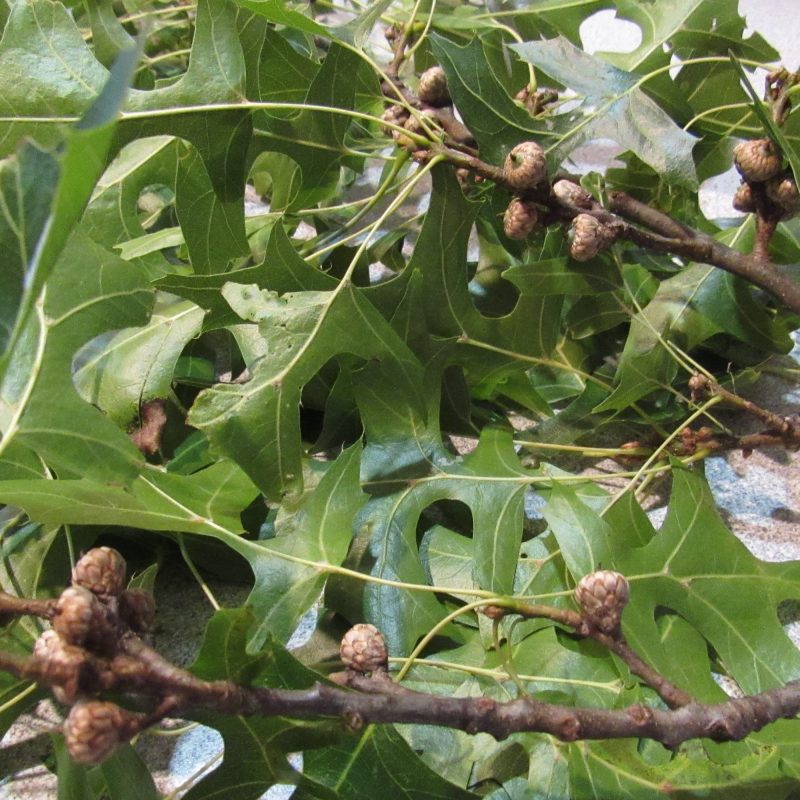
Photo of tiny acorns

From the same branch, here are tiny acorns getting started. They cluster on the twigs just below the new leaves, and if the weather is hot and dry, several may drop off before the crop matures in the fall.

Photo of clematis vine

My clematis this year was suffering fungus, that disease called clematis wilt. You can see some malformed leaves that look like a willow tree’s, in the lower left corner, and some of the dried and shriveled ones. I put bone meal in the dirt around the roots, and have been watering steadily. So far, the clematis seems to be recovering. My theory is that bone meal changes the soil pH, and stops the fungus spreading.
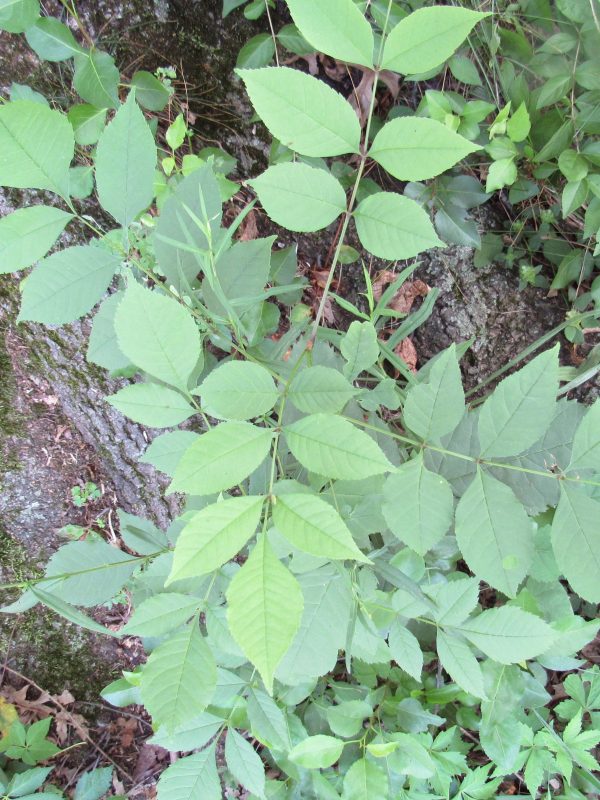
Photo of hickory tree

I like to inventory those plants that appear voluntarily in my yard. It’s a way of measuring environmental health, and diversity of local plant populations. This seedling looks to be a mockernut hickory, which has a small nut and may have been brought by the deer who like also to browse its new leaves.

Photo of laurel bush

This one looks to be a mountain laurel. [It later turned out to be an invasive burning bush euonymus.] 
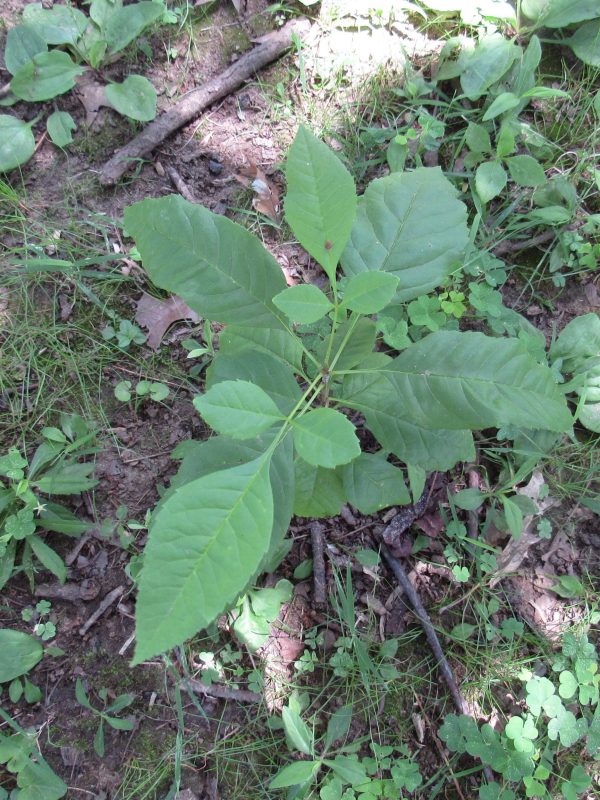
Photo of hazelnut

This is a bladdernut, an understory tree/shrub that is one of the few, in fact, with only three leaflets on its compound leaf. The bladdernut’s Latin name is Staphylea trifolia. [This one turned out to be a shagbark hickory. But, getting things wrong is a good incentive for becoming a better researcher.]

Photo of pretty coleus

An especially nice coleus grown from seed, with its yellow freckles and almost red heart. So far it hasn’t sent up a flower shoot, so maybe I’ll only get to propagate it if I can get cuttings to survive the winter.
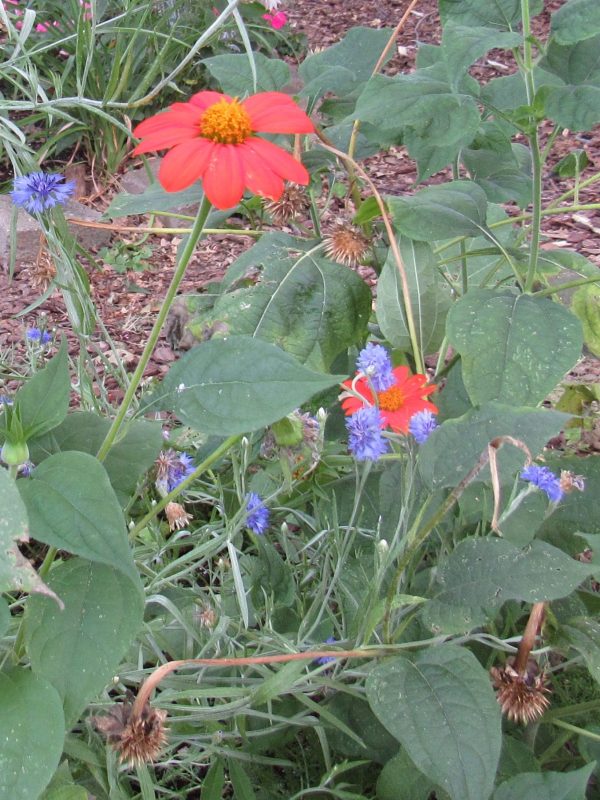
Photo of tithonia and blue centaurea

Finally, a couple of nice combos in annuals that should give color through most of the summer. Orange tithonia and bright blue centaurea, above.
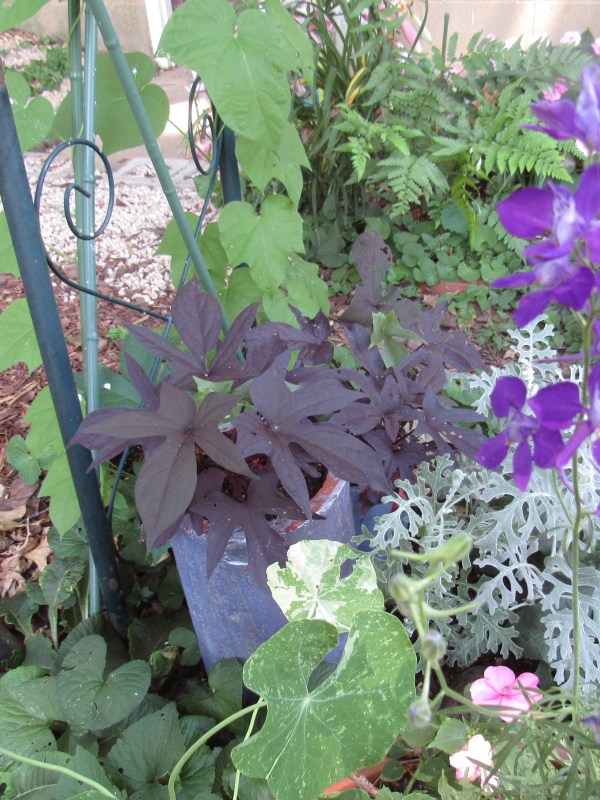
Photo of dark-leaved sweet potato vine and dusty miller

A shady group with dark-leaved sweet potato vine and silver dusty miller. (Also morning glory, larkspur, and variegated nasturtium.)