Pushing Little Things Ahead


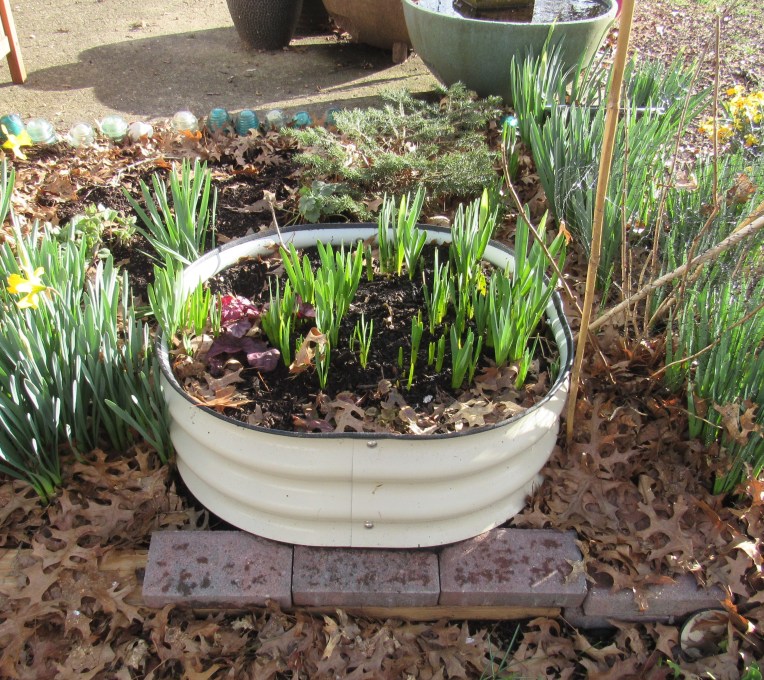
This picture is a few weeks old now. I’ve been meaning to get some garden chat on the blog, but keep having so many other tasks. I love these metal planters. The configuration above measures about a two-foot circle. I’ve been wondering for a while why you can’t buy pots open at the bottom, so you can plant shrubs and dwarf trees that need to root into the ground, but need the protection of a planter. Raised beds also serve a certain aesthetic; plus they have a habitat function, a topic I’ll have more on later. Anyway, the aluminized steel planters are open, easy to put together, fun to choose colors, etc. I thought one would give definition to this bed, as well as suppressing my non-blooming daffodils. (I actually had 6 blooms, but tons more foliage that I just snipped away today, since I don’t really want these daffs.) I’ve told the story before of how they’re so deeply buried a shovel blade’s depth can’t reach the bulbs. I can’t dig them without destroying my other plantings. But…

As you can see, they grew all the way through a foot of dirt. Now they’re even deeper! (I’ll just have to kill them slowly.)
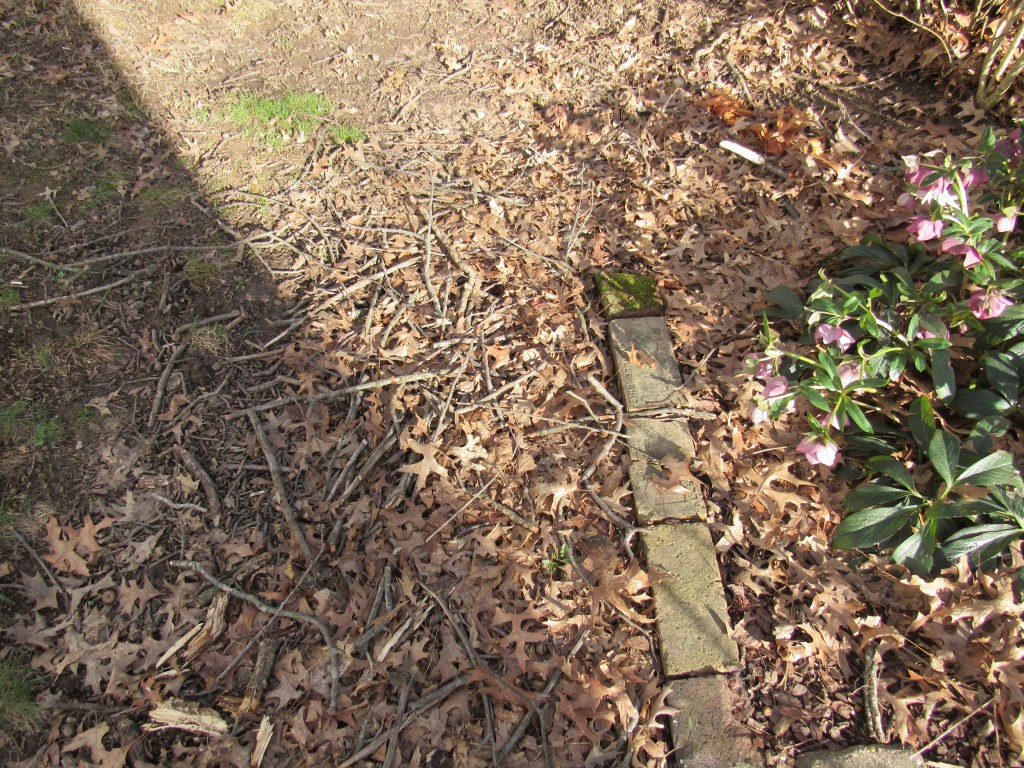


Here’s an area where every heavy rain washes the ground bare. You can see plain mud at the top of the image. When I gather sticks, I break them up and strew them over leaves and garden cuttings. It makes a good free path cover, and stops the washing. But I’ve got a ways to go to stabilize this shallow ditch between my property and the neighbor’s.
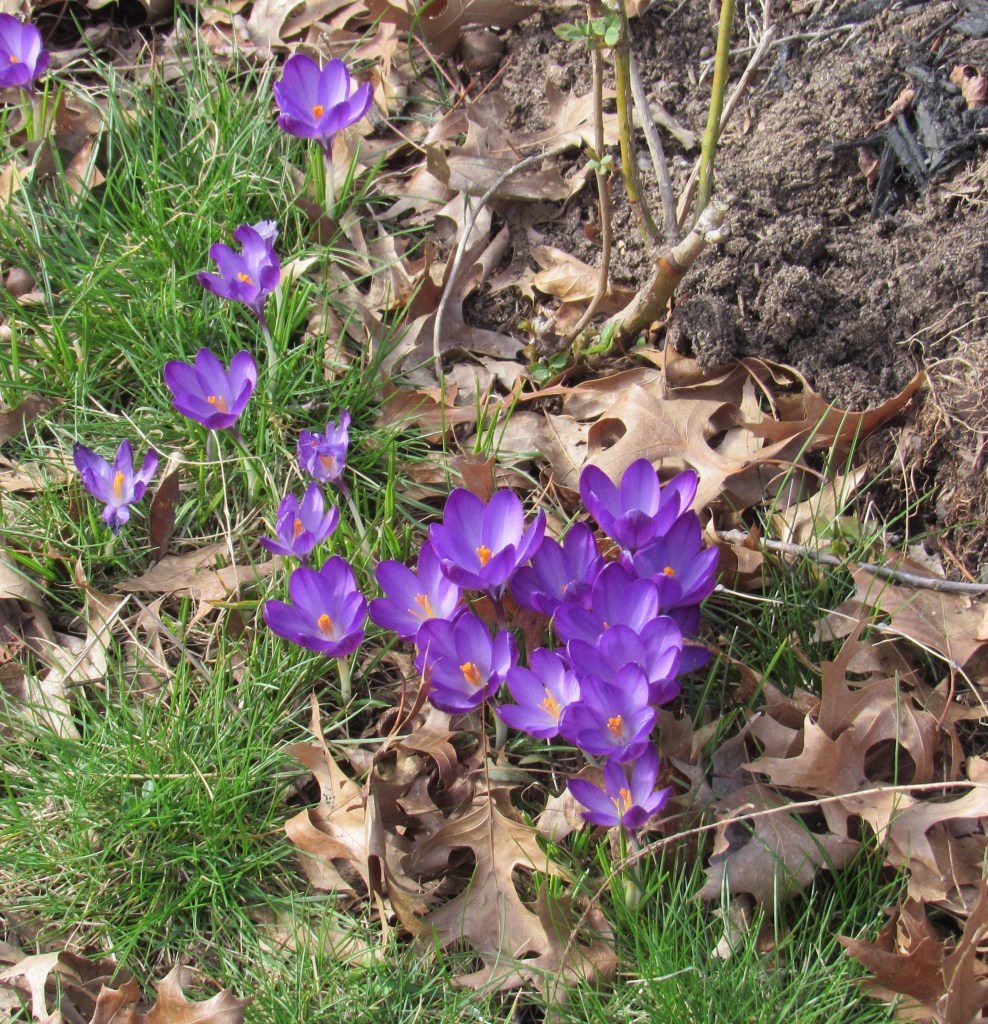


When I was shopping for bulbs last summer, I felt kind of unenthused about crocuses. I bought a few species ones, that I wrote about planting under store bought soil. But the usual purple, white, and yellow just wasn’t inspiring… Until this spring, when I saw how great these clusters of purple were looking. The daffodils (the ones I have where I want them) have been fantastic this year, too. My next orders will be mostly daffodils and crocus.

Though, next spring, I may get inspired by my alliums and “uncommon” bulbs, and decide I need a lot more of those.
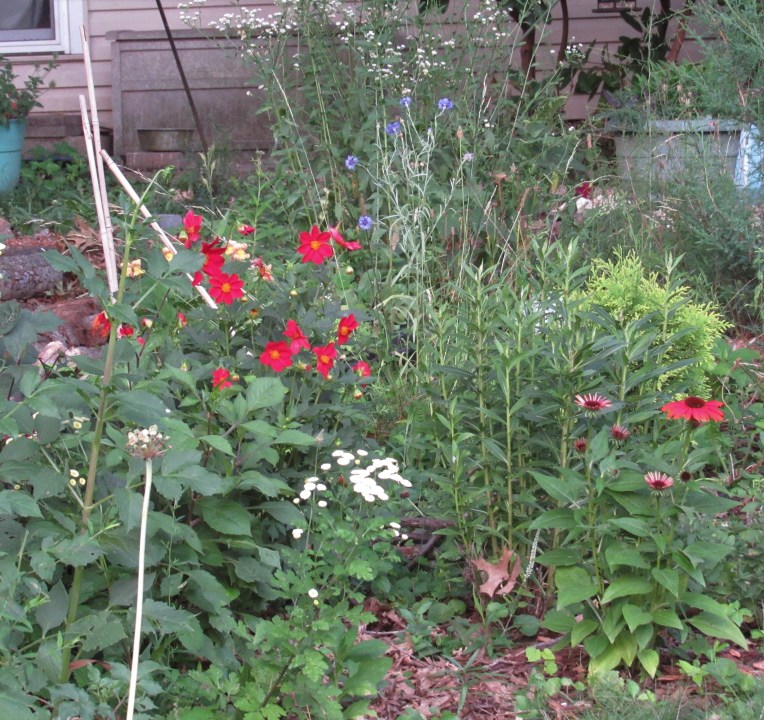
   

Dahlias, purple velvet vine, colocasia

From mid-summer of this year, a meadowy mix of cultivated and wild flowers. The erigeron in the back is a volunteer. I don’t know what species, but one that puts out dozens of small white flowers, wafts in the breezes, and grows two to three feet tall. Then I have red dahlias, blue centaurea, light-yellow feverfew, rosy-orange coneflower, and the yellow-tipped foliage of Golden Globe arborvitae. 

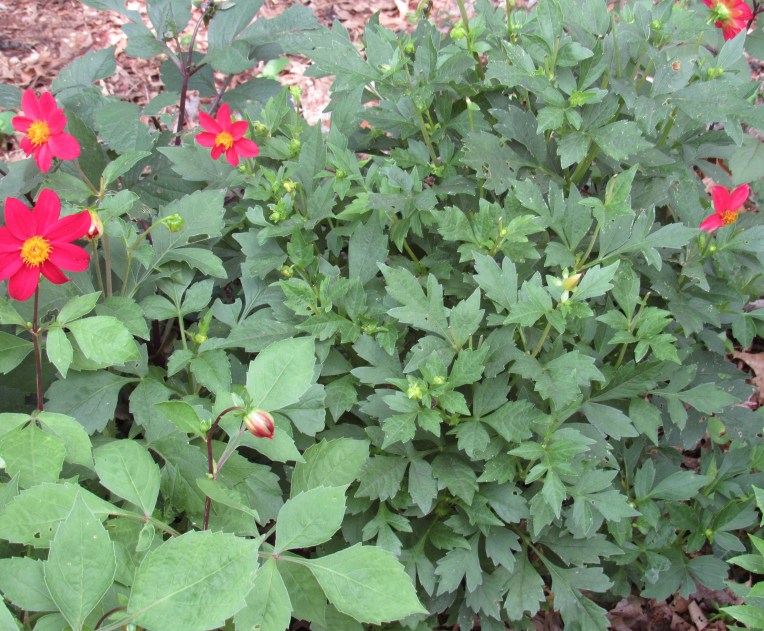
Here are the red dahlias up close. They’re the open flowered, pollinator-friendly kind, and as you can see, the one on the right thinks it’s a mum. Lots of small leaves, lots of flower buds. But they still bloom dahlia-style, in succession—so for all the buds, it can’t quite achieve the loaded look. These have a sheltered spot along the path, and survived from last winter.


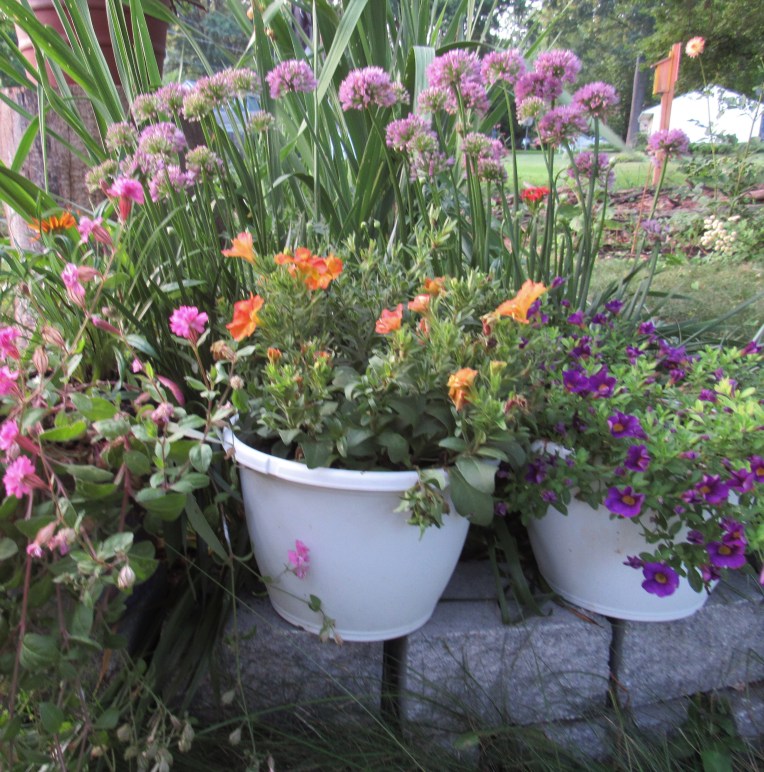
Here are two hanging baskets I got for five dollars each. I took the hanging part off and perched them on this little wall, where until fall arrived and the deer ate them (two calibrachoas in this color-wheel perfect combo of orange and purple), they bloomed gorgeously.

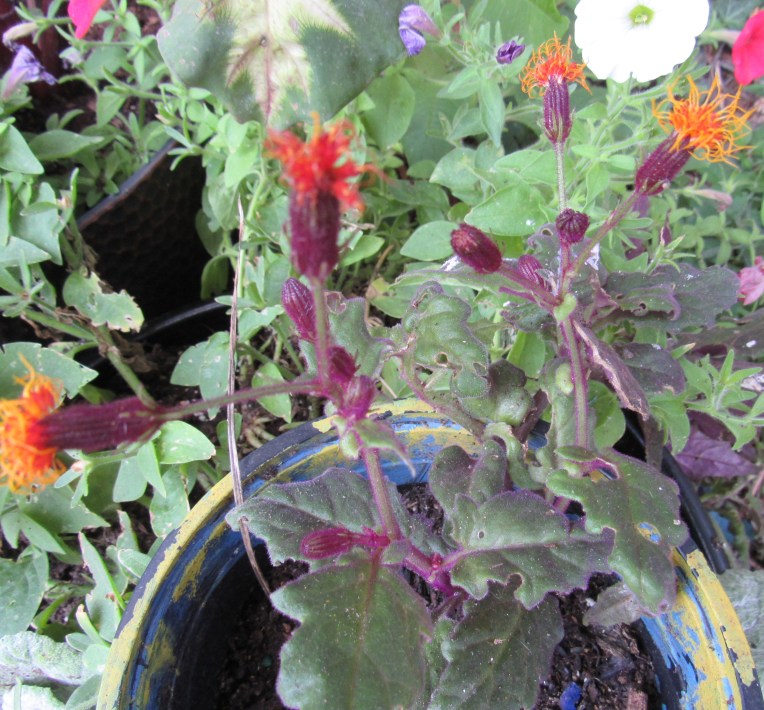
Purple velvet vine looks exotic, and is usually sold as a houseplant. Mine got an intractable case of mealy bug, so I put it outside. Here you see its fantastic little flowers. When they’re finished, they turn into white puffs, like asters. And that’s because this fancy plant is a member of the aster family…who would guess? I brought it indoors for winter, found it still had mealy bug (though it seems not much bothered). I put it in a hanging basket before an isolated window in my garage. If it survives, I’ll let it bloom outdoors next summer.

I used a Waikiki and a black-leaved colocasia together in one large pot. (With a few wave petunias.) I think next year I’ll get a third colocasia type, and have three sets of contrasting leaves. I’m wintering these over against the garage wall, and I’ll cover the pot in bubble wrap. That’s how I keep pitcher plants in winter, and how I kept the black colocasia last year. Colocasias can thrive in pots in the house, but you need a really big space for them. For me, keeping tender tubers, corms, etc., in lightly damp sand, or whatever is recommended, just never works. Letting the plants go dormant in an area that won’t freeze is better. 

New Planters


This area, coming downhill along a three-foot drop from the highest part of the yard to the lowest, has not been satisfactory. It’s all under oak shade, nicely dappled, but the roots allow almost nothing to grow naturally. The principle for planting under trees is build up, don’t dig down. One way is to construct three-quarter boxes from logs or stones, angled to the slope, and fill them with soil, then add a small shrub or perennial, and let it root in. I’ve made some pleasant areas with mostly shade plants, but as you can see middle left, a sunny section too, of sedum and hen and chicks.

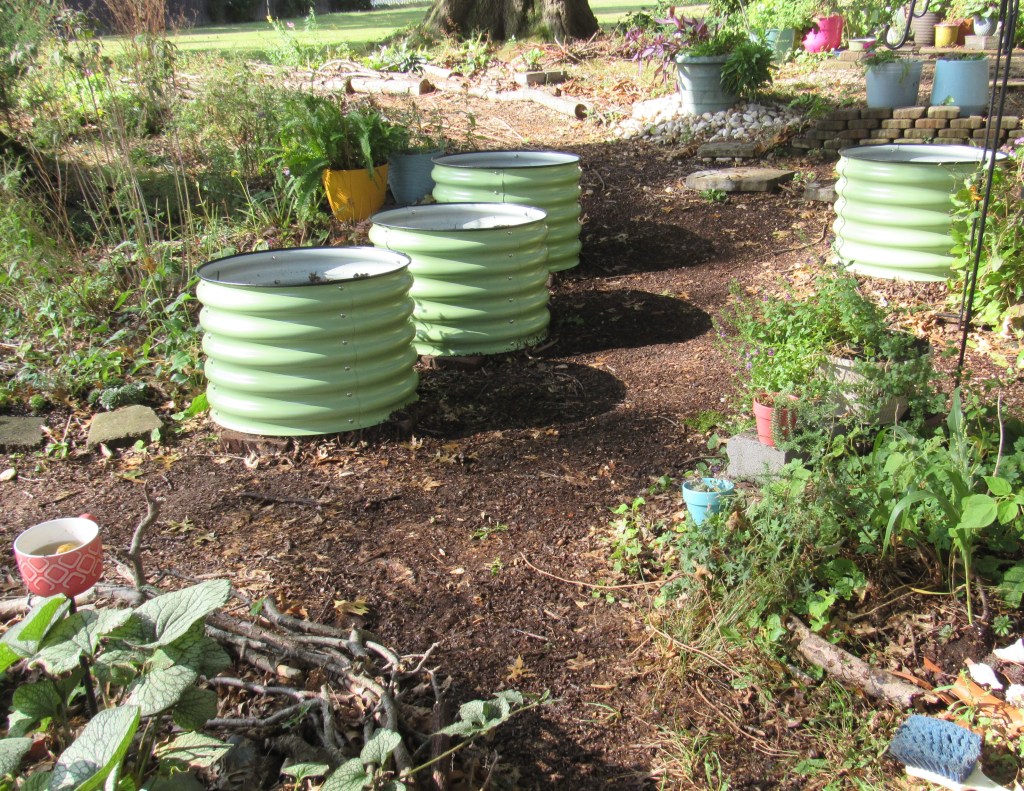
My pathway here has been both devoid of growing things and over-large, spanning about five feet. A path should feel cozy. I chose these round planters to make a wall, in effect, that narrows the space, with one planter on the other side for an entry. I’ve filled them with leaf mould, and one bag of topsoil to finish. They’ll settle through fall, winter, and early spring, and should need another couple of bags each to top them off for planting. My plan is to do what I’ve know I should, and haven’t been serious about…

When I plant shop, I buy six different types of perennials, where I ought to buy six of one type, and divide them into two clumps of three. So I’m going to have heucheras, astilbes, and a single Wiggles and Squiggles hosta for each planter, and have this repeat down the hill, in the style of a true border. (I do have a dwarf Japanese maple in mind for one of the planters.)

End of Spring Bulb Season

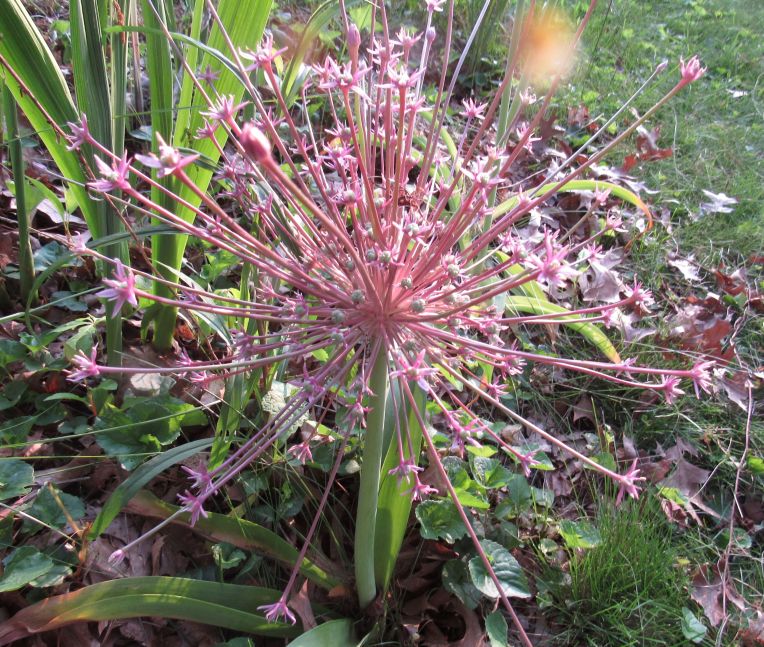
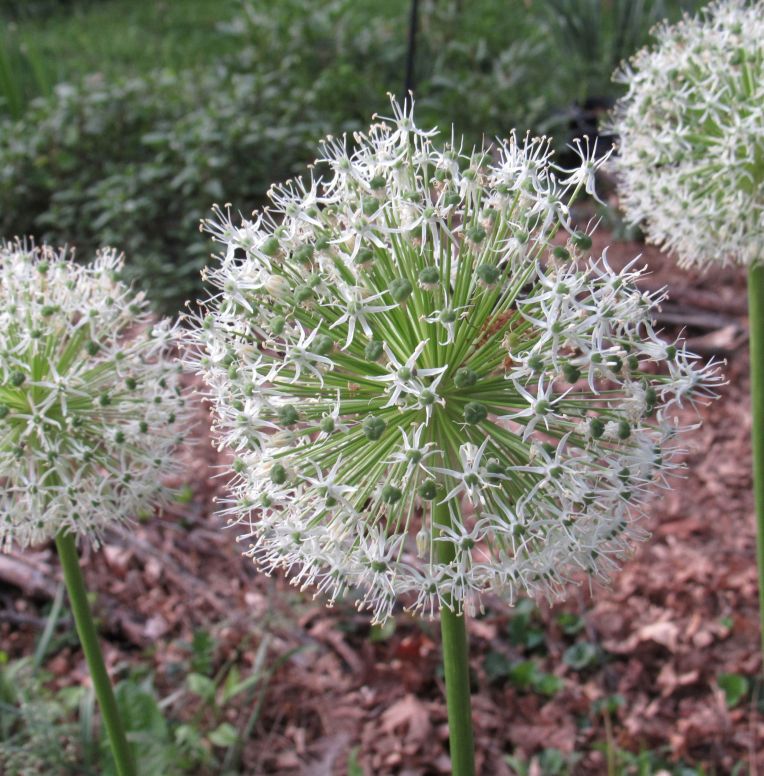
Photo of flowerhead of Allium Schubertii

The bulbs from my fall plantings are about finished for the year, so it’s time to review their performance. I first heard of the fantastic Allium schubertii (above) from a P. Allen Smith YouTube video. What this picture doesn’t capture is that the flower is a full foot wide. I ordered three, but only one bloomed. Still, I’m willing to order a few more this fall. Another good surprise for huge size was the daffodil British Gamble.

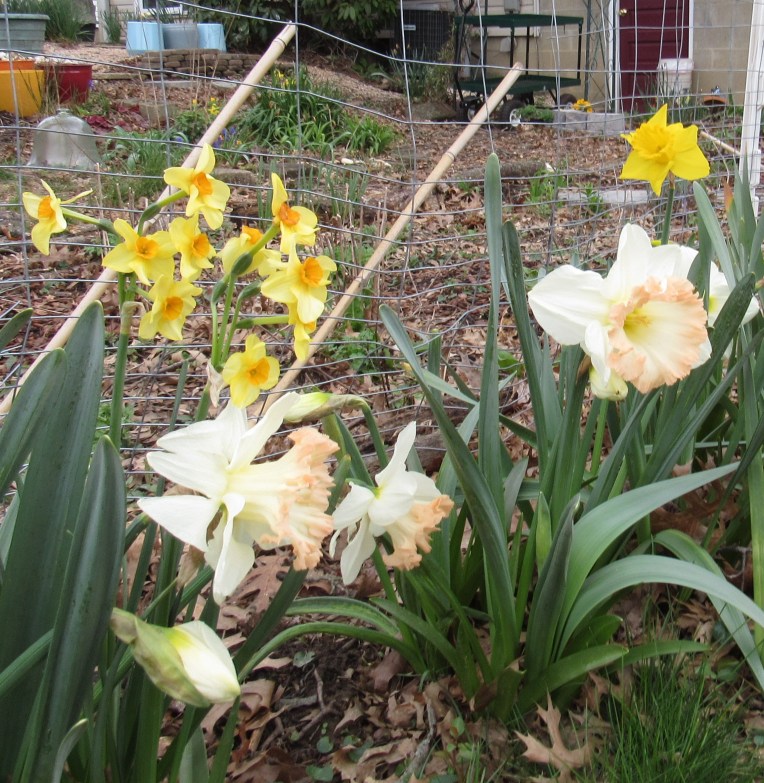
Photo of daffodil British Gamble

The camera distorts the view, but that’s a full-sized Dutch Master behind, upper right. British Gamble has whitish petals with a peach cup. 

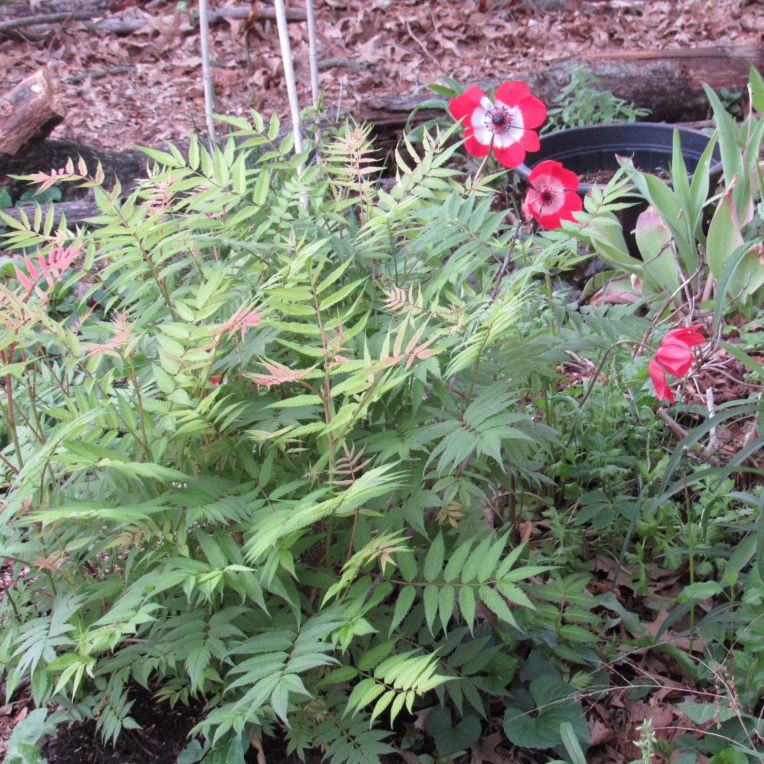
Photo of red poppy anemone and sorbaria


I’ve mentioned these red poppy anemones, meant to be hardy in zone 7 or 8—but which survived the bomb cyclone of December 2022. (That’s a sorbaria in front; the anemones have ferny leaves.) They started blooming in April, and a few are still blooming in June. The hugel border along my path must be creating a microclimate that’s a couple of zones warmer than 6b. All the dahlias I planted in this area have also come back. 


Photo of Everest Allium

I like all types of alliums, and wherever a gardener has deer issues, alliums are a great staple among bulbs. These Mount Everest alliums are the globe type, white and extra-tall. And surprisingly, they have a pretty scent, floral, not oniony. 

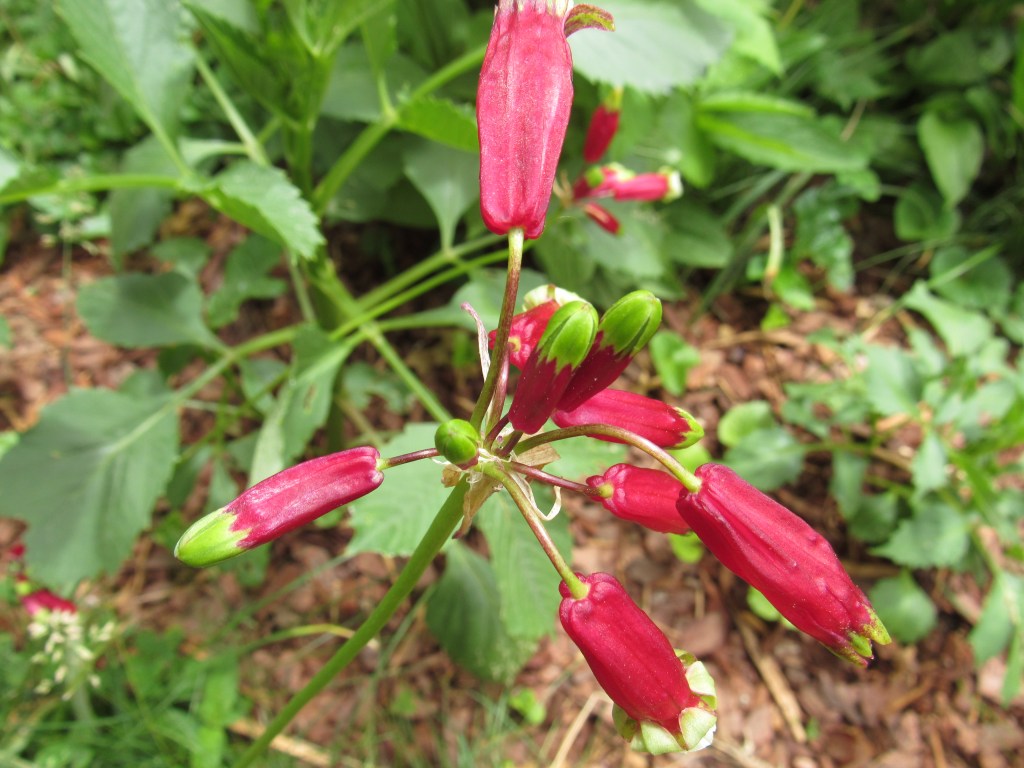
This is Brodiaea laxa coccinea. The flowers are about an inch and a half long, a lot like firecracker cuphea, but larger and a truer red. When you build up a good stretch of these, they’re wonderful, and also a bulb that blooms in June.

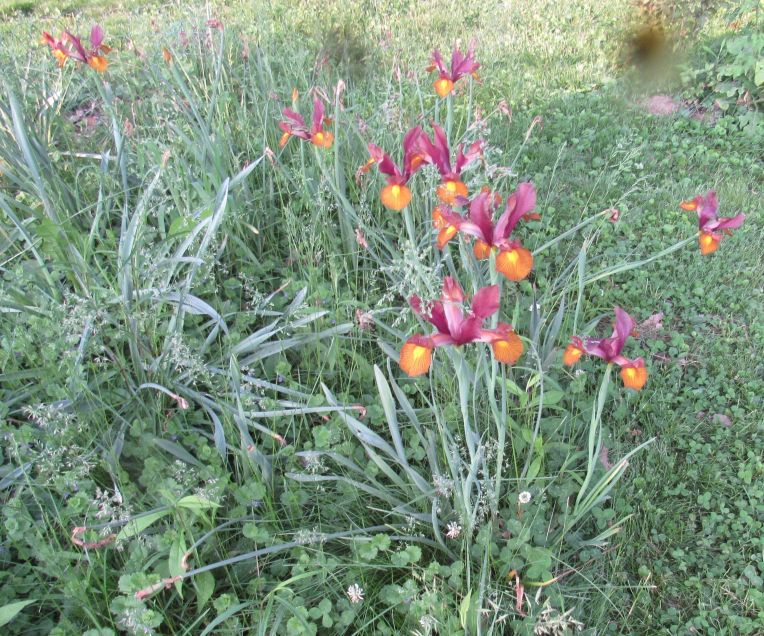
Photo of Dutch iris growing among grass

Dutch iris at one time were the “free gift” you’d get when you ordered classic bulbs: tulips, daffodils, hyacinths, etc. Often, they wouldn’t come up (probably dried out in storage), and the idea of ordering Dutch iris for themselves became unappealing to a lot of gardeners. Modern Dutch iris come in more colors than blue and yellow, beautiful combos similar to what Siberian iris breeders have created. I don’t remember the name of this one, but you can see how nice it is mingling with the grasses.


To recap, recommendations: 

Alliums schubertii, Mount Everest, and also Allium neapolitanum, a small bell-flowered type, that made a great display along my driveway border, blooming a little later than the hyacinths and daffodils I planted with it.

Daffodil British Gamble

Poppy Anemone. If you live in zones 7 or 8, or if you can create a microclimate, these are almost better than tulips for that pop of red. But they also come in blue and white.

Brodiaea laxa coccinea. Also, of “interesting” bulbs, I was really impressed this year by blue camassia, and plan to put in a lot more of them for next spring. 

Leafing Out

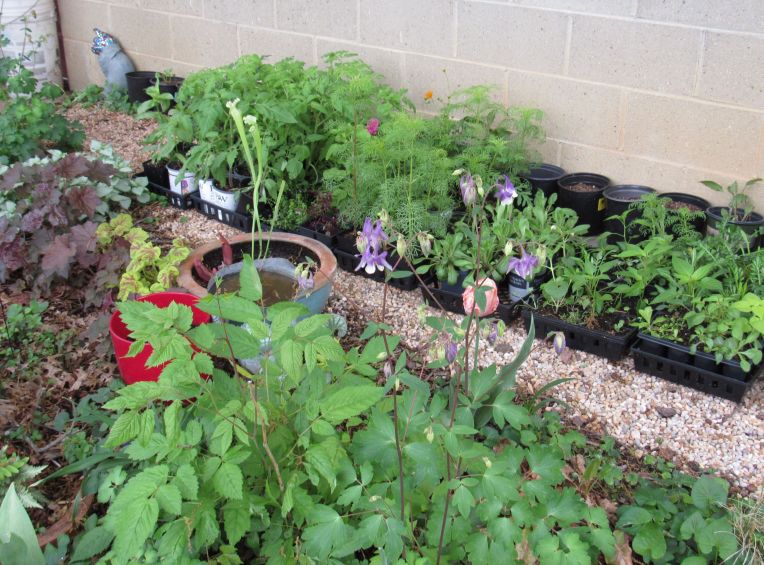
Photo of seedlings in flats

Flats of my strong seedlings this year…a mixed blessing. After advising that in zone 6b we should start seeds around February 25, I couldn’t wait and started mine two weeks earlier. And I was growing some things I hadn’t tried before, so I had no database for decisions. The dahlias I thought would be pot-sized are a couple of feet tall already, upending my plans. I’ll have to expand the dahlia bed and buy other things for pots. 

Celosia are too sensitive for a long sojourn, and should be started late so they don’t live in pots for months…maybe I’ll learn this time! (I’ve brought a couple indoors to my plant shelves so their roots can warm up.) The tomatoes and cosmos, as you can see, are good and healthy in confinement, but more than ready to be in the ground. I have upwards of twenty flats altogether, a big job to carry in and out of the garage…

And nothing to do but wait. A weather phenomenon called an Omega Block is keeping Ohio in winter, and we won’t get real May temps until the end of this week.

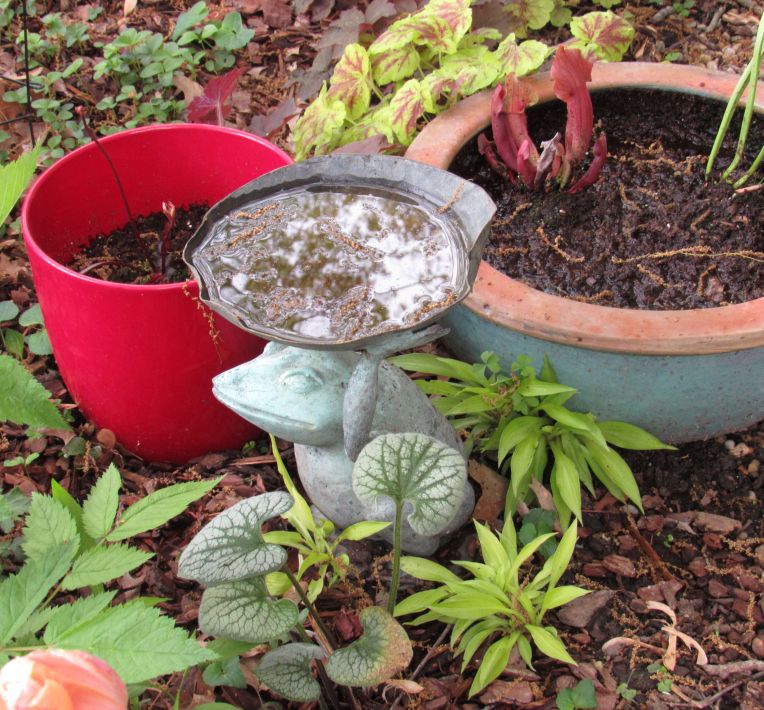
Photo of frog designed bird waterer and bog pots

Last post I discussed how helpful it is to the roots of plants to have a rock over them. A pot works in the same way. You can see that the mini-hosta (Munchkin Fire) under the edge of the bog bowl is bigger and hardier than the other two. The bog bowl holds pitcher plants, and the red pot has a Venus Flytrap. [Plant Delights is a great place for variety in bog plants, with trustworthy sourcing.]

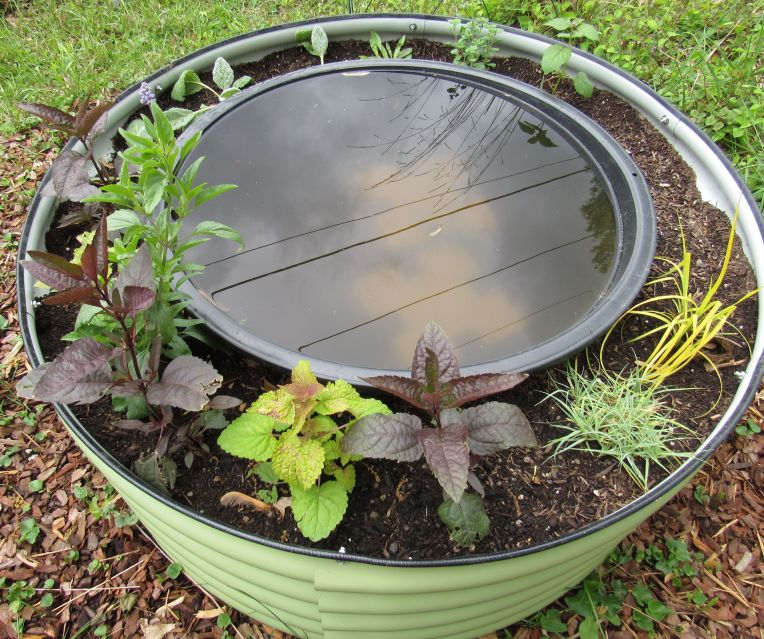
Photo of small tub pond and surrounding plants

I added this tub pond at the rear of my yard. I tried a couple of times to get it leveled, and it went off each time, due to settling of the planter’s fill. But I think the uneven water line is a good thing, in fact. If an animal gets in, it has a way of reaching the edge and climbing out. Once the leaves grow over the tub, it will look fine. The plants are purple-leaved heliopsis (Burning Hearts), two types of carex, chartreuse-leaved hyssop, Blue Victory salvia, silver sage, calamint, and coreopsis. These should all be deer resistant, so I won’t need to spray much close to the pond. Inside, you can see a couple of the new blocks that stores like Lowe’s are selling for constructing raised beds. I thought they’d make great supports in ponds for water-plant baskets, as the niches can shelter tadpoles.

Photo of a hugel bed with logs showing, mulch, and plants

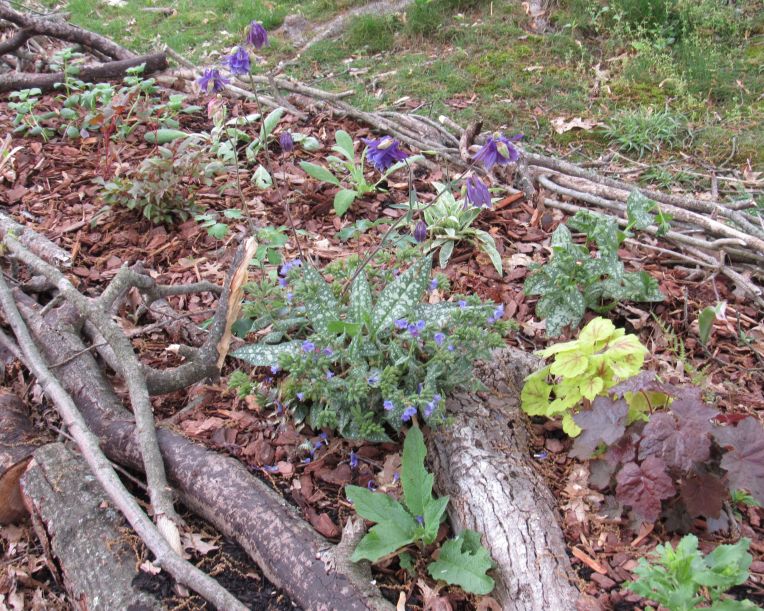
My hugel bed, maturing nicely. The logs are slowly being buried by soil activity, and their tops make an attractive feature. Last year’s plants have deepened their roots and are benefiting from the microclimate, that keeps them warmer than the outside temp. The new plants are two more pulmonarias, snapdragons, and woolly lamb’s ears. My yard has tons of fireflies in the summer, because these stick and log borders are perfect insect habitat. 

Photo of brunnera and bleeding heart mingling

Photo of yellow-leaved bleeding heart

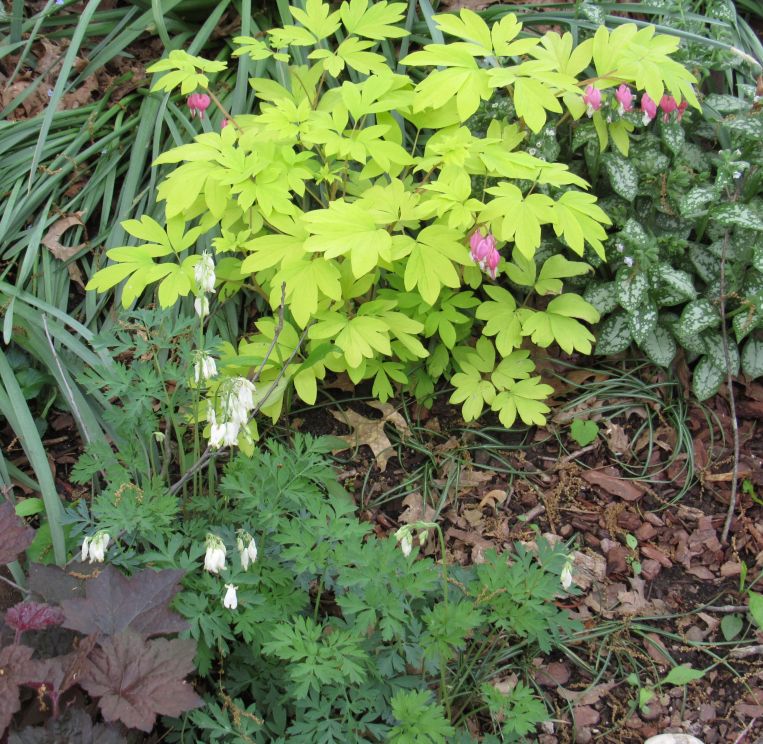
One of my shade beds, with brunnera and bleeding heart mingling to a pretty effect. Below, the bright yellow bleeding heart that’s become a star of this area. I was looking for a plain one when I bought it, and didn’t want the yellow leaves. I’d thought of adding one in late spring, and that year the yellow was all I could find. As it turns out, it’s a perfect plant.

Photo of giant Empress Wu hosta

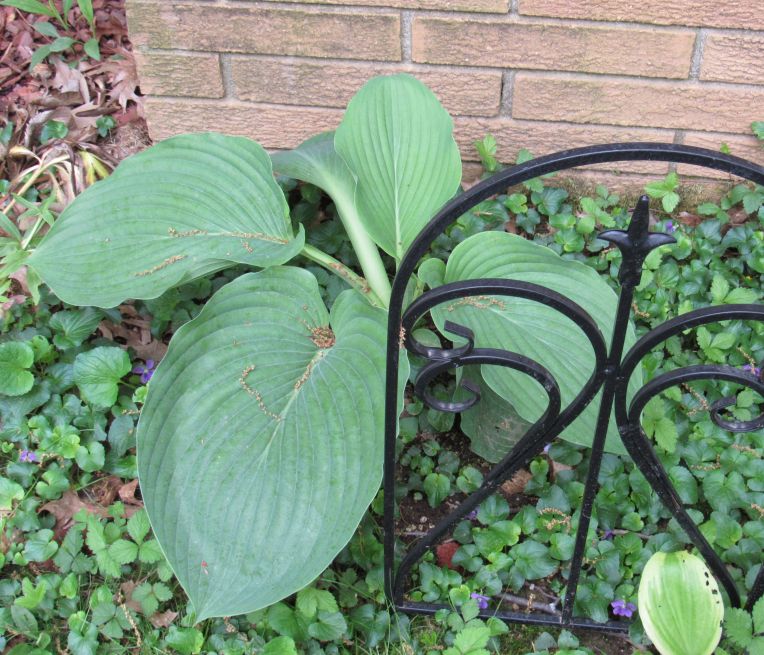
They say hostas don’t like to be moved. These Empress Wus did nothing their first year. The second year, because I’d got them as a BOGO and hadn’t really paid attention to what they were, I read up on them and learned their claim to fame is huge size. Then I knew the Wus needed a bigger space, and moved them by the chimney. But they aren’t sulking at all; they’re taking off and sporting footlong leaves. (The little fence is a deer-snout-bumper, which actually works pretty well in deterring them.)

Photo of bright coral heucheras and blue green hosta

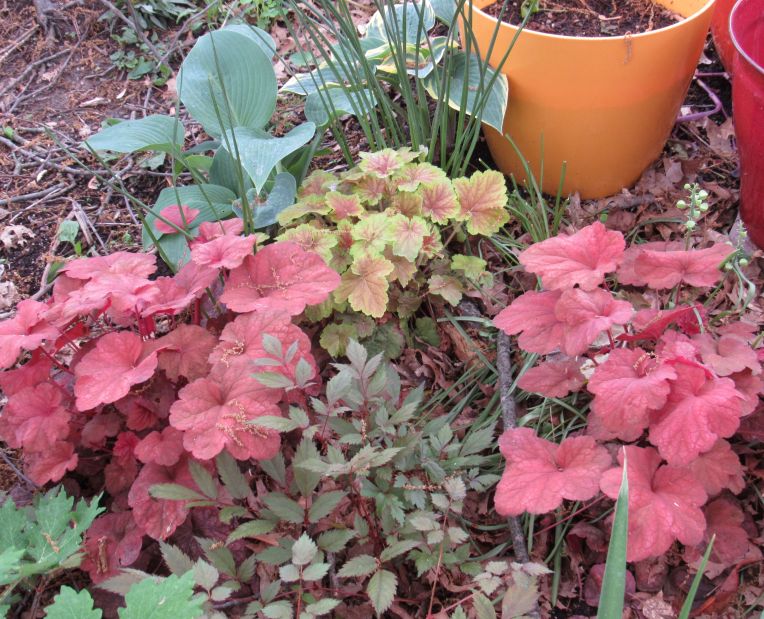
Finally, some heuchera that I bought cheap at Walmart, with no variety name. Their first foliage is a velvety corally-copper, going great with the astilbe, the Solar Eclipse heucherella and the blue green hosta.

Pots In the Garden Late Winter

Photo of hellebore flower, pink with green stripes

This is a hellebore that seeded itself under the parent and was moved to another bed. Last year it bloomed for the first time in the middle of summer, and had whitish flowers. This year the flowers bloomed at the normal time, late February, and are this green-striped pink. All three hellebores I moved have larger flowers than the parent, and one other has some patterning on the flowers.

Photo of orange, red, and yellow garden pots
Photo of pale blue garden pots
Photo of bright blue and aqua garden pots

The above photos give a mini-tour of my paths, with pots as I’ve placed them so far. I love pots in the garden, and picking colors and sizes to combine. Pots also help with water retention and wind protection, so they aren’t just for prettiness. At this time of year, we can do structural work, adding mulch and gravel, and features like ponds and pots. And we have the fun of walking our garden and seeing what’s coming up. Later I’ll go around and level these; also, I’m holding off putting my ceramic and terra cotta ones outdoors until the frost danger is past.

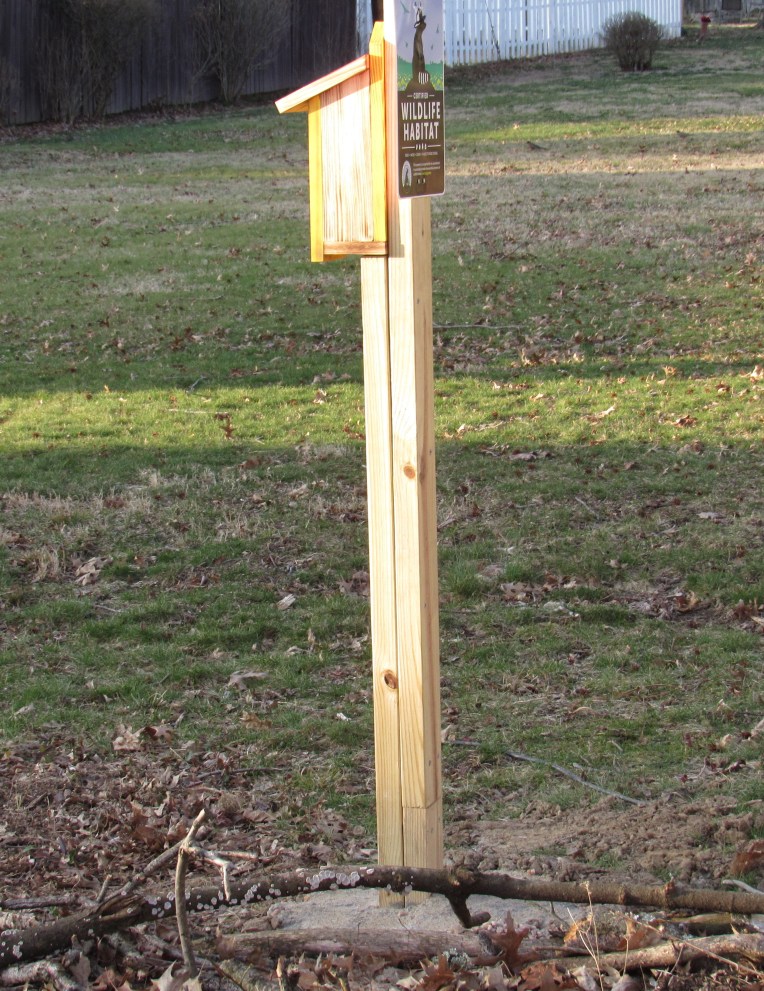
Photo of Certified Wildlife Habitat sign and birdhouse

Here’s how I put up my NWF Certified Wildlife Habitat sign. I decided a post by itself wasn’t making the best use of space, so I bought three 2 x 4 treated boards, each four feet long. I offset them by about fifteen inches, then cut that length off the third board and attached it to the bottom to fill out the post. That left a recess for the birdhouse, one I bought from an Etsy seller. I filled the hole I dug with gravel to hold the post upright, then added Quikrete to cement it in place. 

Seed-Starting Overview (part three)


Proof, above, that deer will bite into daffodils. You can see the poor remains of a flower that was trying to come up. The deer in my yard, after that trial, have left my daffodils alone, and I have too many daffodils to use my expensive deer spray on.


More on seeds:

If you grow annuals in pots, early spring is the time to freshen the soil with compost. Or, if you dump the dirt from your pots into your flower beds to top them off, as I do, it’s the right time to buy new topsoil and fill pots again. I use bags labeled topsoil rather than potting mix, because topsoil, as the commercial suppliers make it, has a lot of wood chips, and none of the added fertilizers. I think it’s better not to overfeed your potted plants.

Most annuals can live outdoors in early May. A few, like dusty millers and bachelor’s buttons, have thick, hairy leaves, and can endure a frost, but this is no rule of thumb, as other hairy-leaved annuals, like tomatoes and sunflowers, can’t endure cold temps at all.

Be prepared to carry pots indoors or cover them—but in a typical year, late April is the frost-safe, as opposed to frost-free, time. Early May (6b) is when, historically, frost doesn’t occur.


Do home-gathered seeds germinate better than commercial ones?

I don’t notice a difference when starting seeds indoors. Gathered seeds, in my observation, germinate better than commercial seeds when sown directly outdoors. That’s probably because they were “born” with fungal or bacterial influences drawn from my locality, and so root happily in the home soil.

A six-pack of annuals, dotted here and there, is underwhelming, but a swath of marigolds, crowded in with cosmos, zinnia, tithonia, salvia, sunflower, etc., is a beautiful sight. Create swaths at the edges of beds and paths by scraping a hoe across the surface, loosening lawn grass and weeds (and discarding them!). Then sow seeds densely and tamp them in, so they don’t immediately attract birds. You can cover a sowing with straw, lightly applied. Mulch is too heavy, and will inhibit germination. 


Can you start a garden entirely by direct sowing?

The first consideration is timing. You would want to research which plants can grow to blooming size in your zone in the space of 120 days, most of the frost-free planting season. Rudbeckias, Gaillardias, Butterfly Weed, Heliopsis, are some perennials that have bloomed for me their first year from seed. Annuals give far more choices, but even zinnias and marigolds may not actually bloom until July (in 6b, + or – in 5b, 6a, and 7a), if sown directly. Another consideration is creatures. Ants are large consumers of seeds, and have the military organization to find them. Scratching birds may also discover a good portion of your seeds.

For vegetables, a lot of the good stuff is typically direct-sown, as corn, beans, peas, squash, potatoes, onions. (I mentioned last post the advantage of starting corn in pots, if you have squirrels.) Tomatoes, timing-wise, are on a thin margin, and won’t work well. Some skinny peppers may fruit; bells are unlikely to fatten up without starting under lights. 

The two points to consider, then, are: How soon do you want to see flowers (fruits)? How much of haphazard results are you willing to tolerate? You can save a ton of money with all-direct-sowing, and can try the experiment in just a portion of your garden. 


Seed-Starting Overview (part two)

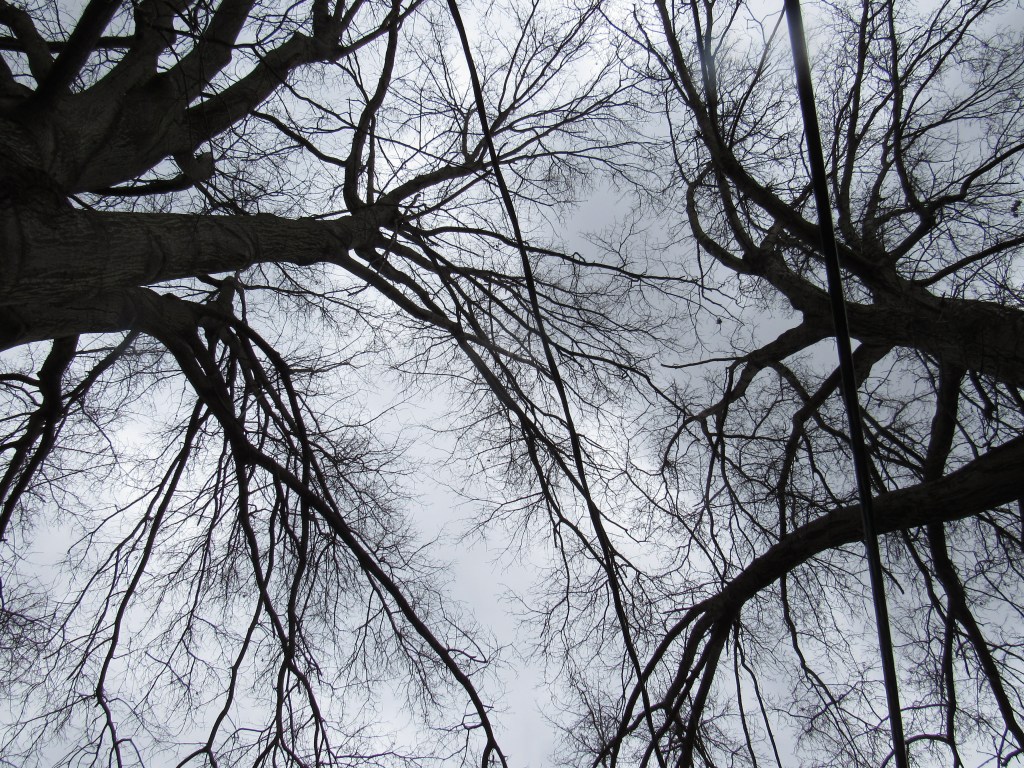
Photo of oak trees in winter


A reasonable schedule in zone 6b might be to start perennials, herbs in the mint family (many of which are perennial), and anything the packet says takes longer than eight weeks to reach transplant size, in late February (Feb. 25th for me). Start annuals with six-to eight-week maturing periods in March (March 10 for me). Start quick (2-3 weeks) annuals and vegetables, that will only get leggy indoors, in early April (April 1st for me). Also, you can do succession sowing to get later swaths of zinnias, marigolds, salvias, snapdragons, etc., ready to flower in late summer, as late as the first week of May. The reason for sowing anything in flats that can be sown directly is to get size on the plant, and make it less vulnerable. Corn is a good example—a sprouted kernel to a squirrel is just a snack with leaves attached, that need biting off. If you grow your corn in pots until the kernel is used up, and the roots are strong, you may get a harvest for yourself.

Last year I got too eager to grow things, and started perennials in January. I was also trying to use a potting medium instead of peat pellets, and it messed up my germination rate. I don’t find it as easy to go peat-free as the TV garden shows imply. The peat pellets’ advantage is that they’re resistant to fungus, and the protection they offer lasts a long time, until the seedling has grown past the danger of wilting. Also, they can hold moisture without heaviness. Heavy damp stresses seeds for oxygen, and more humus-y mixes retain cold, both inhibiting factors to germination and survival. Last year, many of my seeds never germinated at all.

Another problem with keeping plants indoors too long is the artificial environment. Indoor air is stagnant, allowing a foothold to disease, fungus gnats, and mites; plants need air movement for transpiration, the release of moisture through the pores in their leaves, which encourages the root system to draw moisture from the medium. In fact, a fan running in your growing room, at low speed, is a good idea.

The time when your plants are large enough to go outdoors should coincide well with the change in weather, from winter cold to spring daytime temps in the 60s and 70s. Find a shaded space with wind protection, or create one. Perennials should be first out; once they can stand on their own in full sun, and especially with the benefit of a few rains, you can take them out of circulation—either plant them, or at least place their pots where you intend to plant them. A number of perennials, such as coneflower, salvia, achillea, rudbeckia, monarda, and foxglove, have hairy, rumply, or ferny leaves, a sign that they’re adapted to frost tolerance.

Frost, also, harms hardy plants less after the equinox (March 20, 2023)—when daytime length equals night. Nighttime temps in zone 6b are usually above freezing. The ground warms up, and the hours of frost needed to burn leaves and harm roots are not available. Observe which plants already in your garden are pushing up strong new growth; the same plants from this year’s starts will survive through frost, if you have them well hardened.


(to be continued)


Seed-Starting Overview (part One)

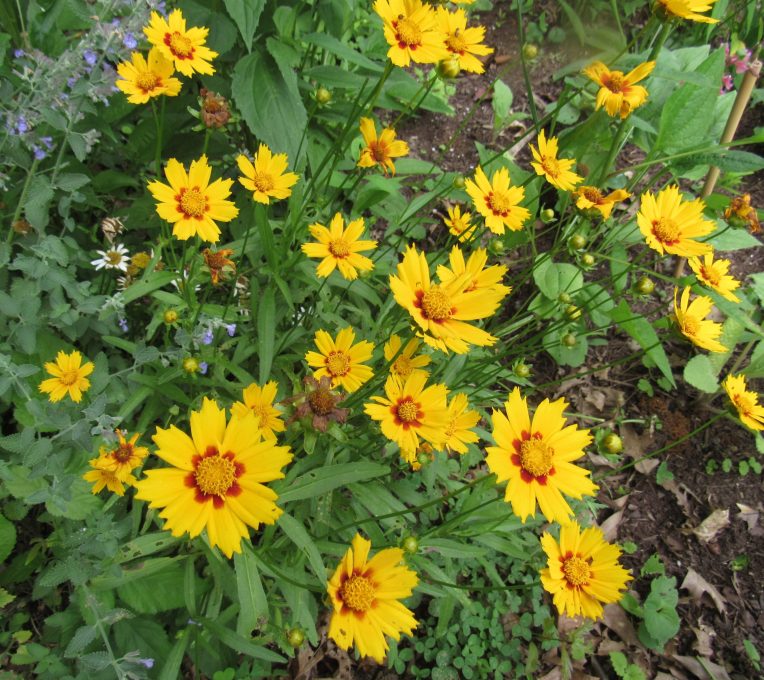
Photo of bright yellow coreopsis blooms


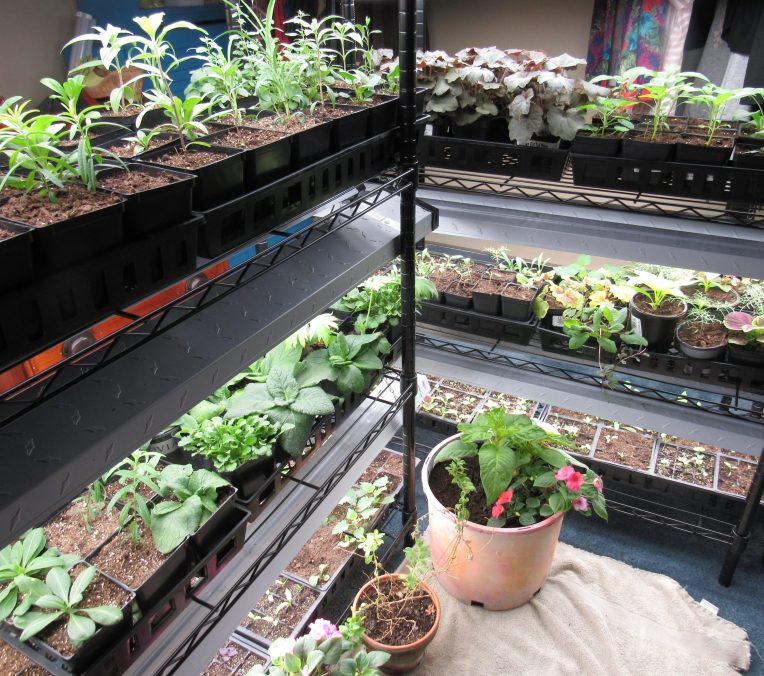
Photo of seed-starting shelves and lighting


January is a good time to get your setup going, if you want to try stocking your garden with seed-grown plants. For the next few posts, I’ll provide what experience has taught me.

Any four-shelf unit really gives you three, unless you have a way of rigging lights above the topmost shelf; but this shelf makes a place to store your gear—spray bottles, pots, labels, etc. The ones I use are sold under the Amazon Basics brand, listed this year at 64.96, not including sales tax. They consist of wire shelves, hollow posts that screw together, and plastic fasteners that hold the shelves in place. They are not very trying to assemble, and also pretty attractive for use at other times as household furniture.

What you’ll want, if starting 500+ seeds (which sounds like a lot, but for any largish garden, is barely enough) is at least three sets of shelves. Each shelf can hold two flats, oriented short end to short end, for maximum exposure to light. When seedlings are large enough to be potted on (as in photo above), fewer will fit in a flat, and the shelves need spacing higher—the reason you need three units, instead of two.

For lights, daylight (blue-toned) LEDs work fine; I have not found any deficit in the light they provide to seedlings. The best choice is the shoplight type (at various stores, around $50 for a set of two), with two tubes per unit, and a four-foot length—and you’ll be happier if you buy lights that connect to one another, so that you have one cord per six lights in your surge protector, instead of a big tangle of cords. You can add up the wattage to be extra careful, but even three shelving units with eighteen lights altogether should fall well short of the load-capacity on a modern household plug.

Eighteen shoplights are a strong investment, true, but once you’ve purchased your seed-starting equipment, the cost-per-year over the lifetime of the equipment is reasonable, and even cheap. If you compare the cost of this same arrangement as sold by garden suppliers (as much as $300 for a two-shelf unit, or $1200 for four shelves), you’ll appreciate that a $700 (approx.) investment for three four-shelf units with lighting is a good bargain.

Any room with a door you can close against curious pets works as a growing room. I use a spare bedroom, and protect the carpet with drop cloths. Even LED bulbs will add heat to the room. I find I can’t use more than the three sets of shelf/light combos without the temp approaching the 80s (F), which is too stuffy for most outdoor plants, especially perennials. I move surplus maturing plants down to the garage. At this stage they’re fine, if not happier, in a cooler space, but if your seed-starting racks can only be in an unheated garage or porch, you’ll need heat mats.

The window of time for seedlings, from dropping the seed into the medium, to hardening off well-grown seedlings outdoors, should be about two months. This formula is usually calculated backwards from your local frost-free date, so that a May 5th date carries you to March 5th. But most perennials take longer than annuals to geminate; at the same time, the majority of perennials hardy in your zone can go in the garden earlier than the frost-free date, once hardened off (exposed to outdoor sunlight and wind until the leaves and roots toughen up). Exceptions are hibiscus and butterfly weed, both of which emerge from the ground after frost, and would be harmed if planted earlier.


(to be continued)