May Garden Notes

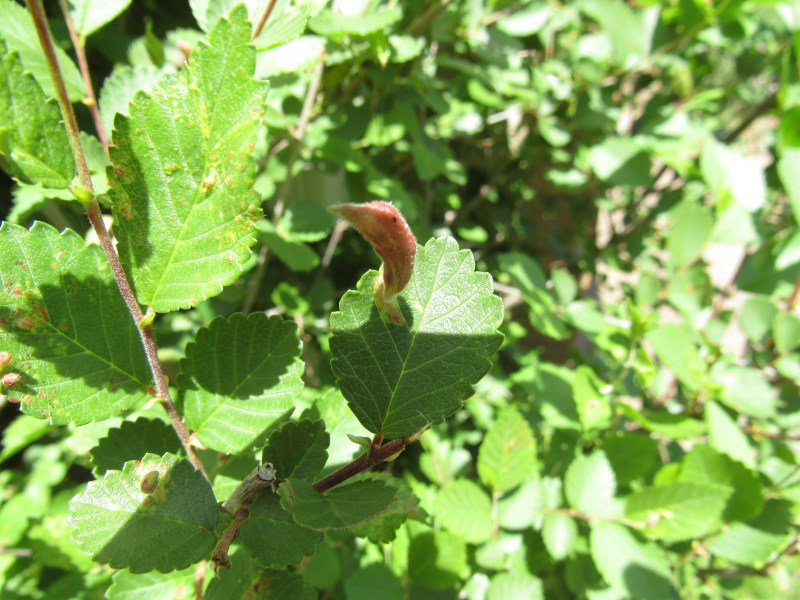
Photo of leaf gall on birch

I think this tree is a gray birch, that got itself next to the garage foundation. Then I neglected getting rid of it, so it shot branches up above the roof-line. When I cut it back one branch took off a piece of flashing. But I feel sorry for the tree, so I trim it back as a shrub and let it live. This year it has all these galls on the leaves, that seem to grow into this strange plant/insect object. You can see some in the background that are stretching.


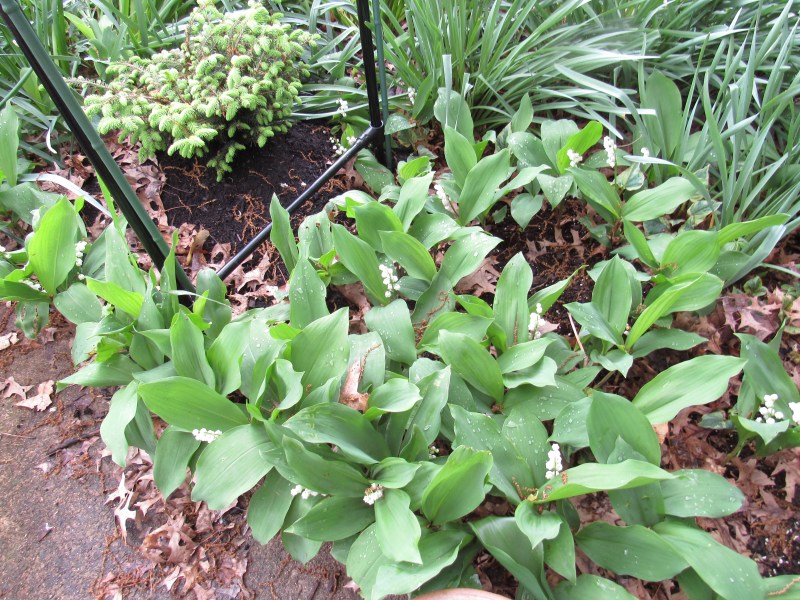
Photo of lilies of the valley

The lilies of the valley are pretty this year, since I raked their bed out for them, and added some fortified potting soil. Its a difficult spot to design, because in the winter the oaks shed masses of leaves, and the bed gets heavily piled; then in the spring the daffodils have to run their course, before there’s room for the next thing. This year I added the dwarf spruce, and a climbing trellis.


Photo of squirrel on feeder pole

In the local squirrel gene pool, is this tendency towards red tails. So far this year, only a Cooper’s hawk, seen in pursuit of an unknown bird, so the squirrels are fat and frollicking. I have a whole flock of morning doves, which seem to be the bird-hunting hawk’s favorite prey.


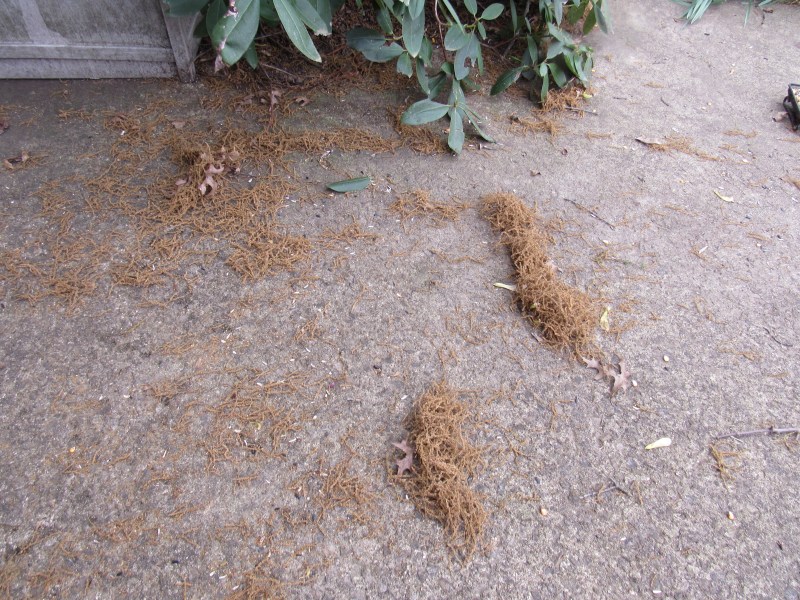
Photo of catkins

In the springtime, the oaks drop so many catkins I can sweep them up and use them for mulch. Catkins are high-protein (it seems, as I learned from looking it up, you can eat them if you like…something to remember if you’re ever lost in the wilderness at the right season), and so it takes little time for them to decompose in the garden.


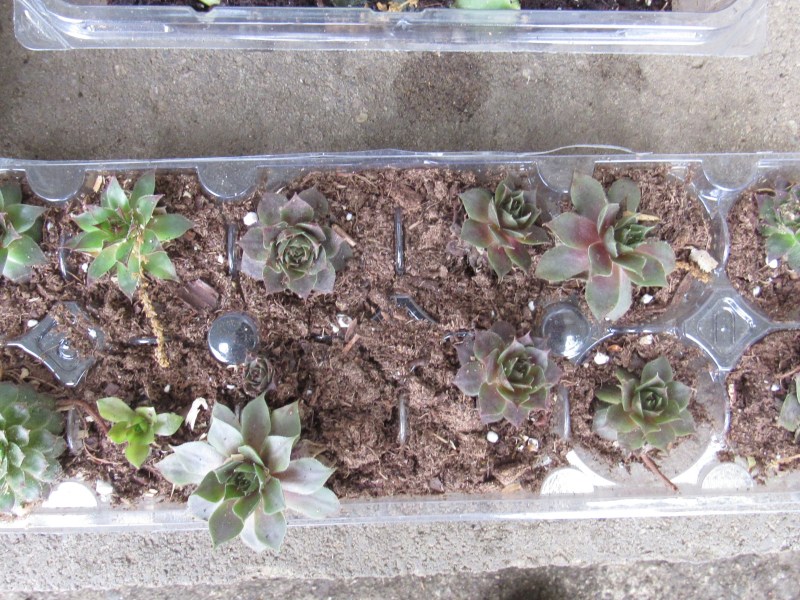
Photo of hens and chicks

Here’s a good way to hatch out your hens and chickens, when you want to spread them around.


Waiting for the Cold Spell to End

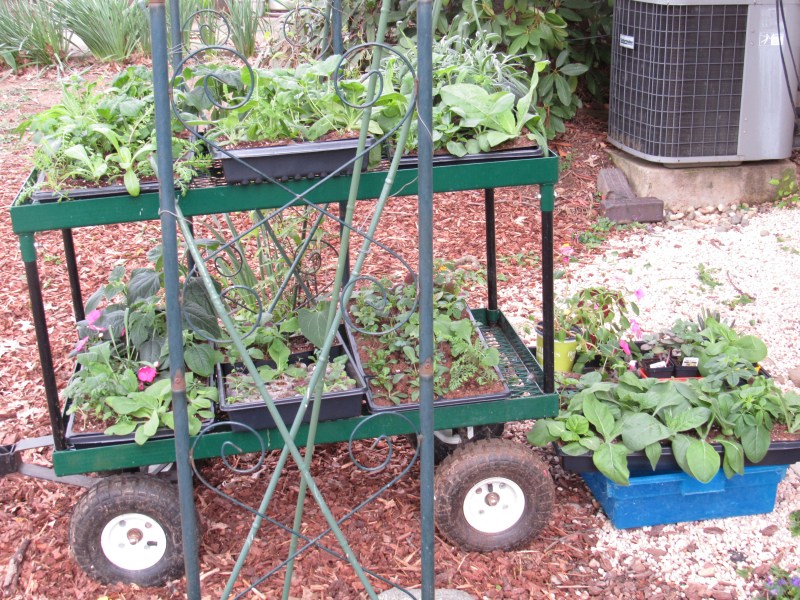
Photo of garden cart and plants

These are the seeds I started March 15. The biggest growers are the annuals, the centaurea, nicotiana, and tithonia. They toughen up well enough with temperatures in the fifties, but need an eye kept on them in case the wind blows too cold. Of perennials, I have rudbeckia, columbine, shasta daisy, lupine, achillea, foxglove, hollyhock, catmint, coreopsis, hibiscus. The slower-growing annuals are coleus, impatiens (the big ones flowering above were started from cuttings), larkspur, calendula, ageratum…and I just started the end of spring annuals, that could sprout sown directly; but, in the case of sunflower, are vulnerable to birds eating them, or need a good start to root well and bloom sooner: morning glory, marigold, and nasturtium.


Photo of Milkweed border

Along the side of the garage I have a stand of swamp milkweed (white-flowered) that grows every summer into a seasonal hedge. These plants get a lot of love from bees and wasps; so far, I haven’t seen monarchs. But, as every year, I want to tout the tithonia flower, which is very attractive to monarchs. That may be because the kind that migrate to Mexico are looking for a familiar haven along the way (tithonia is also called Mexican sunflower). When they go to seed in the late summer, goldfinches will feed on them too.


Photo of old yew bush

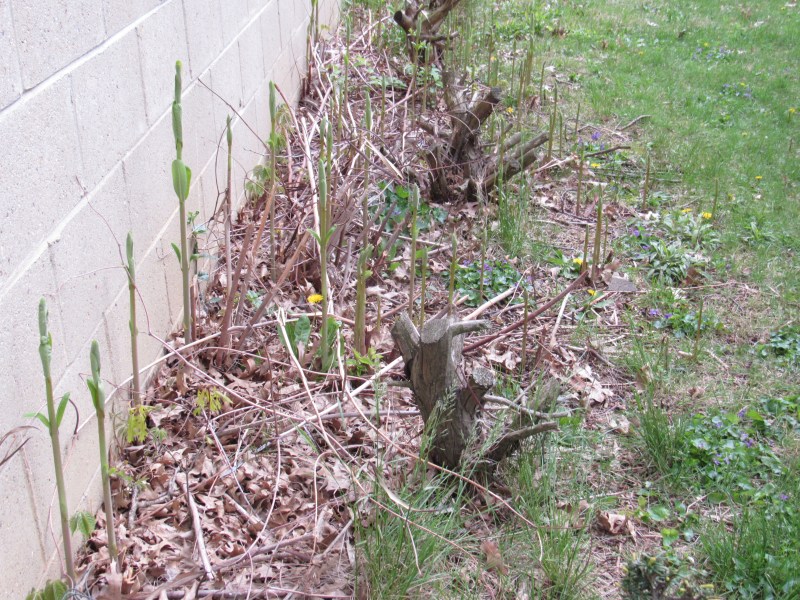
On my old property, I planted an acorn and grew a Chestnut oak about twenty or thirty feet tall at the time I left. I’d like to think it’s still there…maybe it isn’t. But owners can do what they need to with their own place. My garage was first hedged with yew, bushes grown a couple feet taller than me. If they were left alone, there’d be no moving up the side between my property and the neighbors’. I don’t myself like trimmed foundation bushes, so I cut them down, rather than try keeping them up—I couldn’t get the stumps, because my chainsaw is only a little battery-operated one. One yew, and I’m happy it did, if I can keep it small, came back and has a sort of Bristlecone pine vibe.


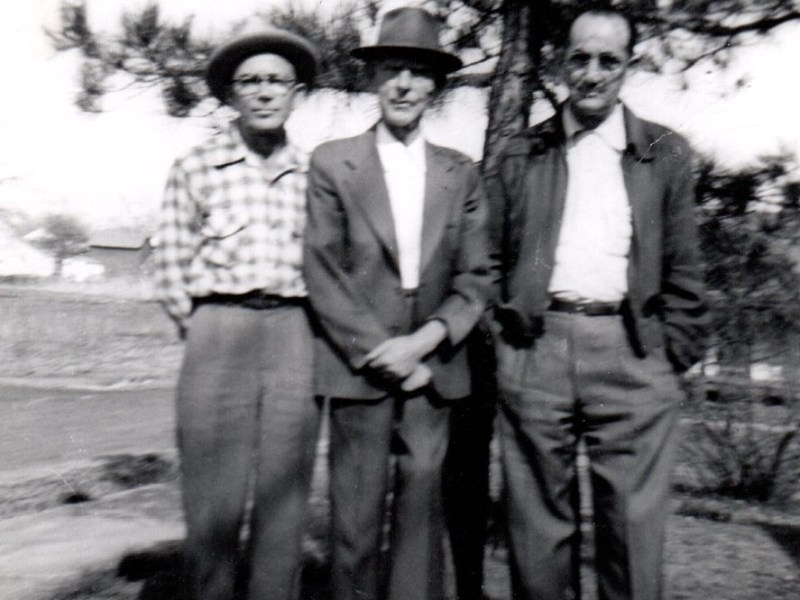
Photo of my grandfather and his brother

My grandfather (left), his brother (right). I don’t know who the skinny man in the center is.


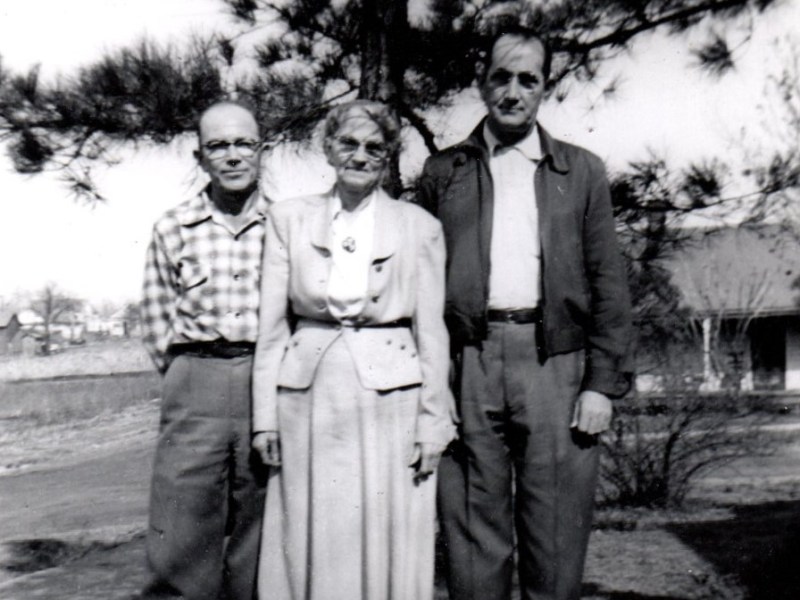
Photo of my grandfather, his brother and mother

Same group, but with my great-grandmother in the middle.


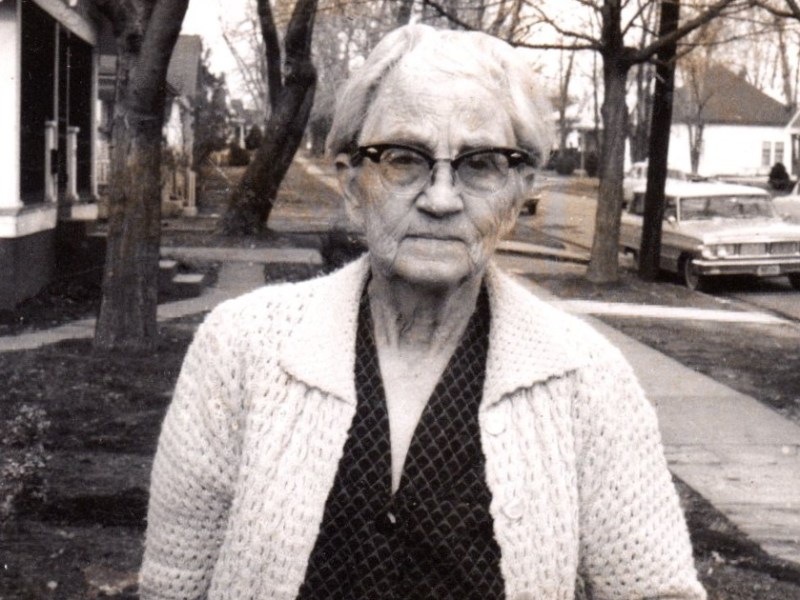
Photo of my great grandmother

My great-grandmother Barker, 1960s, probably Mt. Vernon, Illinois


April Garden News

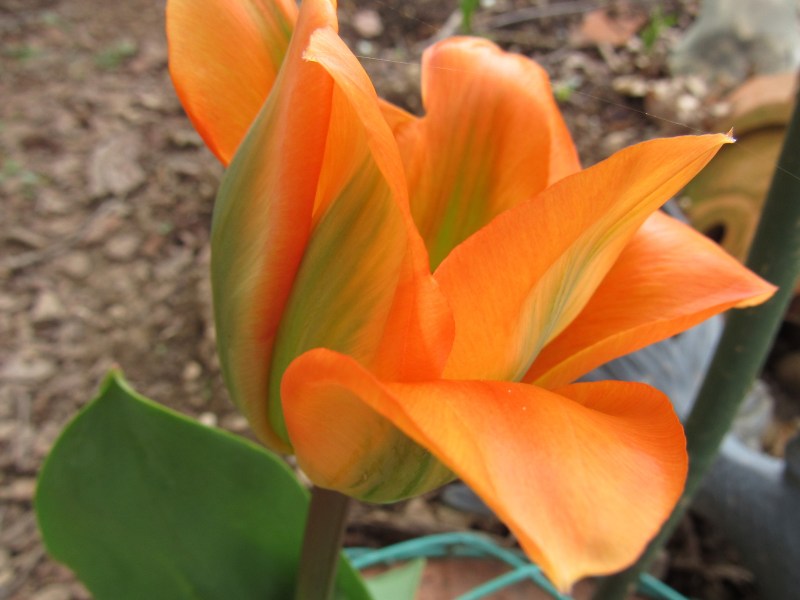
Here’s a sassy orange tulip I saved from the deer. I have two blooming, and one that will probably get away with making a flower. The others have had their heads bitten off.


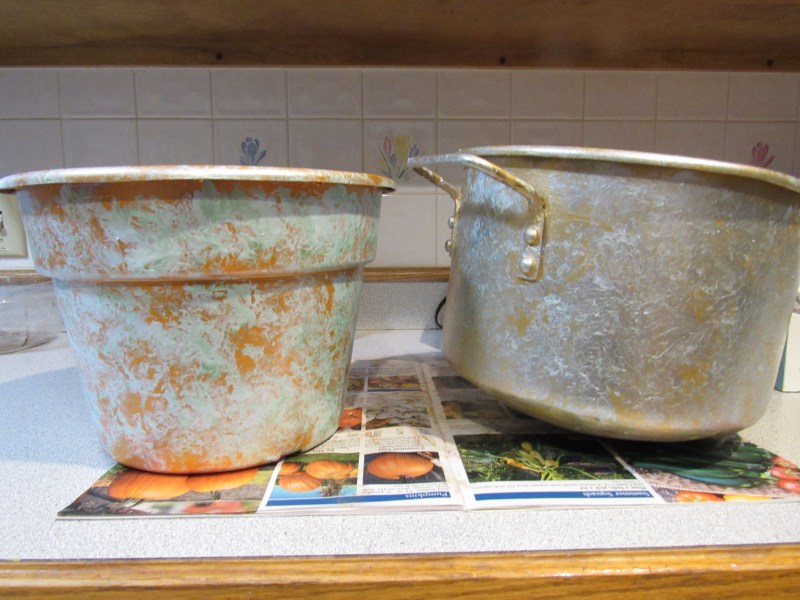
I’ve been getting into the gardening magazines, getting inspired by projects. I don’t subscribe anymore, but still have a stack never read. So, I’ve gone through my garage, finding every pot or article (large pieces of pipe, an old dryer vent), that could be spruced up with craft paint. At the left is nothing but a shrub-sized plastic pot, such as garden centers use. Here’s one kind of recycling to keep plastic out of circulation altogether! The paints are Martha Stewart metallic and pearlized, and the decoration is done by dipping crumpled plastic wrap in contrasting colors after a base coat dries, then tamping on the freeform design. When they’re ready to go out, add a coat of car wax, to make them more rain resistant.


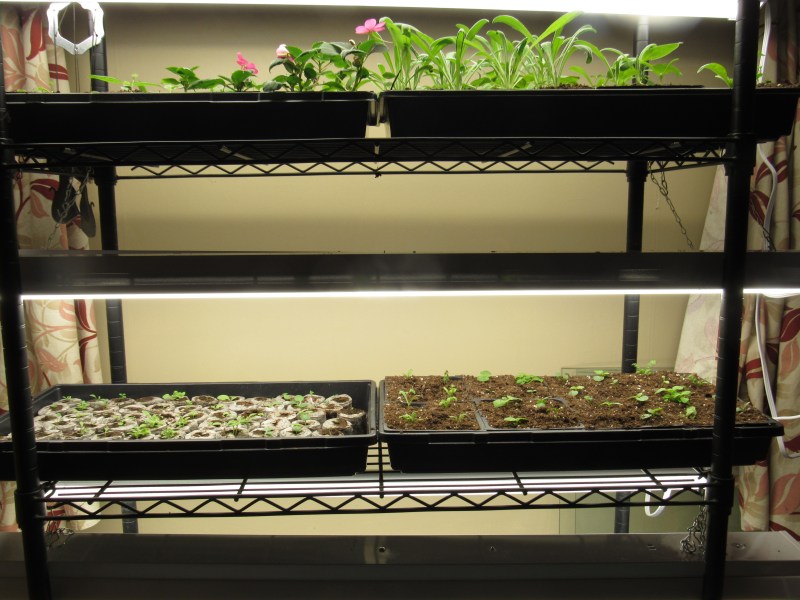
Here are my garden seeds, sprouted and on their way, after two weeks. It’s something of a balancing act to get them early enough they have a healthy amount of growth, comparable to plants you’d buy at the garden store. But growth is especially important with perennials. Last year, for example, I put out probably a dozen hollyhocks, which like most perennials won’t bloom the first year. This year, I count less than half that number surviving, from voles and deer, and crowding by the roots of other plants. Last year’s achillea (deer resistant) has pretty much all come back, but this is the first season they’ll bloom. I had good monarda (also deer resistant) last year, a plant that will flower like an annual, but this year a couple stands don’t seem to have returned. But since even tender annuals can go outdoors in April during the daytime (unless the temperatures are below the upper fifties), it’s better to start early, and have big plants that will bloom as soon as possible.

Seedlings, though, then young mature plants, do get to be a lot to handle indoors.

And by the way, the impatiens flowering pink, above, are from cuttings. They’ll grow easily that way—just snip a top with buds, making your cut between two sets of leaf nodes, and stick it in potting soil. It will root and start blooming within a week or two. The downside is that cuttings are clones. Impatiens are also very easy to start from seeds, and that genetic diversity will improve their chances of not picking up disease.


A Damp Climate

The air, when I lived for a few years in Columbus, Ohio, was always notably drier than down in Athens. My town is part of the greater Ohio Valley, built alongside the Hocking River, that feeds into the Ohio. It’s a moist part of the world, but has been especially rainy for several weeks. Last week we got two days of heavy rains in a row.


Photo of fungi in brush heap

Here in my brush heap are a nice collection of fungi and lichens.


Photo of purple mold on limb

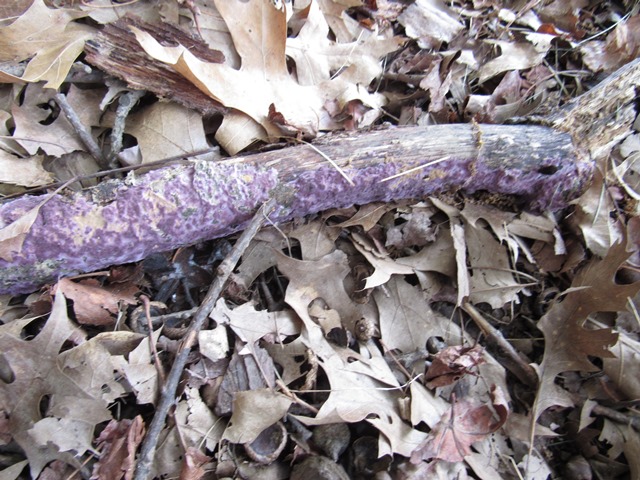
And an interesting one from a couple of years ago, that looks like a purple mold growing on a lichen.


Photo of streaming water in yard

The rainwater in this patch of my yard just streams, and builds itself miniature sandy shoals.


Photo of burrow filled with water

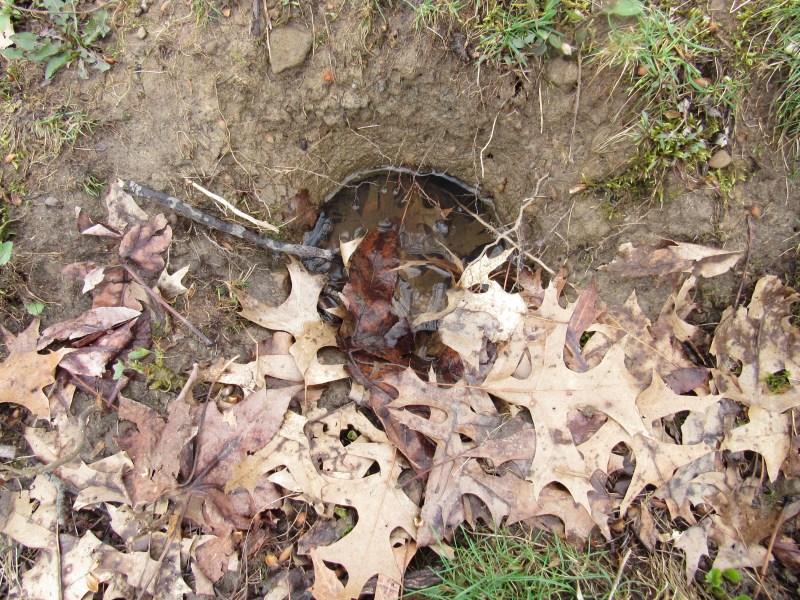
And the reason the water streams is because this animal burrow fills up, and appears to run underground from the pear tree to the brush heap.


Photo of pickerel weed in tub

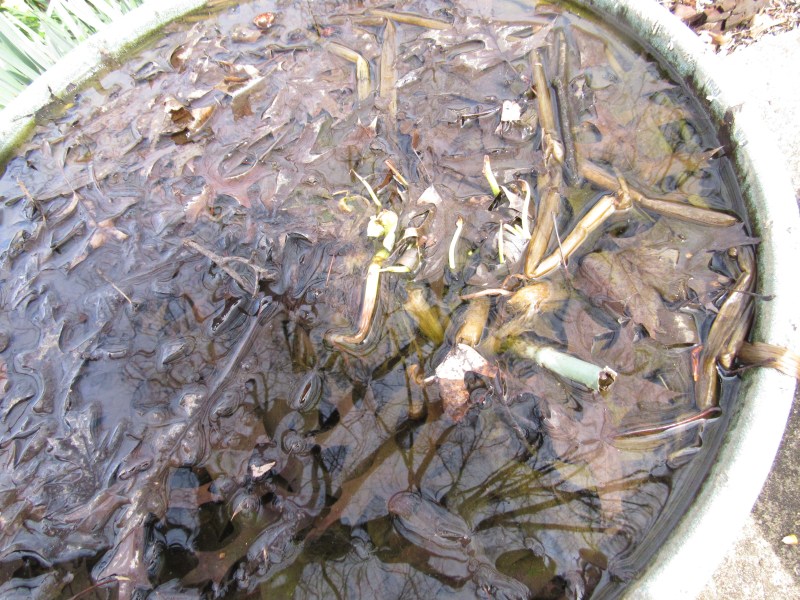
But, good news. My water tubs are shaped like big shallow bowls, so I never do anything for them in the winter, because when the water freezes it just expands outwards and doesn’t harm the tub. So I usually don’t keep my water plants and have to buy new ones. This year, either for mildness on the part of the weather, or hardiness on the part of the pickerel weed, I have one plant that’s pulled through and is starting to grow again.


Spring Fever

It’s that time of year, when the weather warms up, the garden starts to grow, and  it gets hard to sit at your desk and work. 


Photo of sky during hailstorm


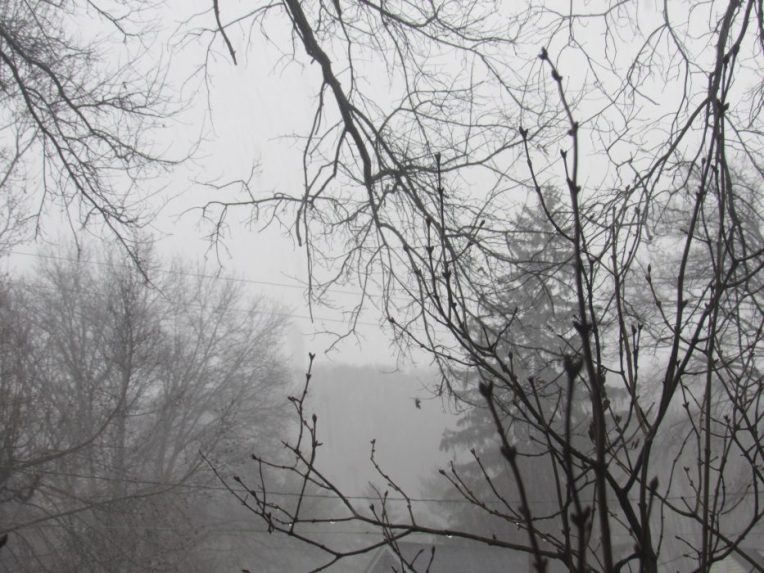
We had a late winter thunderstorm with hail on the third of March, during which I saw a weather phenomenon I never had: the sky turned a shade of pink. By the time I got my camera it was almost gone, but there’s a hint of it in this picture. Otherwise, it’s a nice moody shot, showing how at this time of the year greys can look bright and the landscape eager to get started. And today (the 8th) I had a pair of courting turkey vultures flying over my yard.


Photo of backyard drainage project


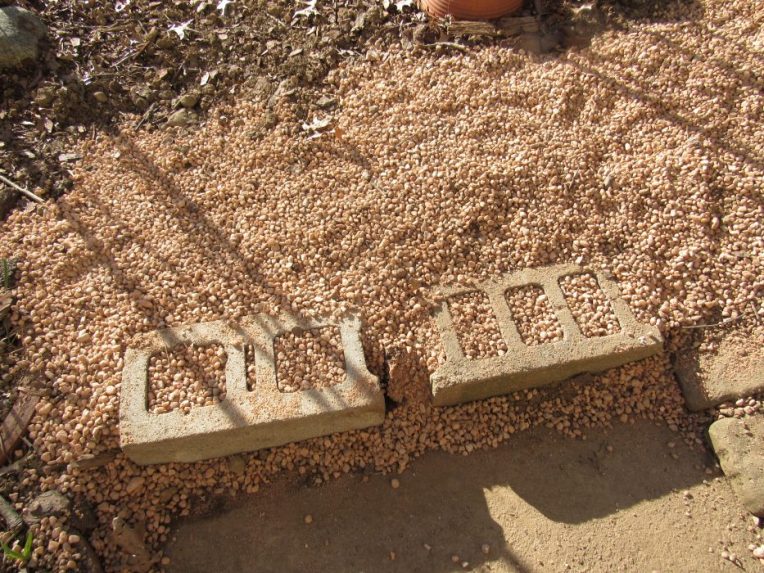
Here’s a shot of my drainage project. My yard has a steep little slope going from the house to the garage-level. In southeastern Ohio for the past several years, we’ve hardly had any snow, nothing like the six inch or more longterm storms we used to get. Now, in a winter, we get one or two events that drop a couple of inches at the most, then melt off within days. Meanwhile, we’ve been having huge downpours of rain; this year, it seems, every week. All that is a reflection of the changing climate, but when you have rain instead of snow, you get a lot of washing. The wash carries away the topsoil, and keeps anything green from growing back. So backyard drainage should be purposed not to channel, but to slow down and spread the runoff, make it trickle down into the soil, rather than stream to the ditch. Pea gravel is a great choice, and if the cinder blocks are set this way, they can function as a step and a place for rainwater to burble away slowly.


Now, in about a week, it’ll be time to start seeds and root cuttings from the impatiens and coleus I saved from the garden last fall!


Family Pictures 1960s

Some Foster family photos from early times (at least the 1960s)


Me as newborn

Me as a newborn

Photo of us in Illinois

A family group, maybe taken Grandpa and Evelyn’s (Foster) in Mt. Vernon, Illinois

Photo of us on Shannon Ave

A family group outside our house on Shannon Avenue, Athens, Ohio. I may have been wearing my white Go-Go boots, (a coveted item).

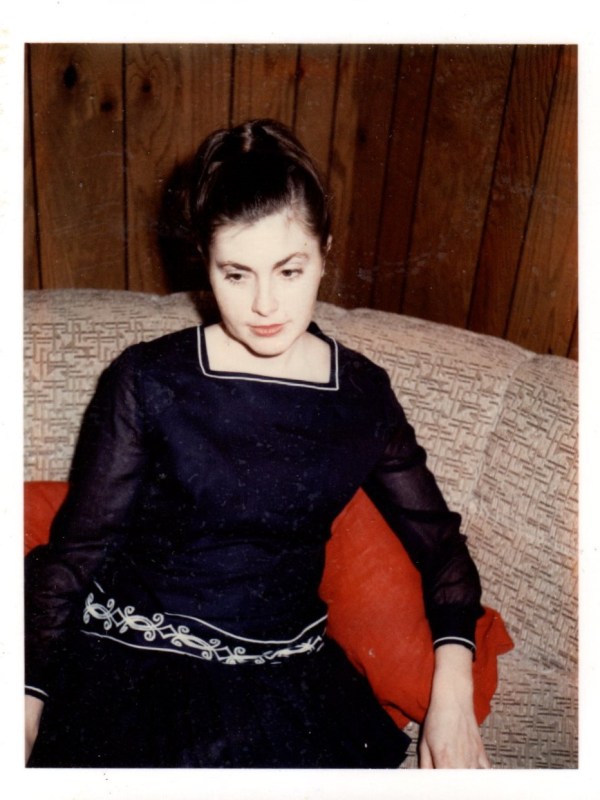
My mother dressed for an occasion

My mother dressed up for some occasion, in the late 1960s.

My sister and I dressed for an occasion

My sister Tracy and me (Stephanie), dressed up for the same occasion. I remember this seafoam dress, that I loved, and for being the little sister, I felt like I got the best of the deal that time, not liking my sister’s party dress as well as my own. 


The Gardener Looks Forward

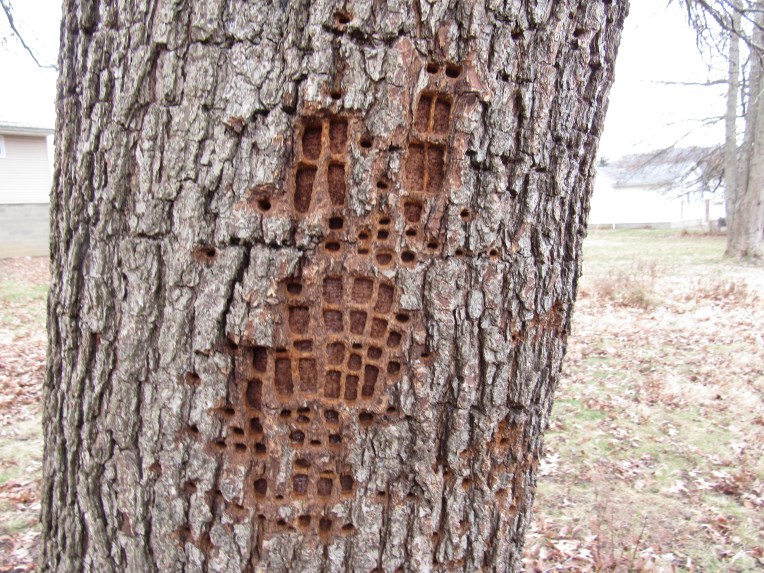
Photo of yellow-bellied sapsucker sapwells on tree


This is the effect of a yellow-bellied sapsucker on my callery pear tree. These sap-wells won’t start to flow until the springtime. The male I’ve seen, who owns this tree and comes out to patrol it, may be living a little out of his traditional range (there must be a female around, too). He’s been making rows of holes on this tree for years, but seems to have moved to a new stage. Sapsuckers can actually kill trees—for myself, I’d rather have happy birds. They aren’t likely to attack species of tree that don’t produce volumes of sap, those being mostly maples, birches, and fruit trees.


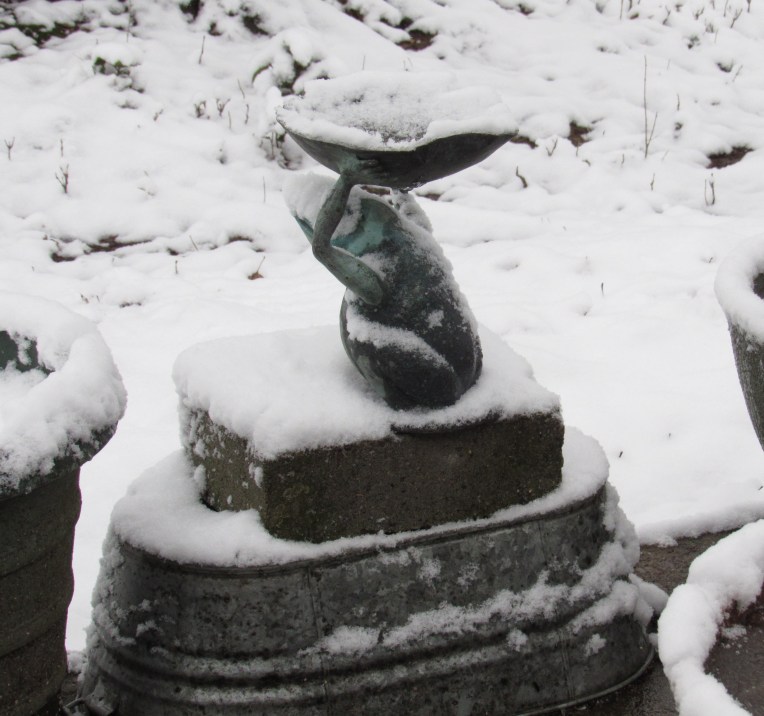
Photo of frog statue in snowy garden


The frog is always getting knocked off his perch. I have visiting deer who come every night looking for corn around the feeder. A couple of males have racks, and I’m guessing they bump the frog trying to maneuver their heads into the space around the tubs and pots.


Photo of Tufted Titmice on snowy branches


These guys were easy to capture in the lilac. Tufted titmice are some of the tamest birds, and don’t mind letting a person with camera get close. They, the chickadees, the downy woodpeckers, and the Carolina wrens, all prefer to go on eating, whether I’m there or not, than fly off to hide in the brush pile.


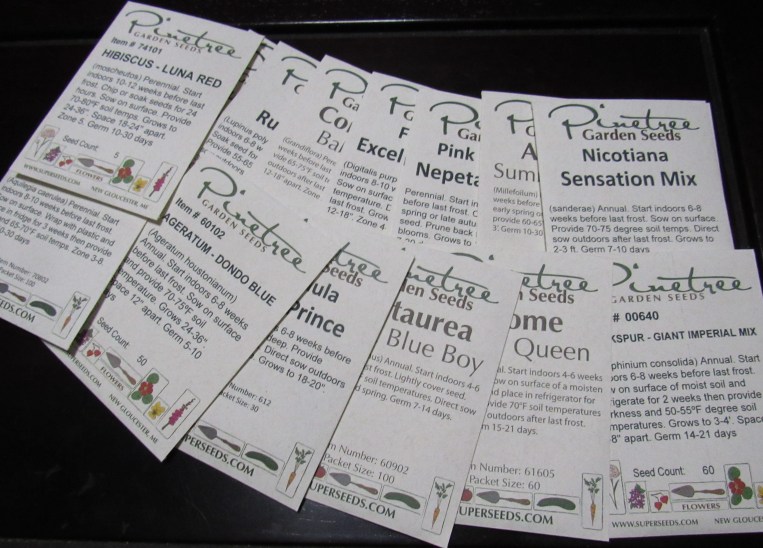
Photo of seed packets


Here are all the seeds I’ll be starting around the last week of March, and in early April. It takes a few weeks for sprouting to begin with, and nothing other than hardened-off perennials can go out until the end of May, when frost is really finished. Growing your own gives you some gardening fun until the outdoors is ready, and also saves a lot of money these days, when a single perennial can cost fifteen to twenty dollars. 


My Sister’s House

Tracy and Sam


My Sister’s House


My parents helped my sister and her husband buy this house in Cincinnati, in 2007 or 2008. The only way I’ve ever seen the house is in pictures my mother has in an album. (It was sold after Tracy died in 2009…a short time to enjoy that dream of home ownership.) I had a sense, by description, of her place being sort of stuffed with furniture and jumble.

My own house at the time tended to be jumbly, partly because I kept a lot of cats, partly because the house was small and old, and came to me needing a lot of repairs (or renovations) that I didn’t have done. As people in that boat know, when you don’t have places to keep things; when you don’t have closets and shelves and cabinets, or sufficient of these, and when you have a lot you don’t want to get rid of, but aren’t using at the moment…

Things tend to stack up on surfaces. Such as magazines you don’t have time to read. I went through a phase of liking People, Us, In Touch, all the reviews of celebrity gowns at the award shows—around the era of J Lo and Ben Affleck. CDs, DVDs…you’ll remember how much space those could take up, the VCR tapes that preceded the DVDs…

And then I had a lot of shoplights, and burned-out fluorescent bulbs for them, which are hard to get rid of, part of my annual seed-starting. I put a lot into my garden in Chauncey. After years of expansion I was running out of time to keep the yard trimmed and all the beds weeded.

Things accumulate, like new writing projects. That’s one of the difficulties of being at a certain level of income. A rich person with a McMansion probably has, by weight and number, a greater tonnage of possessions than any Appalachian hoarder. But fitting it all in a small space makes appearances more inviting of condemnation than spreading it into dozens of rooms and storage buildings, etc. Income, when your housing, for what it is, doesn’t cost much, and your car is paid for, and you can’t take vacations, because those are outside the budget, and you can’t borrow money to fix things up, because then all your disposable income would go to payments…

And if you work an unhappy job, you need treats. You can buy new clothes, you can buy music and subscribe to magazines. You can take up hobbies and buy the gear for them. So my house was very cluttered. Others in my family had the same habits, and I assumed this of my sister.

But we never saw each other. Our adult lives were spent in a constant enemy state.

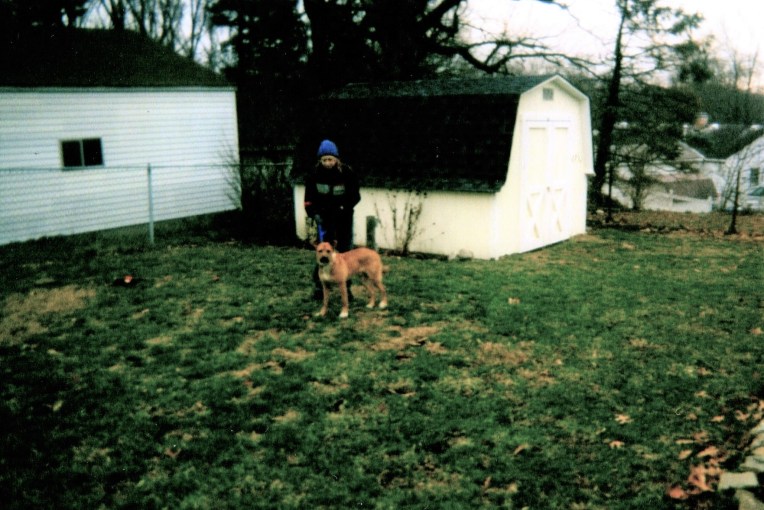
I learned from the pictures that Tracy kept houseplants, something our mother started us on in the 70s, when houseplants were big. She (you can see) had a nice backyard with a shed, also a little deck.

So why did we dislike each other?

I did not have friends growing up, which at my present age I don’t mind saying frankly. There are so many people who don’t have friends. They’re under pressure to feel embarrassment, afraid being other than the cultural ideal will lead to bullying. There’s a lot to say on this subject, more than can fit a single post, but think how sad it is so many people enter abusive or miserable relationships, because they would do that to themselves rather than be attacked for living alone. Being bullied is a lifelong experience, middle aged people are bullied in the workplace; even once-powerful people, when they lose control over their lives (as in the nursing home), are bullied.

The dynamic between power and powerlessness is a major driver of bullying. So those who begin life pushed to the margin find themselves stuck there, uncool, disliked for being uncool, shunned for fear of showing friendliness to this ostracized person.

I can’t say what motivated my sister’s early behavior. When we were children, we always played together. When we first came to Athens, my brother and I were pre-school age; my sister about five, and soon enrolled in kindergarten. I remember playing outdoors in the driveway, next door on the sidewalk of Mrs. Chadwick, who babysat for us. One of the great things of my life at that age was the milkman who, delivering to Mrs. Chadwick, gave me a lime-flavored popsicle. Just because…and I think at the age of four I was already somehow indoctrinated into a midwestern peculiarity, which some readers may recognize: the idea that having things—anything at all, I assume, taking into account the jealousies I’ve known—is not fair to people who don’t have them, so any little happiness has to be a source of guilt.

My parents would at times take us to visit friends of theirs who had children, and on those occasions, my sister, who was my friend at home, would go off with the other kids and shut me out. I was left standing around with no place to be in a strange house, where there was nothing I could choose to do, no room I was allowed to occupy, a kind of awfulness I’ve never forgotten.

When we moved to Shannon Avenue, my sister’s best friend was the daughter of a family who lived down the street, a family with four daughters and a son. I was always, for that only period of my life where I had a circle, included. We had campouts in the back yard; this over the side of a hedge from a funeral parlor parking lot, that to kids was place to ride bikes (a time I was daring enough to make curves so sharp they were almost horizontal, and to ride with no hands). We rode bikes in the electric company parking lot across the street. The electric company made an excellent place for kids to visit; it always smelled like fresh-baked cookies, because they had a showroom where electric stoves were demonstrated. And you got Reddy Kilowatt comic books.

Tracy and I talked to each other until our early twenties. She became a non-friend to her little sister as well as, so far as I know, the girl she was once best friends with, at the time she started middle school. In middle school I got pushed out of the group of younger sisters I’d been somewhat friends with, and from that point on, was a labeled person with no possibility of being sought out.

About the fourth grade, homework began, and that was the end of my easy A’s. I could read above my age group; I used to especially love science. I had a little collection, with a bird skeleton (I stuck this to a piece of cardboard, and marked it Exhibit A, a thing I got from watching Perry Mason), a tumbleweed, a hornet’s nest, and a box of rocks and minerals…gneiss, schist, petrified wood, quartz, a little chunk of bright yellow sulphur…

But I couldn’t take homework. I found it unfair, an encroachment on my free time. I didn’t know how to organize the doing of a task…why my room, and later my house, was so messy.

So I fell behind, and from being a smarty, became a C student. My pride then was that I could get C’s doing absolutely nothing. I quit studying for tests, rarely handed in homework.

I graduated from high school on this system.

Athens is an academic town. My sister was the honor student. I was so far outside that milieu, I still don’t really know what it entails. That might have been part of the exacerbation, some sense of embarrassment that I was “dumb”.

I got my college degree after I’d taught myself the discipline I needed to write papers. But to be fair, I still think college in the 80s would have been miserable work. Kudos to the pre-computer students who struggled with carbons and footnotes.

So, a time came when my sister and I never spoke at all; it came when we were adults away from home, and first I, then Tracy, moved back to Athens. I worked at Gold Circle, as I mentioned in another post, and eventually felt very gloomy about it. It seemed hateful to have spent my twentieth, twenty-first, twenty-second years at a job where I was made fun of for productivity—for working while the office furniture was shifted around, on one occasion. Everyone else standing around. And the reason I worked was for having no socialization. I couldn’t stand around and talk, I had no one to talk to.

I moved back in with my parents. Tracy had what I’d thought was a great job, working (clerical) at the veterinary teaching hospital at Ohio State University. I don’t know what troubles she had. She came back, and we sort of jostled, because I was already lodged in my parent’s house, and felt proprietary about my space. I didn’t trust her. (Some history of stealing from each other.) It ought to be said that her lifelong issue was alcohol. My idea of Tracy as an adult was formed from my parents’ accounts of her, since we weren’t friends.

I can’t say what fairer view I could have taken, because I never had her own side of things. We didn’t speak, we played that game of taking shots at each other by saying pointed things to Mom and Dad. To me her way of behaving was artificial. I said to myself for years that there was no way to communicate with someone who wasn’t real.

Now I would say I could have allowed one-sidedness. I’ve learned not to care about the improvement of other people, since looking out for your own improvement is enough…you won’t run out of opportunities for it in your lifetime. Meanwhile, if no progress is made, you can count yourself as having tried.

Probably all this is a puzzle to outsiders. It seems extreme that sisters with no event, no fight, no ideological clash, no big principles debated…not even little things discussed, could end up so at odds as to be strangers. I’ve always had self-esteem (I think Tracy had very little). When people pushed me aside, I wanted nothing to do with them. I don’t think my family managed things very forgivingly, in general. We were sort of pitted against each other as kids, so if someone won, the other had to lose. We had an odd dynamic of Things, like favorite colors, hobbies, TV actors, being “owned”…

An example would be birthstones. Tracy’s was turquoise, mine opal. The dynamic required I not be allowed to like turquoise jewelry, because it wasn’t “my” stone. But I do like it…I think everyone does. And I give permission to the world to buy all the opals you want.

(They can be a little disappointing.)

Tracy wrote poetry…I’ve never seen one. I write poetry…I started in 2014, so she never saw one of mine. She aspired to be a writer of novels, I don’t know whether any of her fiction is kept by anyone who knew her. I’ve never, either, seen any of her stories. I write stories and novels. She aspired at one time to be a filmmaker…though I interpret this. She followed a crowd in high school who made films. I make little videos…truthfully only images to attach my music to, though if someone invents the 36-hour day…

But, because I don’t do musical notation, so that’s my means of preserving my work.

All this should mean we’d have had a lot in common, and leaves the question hanging, of whether the competitiveness, the rivalry instilled in our childhood, the skewed implication that liking what someone else liked was somehow aggressing on their territory, made our enemy state unavoidable.



Squirrelliness Again

Squirrel and Mourning Doves Zoom

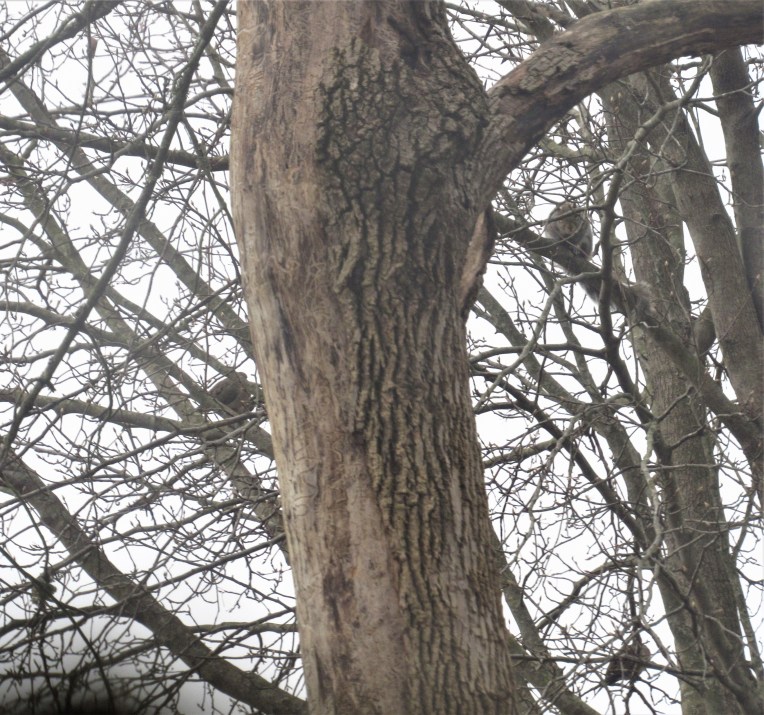
I saw my trees had what looked like several large birds roosting in the branches…but when I used my camera, they turned out to be just an unexciting bunch of squirrels and mourning doves. Earlier this week a neighborhood cat who comes to eat leftovers at my back door—and who’d just eaten both leftovers from my indoor cats’ food, and a handful of treats, started gathering himself while perched on my patio storage box. I thought he couldn’t do it, but the squirrel he was eyeing got behind a large flower pot. The cat made one huge leap, and landed in position to outmaneuver his prey. I saw him walking off with the squirrel in his mouth, and read the signs by the marks of his feet where he’d landed in the mud. So, some unhappiness in the squirrel community this week.


Squirrel Zoom