News from 1820

Stephanie Foster and Tracy Foster 1961
Me (Stephanie), on the left, my sister Tracy on the right. I don’t know how old I am in this picture…one or two years.


And, a few announcements from the year 1820, transcriptions I make to give family tree aficionados a taste of what their ancestors might have been influenced by, or talking about. 


The Hillsborough Recorder (NC) August 16, 1820


The governor of Virginia offers a reward of $500.00 for George Hamblet, who committed a deliberate murder on a negro man, his slave, accompanied by circumstances of the most savage cruelty.


It is said, that the following gives the respective ages of the surviving political patriarchs who signed the Declaration of Independence:


William Floyd, of New York….87

John Adams, of Massachusetts….85

Thomas Jefferson, of Virginia….83

Charles Carroll, of Maryland….82


Gentlemen are requested not to kill a belled buzzard, which is ranging about this neighbourhood. It was belled at Yankee Hall in May last.

William W. Hall


Alexandria Gazette and Daily Advertiser, July 22, 1820

Liver Stable

Elizabeth Towers


RETURNS her sincerest thanks to the public for the liberal encouragement her late deceased husband received in the above business for this twenty years, and informs his friends and the public in general, that she still continues the above business at the former stand, where every attention will be paid that formerly was, to render ample satisfaction to those Ladies and Gentlemen that will honor me with their custom, as she has a large family to support, and through no other means.


Notice


PROPOSALS will be received at Fort Washington until June 20th for supplying the troops and laborers with FRESH BEEF twice a week for one year.

R. B. Lee, Lt. U.S.A.


A Card


Those ladies and gentlemen who witnessed the great exertions of Mr. and Master Napey to entertain them by the ascension of their balloon, and who were prevented by the crowd from approaching the old gentleman to contribute their mite to remunerate him, are respectfully invited to call at his place of abode, at the corner of Prince and Fairfax, to enable him to proceed to his friends at New York.

Mr. Napey takes this occasion to return his thanks to the citizens of Alexandria for their great kindness and liberality to him during his stay in town, and regrets that some untoward circumstances prevented him from fully executing his plan as it regarded his balloons yesterday.


A Story, A Video, and A New Book

This slideshow requires JavaScript.


Most of my growing-up years, my family lived on Shannon Avenue in Athens, Ohio. Early on, when my parents first bought the house, a little cache of some former owner’s WWII souvenirs was found in the attic. My sister got to add to her things an “Aussie” hat, a cool article to play dress-up with. I got to keep these two items, the soldier’s campaign medal and a 1945 franc—a significant issue, after the country got its own government back. I would agree with anyone who feels we should not have had these things to play with, but seventy-four years on, I don’t know if the rightful descendants can ever be located.


Above, my cats at play, and a little accompanying music.


This is my latest book of poetry, which you can get on Kindle or as a paperback.


The Salem Accused

Photo of grey squirrel with ginger tail
This squirrel with the red tail was part of my yard’s population for a while. But, I have hawks…


Mary Osgood Confession


My Foster ancestors settled in Massachusetts, some in the town of Salem. I don’t know that I have any direct descendancy from those involved in this famous event. But the Foster name comes up. As the story below relates, Mary Osgood was charged with tormenting a Rose Foster; also among the victims of this early hysteria was an Ann Foster, who died in jail. I feel the topic is worth a few analytical paragraphs. After all, the victims are often casually referred to as the “Salem witches”.

There is a strange sort of transmogrification, where feminism and political correctness join to color the story. Witches somehow, within our culture, much fueled by TV shows and books, are used to represent a kind of female power. The idea of the witch becomes iconic. At the same time, the notion of a protected class, a marginalized minority (and American history is rich in the marginalizing of minorities), gets woven in.

And what happens to justice?

An important lesson, for the times we live in, falls by the wayside. These people were not witches, a thing that doesn’t exist (while we make allowance for adopted religious practices). So we can’t “champion” their cause, by superimposing onto it pop culture and political creeds, resulting in an odd presumption of guilt. Our ancestors would not have wished to be told, “You’re a witch, and that’s okay!” They would have asked that their innocence be shouted from the rooftops.

Thus, the salient point, about application of the legal process: the case was not prosecutable. It would have been necessary to determine the validity of the charges first, before undertaking to bring them. The trials preceded on a circular basis: People made accusations against individuals; due to those accusations, the accused were brought to trial, to have the charges “proven” by the testimony of the accusers. There is a present danger of the same sorts of proceedings; and a bandying about, lately, of the term “witch hunt”. The fantasies the Salem accusers indulged were a product of those things culturally available to them; nothing unimaginable occurred, even in their heads.

So let’s bear this in mind—in the world of fiction, witches can be admirable characters, and carry the role of empowered feminist icon, or beleaguered minority, or both. The accused of Salem were ordinary people, innocent of the charges made against them, and murdered by the system.


The examination and confession (September 8, 1692) of Mary Osgood, wife of Capt. Osgood, of Andover, taken before John Hawthorne and Majesties’ justices. She confesses, that about eleven years ago, when she was in a melancholy state and condition, she used to walk abroad in her orchard; and upon a certain time she saw the appearance of a cat at the end of the house, which she yet thought was a real cat. However, at that time it diverted her from praying to God, and instead thereof she prayed to the devil, about which time she made covenant with the devil, who, as a black man, came to her and presented her with a book, upon which she laid her finger, and that left a red spot; and that upon her sinning the devil told her he was her god and that she should serve and worship him; and she believes she consented to it. She says further, that about two years ago she was carried through the air in company with Deacon Frye’s wife, Ebenezer Barker’s wife, and Goody Tyler, to Five Mile Pond, where she was baptized by the devil, who dipped her face in water, made her renounce her former baptism, and told her she must be his, soul and body, forever, and that she must serve him, which she promised to do.

She says the renouncing of her first baptism was after her dipping, and that she was transported again through the air in company with the aforenamed persons, in the same manner as she went, and believes they were carried upon a pole.

Q. How many persons were on the pole?

A. As I have said before; viz.: four persons and no more, but whom she had named above. She confesses she has afflicted three persons: John Sawdy, Martha Sprague and Rose Foster; and that she did it by pinching her bedclothes and giving consent, the devil should do it in her shape, and that the devil could not do it without her consent. She confesses the afflicting persons in the court by the glance of the eye. She says, as she was coming down to Salem to be examined, she and the rest of the company stopped at Mr. Phillip’s to refresh themselves up, and the afflicted persons, being behind them on the road, came just as she was mounting again, and were then afflicted and cried out upon her, so that she was forced to stay until they were all passed, and said she only looked that way towards them.

Q. Do you know the devil can take the shape of an innocent person and afflict?

A. I believe he cannot.

Q. Who taught you this way of witchcraft?

A. Satan; and that he taught her abundance of satisfaction and quietness in her future state, but never performed anything, and that she has lived more miserably and more discontented than ever before. She confesses further that she herself, in company with Goody Parker, Goody Tyler and Goody Dean, had a meeting at Moses Tyler’s house last Monday night, to afflict, and that she and Goody Dean carried the shape of Mr. Dean, the minister, between them, to make persons believe that Mr. Dean was afflicted.

Q. What hindered you from accomplishing what you intended?

A. The Lord would not suffer it so to be; that the devil should afflict in an innocent person’s shape.

Q. Have you been at any other witch meetings?

A. I know nothing thereof, and I shall answer in the presence of God and his people, but said that the black man stood before her and told her that what she had confessed was a lie; notwithstanding she said that what she had confessed was true, and thereto put her hand. Her husband, being present, was asked if he judged his wife to be any way discomposed. He answered that, having lived with her so long, he doth not judge her to be any way discomposed, but has cause to believe what she has said is true. When Mistress Osgood was first called, she afflicted Martha Sprague and Rose Foster by the glance of her eyes, and recovered them out of their fits by the touch of her hand. Mary (Foster) Lacey and Betty Johnson and Hannah Part [probably Post] saw Mistress Osgood afflicting Sprague and Foster. The said Hannah Post and Mary Lacey and Betty Johnson, Jun., and Rose Foster and Mary Richardson were afflicted by Mistress Osgood in the time of their examination and recovered by her touching of their hands.

‘I’ underwritten, being appointed by authority to take this examination, do testify upon oath, taken in court, that this is a true copy of, the substance of it, to the best of my knowledge, January 5, 1692-3. The above Mary Osgood was examined before their majesty’s justices of the peace in Salem.

John Higginson, Just. Pac.


Source: Foster Genealogy, Frederick Clifton Pierce, 1899.

(Mary Osgood was released, and died in 1710; the John Hawthorne mentioned, was the G2 grandfather of author Nathaniel Hawthorne.)


News from 1819

Baby Deer
Photographed through the kitchen window, so as not to scare them. These two and their mother have been spending hours in my garden each day.


Transcriptions from the Alexandria Gazette and Daily Advertiser, September 1, 1819


The New Orleans Gazette of the 4th inst. states that a most dreadful hurricane took place on the coast of New Orleans, on the 28th ult. in which the U.S. schooner Firebrand, officers and crew were entirely lost; several others have met a similar fate or have been sunk. The officers on board the Firebrand were Lieutenant Grey, Dr. Wardle, and Messrs. Perkins and Adams, midshipmen. The schooner Thomas Shields was also capsized at the bay of St. Louis, and all the hands lost. All the houses at the bay of St. Louis were seriously damaged, and most of them blown down. The extent of the damage, it appears by the New Orleans Gazette, are as yet but partially known.

[The hurricane would have struck N.O. around July 28, 1819, the one reported below, striking the Virginia coast, was a separate event, of late August 1819]


The Weather

We do not recollect to have ever witnessed at this season of the year, a heavier fall of rain than we have had in this place within the last eight and forty hours. With very little intermission it poured a perfect torrent, from Thursday afternoon, about four o’clock, until nearly the same hour yesterday, blowing a heavy gale of wind the greater part of time from Northeast to West, shifting frequently. The sudden change of wind from the former to the latter point, on the first of the floodtide, checked the water passing up James River, and caused it to raise so high in this harbor that all the wharves were overflowed, and most of the warehouses contiguous had their lower floors covered from one and a half to two and a half feet. The damages sustained from this source is a little short of, if it does not succeed, 2 thousand dollars. Messrs. J. and W. Southgate, J. R. Harwood, W. Ashley, and S. & P. Christian are the principle sufferers, the three first by injury done to perishable articles in the lower story, and the last by the tide sweeping off a quantity of shingles from the end of Moran’s wharf. Spars, plank, heavy timber, and wharf logs were seen floating about in the harbor, and deposited in places on the wharf where they had been left at the recess of the tide.

Several vessels were driven on shore in different parts of the harbor, but, we believe, sustained no damage.

The wind blew with intense violence until about 5 o’clock yesterday evening; and when our paper was put to press the weather had not assumed any thing of a settled appearance.

We anticipate shocking accounts from such vessels on the coast as were unable to make a harbor before the gale set in. Our harbor is full of vessels that had put in in expectation of bad weather.


100 Dollars Reward


I will give the above reward to any person who will return to my possession, negro LAWRENCE, who assumes the surname of FENWICK. This fellow left my farm, on the Wicomico river, in Charles county, Md. on the 6th July, in consequence of his own outrageous conduct towards my overseer. He is a negro of a fine erect figure, good features, a smooth black skin, rather above the middle stature, of a youthful appearance for one of thirty years of age, and of great plausibility and natural smartness. His ears grow remarkably close to his head, and on the inside of his lower lip, he has a white mark or spot. I purchased him 4 years ago of the estate of Mrs. P. H. Courts, of this county. I am led (by circumstances which have come to my knowledge since he absconded) to believe that he will endeavor to make his way to King George county, Va.; should he not take this route, he will probably be met with in the District of Columbia, or in the upper counties of this state, on his way to Pennsylvania. I apprehend he will change his name, and if committed to jail, refuse to state to whom he belongs, as the misconduct which preceded his departure, & his absconding, have all appeared since to be premeditated. He took all his clothes with him, of which he had a large number; among them—a new bearskin overcoat, a long, close-bodied blue coat, a pair of striped jean pantaloons, one or more of white waistcoats, besides many articles of coarse clothing; these, however, he will probably exchange, or sell them for cash to defray his traveling expenses.

I will give the above reward to any person who will bring him home to me, or FIFTY DOLLARS if confined in jail, and notice given me, so that I recover him.

Should he be taken out of state, I will also pay all reasonable costs and charges which may attend the bringing him home.


I. T. STODDARD

West Hatton, near Allen’s Fresh Post Office, Charles county, Md.


Fifty Dollar Reward


 Ran away from the subscriber living in King George’s County, Va. on Monday the 22nd of March, a yellow man names JAMES, about 22 years of age, his fore-teeth wide apart and cannot speak very quick—had on Virginia cloth clothes and carried off a shaggy great coat, he has a father named Peter Hall, who lives with the widow Morgan at Oak Hill, Farquier Co., and his grandfather old Frederick Hall, is supposed to be living at Mr. Terrett’s near Alexandria, and it is likely he may be lurking about there. I will give the above reward for apprehending and securing said fellow so that I get him again, and reasonable charges if brought home.


J. H. WASHINGTON

Masters of vessels and others are forewarned against harboring or carrying off said fellow.


Look Here

All classes of citizens concerned for the welfare of their posterity and the community at large, are informed there has just been published an ornamental sheet, entitled an


Antidote for Dueling;


Containing the folly and wickedness of that practice, in forcible and energetic language; mostly selected from the sacred scriptures. They are to be had from the bookstores of Messrs. Davis and Force at Washington, and at the different bookstores in Alexandria.


Was Committed


To the jail for the county of Alexandria on the 28th ult., as a runaway, a mulatto man who calls himself JERRY MORE, and says he is free born, and that he served his time with a Mr. Francis White, living on Big Capon, Hampshire Co., Va. at Cold Stream Mills, and that he is recorded as a free man in the clerk’s office, at Romney, Va.  Said mulatto man is about 23 years of age, 6 feet high, stout and well made, has lost the first joint of the forefinger on his left hand.

The owner is desired to come prove property, pay charges, and take him away, otherwise, he will be disposed of as the law directs.


ANDW. ROUNSAVELL, Jailer


Missouri and Illinois Bounty Lands


The subscriber has for sale a number of the most valuable tracts, in both of those rich and improving bodies of lands, and can supply applicants with any number they may wish, and in any part of either territory. Every person who visits the Western Country, particularly those who intend settling there, should take with them a few quarter sections of those lands; every man who has a young and growing family, and can spare a few hundred dollars, should not miss the present opportunity of getting some of those lands; as it will insure to his children a greater certainty than any other type of investment he can possibly make for their benefit. From the immense emigration to both Illinois and Missouri, particularly to the military lands, it is certain there must be a great rise in the price very soon, and those who miss the present opportunity will never again have the chance to do so well. The patents will be sold very low, for cash, good notes, or bonds at short dates, or bank stock in the Central Bank of Georgetown and Washington, and the Farmers and Mechanics Bank of Georgetown. As I am a large dealer in Military Bounty Lands, I can supply any number that may be required.

Please reply at my Exchange Banking House, Bridge street, Georgetown.


ROMULUS RIGGS


(Source, U.S. Library of Congress)


Advertising of 1809

By 1809, newspapers had stopped using the “s” that looked like an “f”, and so are a little easier for 21st century citizens to read. Human beings for sale were mixed among other notices and advertisements. The United States was at strong odds with Great Britain, over the embargo and impressment practices of their war with Napoleon Bonaparte, that led to our war of 1812.

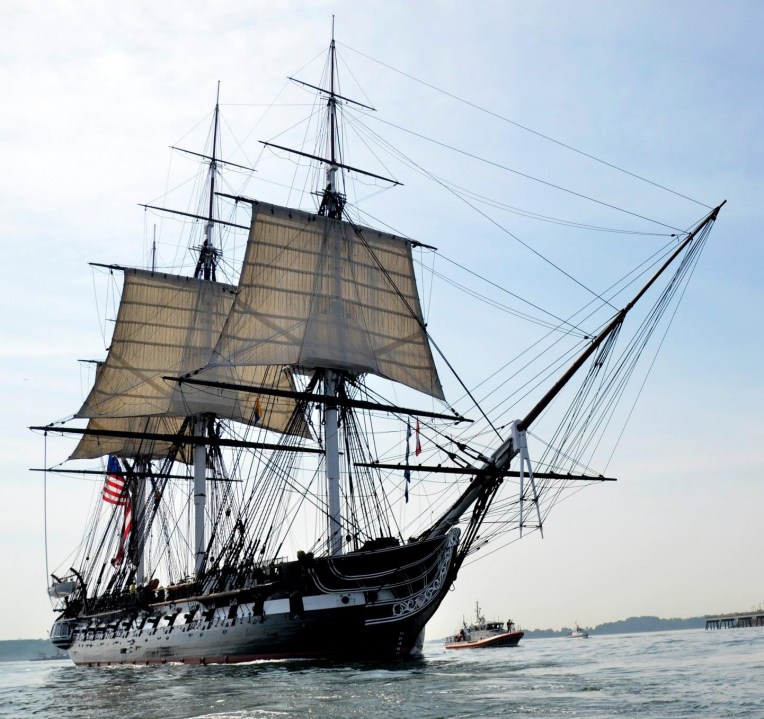
Photo of historic sailing ship USS Constitution
USS Constitution
The National Intelligencer and Washington Advertiser, March 3, 1809

Just Published

And to be had at R. C. Weightman’s Book Store

A tour through part of Virginia, in the summer of 1808, in a series of letters, including an account of Harper’s ferry, the natural bridge, the new discovery called Weir’s Cave, Monticello, and the different Medical Springs, hot and cold baths, visited by the author.

Price 37 and ½ cents


Mill Wrights Wanted

Six good journeymen will meet with employment by applying to the subscriber at Occoquin before the 20th March, and afterwards at Ellicott’s Lower Mills, 8 miles from Baltimore.


ONE HUNDRED DOLLARS REWARD

Ran away from the subscriber, in Pineataway, Prince Georges county, Maryland, on the 31st of May last, two Negro Men, viz. POMPEY, a very black man, upwards of 50 years old, 5 feet 10 or 11 inches high, rather slender made, with a small head and face; his forehead projects considerably over his eyes, and it is believed he has lost an under foretooth; he is much addicted to liquor, and when drunk disposed to talk a great deal; he has been accustomed to drive a carriage and waggon; he had on when he went away a deep blue short jacket of coarse cloth, oznabrig shirt and trowsers.

Basil, a dark mulatto, about 22 or 23 years old, 5 feet 8 or 9 inches high, rather stout made; has thick lips and large mouth; the forefinger of his right hand is stiff and smaller than the other; he had ulcers on his legs, and if healed, the scars may be discovered. Basil was a house servant, and at the time he went off, his apparel was the same as Pompey’s, but they had each a variety of cloths. They may endeavor to pass as freemen, and it is probable that Basil is in Alexandria or Baltimore, as his father is living in the former place, and he has a brother and sister in the latter. It is conjectured that a black man in the District of Columbia named Jack Neall, has contrived to get them away, as the subscriber has been informed that the said Neall about two years ago carried a negro woman of his on board a vessel at Alexandria, at which time she was a runaway. The above reward (including what the law allows) will be given for securing Pompey and Basil in any jail, so that the subscriber shall get them again, or Fifty Dollars for either and all reasonable expenses if brought home. All persons are forewarned against harboring them.

JACOB DUCKETT


WANTED TO PURCHASE

A Servant, accustomed to wait on a single gentleman, who is sensible and likely, and has a good character; for whom liberal price will be given.


FOR SALE

A very likely, healthy, MULATTO GIRL, about 12 years of age—apply at this office.


FOR SALE

A valuable family of NEGROES, consisting of a man, who is a carpenter, his wife and seven children; all young and healthy.

BENJ. ODEN

Prince Georges County


FIVE DOLLARS REWARD

LOST, a SILVER WATCH, with hands telling the day of the month, on the face of her, and capped—Mott, maker, of New York. Whoever will return the Watch to this office, shall receive the above sum, and no questions asked.

Post-Colonial Life

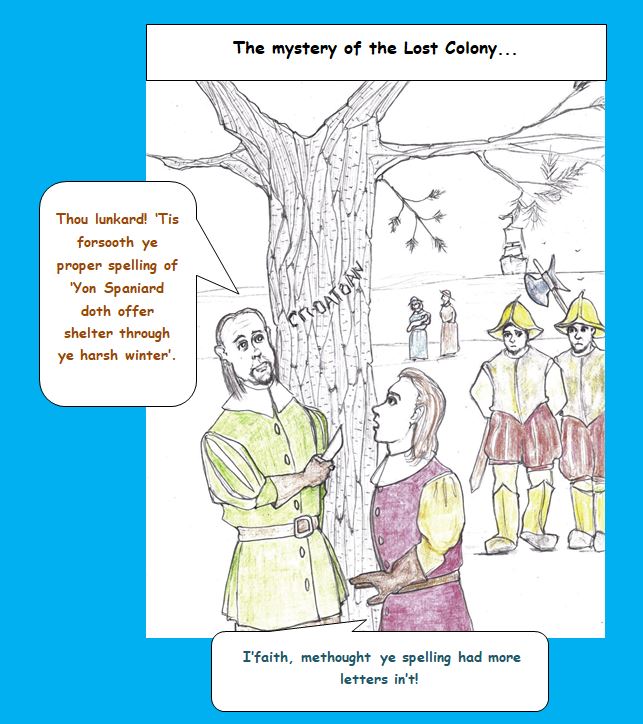
See lots of cartoons at The Cartoon House!


From early newspapers, samples of what our ancestors, in the first years of the republic, might have been reading. First, a few titles you could buy in New York, advertised in the Gazette of the United States, August 13, 1791


Ruddiman’s Rudiments

Klopflock’s Messiah

Gentleman’s Pocket Farrier

Smellie’s Philosophy of Natural History

Miss Murray’s Mentoria


Portion of an editorial:

America, from this period, begins a new era in her national existence —“The World Is All Before Her”—the wisdom and folly, the misery and prosperity of the EMPIRES, STATES, and KINGDOMS, which have had their day upon the great Theatre of Time, and are now no more, suggest the most important Mememtos—These with the rapid series of events, in which our Country has been so deeply interested, have taught the enlightened Citizens of the United States, that FREEDOM and GOVERNMENT—LIBERTY and LAWS, are inseparable. This Conviction has led to the adoption of the New Constitution; for, however VARIOUS the sentiments, respecting the MERITS of this system, all GOOD MEN are agreed in the necessity that exists, of an EFFICIENT FEDERAL GOVERNMENT.

A paper, therefore, established upon NATIONAL, INDEPENDENT, and IMPARTIAL PRINCIPLES, which shall take up the premised Articles, upon a COMPETENT PLAN, it is presumed, will be highly interesting, and meet with public approbation and patronage.

The Editor of this publication is determined to leave no avenue of information unexplored : —He solicits the assistance of Persons of leisure and abilities—which, united with his own assiduity, he flatters himself will render the Gazette of the United States not unworthy general encouragement——and is, with due respect, the public’s humble servant,  

THE EDITOR (John Fenno) (November 25, 1789)

The Gazette of the United States was a Federalist paper, based in New York City, then America’s capital. It received funding (coordinated by) and contributions from Alexander Hamilton. (Information, the United States Library of Congress.)  


The Monitor and Wilmington Repository. September 20, 1800   


A feature piece: 

Musquetoes enjoy successively two kinds of life, which appear very opposite, but which are also common to many other insects. It may be said, they are born fish, and latterly are winged inhabitants of the air. The male may be known from the female by the plumes on his head. Their time of love is generally when they are seen playing in the air. The female lays eggs on the surface of stagnated waters, to the number of 200 to 350, which stick together with a kind of glutinous substance, in form of a boat, with a head and stern, the small end upwards. They appear like little spots of lampblack, or small coals huddled together. From the bottom of the egg, hatches out a larva, which is a long body without legs; the large head hangs downwards, with the tail resting on the surface of the water, in which is a pipe and organ of respiration, and four fins on the opposite side. In this state it feeds on small animalculae, and grass; and then is very sprightly, for on the least agitation of the water, they dart instantly to the bottom, but are obliged to rise quickly to receive fresh air. They remain in this state two or three weeks, and then change into the Chyrsolids, in which state they do not eat. Their pipes for breathing are then transferred from the tail to the head, which represent horns. The tail is turned under quite to the head, like a lobster.

They live in this state three days, and when about to leave the watry element, they burst the shell at the top of the head, then get the two forelegs out and begin to dress, and hawl out the hinder legs and wings. The shell now represents a boat floating about, and if roughly agitated by wind, on the shaking of the water they are drowned, but if undisturbed [they spread their] wings and take their flight; abandon the waters to seek their nourishment in the blood of animals, and sacarine substances.

The best way to cure their bite, is to wet the parts bitten with saliva, and desist if possible from the itch of scratching. Volatile Alkali applied, is a remedy in this as well as in the bite of vipers. Lemon juice rubbed on our skin, it is said, will prevent musquetoes from being troublesome.  


Notice is Hereby Given

To the TRUSTEES of the POORHOUSE of the County of Newcastle 


That a meeting of the board will be held at the Poorhouse, on the first day of October next, at ten o’clock, A. M. at which time and place it is hoped the trustees will give punctual attendances. The Collectors of the Poor Tax for Newcastle County, are also notified that the 2nd sum of the payment became due the 7th day of this instant. It is hoped that they will, without delay, discharge the same; and those who are in arrears for old balances, and the first quarter of the current year with the Treasurer of the Board, need not expect any further indulgence. All persons having any legal demands against the Board for supplies furnished either by the orders of the Trustees, or by the order of the Overseer of the House, are required to render the same for settlement.  


John Crow, Sec.

Aug. 29, 1800


War Department, August 4th, 1800


The commanding Officers of corps, detachments, posts, garrisons, and recruiting parties belonging to the military establishment of the United States, are to report to and receive orders from Brigadier General Wilkinson, in the city of Washington, and all officers on furlough are to report themselves to the same officer with all possible dispatch.  


SAMUEL DEXTER

Secretary of War  


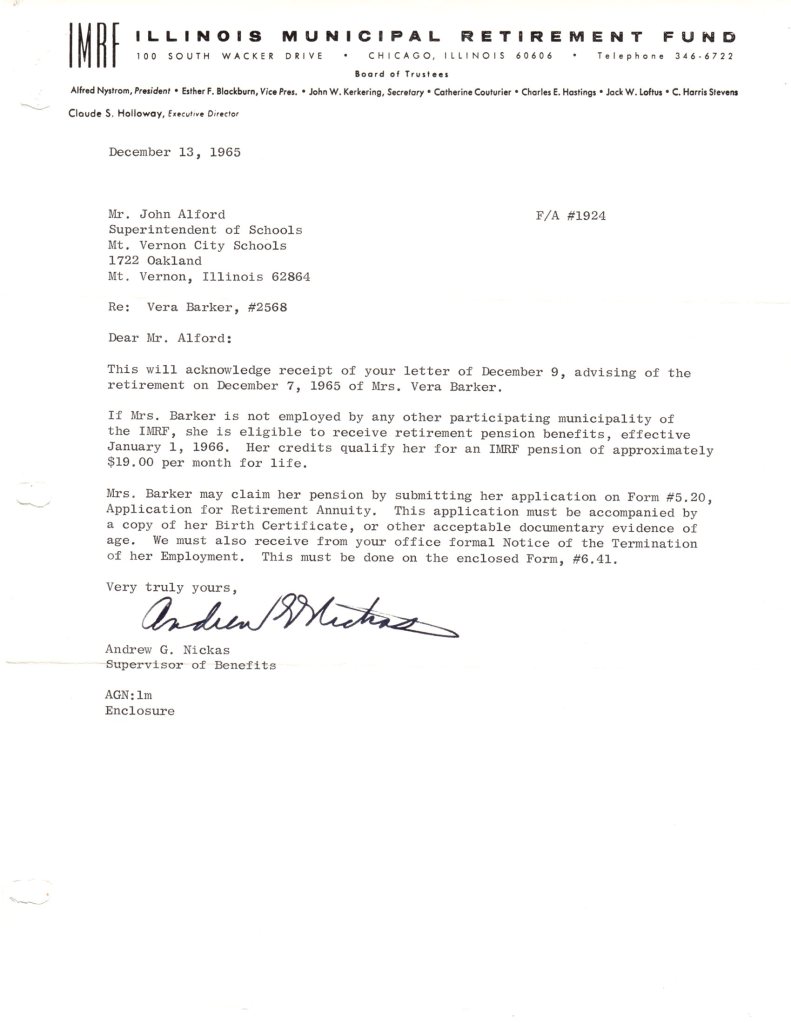
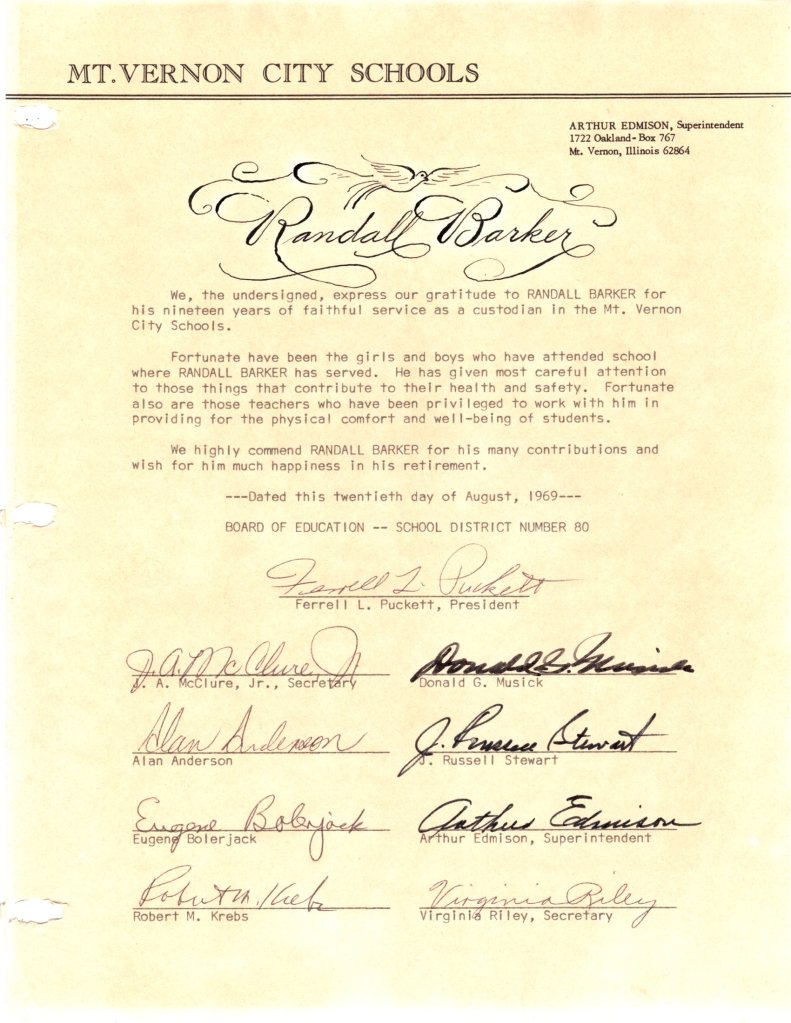
A Pension Letter and Retirement Accolades

My grandmother had only an eighth-grade education, and grew up on a farm. She and my grandfather were able to work at a variety of jobs, at the Mount Vernon shoe factory (Brown Co., I believe), eventually in the school system. Just to editorialize, let me raise the question of whether the changes in the workplace reflect a difference in the work force itself? Do “unskilled” people today get pushed farther to the margin, although they, like the generations before them, will learn how to do their jobs, on the job? We have certifications and diplomas, the lack of which shut people out, while the people themselves must be as intelligent and capable as ever. My grandparents saved, bought and paid off a house, saved more, and left a legacy that helped me pay off my student loans. Are today’s unskilled workers not shut out of the housing market, for the disproportionate cost by percentage of income?


A Veteran Seeks His Pension

My ancestor, Jacob Barker, petitioned the court three times, trying to win a pension, as under the law passed in 1832, he would have been entitled to. Effectively, the law was enacted fifty years after the end of the war (1783), limiting the number of pensioners; further, though Jacob received a disabling wound to his leg, he could not prove he’d served for six months altogether, another limitation of the law. He probably was not aware that the state of South Carolina had a record of his service. In the 1840s, neither the railroads nor the telegraph were in practical terms of use to the average person, so a records search in another state would also be too difficult and expensive to bear on a country court case.

This transcript, from my mother’s documents, is listed as R497, fn39SC, originally transcribed by Will Graves. I have added, for readability, more punctuation, and made a few corrections of terminology, people and place names.

State of Illinois, Hambleton [Hamilton] County: On this 27th day of November 1834, personally appeared in open Court before William Allen one of the County Commissioners of the County and State [the] aforesaid Jacob Barker, a resident of the County and State aforesaid aged seventy-one years, who being first duly sworn according to law doth on his oath make the following declaration in order to obtain the benefit of the act of Congress passed June 7th, 1832.

That he entered the service of the United States under the following named officer and served herein as stated:


That in the year 1782, he was drafted for one month under the command of Major Lyles, he then living in South Carolina, Fairfield County, and that he rendezvoused at Colonel John Winn’s [in] Winnsboro, South Carolina. From there they marched to McCord’s Ferry on Broad [in] State of South Carolina, and they laid there something more than one month after which they were dismissed by Major Lyles to return home having served, including the time of marching to and from home a time of one month and some days. And that in the year 1782, he was again drafted for one month, commanded by Major Lyles and that he rendezvoused at Winnsboro, South Carolina; from there they marched, and that they were employed in ranging and scouting through the country in different directions after the Tories, etc., and that they were dismissed from this Tour by [word obliterated] on the Catawba River, South Carolina, a distance of sixty-five or seventy miles from home, having served one month and six days.

And in that same year of 1782 he was again drafted under Captain Bishop and Major Lyles and that they rendezvoused at Winnsboro, South Carolina, and that they were employed in ranging and scouting after the Tories on Little River, Broad River, Catawba River, and the Congaree, Colonel Winn having command of this tour and that they were dismissed on Broad River, South Carolina, near a place called Shyries [Shirers] Ferry, he then returned home having served one month and eight days—and that in the year 1782, he was again drafted under Major Lyles and Colonel Winn and that they were stationed at Colonel Winn’s South Carolina, Fairfield County, after remaining some time at Colonel Winn’s, they were employed in ranging and scouting through the country until their time was out; he then returned home having served one month and nine days, and that again in the year 1782, he was again called out under Lieutenant Lyles, commanded by Colonel David Hopkins, and that they joined General Green [Nathanael Greene], near the Congaree; from there they marched to the Eutaw Springs, where we had an engagement with the British which lasted something over three hours; the militia were commanded at this place by General Pickens; and that after firing the third time, the applicant was shot through the right leg, being then compelled to retire; they then were dismissed and returned home, having served one month and fifteen days; and that he knows of no person whose testimony he can procure to establish his services; he hereby relinquishes every claim to a pension or annuity, except the present and declares that his name is not [on] the agency of any State whatever. Sworn to and subscribed this day and date above written.


S/Jacob Barker, X his mark

[David Powell and John Douglass gave the standard supporting affidavit.]


Where and in what year were you born?

Answer: In the year 1754.

Have you any record of your age?

Answer: No.

Where were you living when called into service?

South Carolina, Fairfield County.

How were you called into service?

Answer: I was drafted.

Where have you lived since the Revolutionary War?

Answer: From South Carolina, I moved to Livingston County, State of Kentucky; from there to Hopkins County, Kentucky; from there to the State of Illinois, Hambleton County, where I now live.


Sworn to the day and year aforesaid:

S/Jacob Barker, X his mark


State of Illinois, Hamilton County: September term of the Hamilton Circuit Court.


On this 22nd day of September, the year of 1841, at the Hamilton Circuit Court, now in session, the same being a Court of record having a clerk and seal, in open Court, before the Honorable Walter B. Seates, associate Judge of the Supreme Court of the State of Illinois, and Presiding Judge of the Hamilton Circuit Court, appeared Jacob Barker, of Hamilton County, in the State of Illinois aforesaid, about eighty years of age, who being first duly sworn according to law, doth on his oath make the following declaration, in order to obtain the benefit of the act of Congress, passed June the 7th, 1832:


That he entered the service of the United States under Major Lyles, about the age of 17 years, and served as herein after stated; when he so entered the service of the United States, he lived in Fairfield County in the State of South Carolina, and was drafted into the service from Colonel Winn’s Regiment of Fairfield County militia, and he belonged to the company of Captain Mobesly [Mosely or Mobley?]; that when this declarant was so drafted, he was drafted for a month, but the exact year he does not know from his extreme old age and consequent debility of mind and body, but it was the same year the battle of Ninety-Six was fought, he is quite sure; he cannot recollect the number [of] men that composed the force under Lyles, but to the best of his recollection, there could not be much over 60 or 70, if that; that when the force under Lyles aforesaid, was organized this declarant and the rest of the Company marched from their place of rendezvous in Fairfield County to Ankins [Ancrum’s] Ferry on Broad River, in said County, where they lay for a few days, and then Lyles crossed Broad River, with part of the force, which set out under him to assist the Americans at Ninety-Six; this declarant and several others having stayed behind for the want of arms; and about staying behind at Ancrum’s Ferry as aforesaid, one of those who stayed behind took the smallpox; after this, declarant and some of the others having got arms crossed after Lyles and joined him; Lyles and his force were too late in coming up to be of any assistance to the Americans who were overpowered by the British; the next tour which this declarant took, after Lyles returned from Ninety-Six to Fairfield County and his first tour had expired, was under Captain Hill as a volunteer, and lay part of the time at Lyles Ford on Broad River; and whilst lying there he was wounded in his thigh by a shot fired from a rifle across the River, by which this declarant was disabled for further service for one month at least, but cannot now recollect how long he was on this tour but he is certain that is was on the actual service against the British and Tories from the time his first tour expired until the time he was again drafted shortly before the battle of Eutaw Springs (excepting the time he lost when he was wounded as aforesaid); that shortly before the battle of Eutaw Springs he was again drafted into the service of the United States, and the Regiment to which he was attached was commanded by Colonel David Hopkins and the same Major Manus Lyles was their major, and Captain Bishop was Captain of this declarant’s Company. He was drafted this time for one month, and during this time, the battle of Eutaw Springs was fought; that he marched from Fairfield County aforesaid to the place of rendezvous to join his Regiment and from that marched to join the army under Generals Greene and Pickens; that he was in the battle of Eutaw Springs and under the command of David Hopkins, Colonel of the Regiment as aforesaid; that during the fight this declarant saw General Pickens lying on the road leading to Charleston; he was lying on the ground, when this declarant came up to him and asked him if he was badly wounded; when the General replied, “I am not exactly wounded, but I have been struck by a spent ball, which struck me in the pit of the stomach and has hurt me badly, but I will be up soon again and among you”, or some such words in substance; that this declarant was himself so badly wounded in the battle of Eutaw Springs, in the right leg, that he had to be borne off the field of battle by one Isaac Waggoner, since dead, and a man of the name of James Taylor helped to carry him home to his father’s house, but what has become of said Taylor, this declarant cannot tell, as he has not heard of him for many years, and the last they heard of him was that he had gone from South Carolina, to the State of Missouri; but where he lives or whether he is alive or dead, this declarant cannot tell; that he has no evidence to prove the facts herein stated, but his own oath, that he knows of; that this declarant was disabled from performing further service in consequence of his wounds received in the battle of Eutaw Springs for 9 weeks or thereabouts, and when recovered set out again to join the American Army under Greene and Pickens; but before he could join the Army which was then at [place unknown], peace was proclaimed; that this declarant from his extreme age cannot recollect everything that happened during the time he served, nor dates when things happened, and he is unable either to read or write, or he should have tried sooner for a pension; that he employed a man of the name of Newman Jones 4 or 5 years ago to try and get a pension for him, but has never heard from said Newman more about it; that he to the best of his recollection served the United States for a period not less than 6 months altogether; that he therefore relinquishes all Claim to pension or annuity, except the present and his name is not on the pension roll of the agency of any State; that is, the declarant cannot state the exact year in which he was born having no record of his age, that he was in his 17th year in the year the battle of Ninety-Six was fought; that he was born in Fairfield County, South Carolina, lived there until 24 years after the battle of Eutaw Springs, then moved into Hopkins County, Kentucky, where he lived about [words obliterated] years, and then moved into County of Hamilton in this state, where he has lived ever since; that he is well known by William Gholson, a clergyman, and William Allen, who is his neighbor, who can state what he knows and believes concerning this declarant’s standing and character for veracity.

Sworn to and subscribed in open Court this 22nd of September, 1841.

S/Jeduthun P. Hardy, Clerk

S/Jacob Barker, X his mark

[William Gholson, a clergyman, and A. D. Grimes gave the standard supporting affidavit.]

State of Illinois, Hamilton County: Before us, two Justices of the Peace in and for said County and State personally appeared Jacob Barker of said County and State, and personally also well known to us, as a person of credibility, who, being of lawful age (88 years old), and first duly sworn, according to law, doth on his oath declare, that he was drafted from the Militia of Fairfield County, in the State of South Carolina in (say) 1780 at home, and taken to Winnsboro, the County seat, and joined the Regiment commanded by Colonel John Winn (Richard Winn his son called General of the forces).

We went to Ancrum’s Ferry under Major [Aromanus Lyles]—continued there two or three weeks—we went then to the aid of the Army at Ninety-Six under Generals Greene and Sumter, then returned to Shirer’s Ferry across Broad River, home again, being out one month. He states that he was carried off again under the command of Captain Brashears, and served one month, then returned home; was called out again under Lieutenant Ephraim Lyles, and under him served 2 tours, one month each time; was called out again under Captain David Mayberry; was out one month through the Country. He states he went out the 6th time under Lieutenant West Daniel, and was out about 35 days and was wounded at the battle of Eutaw Springs by a musket ball, which cut off a piece of one of the bones of the right leg, and passed off through the fleshy part of the leg. He states he was carried off the field, and for 5 weeks, could not mark the ground with his leg. He states it injured him ever since in his farming pursuits materially by lameness. General Greene was there [as] commander in chief and Colonels David Hopkins and Pickens (was wounded in the battle), commanded the South Carolina Militia. He states his reasons for not applying sooner was there was no pension for militia men until the 7th of June 1832, and a want of knowledge, and a competent person, prevented him ever since, and further Deponent saith not.


Signed (witnessed):

S/John Braden, Jr.

S/Jacob Barker, X his mark

Sworn and subscribed before us Justices of the Peace as above, on this 16th day of October, 1843.

S/Samuel Wilson, JP

S/John Braden, JP


[Veteran’s application was rejected because he failed to allege that he served the required six months of active service.]


Links:

Catawba River

Congaree River

Nathanael Greene

Andrew Pickens

Siege of Ninety-Six

Battle of Eutaw Springs